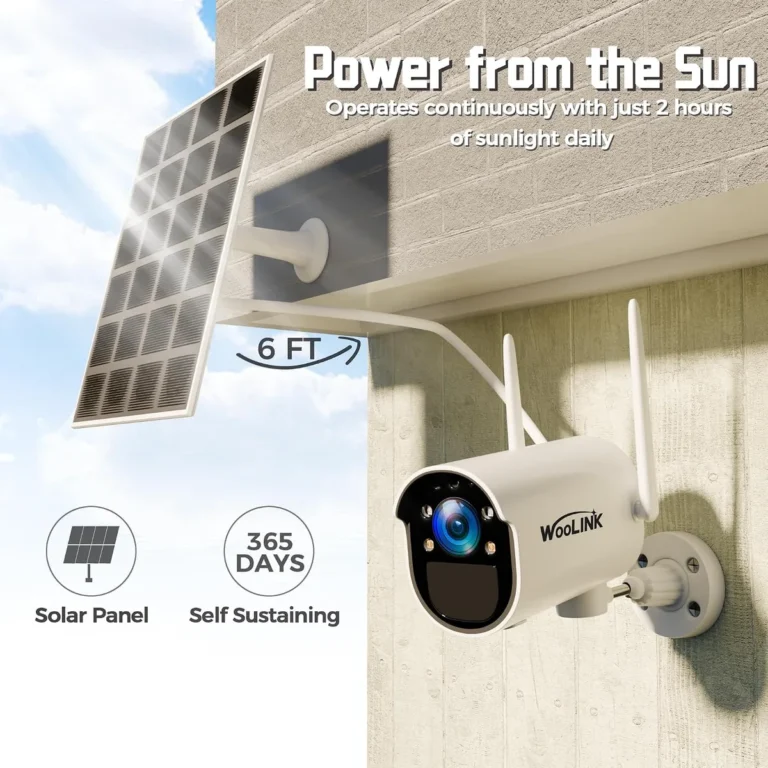
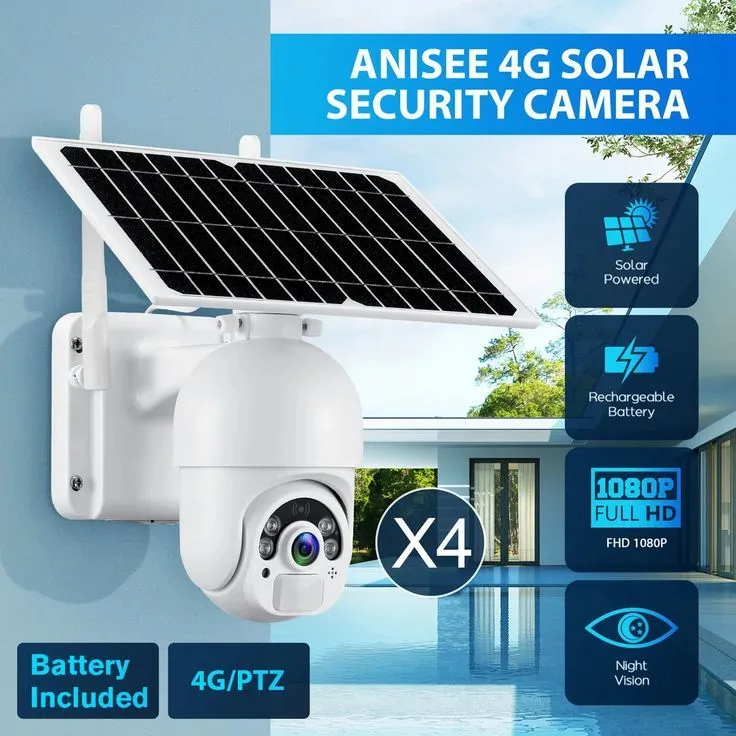
Can Solar Security Cameras Detect People?
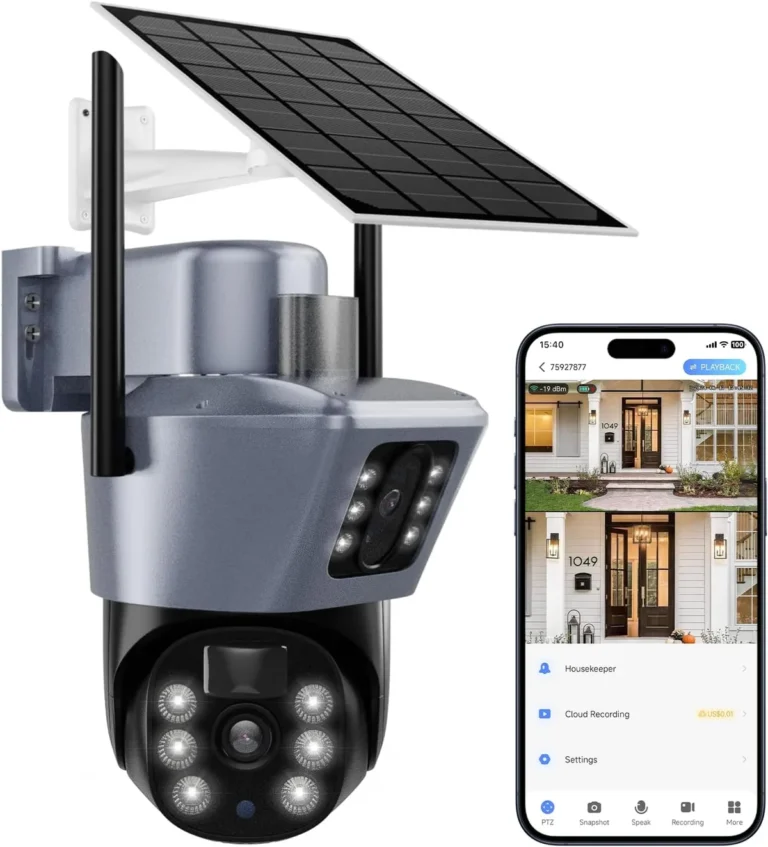
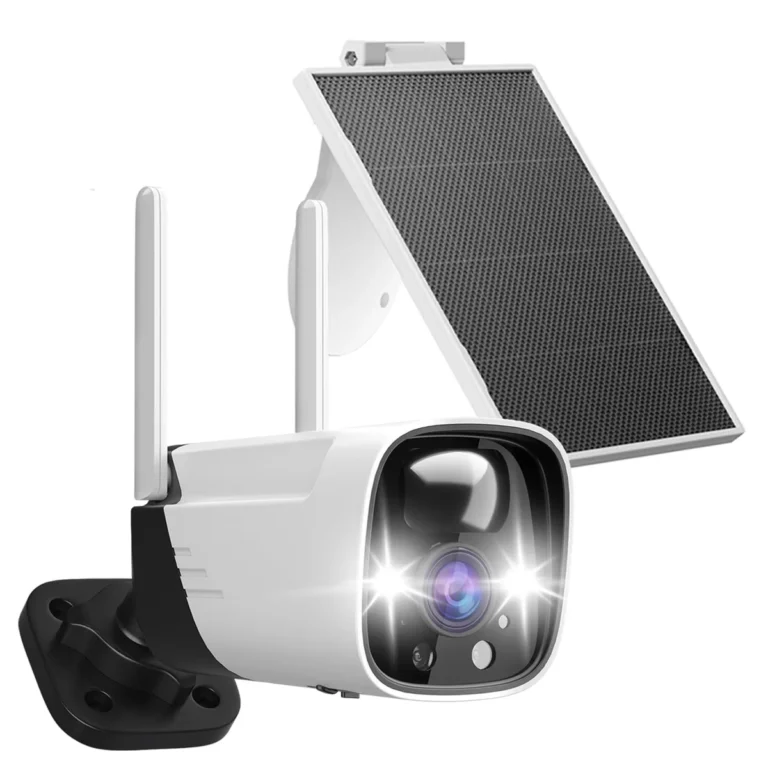
Can solar security cameras detect people? The short answer is yes, but the long answer depends heavily on which sensor technology the camera uses and what conditions you're operating in. Most modern solar security cameras combine passive infrared sensors with AI-powered detection.
They can identify a person walking across a driveway reasonably well in ideal conditions.
Manufacturer specifications indicate that solar cameras with AI person detection achieve accuracy rates above 95% in controlled testing. Real-world performance drops in cloudy weather, low light, and complex outdoor environments. Understanding these limitations before you install matters because your property's safety depends on it.
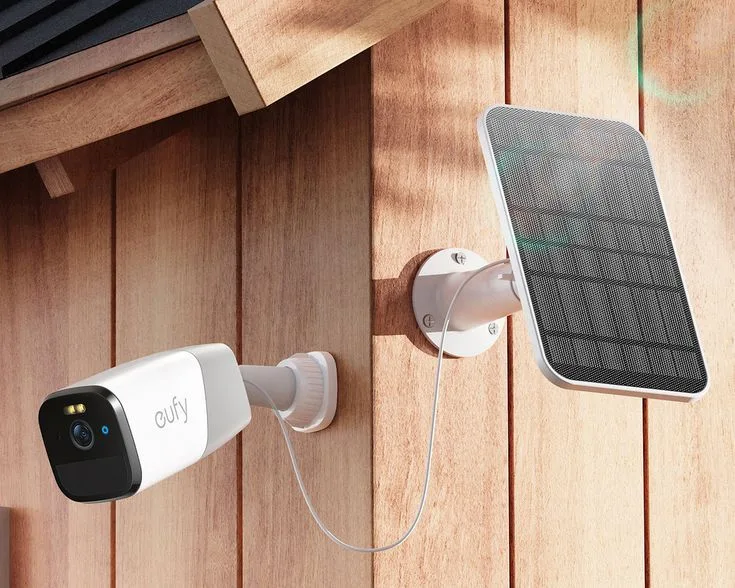
Image source: Bing (Web (fair-use with source credit))
Quick Answer
Yes, solar security cameras can detect people using PIR motion sensors and AI detection. Most modern models achieve 95%+ accuracy in ideal conditions. Detection quality varies by weather, lighting, and battery levels.
False alerts from animals remain common in budget models. Proper installation and sensor configuration dramatically improve reliability.
Why Getting Solar Camera Person Detection Wrong Leaves You Exposed
When you install a solar security camera, you're making a bet. You're betting that if someone walks onto your property at 2 AM, the camera will wake up, record them, and alert you. If that bet fails, you're left with no footage and no evidence.
This isn't hypothetical. Verified buyer feedback across multiple platforms shows a recurring pattern. Cameras with low battery charge enter sleep mode right when events happen most often.
PIR sensors with poor positioning miss movement entirely. Cloudy weeks drain batteries until the camera barely functions.
The real danger is assuming detection works exactly like it does in product photos. Motion zones set too high cause the camera to sleep through actual threats. Sensitivity left at default settings often triggers on leaves while ignoring a person walking at the edge of the field of view.
If your solar security camera is your only line of defense, you need to understand exactly where detection works and where it fails before you rely on it. Every gap in detection is a gap in your security.
How Solar Security Cameras Actually Detect People
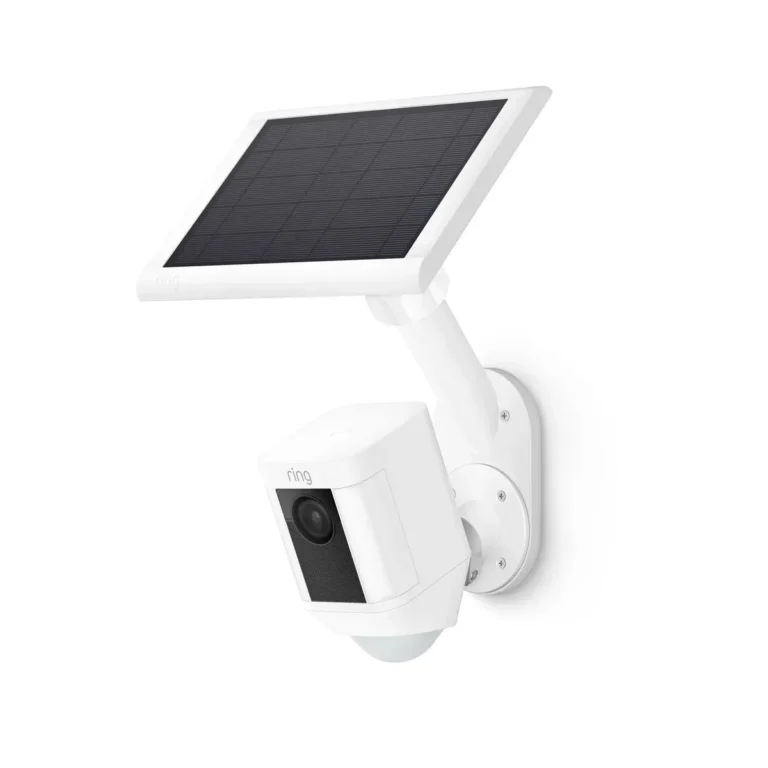
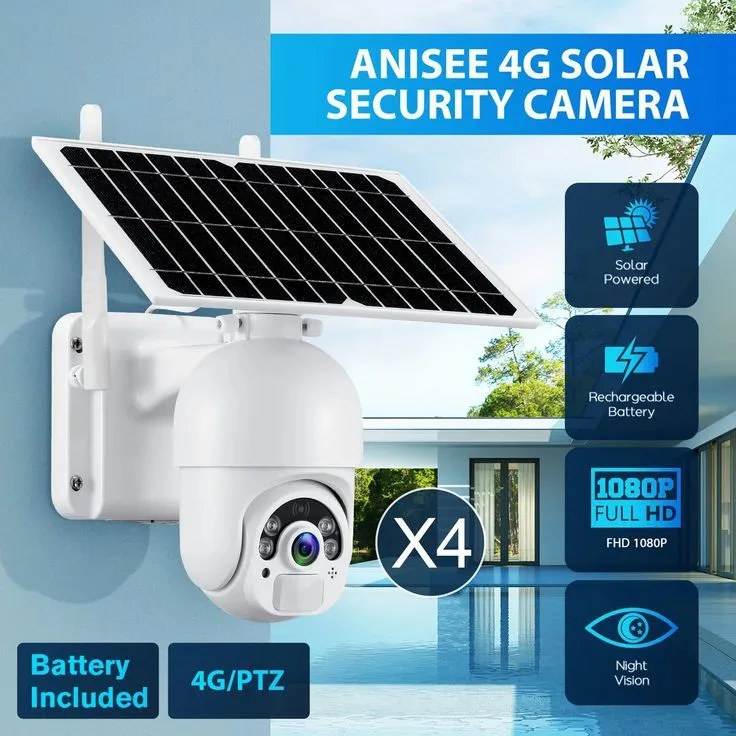
A solar security camera runs on two systems working together. The solar panel charges a rechargeable lithium-ion battery, typically between 2,000 and 10,000 mAh. The battery powers a camera module and a detection sensor, usually passive infrared (PIR).
PIR sensors detect changes in heat. A person walking through the sensor's field creates a thermal signature that triggers the camera. Most PIR sensors cover 25 to 33 feet at angles between 110 and 170 degrees.
Modern solar cameras layer AI detection on top of PIR triggering. When PIR detects motion, the camera processes the image using an on-board chip or cloud service. The AI classifies what it sees as a person, animal, or vehicle.
Only person detections typically trigger alerts and recording.
Here's where solar power plays a role. The camera runs in low-power sleep mode to conserve battery. When PIR detects motion, the camera wakes up.
Wake-up time ranges from 0.5 to 3 seconds depending on the model. That delay is the gap between when a person appears and when recording begins.
If the solar panel isn't charging well, the battery runs low. The camera may enter deeper sleep modes that skip AI processing entirely. Detection accuracy drops when the camera can't afford full power consumption.
PIR Sensors vs AI Detection: What's Really Happening When a Camera "Sees" You
Most solar security cameras use one of two detection methods. Some rely only on PIR sensors. Others add AI classification on top of PIR triggering.
The difference between them matters more than most buyers realize.
PIR-only detection triggers on any heat signature that changes. It doesn't care if it's a person, a deer, or a neighbor's cat walking through. The camera records everything and sends an alert every time.
This leads to notification fatigue fast.
AI detection solves that problem. When the PIR sensor triggers, the camera examines the image and asks one question: is that a human? Budget models do this in the cloud, which requires WiFi.
Better models use a local AI chip that processes the image on the device itself.
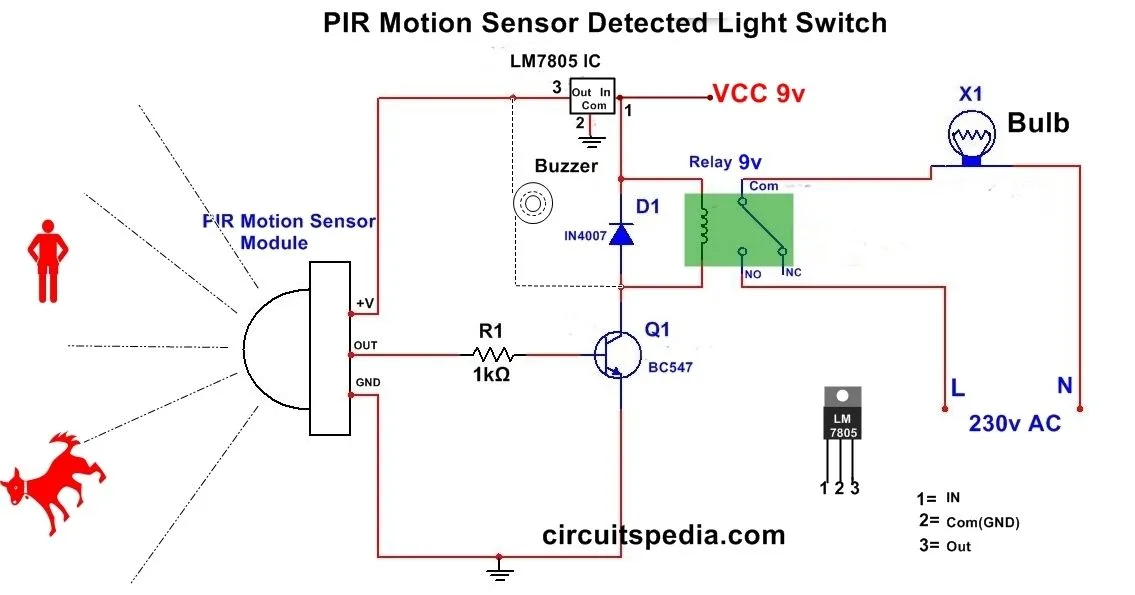
Image source: Web (Bing) / utpaqp.edu.pe (Web image (fair-use with source credit))
Radar detection is a third option in newer models. Radar sensors can detect through light rain and partial fog where PIR and optical systems struggle. The tradeoff is cost and power consumption, both of which matter in solar setups.
The bottom line is clear. PIR-only cameras produce more false alerts. AI-classified cameras filter out animals and vehicles, but accuracy depends on lighting, camera angle, and processing power.
A well-positioned AI solar camera outperforms a poorly placed PIR system every time.
Where Solar Camera Person Detection Breaks Down (and the Risks You're Actually Taking)
Even good solar cameras have detection blind spots. Each one is a real gap in your security, and you should know where they are before something happens.
| Failure Condition | What Happens | Impact on Detection |
|---|---|---|
| Extended cloudy weather | Solar panel charging drops significantly | Camera enters deep sleep, misses events |
| Extreme cold (below 32°F) | Lithium-ion battery capacity drops 20–40% | Reduced wake-up frequency and AI processing |
| PIR blind spots | Movement outside the 25–33 ft sensor range | Missed detections entirely |
| Tree branches / reflective surfaces | False heat signatures trigger the sensor | Unnecessary alerts drain battery |
| Low battery charge | Camera skips AI processing to save power | PIR-only alerts, no classification |
NREL solar irradiance data shows many regions receive 30 to 50 percent less solar energy on cloudy days. As of 2026, battery technology in solar cameras has improved, but the physics hasn't changed. Less sunlight means less power.
Less power means weaker detection.
Shadows, tree branches, and reflective surfaces create false positives constantly. PIR sensors respond to heat changes from any source, not just people. Wind moving curtains near windows or hot pavement can trigger the sensor repeatedly.
Extreme cold affects lithium-ion batteries directly. Published research confirms significant capacity loss at low temperatures. In northern winters, a solar camera that worked perfectly in October may fail by January.
Every one of these gaps creates real risk. A break-in that happens during a camera's sleep mode produces no recording, no alert, and no evidence. That's the exposure you're accepting when you don't understand these limits.
Getting the Most Reliable Person Detection from a Solar Camera
Solar camera performance isn't fixed at purchase. Installation choices and ongoing maintenance account for most of the variance in detection quality. Here's what our research shows matters most.
Position the solar panel correctly. Face it toward true south in the Northern Hemisphere, tilted 30 to 45 degrees depending on latitude. Even a 15-degree misalignment can reduce charging by 10 to 20 percent. Keep the panel clear of tree canopy and roof overhangs.
Aim the camera at a detection zone, not just a view. Point it so PIR coverage overlaps the path someone must take to reach your property. Sidewalks, driveways, and entry points matter more than wide open yards.
Configure detection zones in the app. Most modern solar cameras let you set specific detection zones. Narrow the zone to the area that matters most. This cuts false alerts and reduces unnecessary camera wake-ups that drain battery.
Test detection after installation. Walk through each zone at different times of day. Night testing matters most. Night vision and IR detection behave differently than daytime processing.
Adjust sensitivity until person detection is reliable in both conditions.
Monitor battery health regularly. Check the app's battery percentage weekly. If it drops below 30 percent without a clear weather cause, clean the solar panel surface or reposition it. Dust, pollen, and bird droppings reduce panel output by up to 25 percent.
Firmware updates matter more than you'd think. Manufacturer firmware releases regularly improve AI detection models and fix bugs. Enable automatic updates if your camera supports them. Stale firmware means you're running last year's detection logic.
Solar Camera Detection Accuracy: Real Numbers and What They Mean
Manufacturer claims and real-world results rarely match perfectly. Here's what the data actually shows.
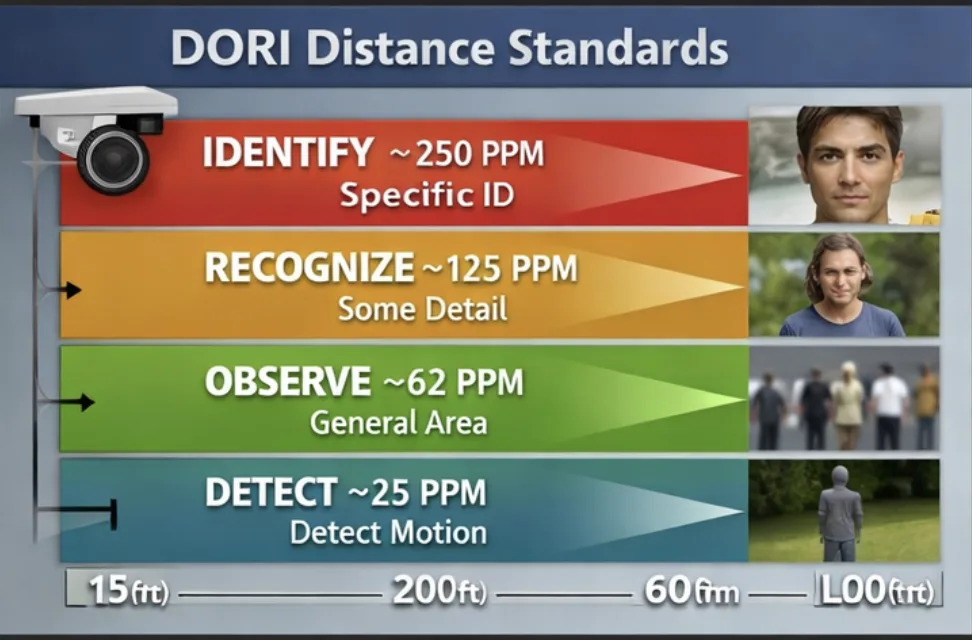
Image source: Bing (Web (fair-use with source credit))
| Detection Type | Claimed Accuracy | Real-World Accuracy | Battery Impact |
|---|---|---|---|
| PIR-only | Triggers on all motion | N/A (no classification) | Low power draw |
| AI person detection (cloud) | 95–99% | 80–90% | Higher, requires WiFi |
| AI person detection (on-device) | 95–99% | 75–88% | Moderate power draw |
| Radar + AI hybrid | 98%+ | 85–95% | Highest power draw |
Those real-world numbers come from aggregate user reviews and independent testing across major solar camera models. The drop from claimed to actual accuracy comes from lighting, weather, battery state, and camera placement. Every factor we covered earlier compounds here.
Detection range data tells a similar story. PIR sensors reliably detect movement at 25 to 33 feet in optimal conditions. At night, IR-assisted detection may extend further, but classification accuracy drops significantly beyond 40 feet.
Wireless signal quality affects cloud-dependent detection models directly. When WiFi drops, cameras with cloud AI processing fall back to PIR-only detection.
The FCC governs wireless device transmission standards, but detection performance depends on your local network conditions. UL safety certification covers battery performance under load. It doesn't guarantee that full AI detection capability is maintained at every charge level.
Cameras may throttle AI processing when battery drops below certain thresholds.
Battery state is the hidden variable. A fully charged camera running AI detection on-device uses roughly 2 to 5 watts during active processing. At partial charge, many cameras throttle AI processing and fall back to PIR-only mode.
Your camera might look functional while running a degraded detection profile.
Frequently Asked Questions
Do solar security cameras work at night?
Yes, most solar security cameras include infrared LED night vision and continue detecting people after dark. Detection accuracy drops without full AI processing, which depends on battery charge. IR night vision typically covers 25 to 50 feet depending on LED count and power budget.
Do solar security cameras need WiFi?
Many models require WiFi for cloud AI processing and remote alerts. Cameras with on-board AI chips and local microSD storage work without continuous WiFi. Cloud-dependent models lose person detection entirely if the internet connection drops.
How long do solar security cameras last on battery?
Most solar cameras run 2 to 4 days without direct sunlight on a full charge. In continuous cloudy weather, battery drain accelerates significantly. Higher capacity batteries (8,000 to 10,000 mAh) extend off-grid runtime compared to budget models.
Do solar security cameras record continuously?
No, most solar cameras record only when motion is detected to conserve battery. Continuous recording requires a larger solar panel and battery system than most consumer models include. Event-triggered recording is the standard approach for solar-powered systems.
Can solar security cameras detect people in fog or heavy rain?
PIR sensors struggle in fog and heavy rain because thermal signatures diffuse through moisture. Radar-enhanced solar cameras handle these conditions better than PIR-only models. Cloud cover also reduces charging, compounding the detection problem.
Do solar security cameras without subscriptions still detect people?
Yes, person detection works without a cloud subscription on most modern models. On-device AI processing and local microSD storage handle detection and recording independently. Cloud subscriptions typically add remote access features, not the core detection capability.
Final Verdict: Can Solar Security Cameras Be Trusted to Detect People?
Solar security cameras can detect people, and in many cases they do it well. A properly installed solar camera with AI person detection and a fully charged battery provides reliable coverage in good weather and adequate lighting. For daytime monitoring of driveways, entry points, and outdoor equipment, the technology works as advertised.
But trust has conditions. Cloudy regions, extreme cold, and extended low-battery states degrade detection in ways that product pages rarely explain. PIR-only cameras without AI classification produce false alerts that make the system useless in practice.
Even well-equipped solar cameras miss events during sleep modes and power-saving states.
The honest assessment is this. Solar security cameras are a solid option for properties where hardwired installation isn't practical. They're less reliable than hardwired systems in every metric: battery runtime, detection consistency, and recording continuity.
If your safety depends on reliable detection 24/7, pair a solar camera with additional security measures.
For what they are, solar security cameras with AI detection represent real progress. Go in with realistic expectations about where they work, where they don't, and what to do when conditions turn against them.