How Short Should a Lawn Mower Cut Grass?
How short should a lawn mower cut grass? That depends on what kind of grass you're growing, what season it is, and how healthy your lawn is right now. There's no single magic number that works for every yard in America.
Get the height wrong and you'll deal with weeds, brown patches, and a lawn that never quite looks right.
Most warm-season grasses like Bermuda thrive at 1 to 2 inches, while cool-season grasses like Kentucky bluegrass need 2.5 to 3.5 inches to stay healthy. The National Turfgrass Evaluation Program has tested these varieties across hundreds of sites to confirm those ranges. Understanding which grass you have and what conditions it faces will set you up to make the right call every time you mow.
Quick Answer
How short should a lawn mower cut grass? Grass type sets the height. Bermuda grass needs 1 to 2 inches.
Kentucky bluegrass needs 2.5 to 3.5 inches. Always follow the one-third rule when mowing. Mowing too short is the most common lawn mistake.
What's the Right Cutting Height for Your Lawn? It Depends on These 5 Things
There's no universal answer, and that's not very helpful. Five main factors decide the right number for your lawn. They all work together, and getting each one right makes a bigger difference than you'd think.
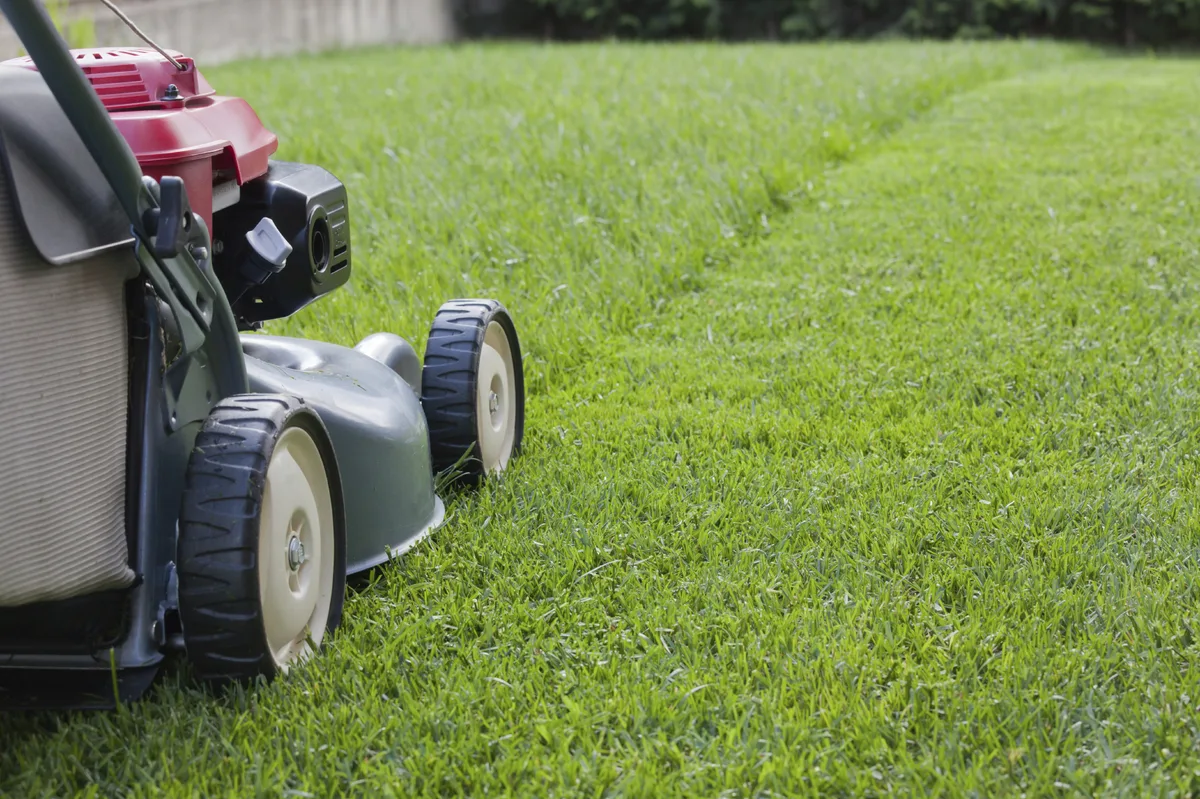
Image source: Web (Bing) / dxoddxeqc.blob.core.windows.net (Web image (fair-use with source credit))
1. Your grass type. Warm-season grasses like Bermuda and Zoysia tolerate shorter cuts. Cool-season grasses like Kentucky bluegrass and tall fescue need more height to protect their crowns.
If you're not sure what you have, a local cooperative extension service can identify it from a sample, usually for free.
2. The season. During peak spring growth, you can mow a bit shorter. When summer heat stresses your lawn, raise the deck.
Cool-season lawns in particular suffer when mowed short in July.
3. Your lawn's health. A thick, dense lawn can handle a tighter cut. A thin or damaged lawn should be mowed higher to reduce stress and help it recover.
4. How often you mow. The one-third rule ties into this. If you mow every 5 to 7 days during growing season, you'll cut less each time.
Waiting longer means more material coming off at once, so a taller setting protects the grass.
5. Sunlight. Shade-grown grass needs extra height. In shaded areas, taller blades capture more light.
A shady lawn mowed short will thin out faster than a sunny one.
If you've ever set your mower to one number and hoped for the best, that's the most common mistake. Match the height to your grass type first. Then adjust for season and lawn condition.
The One-Third Rule: The Only Mowing Rule That Actually Matters
The one-third rule is simple. Never remove more than one-third of the grass blade's total height in a single mow. That's it.
Why does this matter so much? Grass blades are essentially solar panels. They capture sunlight and turn it into energy through photosynthesis.
Chop off too much at once and you strip that machinery down. The grass has to redirect energy to regrowing leaves instead of developing roots.
Here's what that looks like in practice:
| Current Grass Height | Maximum Safe Cut | Mower Setting Target |
|---|---|---|
| 1.5 inches | Remove 0.5 inches | Cut to 1 inch |
| 3 inches | Remove 1 inch | Cut to 2 inches |
| 4.5 inches | Remove 1.5 inches | Cut to 3 inches |
| 6 inches | Remove 2 inches | Cut to 4 inches |
If your lawn has grown tall and you missed a few weeks, don't try to catch up in one pass. Set the mower taller for the first cut. Drop it gradually over the following 1 to 2 weeks until you reach your target height.
This matters most in early spring. Cool-season grasses like Kentucky bluegrass and tall fescue can add 3 to 4 inches per week in April and May. Homeowners who wait until it's "perfect mowing weather" often find grass that's already 6 inches tall.
Mowing it back to 2.5 inches in one shot sets the lawn back badly.
Follow the one-third rule and your grass will stay thicker, greener, and far more resistant to weeds and drought stress.
Your Grass Type Decides Your Cut Height (Here's the Full Guide)
Your grass type is the single biggest factor in choosing cutting height. Different grasses grow differently, have different crown positions, and tolerate different stress levels.
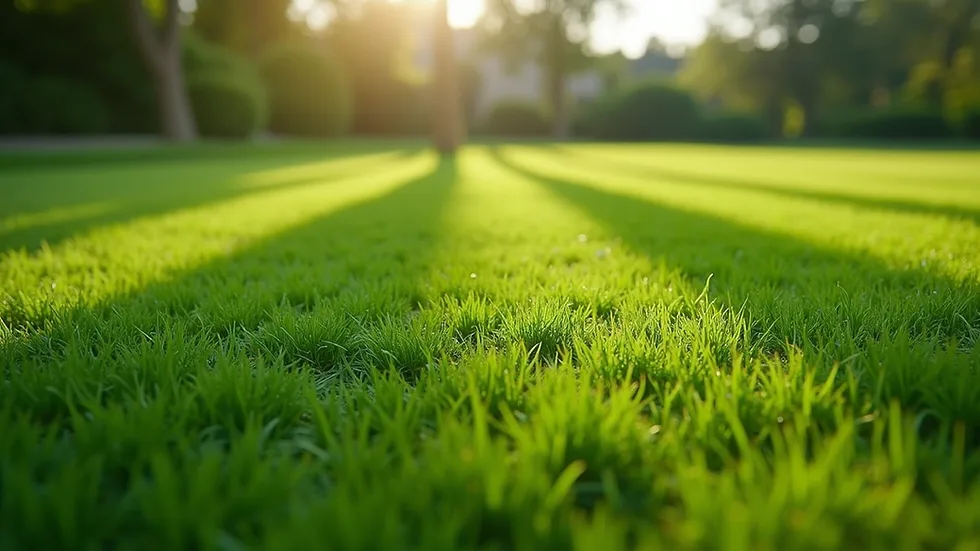
Image source: Web (Bing) / perfectgreendfw.com (Web image (fair-use with source credit))
Warm-Season Grasses: Bermuda, Zoysia, St. Augustine & Centipede
Warm-season grasses grow actively from late spring through early fall. They prefer shorter cuts and handle heat well.
| Grass Type | Mowing Height Range | Best For |
|---|---|---|
| Bermuda grass | 1 to 2 inches | Full sun, Southern climates |
| Zoysia grass | 2 to 3 inches | Sun to partial shade, warm zones |
| St. Augustine grass | 3 to 4 inches | Shade-tolerant Southern lawns |
| Centipede grass | 1.5 to 2.5 inches | Low-maintenance acidic soils |
Bermuda grass is the most aggressive grower in this group. It thrives when mowed at 1 to 1.5 inches regularly. Many homeowners with Bermuda lawns mow every 5 to 7 days during peak season to keep it dense and even.
Zoysia benefits from a higher cut, at 2.5 to 3 inches, which keeps it thick with a deeper root system.
Cool-Season Grasses: Kentucky Bluegrass, Fescue & Rye
Cool-season grasses grow most actively in spring and fall. They need taller cuts to survive summer stress.
| Grass Type | Mowing Height Range | Best For |
|---|---|---|
| Kentucky bluegrass | 2.5 to 3.5 inches | Northern climates, rich soils |
| Tall fescue | 3 to 4 inches | Transitional zones, drought areas |
| Fine fescue | 2.5 to 3.5 inches | Shady areas, low-input lawns |
| Perennial ryegrass | 2.5 to 3.5 inches | Overseeding, quick germination |
Fine fescue doesn't tolerate close mowing. Keep it at 3 inches or above. Tall fescue needs a taller cut than bluegrass to protect its deeper root zone.
If your lawn is a mix, and most are, go with the most sensitive grass type in the blend. That usually means choosing the taller recommendation. When in doubt, mow higher rather than lower.
Grass recovers from a too-high cut much faster than from a too-short one.
How Season, Weather, and Lawn Health Change the Answer
Your grass type gives you a baseline height. Season and weather tell you when to adjust up or down.
Spring. Early spring, around late March to mid-April, is when you ease your mower down to the target height for your grass type. Start high and drop gradually. By May, most cool-season lawns should be at their ideal mowing height.
Summer heat. When daytime temperatures regularly hit 85 to 95 degrees Fahrenheit, raise your mower by 1 inch. Taller grass shades the soil, reduces moisture loss, and keeps the crown, the growth point at the base of each blade, cooler. This is especially critical for Kentucky bluegrass and fine fescue, which go dormant in extreme heat.
Fall. Fall is the best time of year for most lawns. You can drop the mower back to standard height and mow more frequently. Cool-season grasses like ryegrass and fescue grow vigorously in September and October.
Wet conditions. Wet grass tears instead of cutting cleanly. Ragged blade tips invite disease. If the lawn is saturated, wait until it dries.
Mowing wet grass also compacts the soil, especially with heavy riding mowers.
Lawn stress. If your lawn looks thin, brown, or patchy, mow higher than usual for 2 to 3 weeks. A stressed lawn needs every bit of blade area it has for photosynthesis.
Manufacturer specifications on most residential mowers as of 2026 list deck height ranges from 0.75 to 5.25 inches. You've got plenty of adjustment room in either direction.
A Simple Decision Tree for Setting Your Mower Height
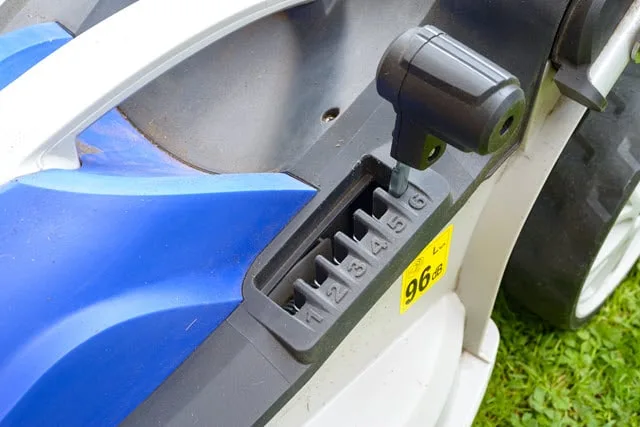
Image source: Web (Bing) / lawnchick.com (Web image (fair-use with source credit))
Here's how to walk through the decision every time you mow.
Step 1: Identify your grass type. Pull a sample and check with a local cooperative extension service. Most will ID it for free or a small fee.
Step 2: Check the current grass height. Measure a few blades in different spots. Don't guess.
Step 3: Find the one-third limit. Divide the current height by 3. That's the most you should cut off in this mow.
Step 4: Set your mower to the target height. Use this decision logic:
- If current height is at target: mow as usual
- If current height is slightly above target: cut to target in one pass
- If current height is 1.5 times target or more: cut to two-thirds of the way down, then reduce next week
- If the lawn is stressed, diseased, or newly seeded: mow 1 inch higher than normal for 2 to 3 weeks
Step 5: Adjust for conditions. If it's hot and dry, add 1 inch. If it's the rainy growing season and the grass is lush, you can cut to the low end of your range.
Step 6: Inspect after mowing. Walk the lawn and check for unevenness. If you see torn or ragged blade tips, your blades need sharpening, not a height change.
That's the full workflow. Get these six steps right and you'll have a healthier lawn than most yards in your neighborhood.
6 Mowing Mistakes That Kill Healthy Grass
Even experienced homeowners make these. Catching them early saves months of lawn recovery time.
Cutting below the crown height. Every grass blade grows from a crown, the thick white stem at the base. Cut below it and you kill the plant. Bermuda grass crowns sit lower, so it tolerates 1-inch cuts.
Kentucky bluegrass crowns sit higher, so going below 2 inches is risky.
Ignoring the one-third rule when you're in a hurry. Scalping is the most damaging thing you can do to a lawn. It opens the soil to sun, weeds, and disease all at once.
Using dull blades. Torn grass tips turn brown within days. Most extension services recommend sharpening blades every 25 to 30 hours of mowing time. That's roughly once a month for a typical homeowner.
Mowing wet grass. Wet blades tear instead of cut cleanly. Soil compaction from riding mowers gets worse in wet conditions too. Wait a day after rain whenever possible.
Keeping a mower too low all season. This is especially tempting with Bermuda lawns. A lower cut looks cleaner, but cutting at the absolute bottom of the range all summer stresses the grass. Alternate between the low and high end of your range based on weather.
Skipping a pre-mow height check. Two minutes with a ruler saves you from a bad cut. Check the current height before every mow, especially after weeks of missed cutting. Set the deck based on what you measure, not what you assume.
Fix any of these and your lawn will show visible improvement within two to three mowing cycles.
Frequently Asked Questions About Lawn Cutting Height
What height should I cut Bermuda grass?
Bermuda grass mows best at 1 to 2 inches during active growth. Many homeowners cut it at 1.5 inches during peak season and raise it to 2 inches during summer stress. Never cut below 1 inch, as the crown will be exposed to heat damage and weed invasion.
How short can I cut Kentucky bluegrass without killing it?
You can safely cut Kentucky bluegrass at 2.5 to 3 inches. Going below 2 inches risks crown damage and sets the lawn up for weed takeover. In drought conditions, raise it to 3.5 inches to protect the root zone.
Should I cut grass higher in summer?
Yes. Raise your mower by 1 inch when temperatures regularly hit 85 degrees Fahrenheit or above. Taller grass shades the soil, reduces water loss, and keeps the crown cooler.
This matters most for cool-season grasses like bluegrass and fine fescue.
How often should I mow to maintain the right height?
Mow every 5 to 7 days during spring and early fall growth. Every 7 to 10 days works for Bermuda in summer. Follow the one-third rule at all times, adjusting frequency so you're never removing more than one-third of the blade height in a single pass.
What's the best cutting height for a new lawn?
Wait until new grass reaches 3 to 4 inches tall before the first mow. Set the mower to cut only the top third. Most new lawns are cut at 2.5 to 3 inches on the first pass.
Then lower gradually to your target height over two to three weeks.
Does mower type affect cutting height?
Reel mowers cut lowest, usually between 0.5 and 2 inches. Rotary mowers handle a wider range, typically 0.75 to 5.25 inches. Zero-turn and riding mowers adjust the entire deck height electronically.
Choose a mower whose height range matches your grass type's needs.