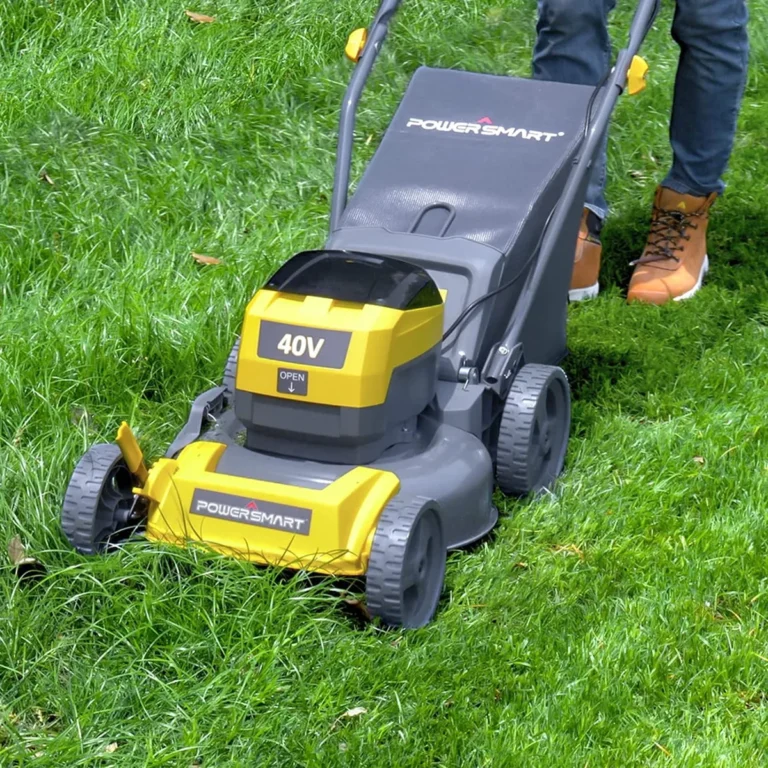
Can You Use a Lawn Mower on a Hill?
Can you use a lawn mower on a hill? Yes, you can. Whether you should depends on how steep the slope is and what type of mower you're using.
Getting either wrong can lead to a rollover, and that's a serious risk.
The Consumer Product Safety Commission reports that lawn mower incidents send thousands of people to emergency rooms each year. Riding mower rollovers rank among the most serious causes. This isn't a question to gloss over.
Specific numbers and safety rules make the difference between a smooth mow and a disaster.
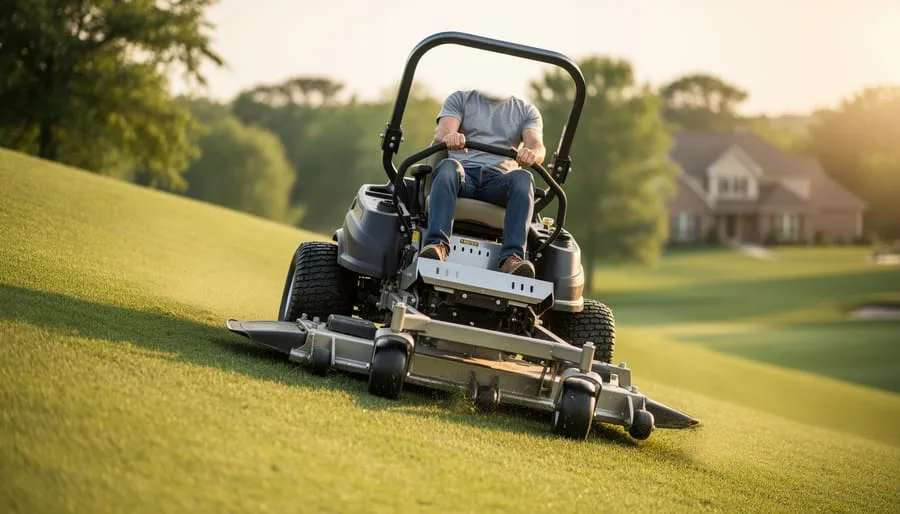
Image source: Bing (Web (fair-use with source credit))
Quick Answer
Yes, you can use a lawn mower on a hill. That's safe only if the slope stays under 15 degrees. It's the standard limit for most residential riding mowers.
Steeper hills call for walk-behind mowers or professional help. Always mow across the slope, never straight up or down.
Can You Really Mow a Hill with a Lawn Mower? The Honest Answer
The honest answer is: it depends. A gentle 5% grade works fine with almost any mower. A 20% slope is a serious hazard for ride-on equipment.
Most residential riding lawn tractors and zero-turn mowers are rated for slopes up to 15 degrees. That's about a 27% grade. As of 2026, most major manufacturers still hold that line.
Some commercial models push slightly higher, but the safety margin gets thin fast.
Walk-behind mowers and self-propelled mowers handle steeper grades better. The operator stays on foot, which means more control and lower rollover risk. Push reel mowers work on hills too, but they demand real physical effort.
The stakes are real. According to the Consumer Product Safety Commission, lawn mowers cause thousands of injuries annually in the United States. Many of those incidents happen on hilly or uneven terrain.
The key question isn't just whether it can be done. It's whether it can be done safely. Here's what different mower types can realistically handle:
| Mower Type | Max Safe Slope | Operator Risk |
|---|---|---|
| Push reel mower | 25-35% | Low |
| Self-propelled walk-behind | 20-30% | Moderate |
| Riding lawn tractor | 15% (27% grade) | High above limit |
| Zero-turn mower | 10-15% | Very high above limit |
| Commercial stand-on mower | 10-15% | Very high |
Why Slope Steepness Is the Number That Decides Everything
Slope steepness is the single biggest factor in whether you can safely mow a hill. Everything else follows from that one measurement.
Slope is usually expressed as a percentage or in degrees. A 15-degree slope equals roughly a 27% grade. You can measure it with a smartphone inclinometer app or a physical angle finder.
It takes 30 seconds and removes all guesswork.
Here's the practical breakdown:
- 1-5% grade: Any mower works. No real concerns.
- 5-10% grade: Most mowers handle it. Watch your speed.
- 10-15% grade: Only if your equipment is rated for it.
- 15-20% grade: Walk-behind only. Riding mowers get dangerous.
- 20%+ grade: Consider alternatives or hire help.
Per Penn State Extension guidance, wet turf drops traction significantly on slopes. A grade that's fine on dry grass can become slippery after rain. Always check ground conditions before you commit to mowing.
The other thing to know about steepness: it amplifies every other problem. Stalling gets worse. Fuel sloshing becomes a real issue.
The mower's center of gravity shifts, and rollover risk climbs fast past the manufacturer's rated limit.
Choosing the Right Mower Type for Your Slope
If your slope is under 10%, almost any mower works. The decision gets trickier between 10% and 15%. Above 15%, you need to seriously rethink your equipment.
Here's how to match the mower to the grade:
For gentle slopes (under 10%): Any mower type works. Riding mowers, zero-turns, self-propelled walk-behinds, and even push reel mowers are all fine. You're in the no-worries zone.
For moderate slopes (10-15%): Self-propelled walk-behind mowers are your safest bet. They give you steady traction and you stay on foot. Riding mowers can work here if rated for 15 degrees, but don't push it.
For steep slopes (15-20%): Walk-behind mowers with good traction are the primary option. Consider a self-propelled model with aggressive tire tread. Riding mowers are past their comfort zone.
For very steep slopes (20%+): Switch approaches entirely. Use a string trimmer on the steepest sections or hire a professional crew. Tracked mowers exist for this niche, but they're expensive.
The best advice from landscape professionals is simple. Match the mower to the terrain, not the other way around.
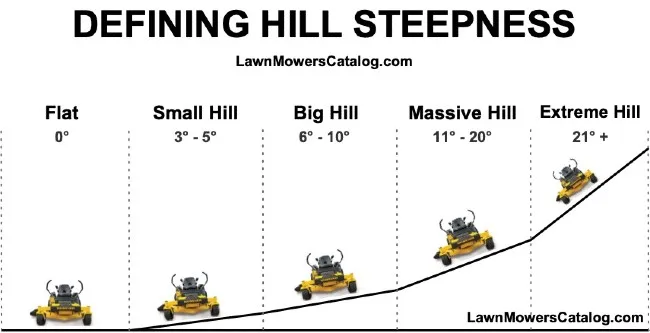
Image source: Bing (Web (fair-use with source credit))
Step-by-Step: How to Mow a Hill Safely
If you've got a slope that falls within your mower's rated range, here's how to handle it without getting hurt or damaging your turf.
Step 1: Measure the slope first. Download a free inclinometer app or use a physical angle finder. Compare the reading to your mower's rating in the operator manual. If the slope exceeds the rating, stop here.
Step 2: Check ground conditions. Wet grass, loose soil, and soft ground all reduce traction on slopes. Don't mow if the ground is saturated or if it rained within the last 24 hours.
Step 3: Set up your mower on flat ground. Raise the ROPS (Roll-Over Protection Structure) on a riding mower. Put on your seatbelt. Adjust cutting height one notch higher than normal for slopes.
Step 4: Start the mower on level terrain. Never start a mower parked on a slope. Oil can seep into the cylinder and cause damage. Move to flat ground first.
Step 5: Mow across the slope, not up and down. This is the single most important technique. It keeps the mower's center of gravity low and stable. Mowing straight up or down a hill is the leading cause of riding mower rollovers.
Step 6: Keep speed low. Go slow. Most manufacturers recommend 2-3 mph on slopes. Rushing increases the chance of sliding, tipping, or hitting an obstacle you didn't see.
Step 7: Work downhill first if needed. If you need to change direction, do it at the bottom of the slope on flat ground. Never turn or stop on the steepest part of the hill.
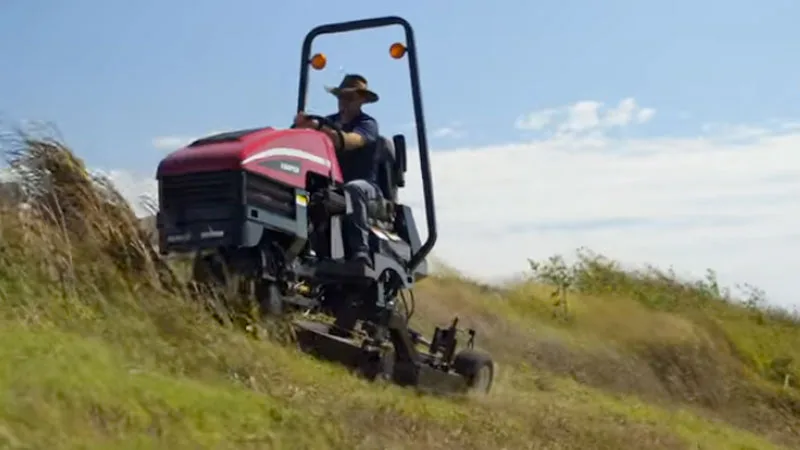
Image source: Web (Bing) / harperturfequipment.com (Web image (fair-use with source credit))
Slope Mowing Mistakes That Cause Rollovers and Turf Damage
Most mowing accidents on hills come down to a handful of preventable mistakes. Avoiding them dramatically reduces your risk.
Mowing straight up or down the slope. This is the number one killer. It shifts the mower's weight entirely uphill or downhill. Riding mowers are especially vulnerable because the operator can't correct fast enough once a slide starts.
Ignoring the slope rating. Every mower has a manufacturer-specified slope limit. Exceeding it voids warranty protections and dramatically increases rollover risk. Your operator manual has the exact number.
Find it.
Mowing on wet ground. Wet turf can lose 40-60% of its traction compared to dry grass. What feels like a mild slope on a dry day becomes dangerous when the ground is saturated.
Not wearing a seatbelt or ROPS. Riding mowers equipped with a Roll-Over Protection Structure require the seatbelt to work properly. Leaving ROPS down or unbuckling the belt removes your primary protection in a tip-over.
Standing on the uphill side of a riding mower. When mowing across a slope, stay seated in the center. Shifting your weight uphill or downhill can throw off the balance point.
Starting a mower on a slope. Oil and fuel shift when the engine starts on an incline. This can flood the engine or cause premature wear. Always start on flat ground.
Letting the mower idle on a slope. If you need to stop, cut the engine and move to flat ground first. Don't leave the mower running and parked on an incline.
When a Lawn Mower Isn't the Right Call
Sometimes the honest answer is to put the mower away. Knowing when to stop is just as important as knowing how to operate safely.
When your slope exceeds 20%. Most residential equipment becomes genuinely unsafe at this grade. The risk of rollover climbs sharply, and no amount of technique fully compensates. Per OSHA guidance for landscape workers, operators should never operate riding equipment beyond manufacturer-rated slopes.
When the ground is soft or waterlogged. Even a moderate slope turns dangerous when the soil is saturated. Wheels sink, traction drops, and the mower can slide sideways in ways the operator can't recover from. Wait for the ground to firm up.
When you have physical limitations. Balance issues, joint pain, or limited mobility make walk-behind mowing on slopes risky. Self-propelled mowers help, but they don't solve every problem.
Here's what works instead:
- String trimmer or brush cutter for the steepest sections
- A tracked all-terrain mower for slopes in the 20-35% range
- Hiring a professional landscape crew for steep or dangerous terrain
- Using a riding mower with a tow-behind collection system from the bottom of the hill
- Redesigning the slope over time with terracing or planting ground cover
Commercial stand-on mowers with advanced traction systems can handle some of these grades, but they're expensive and still carry real risk. The safest option when doubt exists is to call in someone with the right equipment and experience.
Don't let overgrown grass on a steep bank push you into a decision you shouldn't make. Fire risk from unmaintained dry slopes is a legitimate concern. Get help if the job is beyond your equipment's rating.
Frequently Asked Questions
How steep can you mow with a riding lawn mower?
Most residential riding lawn tractors are rated for slopes up to 15 degrees, which equals about a 27% grade. Some models handle slightly steeper grades, but the manufacturer's rating is your hard limit. Exceeding it increases rollover risk significantly.
Check your operator manual for the exact specification.
Is it safe to mow a hill with a zero-turn mower?
Zero-turn mowers are the least stable mower type on slopes. Most are rated for 10 to 15 degrees. They rely on independent rear wheel steering, which can cause the machine to slide or spin on inclines.
Stick to gentle slopes with zero-turns, or use a different mower type on steeper terrain.
What is the safest way to mow a steep hill?
Mow across the slope rather than straight up or down. Keep your speed low, around 2 to 3 mph. Raise your cutting height one notch to reduce strain on the mower.
Work from the top of the hill downward if the terrain allows it.
Can you start a lawn mower on a hill?
No, you shouldn't. When the mower is parked on an incline, oil can seep into the engine cylinder. Fuel can also slosh into the carburetor.
Both cause hard starts or engine damage. Always move the mower to flat ground before starting it.
How do you measure the slope of your yard?
Download a free inclinometer app on your smartphone or use a physical angle finder tool. Place the device on the ground at the steepest point of the slope. The reading gives you the angle in degrees or the grade percentage.
Compare it to your mower's rating before you start mowing.
What should you do if a riding mower tips on a hill?
Stay seated if possible and hold the wheel. Don't jump off during a tip-over. Once the mower stops, assess for injuries before getting up.
Shut the engine off immediately and inspect the equipment before attempting to restart it. Seek medical attention if you hit your head or feel any pain.