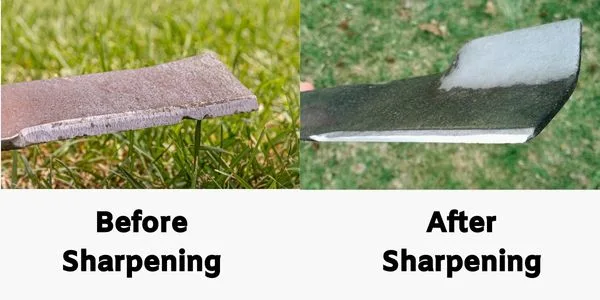
Why Is My Lawn Mower Leaving Grass Behind?
Why is my lawn mower leaving grass behind? You've just finished mowing, and the lawn looks worse than before. Rows of uncut grass stretch across the yard, and the mower seems to fight every pass.
This is one of the most common complaints among homeowners, and the cause is almost always fixable.
Manufacturer specifications for most residential lawn mowers recommend blade sharpening every 25 to 30 hours of use. A dull blade loses cutting efficiency well before that point. The result is ragged, torn grass instead of a clean cut.
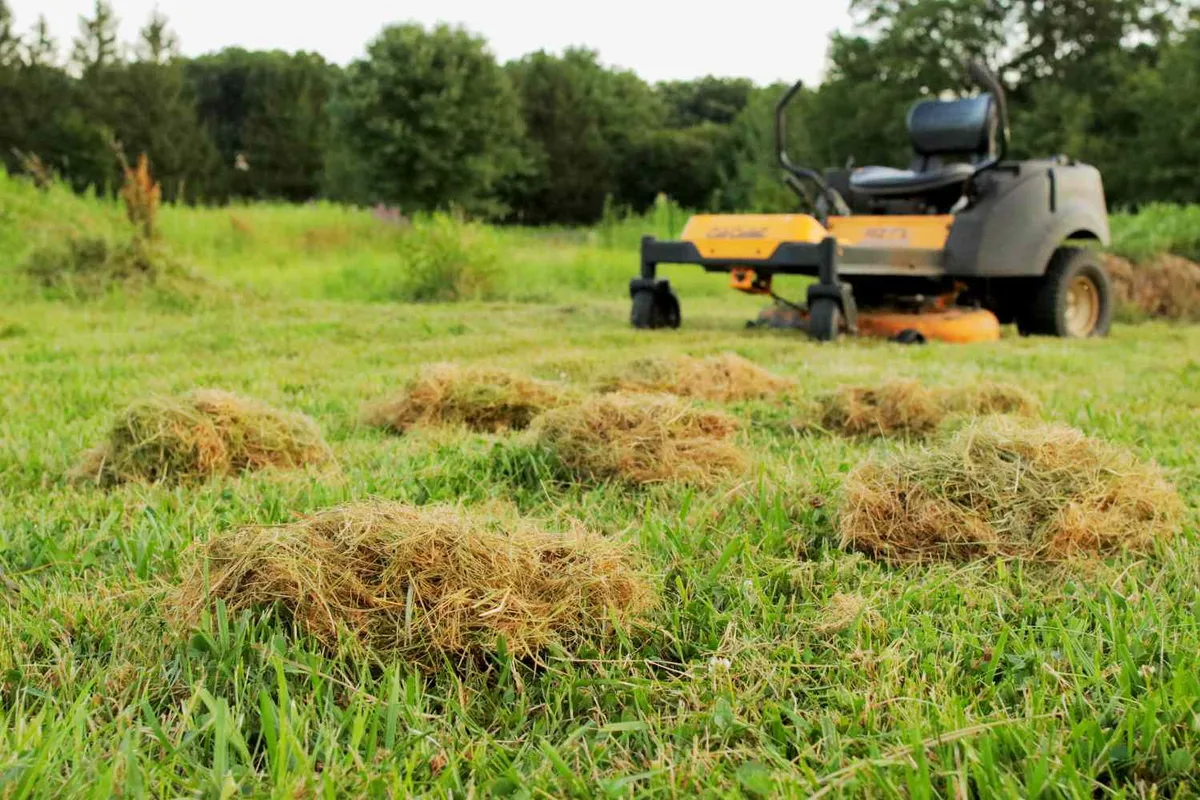
Image source: Bing (Web (fair-use with source credit))
Quick Answer
Your lawn mower leaves grass behind when the blade is dull. Bent or loose blades also cause missed patches. Wet grass and a clogged deck make the problem worse.
Sharpen or replace the blade and adjust your cutting height for the conditions.
How a Lawn Mower Blade Actually Cuts Grass (And What Makes It Fail)
A rotary blade spins at high speed and slices grass fibers with a sharp trailing edge. On most residential walk-behind mowers, blade speed runs between 3,000 and 3,600 RPM. The spinning blade also creates airflow inside the deck that lifts grass into its path.
When the blade edge is sharp, it cuts grass cleanly in a single pass. When it's dull, it tears and shreds the fibers instead. Torn grass browns faster and grows back unevenly.
That's why blade sharpness matters so much.
Blade type affects airflow and cut quality too. Here's how the three most common designs compare:
| Blade Type | Best For | Cut Quality | Grass Handling |
|---|---|---|---|
| Standard / high-lift | General mowing, bagging | Clean, consistent cut | Lifts grass for discharge or bagging |
| Mulching blade | Mulching without a bag | Shreds clippings into fine pieces | Keeps clippings under the deck |
| 3-in-1 blade | Versatile mowing | Good across conditions | Mulches, bags, or side discharges |
Per Briggs & Stratton manufacturer documentation, using the wrong blade type can cause clumping and poor discharge even when the blade is sharp. Match the blade to your mowing style.
Start Here: 3 Questions That Narrow Down the Real Problem
Before reaching for a wrench, answer three quick questions. These narrow down the cause fast.
What type of mower do you have?
Your mower type changes where the problem likely lives. If you've got a push mower, the problem is usually blade sharpness, cutting height, or grass conditions. For a zero-turn or lawn tractor, look at blade speed, deck clearance, or discharge chute blockage.
Reel mowers and robotic mowers have their own specific failure modes.
What does the grass look like after mowing?
The way the grass looks after mowing tells you the exact cause. Torn or shredded grass points directly to a dull blade. Clumps left on the lawn suggest the mulching or bagging system isn't working.
Clean cuts in some areas but missed patches in others usually mean uneven cutting height or uneven terrain.
What were the conditions when you mowed?
Wet or overgrown conditions are the biggest red flags. If you cut wet grass, you'll get clumping and poor discharge almost every time. If the lawn was overgrown from skipping a week or two, a single pass isn't enough.
Tall grass needs a two-pass mow, starting with a higher cutting setting.
The Decision Guide: Match Your Problem to the Right Fix
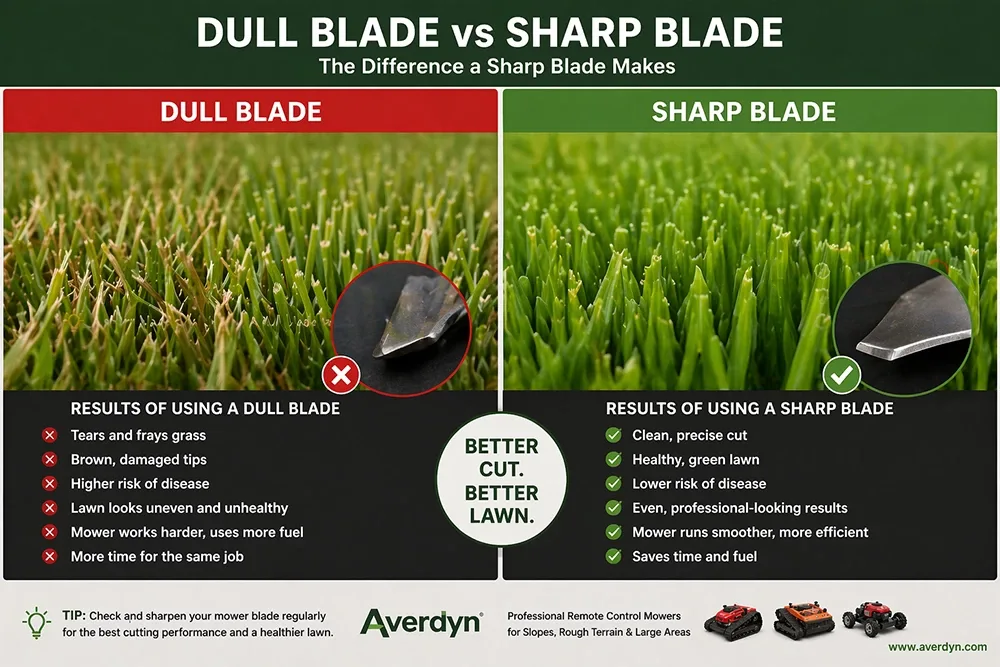
Image source: Bing (Web (fair-use with source credit))
Once you've answered the three questions above, follow this decision guide:
| Symptom | Likely Cause | Best Fix |
|---|---|---|
| Torn, shredded grass | Dull or nicked blade | Sharpen or replace the blade |
| Clumps under the deck | Clogged deck or wrong blade type | Clean the deck, check blade style |
| Missed patches on flat ground | Blade too low or bent | Adjust deck height, inspect blade |
| Engine bogging down in thick grass | Clogged air filter or spark plug | Clean or replace air filter, check spark plug |
| Grass left in rows on hills | Deck lift-off on slopes | Mow across slopes, raise deck height |
| No discharge or bagging | Blocked discharge chute | Clear chute, check bagger attachment |
| Vibration or blade wobble | Unbalanced or loose blade | Rebalance or retighten blade bolt |
A University of Minnesota Extension turfgrass guide recommends sharpening blades at least twice per season for most residential mowers. Follow manufacturer torque specs when reinstalling, typically 38 to 50 ft-lbs.
Mower Blade Maintenance: Keeping a Clean Cut Every Time
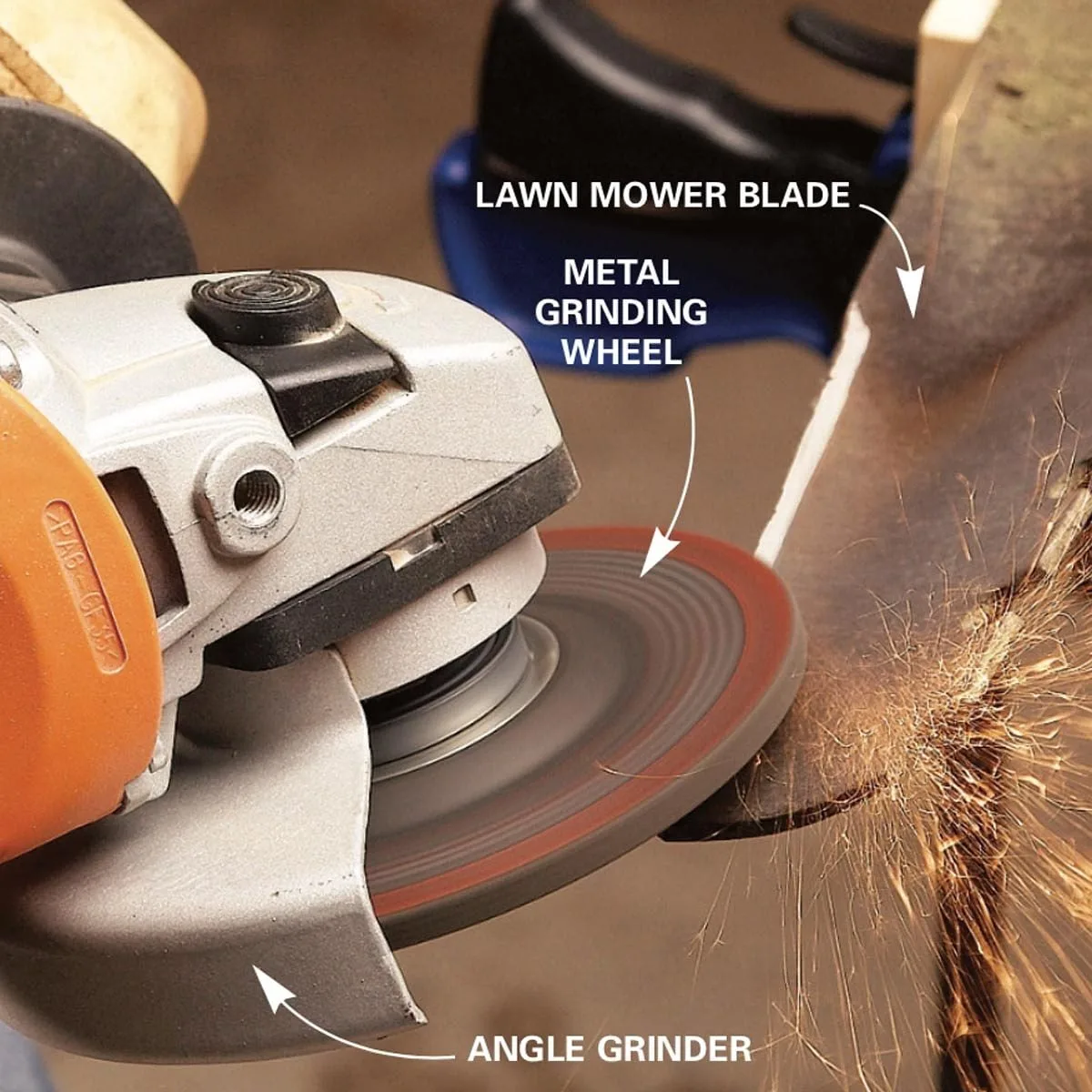
Image source: Bing (Web (fair-use with source credit))
Regular blade maintenance prevents most mowing problems before they start. Here's a practical schedule as of 2026:
| Task | Frequency | What To Do |
|---|---|---|
| Sharpen blade | Every 25-30 hours or 2-3 times per season | Grind edge on a file or bench grinder |
| Balance blade | After every sharpening | Balance on a nail to check for wobble |
| Replace blade | Every 2-3 years or when severely worn | Order correct OEM or aftermarket blade |
| Clean deck | Monthly during mowing season | Scrape under-deck grass buildup |
| Check air filter | Every 50 hours or monthly | Replace paper filter if dirty |
| Adjust cutting height | Start and end of each mowing session | Set 2.5-3.5 inches for most lawns |
When you sharpen a blade, always disconnect the spark plug wire first. Use a blade lock or clamp to hold the blade in place while you work. Wear safety glasses, and check for nicks or bends before reinstalling.
After reinstalling, torque the blade bolt to manufacturer specs. Briggs & Stratton lists 48 ft-lbs for many residential models. Check your owner's manual for your specific value.
Mistakes That Make the Problem Worse
Even after fixing the blade, certain habits keep the problem alive:
- Mowing wet grass. Water makes grass heavier and harder to cut. The blade gets clogged, and clumps stick to everything. Always let the lawn dry first.
- Setting the deck too low. Cutting below 2 inches stresses the grass and makes the blade work harder. Stick to 2.5 to 3.5 inches for most lawns.
- Mowing too fast. Running the mower quickly means the blade doesn't have time to make a clean cut. Slow down, especially in thick areas.
- Ignoring the air filter. A dirty filter starves the engine of airflow. The engine loses power, and the blade slows down under load.
- Using the wrong blade. A high-lift blade works well for bagging but performs poorly for mulching. Match the blade to your mowing style.
- Forgetting the spark plug. A fouled spark plug causes uneven RPMs. The blade speed drops, and cutting quality falls off.
- Skipping blade balancing. An unbalanced blade vibrates and causes uneven cuts. Rebalance after every sharpening.
Fix these habits and the blade work you did will actually stick.
Frequently Asked Questions
How often should I sharpen my lawn mower blade?
Most manufacturers recommend sharpening every 25 to 30 hours of mowing, or two to three times per season. A dull blade loses cutting efficiency faster than you'd expect. If your lawn is large or the grass is tough, sharpen more frequently to maintain a clean cut.
Can I sharpen a lawn mower blade myself?
Yes, you can sharpen a blade at home with a hand file or bench grinder. The key is holding the original cutting angle, usually 30 to 45 degrees. Disconnect the spark plug wire first, clamp the blade securely, and wear safety glasses.
Balance the blade after sharpening by testing it on a nail.
Why does my mower cut but leave clumps behind?
Clumping usually means the grass is too wet, the deck is clogged, or you're using the wrong blade type. Clear the deck after each mow and avoid cutting wet grass whenever possible. A mulching blade handles tall grass better for recycling clippings back into the lawn.
What cutting height should I use for my lawn?
Most warm-season grasses like Bermuda and Zoysia do well at 2 to 3 inches. Cool-season grasses like fescue and bluegrass need 3 to 4 inches. Cutting too low stresses the grass and exposes roots.
Set your deck height at the start of the season based on your grass type.
Does blade type affect cutting quality?
Yes, blade design matters more than most people think. A standard high-lift blade works well for general mowing and bagging. A mulching blade shreds clippings into fine pieces for recycling.
Match the blade to your mowing style to get the best results.
How do I know if my blade is bent?
Lay the blade on a flat surface and check if both ends sit evenly. Any visible warp or tilt means the blade is bent. Replace it immediately.
A bent blade causes vibration and leaves ragged, uneven cuts across the lawn.
Your Quick Action Plan
If your lawn mower is leaving grass behind, work through these steps in order:
Check blade sharpness. Remove the blade and inspect the edge. If it's nicked or dull, sharpen or replace it. This single fix resolves the problem in most cases.
Inspect the blade for damage. Look for bends, cracks, or missing pieces. A damaged blade won't cut cleanly no matter how sharp the edge is.
Clean the mower deck. Scrape off built-up grass under the deck. A clogged deck restricts airflow and prevents grass from being ejected or mulched properly.
Adjust the cutting height. Set the deck to 2.5 to 3.5 inches for most residential lawns. If the grass is overgrown, cut in two passes starting from a higher setting.
Check the air filter and spark plug. A dirty filter or fouled spark plug reduces engine power. The blade slows down under load, and cutting quality drops off.
Mow under the right conditions. Wait for dry grass. Wet grass clumps and clogs the deck. A morning or late afternoon mow on dry days works best.
Test after each fix. Run the mower over a small section. Look for clean, even cuts with no missed patches or torn edges.
If the problem persists after these steps, the issue may run deeper, like worn spindle bearings or an engine RPM problem. At that point, a professional service inspection is worth it.