Can a Lawn Mower Cut Weeds?
So, can a lawn mower cut weeds? Yes, but the answer shifts depending on your mower type, weed height, and what kind of weeds you're fighting. Most people assume one pass solves the problem.
It doesn't.
Manufacturer specs for standard push mowers confirm they handle weeds up to about 6 inches tall without engine strain. Anything beyond that risks clogs and motor damage. Let's walk through exactly when mowing works, when it backfires, and what to do instead.
Image source: Bing (Web (fair-use with source credit))
Quick Answer
Yes, a lawn mower can cut most common weeds.
Most mowers handle weeds up to about 6 inches tall.
Mowing reduces weed height but does not kill roots.
Crabgrass and dandelion regrow from roots after cutting.
For tall or woody weeds, trim first with a string trimmer.
Can a Lawn Mower Actually Cut Weeds? The Short Answer
The short answer is yes. A lawn mower will cut through most common weeds you'll find in a typical yard. Crabgrass, dandelion, clover, chickweed, and broadleaf plantain all go under the blade without much trouble.
What matters is height. Most consumer mowers cut effectively at blade heights between 1 and 4 inches. If a weed stands taller than that, you'll need to lower the deck or reach for a string trimmer first.
Here's the catch. Cutting a weed doesn't kill it. Dandelions send taproots deep into the soil.
Crabgrass spreads through stolons that survive above-ground cutting. You're trimming the plant, not eliminating it.
Manufacturer specifications for standard 21-inch push mowers confirm they handle weeds up to about 6 inches tall without significant engine strain. Anything taller risks clogging or stalling the motor.
The real value of mowing in weed management comes down to consistency. Regular cutting at the right height keeps grass thick. Thick grass outcompetes weeds naturally over a season or two.
That's the long game. Mowing won't cure a bad weed infestation overnight, but it's the foundation everything else builds on.
What Happens When You Mow Over Weeds: The Mechanics Behind It
When you mow over a weed, the blade chops the above-ground portion into small pieces. That's all that happens. The root stays in the soil, alive and intact.
This matters because different weed types respond differently to cutting. Annual weeds like crabgrass produce seed in summer. Mowing before they flower stops the spread cycle entirely.
Perennial weeds like dandelion and plantain survive mowing every time. They regrow from the root system, sometimes within days.
Broadleaf weeds often flop over sideways rather than standing upright. Mower blades can miss them completely on the first pass. That's why a second pass in the opposite direction often helps.
Mulching mode changes the picture. A mulching mower recycles chopped weed pieces back into the lawn as fine organic matter. Research from University of Minnesota Extension shows mulched clippings decompose faster and return nutrients to the soil.
This strengthens the grass over time.
The takeaway: mowing controls weed height and reduces seed production. It doesn't eliminate the weed itself.
The Decision Tree: Should You Mow, Trim, or Treat?
Whether mowing alone handles your weed problem depends on a few specific factors. Here's how to decide.
If your weeds are under 6 inches tall: Mow them. Most push and riding mowers cut through weeds in this range without issue. Set your blade height to the middle setting and mow at your normal frequency.
If your weeds are 6 to 12 inches tall: Trim first with a string trimmer, then mow. Mowing tall weeds directly can jam the blade or damage the engine. The trimmer handles the height.
The mower cleans up after.
If your weeds are over 12 inches tall: Don't mow yet. Cut the weeds down to about 4 inches with a trimmer or brush cutter. Wait a few days.
Then mow as usual.
If your lawn has persistent broadleaf weeds: Mowing alone won't solve it. Pair regular mowing with a selective broadleaf herbicide application.
| Weed Height | What to Use | Why |
|---|---|---|
| Under 6 inches | Lawn mower | Blade handles it without strain |
| 6 to 12 inches | String trimmer, then mower | Prevents clogging and blade damage |
| Over 12 inches | Trimmer or brush cutter only | Mower can't handle the height |
| Persistent broadleaf weeds | Mower plus selective herbicide | Roots survive mowing alone |
Mowing Height, Frequency and Mode: The Settings That Change Results
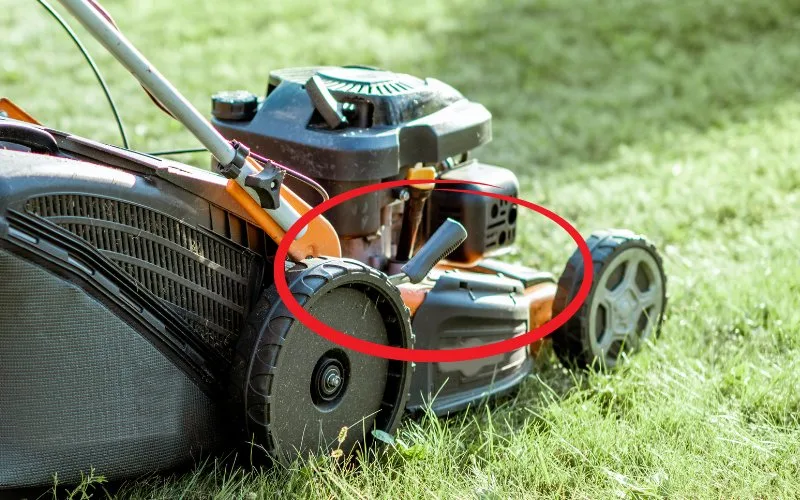
Image source: Web (Bing) / oa.openforall.co.uk (Web image (fair-use with source credit))
Your mower settings matter more than most people realize when it comes to weed control. Three variables make the biggest difference.
Blade height. The general turfgrass standard is never to remove more than one-third of the grass blade in a single mow. For most cool-season grasses, that means cutting at 3 to 4 inches. Taller grass shades out weed seedlings before they can establish.
Shorter grass lets light reach the soil surface, and that's exactly where weeds thrive.
Mowing frequency. During peak growing season, mow every 5 to 7 days. Crabgrass and dandelion both produce seed quickly. If you let the lawn go too long between cuts, you're giving weeds time to flower and set seed.
Mowing mode. Mulching mode is your best friend in a weedy lawn. It chops weed clippings into fine pieces that break down fast. Bagging mode removes weed seed from the lawn surface entirely.
That helps when dandelion seed heads are prominent.
| Setting | Recommended Range | Weed Benefit |
|---|---|---|
| Blade height | 3 to 4 inches | Shades out weed seedlings |
| Mowing frequency | Every 5 to 7 days | Cuts weeds before they seed |
| Mowing mode | Mulch or bag | Reduces weed spread |
As of 2026, most robotic mowers now include adjustable cut heights between 20 and 60 millimeters. That gives you the same weed-management benefits without the physical effort.
When Mowing Alone Isn't Enough: Herbicides, String Trimmers and Alternatives
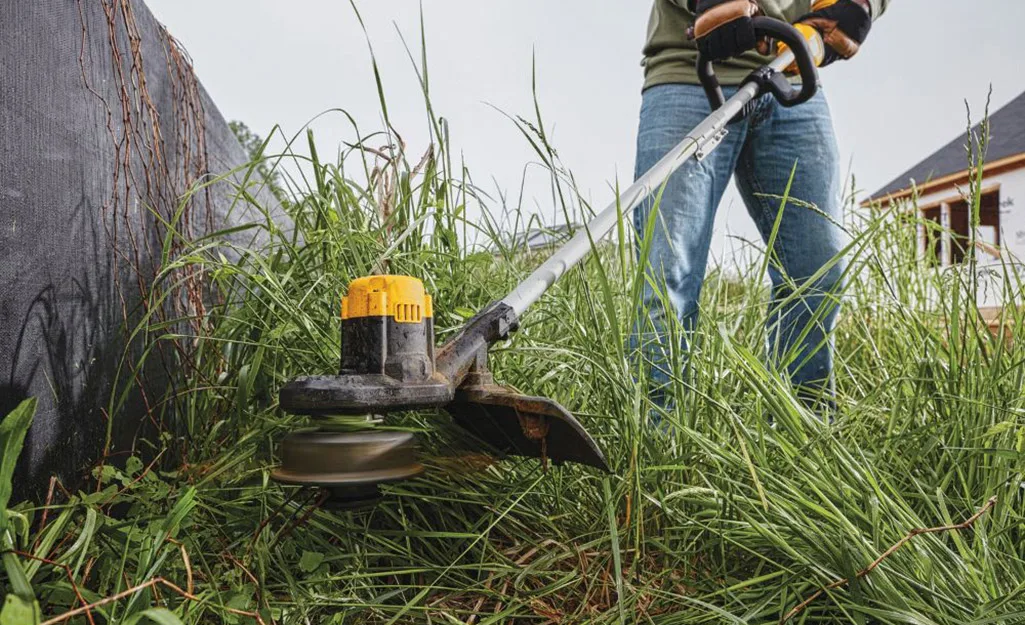
Image source: Bing (Web (fair-use with source credit))
Some weed problems need more than a mower. Here's when and how to bring in backup tools.
String trimmer (weed wacker). For weeds taller than 6 inches, a string trimmer is the go-to. It handles height, shape, and awkward spots a mower can't reach. After trimming, run the mower over the area to clean up the debris.
Selective broadleaf herbicide. If you've got dandelion, clover, or plantain mixed into your grass, a selective herbicide kills the weeds without harming the lawn. Products containing 2,4-D or dicamba are common choices. Always follow label directions.
Apply when the lawn is dry.
Non-selective herbicide. For weeds growing in bare soil patches or cracks in hardscaping, glyphosate-based products kill everything they touch. Use these only where you don't care about killing grass.
Core aeration and overseeding. Over time, thick healthy grass is the best weed killer there is. Aerating compacts soil and overseeding fills bare spots. This leaves less room for weeds to establish in the first place.
The EPA publishes guidelines on herbicide use that every homeowner should review before applying anything to their lawn.
Mistakes to Avoid When Mowing a Weedy Lawn
Mowing a weedy lawn the wrong way can make the problem worse. These are the mistakes that show up most often.
Mowing tall weeds directly with a mower. If weeds stand taller than 6 inches, reach for a string trimmer first. Running a mower through dense, tall growth strains the engine and can jam the blade. Manufacturer specs for most consumer mowers list a maximum cutting height of 4 to 5 inches.
Push past that, and you're risking damage.
Mowing while weeds are in seed. This is the big one. Dandelion heads can produce up to 2,000 seeds each. Crabgrass drops thousands of seeds per plant in late summer.
Mowing over mature seed heads scatters seeds across your lawn and into neighbors' yards. If seed heads are present, bag your clippings instead of mulching.
Setting blade height too low. Short grass lets sunlight reach the soil surface. That's prime territory for weed seedlings. Keep the blade at 3 to 4 inches for most cool-season grasses.
Taller grass naturally blocks weeds from establishing.
Using dull blades. A dull mower blade tears grass rather than cutting it cleanly. Torn grass tips turn brown and weaken the plant. Thinning turf gives weeds an opening.
Sharpen blades every 20 to 25 mowing hours.
Ignoring the mower deck. Clogged under-deck buildup reduces cutting performance and increases the chance of blade jams. Clean the deck after mowing a weedy area, especially if grass is thick and wet.
Frequently Asked Questions
Can a lawn mower cut dandelions?
Yes. A mower will cut through dandelions easily, but it won't kill them. Dandelions have deep taproots that survive cutting above the soil line.
Mowing does stop them from setting seed if you cut them before the yellow heads mature. For full control, pair regular mowing with a selective broadleaf herbicide.
Will mowing kill crabgrass?
No. Mowing crabgrass does not kill it, but it does slow the spread significantly. Crabgrass produces seed in late summer.
If you mow regularly and mow before seed heads form, you prevent new plants from establishing next year. A pre-emergent herbicide in early spring can also stop crabgrass seeds from germinating in the first place.
Is it bad to mow over tall weeds?
It depends on how tall the weeds are. Weeds under 6 inches tall won't bother most mowers. Anything taller risks clogging the blade or stalling the engine.
If your weeds are 6 to 12 inches tall, trim them down first with a string trimmer. Then mow normally. The mower cleans up the trimmed debris.
Should I bag weed clippings or mulch them?
Bag when weeds are in seed. Removing clippings takes weed seeds out of circulation and prevents them from returning to the lawn. Mulch when weeds are just tall growth without seed heads.
Mulched clippings decompose fast and return nutrients to the soil. Both approaches have a place. It depends on the stage of the weeds.
What mowing height is best for preventing weeds?
A 3 to 4 inch blade height works best for most cool-season grasses like Kentucky bluegrass and tall fescue. Taller grass shades out weed seedlings. For warm-season grasses like Bermuda or zoysia, 1 to 2 inches is typical.
Adjust for your grass type. A healthy, properly mowed lawn is the most effective weed prevention tool you have.
Final Decision Guide: Which Approach Fits Your Lawn?
Now that you've seen how mowing, trimming, and treatment options interact, here's a practical path to follow. Match your situation to the scenario below.
Scenario 1: You've got a few weeds mixed into healthy grass.
Mow at 3 to 4 inches every 5 to 7 days. Use mulching mode to recycle clippings. Over the course of a season, the thick grass will crowd out most weeds.
If a few stubborn dandelions remain, spot-treat them with a selective broadleaf herbicide.
Scenario 2: Your lawn is heavily weedy with crabgrass.
Mow consistently and never let crabgrass go to seed. Apply a pre-emergent herbicide in early spring before crabgrass germinates. In the meantime, bag your clippings to prevent seed spread.
Overseed bare areas with grass seed in the fall to compete with weeds going forward.
Scenario 3: You've got tall, overgrown weeds taking over the yard.
Trim everything down to 4 inches with a string trimmer first. Let it sit for a few days. Then mow normally.
If weeds persist after two weeks of regular mowing, you'll likely need a more aggressive approach like herbicide application or a full lawn renovation.
Scenario 4: You want a no-chemical approach.
Mow frequently at the right height. Aerate once or twice a year to reduce soil compaction. Overseed bare spots each fall.
Mulch clippings for organic nutrient return. It's slower than herbicide, but it's effective if you stick with it consistently over two to three growing seasons.
Mowing is the backbone of weed control. Start with the mower. Adjust from there based on what your lawn actually needs.