What Is the Difference Between Inverter and Non-Inverter AC?
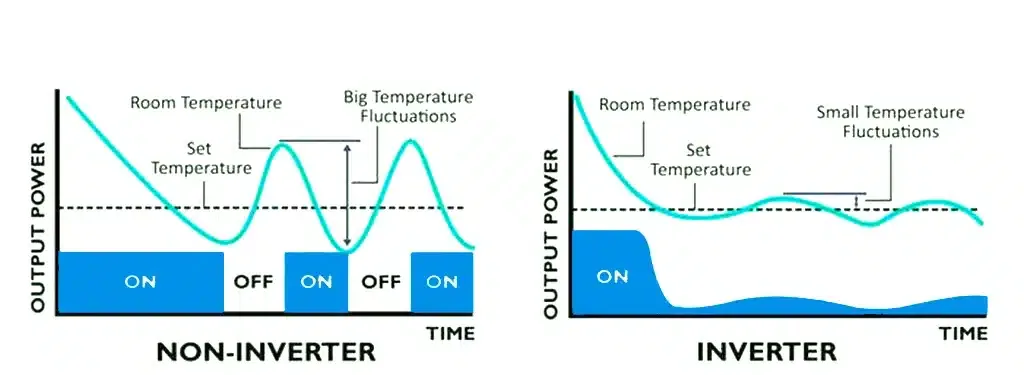
Image source: Bing (Web (fair-use with source credit))
Choosing the right air conditioner can feel overwhelming, especially when you're trying to understand the technical jargon. What is the difference between inverter and non-inverter AC? This is a question many homeowners grapple with, and the answer directly impacts your comfort and your energy bills.
In our research, we've found that understanding the fundamental technology behind each type makes the decision much clearer. It's not just about cooling; it's about how efficiently and consistently that cooling happens. Per the U.S.
Department of Energy, energy efficiency is a key factor in appliance selection, and ACs are significant energy consumers in most homes.
Quick Answer
The main difference between inverter and non-inverter ACs lies in how their compressors operate. Non-inverter ACs use a fixed-speed compressor that cycles on and off to maintain temperature, leading to fluctuations. Inverter ACs use a variable-speed compressor that adjusts its speed to precisely match cooling demands, resulting in more consistent temperatures and greater energy efficiency.
This means inverter models are generally quieter and use less electricity over time.
How Your AC Keeps Things Cool: A Quick Look
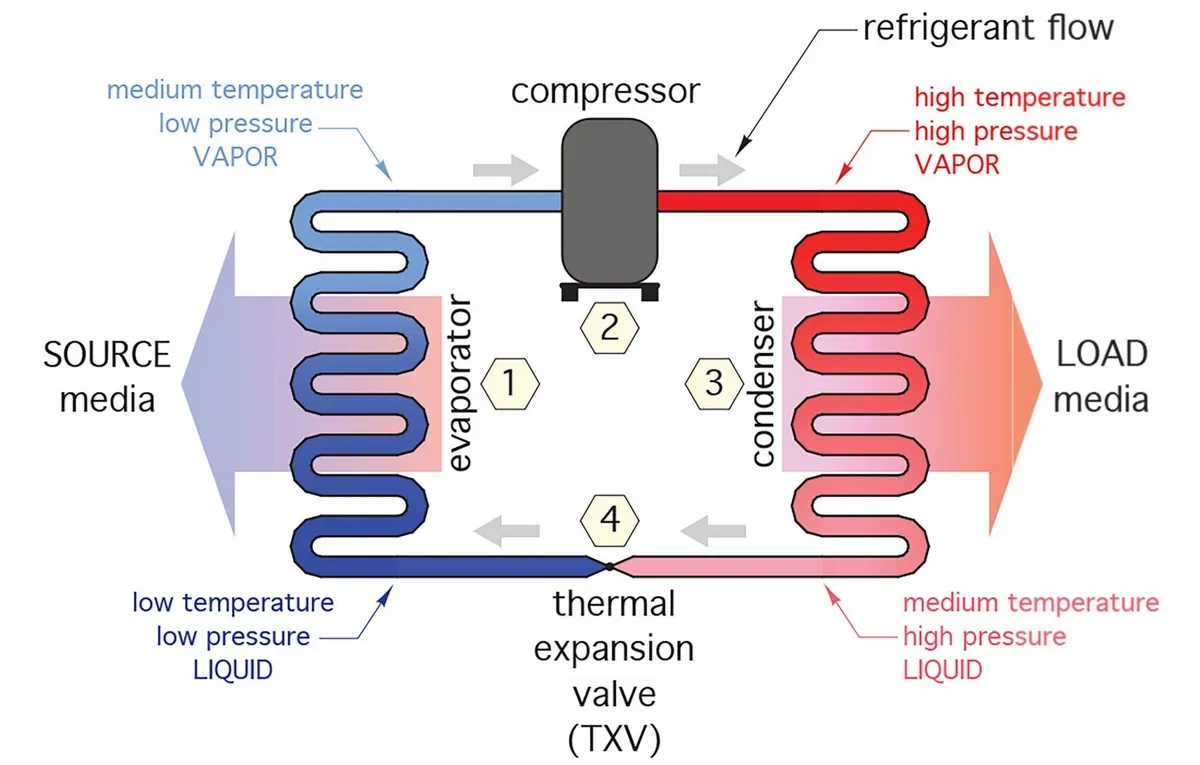
At its heart, any air conditioner works by moving heat from inside your home to the outside. It does this using a refrigerant that circulates through a system. The key component driving this process is the compressor.
This is the part that squeezes the refrigerant, increasing its temperature and pressure, allowing it to release heat. Think of it as the engine of your AC system.
The way this compressor operates is the fundamental distinction between the two main types of ACs you'll encounter: non-inverter and inverter. Understanding this core mechanism is crucial to appreciating the differences in performance, efficiency, and cost.
Non-Inverter AC: The "On-Off" Approach
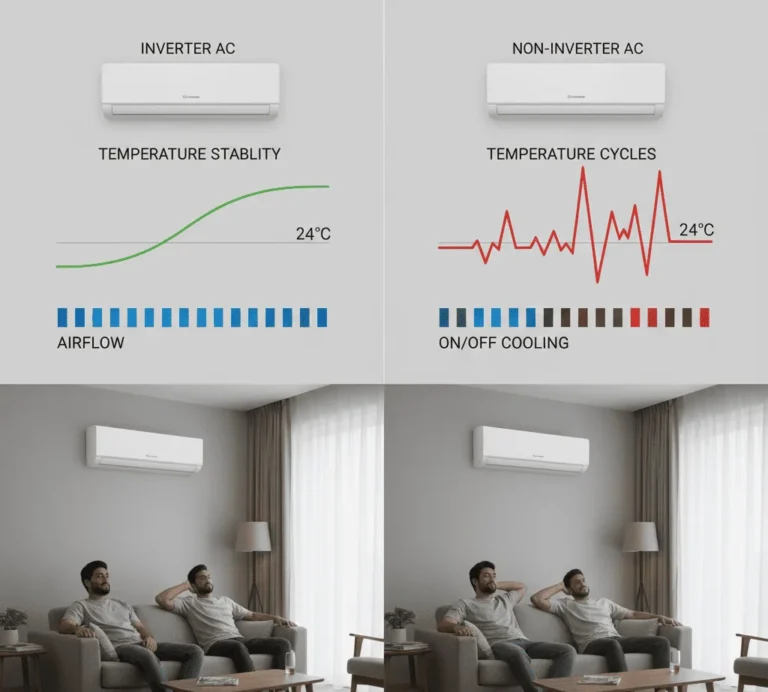
A non-inverter air conditioner operates on a simple, straightforward principle: it's either running at full blast or it's off. There's no in-between. When you set your desired temperature, the compressor kicks in at its maximum capacity to cool the room down.
Once the thermostat senses that the target temperature has been reached, the compressor shuts off completely. However, as the room naturally warms up again, the compressor has to cycle back on at full power to bring the temperature down. This on-and-off cycle repeats constantly throughout the cooling period.
It's a bit like flipping a light switch, it's either on or off.
- Temperature Swings: This cycling means you might notice the room getting noticeably cooler, then gradually warmer, as the compressor cycles. This can lead to less stable comfort levels.
- Energy Use: While simpler and often cheaper to buy, this constant starting and stopping at full power uses more electricity than a more nuanced approach. Each time the compressor starts, it draws a significant surge of power.
Inverter AC: The Smooth Operator
Inverter air conditioners take a more refined approach to cooling. Instead of just switching between full power and off, the inverter technology allows the compressor's speed to be varied. When you first turn an inverter AC on, it may run at a higher speed to quickly cool the space.
However, as the room approaches your set temperature, the inverter system doesn't shut the compressor off. Instead, it slows it down to a much lower speed. This lower speed is just enough to maintain the desired temperature without the energy-intensive start-stop cycles.
It's constantly making micro-adjustments to keep the environment stable.
- Consistent Comfort: This continuous, low-speed operation leads to much more stable and consistent temperatures. You avoid the noticeable temperature swings often associated with non-inverter models.
- Energy Savings: Manufacturer specifications and energy efficiency ratings, such as those assessed by Energy Star, consistently show that inverter technology significantly reduces energy consumption. This is because the compressor doesn't need to power up to maximum repeatedly.
The Big Differences: Why It Matters to You
The technical distinction between variable and fixed compressor speeds translates into tangible differences in how an AC performs and how it impacts your household. These differences affect everything from your monthly electricity bill to the quietness of your living space. Understanding these points is key to making an informed choice that aligns with your priorities.
Here’s a breakdown of how these systems stack up against each other:
| Feature | Non-Inverter AC | Inverter AC |
|---|---|---|
| Energy Efficiency | Less efficient, especially over long periods. | Much more energy efficient, saving on electricity bills. |
| Temperature Control | Fluctuates more; can feel cooler or warmer. | Maintains a very steady temperature. |
| Noise Level | Louder when the compressor cycles on and off. | Quieter, as the compressor runs at lower, consistent speeds. |
| Lifespan of Parts | Compressor cycles can cause more wear and tear. | Smoother operation can lead to longer component life. |
| Initial Cost | Generally lower upfront cost. | Typically higher upfront cost. |
| Running Cost | Higher, due to less efficient operation. | Lower, due to efficient operation. |
Energy Bills: The Inverter Advantage
This is often the most compelling reason people opt for inverter technology. Because the compressor in an inverter AC doesn't constantly restart at full power, it uses significantly less electricity over time. A non-inverter AC will ramp up to 100% power to cool the room, then shut off completely, only to ramp up to 100% again when needed.
An inverter AC, once it reaches the desired temperature, will reduce its compressor speed to maintain that temperature efficiently. Aggregate user reviews and energy testing reports from sources like the U.S. Department of Energy indicate that inverter models can be 30% to 50% more energy-efficient than comparable non-inverter units.
This translates directly into lower monthly utility bills, especially in climates where air conditioning is used frequently. For example, a 12,000 BTU inverter unit might consume around 1,000 watts on average, while a similarly sized non-inverter unit could consume 1,300 watts or more when actively cooling.
Comfort: Steady vs. Swingy
If you're sensitive to temperature changes, the consistent comfort provided by an inverter AC is a significant advantage. The variable-speed compressor works to maintain your set temperature within a very narrow range. You won't experience the noticeable cool blasts followed by warmer periods that can happen with non-inverter models.
A non-inverter AC's cooling is more of an on-and-off affair. It cools things down strongly, then stops. When the temperature rises, it kicks back on with full force.
This cycling can lead to temperature variances of several degrees Fahrenheit, which some people find disruptive to their comfort. The steady-state operation of an inverter system provides a more seamless and pleasant indoor environment.
Noise: Peace and Quiet
The frequent starting and stopping of a non-inverter compressor can be a noticeable source of noise. When the unit kicks on, there's often a distinct hum or even a louder rumble. This can be particularly bothersome in bedrooms, home offices, or any living space where quiet is desired.
Inverter air conditioners, by contrast, are generally much quieter. Since their compressors often run at lower, consistent speeds for extended periods, they produce a much gentler, more subtle sound. This quieter operation contributes significantly to a more peaceful and relaxing indoor atmosphere, especially during long summer days or warm evenings.
Manufacturer specifications often highlight decibel ratings, and inverter models typically have lower ratings for continuous operation.
Cost: Upfront vs. Long-Term
When you're shopping for an air conditioner, the initial price tag is usually a major consideration. Non-inverter ACs typically have a lower upfront purchase price. This makes them an attractive option for those with a tighter immediate budget or for situations where the AC will only be used occasionally.
However, the story changes when you look at the long-term costs. Inverter ACs, while more expensive to buy initially, tend to be more economical to run due to their superior energy efficiency. Over the lifespan of the unit, the savings on electricity bills can often offset the higher initial investment.
This is a key trade-off to consider: a lower entry cost versus a lower operational cost over the years.
Which One Should You Choose?
Deciding between an inverter and a non-inverter air conditioner really comes down to your personal needs, how you plan to use the AC, and your budget priorities. There's no single "best" option for everyone, but understanding your usage patterns will guide you to the right choice.
Here’s a quick guide to help you decide:
Choose a Non-Inverter AC if:
- Your primary concern is the lowest possible upfront cost.
- You plan to use the AC only for very short, infrequent periods.
- Minor temperature fluctuations and occasional compressor noise are not a major issue for you.
- The AC is for a space where precise temperature control isn't critical.
Choose an Inverter AC if:
- You expect to run the AC for many hours a day or for extended periods throughout warm seasons.
- Reducing your monthly electricity bills is a significant priority.
- You value a consistently comfortable environment and prefer quieter operation.
- You are willing to invest more upfront for long-term savings and better performance.
Frequently Asked Questions
What is the most significant energy-saving feature of an inverter AC?
The most significant energy-saving feature of an inverter AC is its variable-speed compressor. This allows it to adjust its cooling output precisely, avoiding the energy-intensive on-and-off cycles of fixed-speed units.
Can a non-inverter AC still be a good choice?
Yes, a non-inverter AC can still be a good choice if your budget is very tight or if you only need to cool a space for very short periods. They are often less expensive to purchase upfront.
How much more expensive are inverter ACs typically?
Inverter ACs are typically 10% to 30% more expensive upfront than comparable non-inverter models. However, this initial investment often pays for itself through lower energy bills over time.
Which type of AC is better for a bedroom?
An inverter AC is generally better for a bedroom due to its quieter operation and more consistent temperature control. This leads to a more comfortable and less disruptive sleeping environment.
Do inverter ACs require special installation or maintenance?
Inverter ACs generally have the same installation and maintenance requirements as non-inverter units. They still need regular filter cleaning and professional servicing to ensure optimal performance and longevity.
How can I tell if an AC is an inverter model?
You can usually tell if an AC is an inverter model by checking its specifications. Look for terms like "variable speed," "inverter technology," or specific model numbers that indicate inverter capabilities. Product labels and manufacturer websites also provide this information.