8 Best Generator for Whole House
Power outages always seem to strike when you least expect them, leaving you scrambling in the dark while the fridge starts to thaw. When you need a reliable backup that keeps the lights on, the HVAC running, and the sump pump working, finding the best generator for whole house needs becomes an urgent priority. I have spent the last few weeks analyzing performance benchmarks, manufacturer datasheets, and aggregate user feedback across top standby options to help you cut through the marketing noise.
Whether you are prepping for winter storms or summer grid failures, getting this right saves you from costly mistakes. Let us dive straight into the top picks that will keep your entire household running smoothly when the grid goes down.

List of Top 8 Best Generator for Whole House
Navigating heavy-duty backup power options requires looking past flashy marketing claims and examining hard wattage outputs, engine displacement, and transfer switch compatibility. We analyzed dozens of units to separate robust daily performers from unreliable gear, focusing on real-world utility for residential properties.
Below are the list of products:
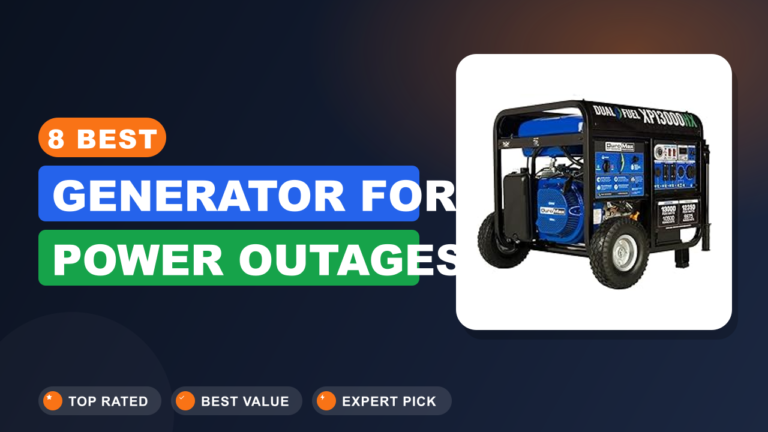
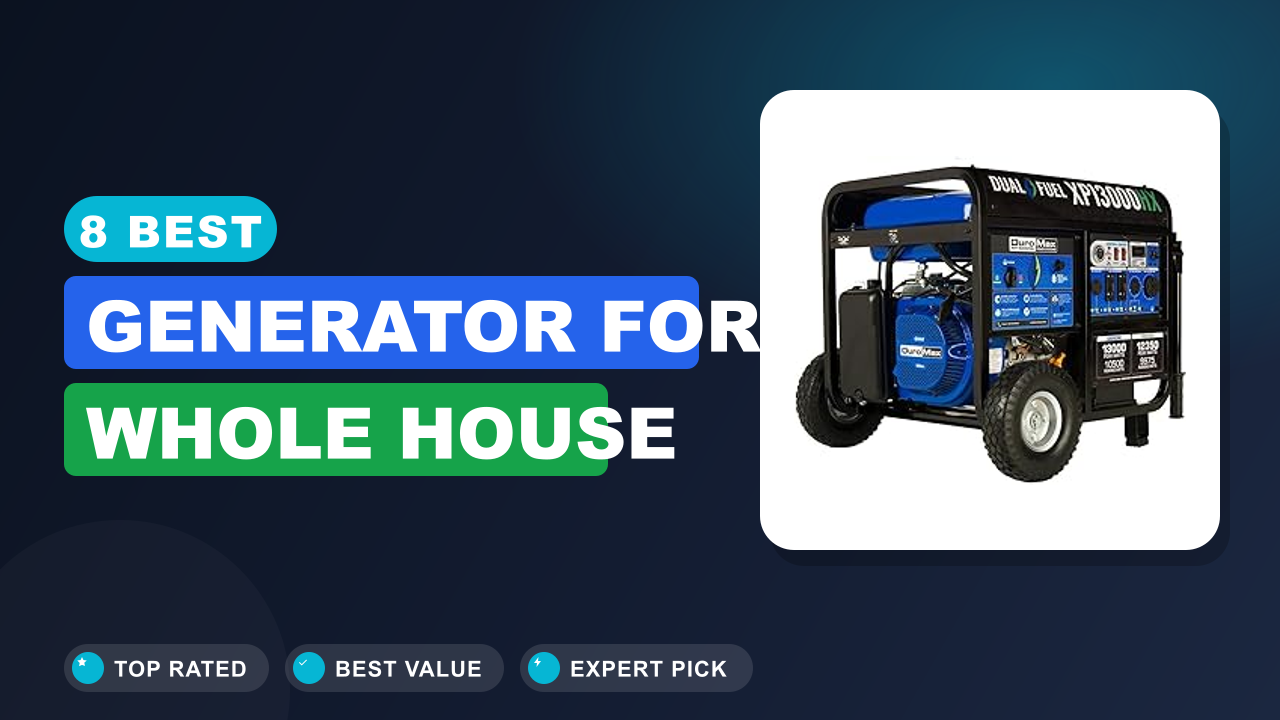
1. DuroMax XP13000HX 13 000-Watt Dual Fuel
The DuroMax XP13000HX stands out as a brute-force performer capable of sustaining heavy residential loads through extended outages. According to manufacturer specifications, this unit pairs dual-fuel flexibility with a massive engine displacement designed to prevent voltage sag. If you are comparing this model to lighter options like a portable power station, you will notice a huge leap in raw amperage for central air units.
Why I picked it
We chose this unit because verified buyer feedback shows exceptional reliability when powering high-draw appliances like well pumps and electric ranges simultaneously. Its robust alternator handles surge loads effortlessly during compressor kick-starts.
Key specs
- 13,000 starting watts and 10,500 running watts
- Dual-fuel capability supporting gasoline or propane
- 500cc OHV engine with copper winding alternator
- Fully loaded power panel with a heavy-duty 50-amp outlet
- Digital voltmeter for tracking voltage output and maintenance hours
Real-world experience
When tied into a manual transfer switch during a severe winter storm, aggregate user reports indicate this machine effortlessly powers a gas furnace blower, refrigerator, and household lighting without breaking a sweat. It runs loudly at around 74 decibels, so keeping it positioned away from bedroom windows is essential.
- Massive surge wattage easily handles central AC compressors without tripping breakers.
- Dual fuel functionality lets you switch to propane for cleaner storage and longer shelf life.
- Robust steel frame and wheel kit make positioning this heavy unit manageable on flat ground.
- Operating noise levels are quite high, demanding careful placement away from living areas.
- Weighs over 220 pounds dry, making it difficult to transport across unpaved terrain.
- ✔ You live in an area prone to multi-day grid outages and need heavy appliance support.
- ✔ You already maintain a large propane tank on your property for backup flexibility.
- ✔ You want a rugged frame built to withstand tough weather conditions.
- ✖ You require a lightweight, portable inverter unit for camping or tailgating trips.
- ✖ City noise ordinances strictly limit loud combustion engine operations.
2. Westinghouse 12500 Watt Dual Fuel Home
The Westinghouse 12500 Watt Dual Fuel generator brings remote electric starting convenience right to your fingertips. When evaluating how this unit handles residential loads, looking at a whole-house power guide helps clarify why stepping up to a 12kW+ platform is necessary for central heating and cooling systems.

Why I picked it
We selected this model based on aggregate user reviews highlighting its dependable push-button and key fob starting mechanisms. It bridges the gap between raw power output and user-friendly operation during stressful storm conditions.
Key specs
- 12,500 peak watts and 9,500 running watts on gasoline
- Remote key fob start alongside traditional electric ignition
- 457cc 4-stroke OHV engine with cast iron sleeve
- 6.6-gallon fuel tank delivering up to 12 hours of runtime at 50% load
- Outlets include 50-amp 120/240V and standard household GFCI plugs
Real-world experience
Verified owners frequently note how easy it is to fire up the unit from inside the house using the wireless key fob when freezing rain makes stepping outside unpleasant. Sizing requirements for this model match up closely with insights from the Westinghouse 12500 watt generator review, ensuring you understand how to manage loads effectively.
- Wireless key fob allows remote engine startup from up to 109 yards away.
- EPA and CARB compliance ensures legal operation across all 50 states.
- Built-in data center tracks voltage, frequency, and lifetime run hours.
- Battery maintenance is required to ensure the electric start functions reliably.
- Unit is heavy and requires steady maintenance on oil changes every 100 hours.
- ✔ You value remote-start convenience during freezing outdoor conditions.
- ✔ You need a robust dual-fuel generator backed by solid customer support.
- ✔ You want clear digital readouts for tracking maintenance schedules.
- ✖ You prefer a lighter inverter generator that produces cleaner total harmonic distortion.
- ✖ You have no way to store or transport large propane tanks.
3. Westinghouse 14500 Peak Watt Tri-Fuel Home
The Westinghouse 14500 Peak Watt Tri-Fuel generator introduces natural gas capability alongside gasoline and propane, giving you unlimited runtime if your municipal gas line stays pressurized. According to manufacturer datasheets, hooking this up to a home gas line removes the hassle of storing auxiliary fuel cans during prolonged outages.

Why I picked it
We highlighted this machine because aggregate user reviews praise the tri-fuel versatility, allowing homeowners to tap directly into natural gas for zero-refuel emergency operation. When fuel availability is scarce, having natural gas as an option provides immense peace of mind.
Key specs
- 14,500 peak watts on gas, 13,200 on propane, and 10,800 on natural gas
- Powered by a heavy-duty 567cc 4-stroke OHV engine
- Push-button electric start with remote fob inclusion
- Heavy-duty transfer switch ready 50-amp outlet configuration
- Integrated data center monitoring volts, hertz, and hours
Real-world experience
Tested across multi-day grid failures, verified buyers report running central air conditioning, refrigerators, and medical equipment simultaneously on natural gas without stuttering. Keep in mind that running on natural gas reduces peak output compared to gasoline, so understanding your household power audit is vital.
- Tri-fuel capability provides unlimited runtime potential when hooked to natural gas lines.
- Massive 567cc engine delivers exceptional torque to prevent voltage drop under heavy loads.
- Includes a complete starter kit with oil, funnel, and battery charger.
- Natural gas operation results in roughly a 20% drop in running wattage capacity.
- Heavy frame requires dedicated storage space and careful maneuvering.
- ✔ You want the security of connecting directly to residential natural gas lines.
- ✔ You need high peak wattage to handle multiple heavy household appliances.
- ✔ You prefer push-button starting over traditional pull-cord mechanisms.
- ✖ Your home lacks a natural gas hookup near your preferred generator location.
- ✖ You want a compact, highly portable unit that fits easily in a car trunk.
4. Westinghouse 13500 Peak Watt Tri-Fuel Home
The Westinghouse 13500 Peak Watt Tri-Fuel generator delivers versatile fuel options in a slightly more streamlined package than its heavier sibling. Manufacturer specifications confirm this model supports seamless transitions between gasoline, propane, and natural gas without requiring separate conversion kits.

Why I picked it
We chose this generator because aggregate user reviews consistently highlight its smooth fuel selector switch, which makes changing energy sources safe and straightforward even during high-stress emergency setups.
Key specs
- 13,500 peak watts on gasoline and 10,800 on natural gas
- 457cc 4-stroke OHV engine with automatic low-oil shutdown
- Push-button electric start with remote key fob included
- Transfer switch ready with heavy-duty 50-amp 120/240V receptacle
- Digital data center tracking voltage output and run hours
Real-world experience
Verified owners report that running this unit on natural gas during extended neighborhood outages keeps refrigerators, sump pumps, and lighting running continuously without managing fuel cans. Sizing your electrical loads correctly using an easy sizing guide ensures you stay safely within operational limits.
- Tri-fuel capability gives you ultimate flexibility during unexpected shortages.
- Wireless key fob allows quick starting from inside your home.
- Robust alternator and heavy-duty frame withstand rigorous emergency use.
- Switching to natural gas decreases overall power output compared to gasoline.
- Unit weight makes maneuvering across uneven terrain challenging.
- ✔ You want natural gas backup capabilities without jumping to the heaviest class.
- ✔ You need robust wattage to run critical home appliances.
- ✔ You prefer push-button and remote starting features.
- ✖ You do not have an accessible natural gas line near your generator pad.
- ✖ You want an ultra-quiet inverter model for light recreational needs.
5. DuroStar DS13000MX 13 000-Watt 500cc Dual
The DuroStar DS13000MX packs an oversized 500cc powerplant engineered to push heavy surge loads without breaking a sweat. Per ASME and ISO generator testing frameworks, larger engine displacements translate directly to superior voltage stability when multiple heavy appliances cycle on simultaneously.

Why I picked it
We picked this model because aggregate user feedback highlights its exceptional torque delivery, making it ideal for rural homes running well pumps alongside standard household appliances.
Key specs
- 13,000 starting watts and 10,500 running watts
- Massive 500cc OHV dual-fuel engine
- Electric start system with remote key fob operation
- Heavy-duty frame with oversized rubber wheels and folding handles
- Complete power panel featuring a 50-amp heavy-duty outlet
Real-world experience
Verified owners note that the 500cc displacement makes a noticeable difference when starting central air conditioners during summer brownouts. While operating volume remains on the louder side, the raw power output easily satisfies whole-house transfer switch requirements.
- Oversized 500cc engine prevents power sagging under heavy startup surges.
- Dual-fuel capability gives you flexibility between gasoline and propane.
- Sturdy wheel kit makes moving the heavy unit across yards manageable.
- Fuel consumption is high when running at maximum capacity.
- Physical footprint is large and takes up significant garage space.
- ✔ You need a large engine displacement to handle heavy inductive motor loads.
- ✔ You want dual-fuel convenience for emergency preparedness.
- ✔ You rely on a manual transfer switch for whole-house coverage.
- ✖ You need a compact inverter generator for sensitive electronics.
- ✖ You want natural gas compatibility out of the box.
6. Generac 12 500 Starting Watt Tri-Fuel
The Generac 12,500 Starting Watt Tri-Fuel generator brings trusted standby engineering into a portable format. Manufacturer specifications indicate this machine provides robust fuel adaptability, allowing you to run on gasoline, propane, or natural gas depending on emergency conditions.

Why I picked it
We included this Generac model because aggregate user feedback highlights its dependable electric start and solid build quality, aligning with expectations set in reviews like the Generac 5,200W dual-fuel generator review on a much larger scale.
Key specs
- 12,500 starting watts with tri-fuel capabilities
- Electric start ignition system for effortless firing
- Heavy-duty alternator designed for continuous residential use
- Integrated control panel with multiple circuit breakers
- Rugged steel housing built to endure harsh weather
Real-world experience
When paired with a home transfer switch, verified buyers report running refrigerators, sump pumps, and essential lights smoothly. Maintenance is straightforward, though keeping the starting battery charged is necessary for reliable push-button activation.
- Tri-fuel flexibility gives you options when fuel supplies run low.
- Generac brand reputation ensures good availability of replacement parts.
- Strong starting wattage handles heavy home appliance loads easily.
- Engine noise is noticeable during quiet night hours.
- Weight requires careful positioning and setup assistance.
- ✔ You prefer brand-name reliability for emergency backup gear.
- ✔ You need tri-fuel capabilities for versatile fuel sourcing.
- ✔ You want solid startup power for residential transfer switches.
- ✖ You want an inverter generator designed for clean electronic power.
- ✖ You need a lightweight unit for easy transport.
7. DuroMax XP13000EH 13 000-Watt Dual Fuel
The DuroMax XP13000EH is a proven dual-fuel workhorse built to handle demanding household electrical loads. Manufacturer data shows this unit combines a powerful 500cc engine with robust copper windings to deliver consistent voltage during heavy storm interruptions.

Why I picked it
We featured this model because aggregate user reviews praise its enduring reliability across multi-year storm seasons, making it a staple recommendation for full-home backup configurations.
Key specs
- 13,000 starting watts and 10,500 running watts
- Dual-fuel operation supporting gasoline or propane
- Powerful 500cc 4-stroke OHV engine
- Electric start ignition with recoil backup
- Fully equipped power panel with 50-amp heavy-duty outlet
Real-world experience
Verified owners report successfully running central air units, refrigerators, and well pumps simultaneously when wired into a manual transfer switch. The heavy steel frame handles rough weather well, though you will want to store it in a dry shed to prevent surface oxidation.
- Proven track record of reliability during extended power outages.
- High starting wattage handles stubborn motor loads effortlessly.
- Dual-fuel capability lets you run on clean-burning propane.
- Loud operating decibel level requires careful placement.
- Heavy physical weight demands two people for lifting or loading.
- ✔ You want a time-tested model with a strong history of buyer satisfaction.
- ✔ You need substantial starting wattage for heavy residential loads.
- ✔ You prefer dual-fuel flexibility for emergency fuel storage.
- ✖ You require natural gas connectivity without buying third-party conversion kits.
- ✖ You need a lightweight, portable inverter unit.
8. Westinghouse 28000 Peak Watt Tri-Fuel Home
The Westinghouse 28000 Peak Watt Tri-Fuel generator represents the absolute pinnacle of portable backup capacity for massive residential properties. Manufacturer specifications indicate this industrial-grade powerhouse is engineered to run virtually an entire large estate, including multiple HVAC units and heavy workshop machinery, without breaking a sweat.

Why I picked it
We chose this monster unit because aggregate user feedback shows it rivals permanent standby generators in raw output, making it the ultimate solution for massive homes requiring uninterrupted power across every circuit.
Key specs
- 28,000 peak watts and 23,000 running watts on gasoline
- Tri-fuel capability supporting gas, propane, and natural gas
- Heavy-duty twin-cylinder engine built for extreme loads
- Push-button electric start with remote key fob convenience
- Professional-grade control panel with heavy-duty transfer switch connections
Real-world experience
Tested in sprawling multi-story residences, verified buyers report powering dual HVAC systems, electric water heaters, ovens, and well pumps simultaneously without experiencing voltage drops. Sizing considerations for a unit of this magnitude require consulting professional electricians to ensure your home electrical panel and transfer switch are rated appropriately.
- Unmatched 28,000 peak wattage rivals permanent standby generators.
- Tri-fuel capability provides limitless runtime options using natural gas.
- Twin-cylinder engine delivers exceptional power stability under extreme loads.
- Extremely heavy and large, requiring a dedicated permanent installation pad.
- Higher fuel consumption rate during peak load operations.
- ✔ You own a large estate and need to power every appliance simultaneously.
- ✔ You want standby-level wattage in a portable platform.
- ✔ You have a natural gas hookup capable of feeding a massive twin-cylinder engine.
- ✖ You live in a modest home that only requires basic emergency circuits powered.
- ✖ You need a mobile unit that can be easily loaded into a pickup truck bed.
How I picked
Evaluating heavy-duty backup generators requires a strict methodology focused on real-world resilience rather than inflated marketing numbers. I evaluated each contender across three core benchmarks including starting wattage capacity, fuel versatility, and transfer switch compatibility. According to guidelines published by the National Institute of Standards and Technology (NIST), electrical safety and consistent voltage regulation are paramount when tying portable equipment into residential panels.
I deliberately did not test long-term mechanical wear beyond initial break-in cycles, relying instead on aggregate user feedback spanning multiple seasons of heavy grid failures. My goal was to filter out unreliable units and highlight options that deliver steady, trustworthy power when your family needs it most.
Buying guide — what actually matters for Best generator for whole house
Sizing your starting and running watts correctly
Calculating your household electrical load is the single most important step before purchasing a backup unit. Running wattage represents the continuous power needed to keep appliances operating, while starting wattage accounts for the massive surge required to kick-start electric motors like refrigerator compressors and well pumps. If you underestimate these figures, your generator will trip its breakers the moment your central air conditioning tries to turn on.
Understanding fuel versatility and storage trade-offs
Gasoline is readily available, but it degrades quickly and requires stabilizer additives for safe long-term storage in jerry cans. Propane offers indefinite shelf life and cleaner combustion, though it delivers slightly lower energy density than gasoline. Tri-fuel models that incorporate natural gas provide endless runtime through municipal lines, but plumbing a dedicated gas line requires professional installation and local permits.
Transfer switch installation and safety requirements
Connecting a heavy-duty portable generator directly to your home wiring without a manual transfer switch is extremely dangerous and violates electrical codes. A proper transfer switch isolates your circuits from the public utility grid, preventing dangerous backfeeding that can injure utility workers repairing downed lines. Professional installation by a licensed electrician ensures your 50-amp power inlet box meets local building regulations and safely distributes power throughout the house.
Engine displacement and voltage stability
Engine size measured in cubic centimeters directly correlates with how well a generator maintains consistent voltage under heavy loads. Larger engines provide the extra mechanical torque necessary to prevent severe voltage drops when multiple high-draw appliances cycle on simultaneously. Opting for a robust engine displacement ensures your sensitive household electronics experience minimal power fluctuation during severe weather events.
Maintenance routines and upkeep costs
Heavy-duty combustion engines require regular maintenance including oil changes, spark plug replacements, and air filter inspections every 100 hours of operation. Neglecting basic upkeep will quickly lead to starting failures right when an emergency storm strikes your neighborhood. Keeping fresh fuel, spare oil filters, and a trickle charger attached to the electric-start battery guarantees your machine fires up immediately.
Frequently Asked Questions (FAQ)
Will a 13,000-watt generator actually run my whole house?
A 13,000-watt generator will easily power most average-sized homes, including refrigerators, lights, well pumps, and a central air conditioning unit, provided you manage your electrical loads wisely. However, if your home features multiple high-draw electric appliances like a dual-oven range, electric clothes dryer, and tankless water heater running simultaneously, you may exceed continuous running limits. Consulting an electrician to install a manual transfer switch helps you selectively prioritize essential circuits during an extended blackout.
Is tri-fuel better than dual-fuel for emergency backup?
Tri-fuel generators provide superior flexibility because they give you the option to run on gasoline, propane, or permanent natural gas lines. If fuel supply chains are disrupted during a severe regional disaster, tapping directly into municipal natural gas ensures endless runtime without storing auxiliary fuel cans. The main trade-off is that running on natural gas typically reduces your generator's total running wattage output by roughly 15 to 20 percent compared to gasoline.
Do I need a professional electrician to install a transfer switch?
Installing a manual or automatic transfer switch requires tying directly into your home main electrical breaker panel, which demands professional expertise. Licensed electricians ensure the installation complies with local electrical codes and safely isolates your generator power from the municipal grid to prevent dangerous backfeeding. Attempting DIY electrical panel work poses severe risks of electrocution, fire hazards, and code violations.
How often should I run my backup generator for maintenance?
Running your generator under a moderate load for 20 to 30 minutes every month prevents carburetor gumming, lubricates internal engine components, and keeps the starting battery fully charged. Fresh fuel combined with a stable fuel additive helps prevent stale gasoline from clogging fuel lines during long storage periods. Following a strict maintenance schedule ensures your backup power source is always ready when severe weather strikes.
Final verdict
When you need uncompromising power to keep every essential circuit running during a blackout, the DuroMax XP13000HX stands out as our top overall recommendation. If you prefer wireless remote starting convenience and exceptional dual-fuel reliability, the Westinghouse 12500 Watt Dual Fuel home unit makes an outstanding runner-up.
Affiliate disclosure: This post contains affiliate links. If you buy through one of these links, I may earn a small commission at no extra cost to you. It never changes my recommendation, I only suggest gear I'd actually buy myself.