Will A 5000 Watt Generator Run A Whole-House: Power Guide
Usually, a 5000-watt generator will not run an entire modern home, but it can power key essentials.
Will a 5000 watt generator run a whole-house? The answer depends on your home size, appliances, fuel type, and starting loads. A 5,000-watt unit can keep vital systems running during an outage, but it may not handle central air, electric heat, a water heater, and every household circuit at once. This guide explains how to calculate your needs, avoid overloads, and use a generator safely.

Will a 5000 watt generator run a whole-house?
Will a 5000 watt generator run a whole-house under normal conditions? In most cases, no. A 5,000-watt generator is better described as an essential-load generator.
It can often run a refrigerator, lights, a Wi-Fi router, a sump pump, a gas furnace blower, and a few small appliances. However, it may struggle with large loads such as:
• Central air conditioning
• Electric water heaters
• Electric furnaces
• Electric clothes dryers
• Electric ovens
• Large well pumps
• Multiple refrigerators and freezers
• Workshop tools
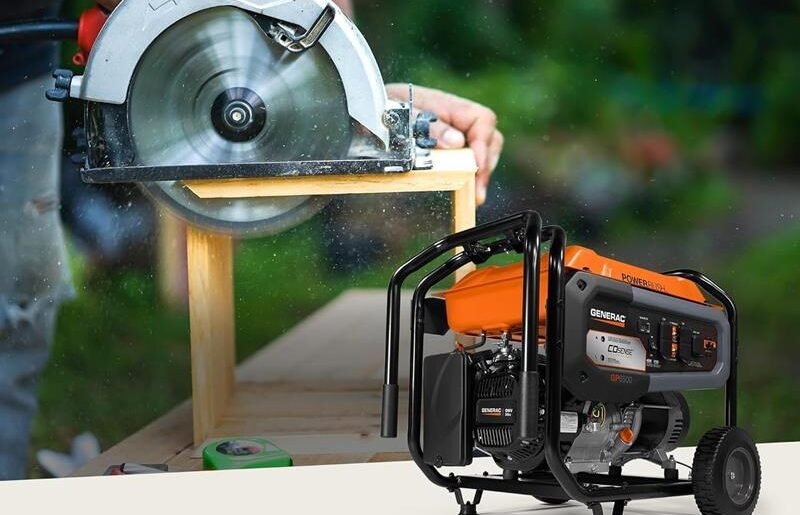
A typical 5,000-watt generator provides about 5,000 running watts. It may offer 6,000 to 7,000 starting watts for a short period. Starting watts matter because motors need a brief surge of power when they turn on.
Think of running watts as your monthly budget and starting watts as a short-term loan. You can use the loan for a moment, but you cannot spend it on every appliance at the same time.

Source: bigrentz.com
Running watts and starting watts explained
The terms running watts and starting watts are central to answering, “Will a 5000 watt generator run a whole-house?”
Running watts are the power an appliance needs while operating. Starting watts are the extra power needed to start a motor or compressor. Refrigerators, sump pumps, air conditioners, and well pumps commonly need a large starting surge.
For example, a refrigerator may use about 150 to 400 running watts but need 800 to 1,200 starting watts. A sump pump may run on 800 watts but briefly need 1,500 to 2,500 starting watts.
A generator must handle both types of demand. If the combined starting load exceeds the generator’s surge rating, the engine may stall, the breaker may trip, or sensitive electronics may shut down.
Always check the appliance label or owner’s manual. Wattage varies by model, age, efficiency, and motor design.
A simple wattage formula
Use this formula to estimate an appliance’s power:
Watts = Volts × Amps
For example, a 120-volt appliance rated at 5 amps uses about 600 watts:
120 volts × 5 amps = 600 watts
This formula gives an operating estimate. It does not always show the motor’s starting demand, so check the manual when possible.
Source: iallpowers.com
What can a 5000-watt generator power?
Will a 5000 watt generator run a whole-house if you choose only essential circuits? It may power many important systems when the load is managed carefully.
Here is an example of a possible emergency load:
| Appliance or system | Approximate running watts |
|---|---|
| Refrigerator | 150 to 400 |
| Freezer | 100 to 300 |
| Gas furnace blower | 400 to 800 |
| Sump pump | 800 to 1,200 |
| Lights | 100 to 500 |
| Internet equipment | 20 to 50 |
| Television | 100 to 300 |
| Microwave | 1,000 to 1,500 |
| Coffee maker | 800 to 1,500 |
These numbers are estimates, not guarantees. If the refrigerator, furnace, sump pump, and microwave run together, the total may approach the generator’s limit. Starting one motor while another motor is already running can cause an overload.
A practical load plan may include:
• Refrigerator and freezer
• Furnace blower
• Sump pump
• Selected lights
• Internet modem and router
• Phone chargers
• Television
• One small kitchen appliance at a time
You may need to turn off the microwave before using a coffee maker. You may also need to delay laundry, cooking, or other high-load tasks.

Source: youtube.com
What a 5000-watt generator usually cannot power
Will a 5000 watt generator run a whole-house with electric heating and cooling? Usually not. Electric heat, central air, and large heating elements can consume most or all of the available capacity.
Common high-demand appliances include:
• Electric furnace: about 10,000 to 20,000 or more running watts
• Electric water heater: about 3,000 to 5,500 watts
• Electric clothes dryer: about 4,000 to 6,000 watts
• Electric range: about 3,000 to 8,000 watts
• Central air conditioner: often 2,000 to 5,000 running watts, with a much higher startup surge
• Well pump: often 750 to 2,500 running watts, with a higher starting demand
Exact values depend on the equipment. A modern inverter air conditioner may use less power than an older unit. A soft-start device can also reduce air conditioner startup demand, but it does not make unlimited power available.
If your home uses propane or natural gas for heating, cooking, and hot water, a 5,000-watt generator becomes more useful. Fuel-powered systems often leave more generator capacity for lights, refrigeration, and electronics.
Source: consumerreports.org
How to calculate your home’s generator load
Will a 5000 watt generator run a whole-house safely? You need a load calculation before connecting it to home circuits.
Follow these steps:
- List the appliances you want during an outage.
- Record each appliance’s running watts.
- Find the starting watts for every motor-driven appliance.
- Add the running watts of appliances that may operate together.
- Add the largest starting surge to that running total.
- Compare the result with the generator’s running and surge ratings.
- Leave a safety margin instead of using 100% of the generator’s capacity.
For example, suppose your essential loads use:
• Refrigerator: 300 running watts
• Furnace blower: 600 running watts
• Sump pump: 1,000 running watts
• Lights and electronics: 400 running watts
• Microwave: 1,200 running watts
The running total is 3,500 watts. If the sump pump needs another 1,500 starting watts, the temporary demand may reach 5,000 watts before other motor surges are included.
That setup may work, but it leaves little room for error. A safer plan would avoid using the microwave while the sump pump starts or while another large motor is running.

Source: reddit.com
Generator size is not the only issue
Will a 5000 watt generator run a whole-house if the wattage looks sufficient? Not necessarily. Voltage, wiring, fuel, outlets, and transfer equipment also matter.
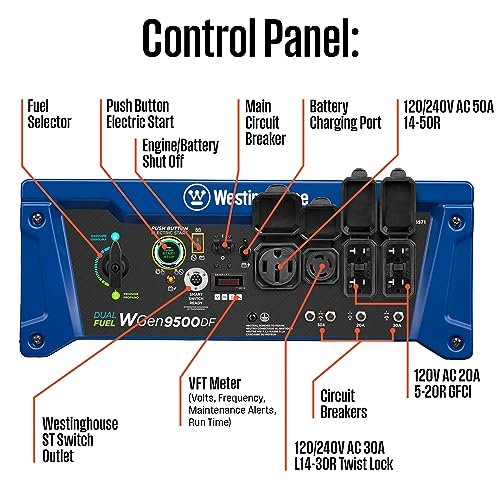
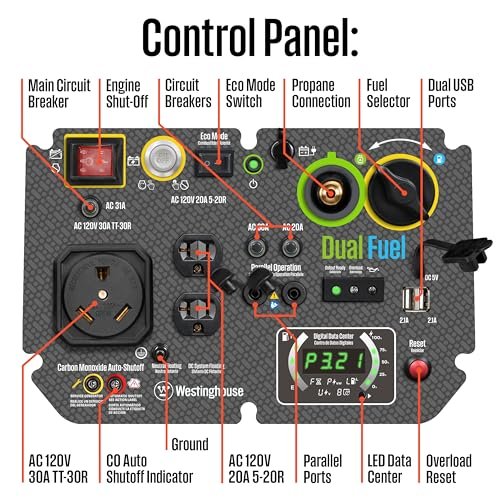
Many 5,000-watt portable generators provide both 120-volt and 240-volt power. Others provide only 120 volts. This difference matters for well pumps, electric furnaces, and other 240-volt appliances.
A generator’s fuel type also affects performance. Gasoline models may lose output as fuel quality declines or as the engine operates at high altitude. Dual-fuel models can run on gasoline or propane, but propane often provides slightly less power.
Read the generator’s specifications carefully. Look for:
• Running watts
• Starting or peak watts
• 120-volt and 240-volt output
• Rated amperage
• Fuel consumption
• Noise level
• Runtime at a stated load
• Carbon monoxide safety features
A 5,000-watt generator at 240 volts can supply roughly 20.8 amps:
5,000 watts ÷ 240 volts = 20.8 amps
At 120 volts, the theoretical current is about 41.7 amps, but the generator’s outlet design and circuit limits control how that power is distributed.

Source: ankersolix.com
Connecting a 5000-watt generator to your home
Do not connect a portable generator directly to a wall outlet. This practice, called backfeeding, can send electricity into utility lines and seriously injure or kill a line worker. It can also damage your home’s wiring and create a fire risk.
The safe options are:
• Use properly rated outdoor extension cords for individual appliances.
• Install a manual transfer switch.
• Use an approved generator inlet and interlock system.
• Have a licensed electrician connect the equipment.
A transfer switch separates your home from the utility grid before generator power enters selected circuits. This prevents dangerous backfeeding and helps you control the load.
Never operate a fuel-burning generator inside a home, garage, basement, shed, or covered porch. Place it outdoors, away from doors, windows, and vents. Carbon monoxide is colorless and odorless, so install working carbon monoxide alarms inside the home and follow the manufacturer’s placement instructions.
Keep the generator dry. Use heavy-duty outdoor-rated cords with the correct amperage rating. Inspect cords for cuts, heat damage, or loose plugs before every use.

Source: amazon.com
Why a whole-house generator is different
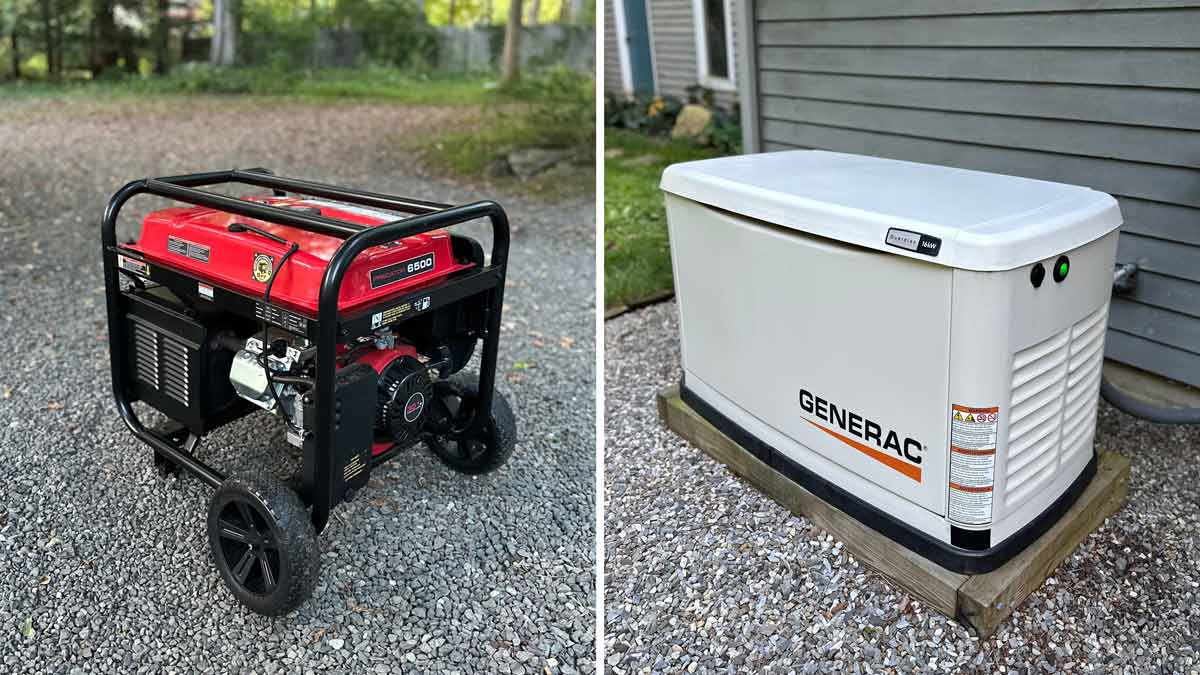
Will a 5000 watt generator run a whole-house in the same way as a standby generator? No. A whole-house standby system is designed to connect to the home’s electrical panel and start automatically during an outage.
Many standby systems produce 10,000 to 26,000 watts or more. Some larger systems can operate central air conditioning, electric appliances, and several household circuits at once. They also use automatic transfer switches and permanent fuel connections.
A 5,000-watt portable generator is more flexible and often costs less. It can be a good choice for short outages, camping, emergency refrigeration, and essential home circuits.
The trade-off is manual setup and load management. You must start the unit, connect it safely, monitor fuel, and prevent too many appliances from running together.
Common mistakes to avoid
Will a 5000 watt generator run a whole-house if you simply plug in several power strips? No. Power strips do not increase generator capacity and may create an overload or fire hazard.
Avoid these common mistakes:
• Adding appliance wattages without checking starting surges
• Running a microwave, toaster, coffee maker, and electric heater together
• Using undersized or indoor extension cords
• Connecting the generator to a wall outlet
• Operating the generator in a garage or enclosed space
• Refueling while the engine is hot
• Ignoring the generator’s 240-volt requirements
• Running the generator at its maximum rating for long periods
• Failing to test the setup before an emergency
One useful lesson from outage planning is that people often count appliances but forget motors. A sump pump may look small on paper, yet its startup surge can affect the whole system. Test your most important combination before severe weather arrives.
How to make a 5000-watt generator more useful
Will a 5000 watt generator run a whole-house more effectively with smart planning? Yes. You can reduce demand and protect the generator by changing how you use electricity.
Try these steps:
- Choose essential circuits instead of powering every circuit.
- Turn off electric space heaters and other high-load devices.
- Start large motor loads one at a time.
- Use LED bulbs instead of incandescent bulbs.
- Keep refrigerator and freezer doors closed.
- Use a gas stove or outdoor cooking method when safe and legal.
- Unplug chargers and electronics that are not needed.
- Use a soft-start system for compatible air conditioners.
- Monitor the generator’s overload indicator and circuit breakers.
- Keep fresh fuel stored according to local rules and safety guidance.
A power meter can help measure real-world loads. Appliance labels provide useful estimates, but actual consumption can be different. Measuring the load gives you a clearer answer than guessing.
How long will a 5000-watt generator run?
Generator runtime depends on fuel tank size, engine design, fuel type, and electrical load. Many portable generators run for several hours on gasoline at a moderate load, but the exact runtime varies by model.
A generator usually consumes more fuel as the load increases. Running at 50% capacity may provide much longer runtime than running near the maximum rating.
To improve runtime:
• Use only the circuits you need.
• Avoid unnecessary high-wattage appliances.
• Maintain the air filter and spark plug.
• Use the correct oil grade.
• Do not overload the unit.
• Follow the manufacturer’s maintenance schedule.
Never refuel a hot generator. Shut it down, allow it to cool, and refuel outdoors. Store fuel only in approved containers and follow local fire rules.
Frequently Asked Questions of Will a 5000 watt generator run a whole-house?
Will a 5000 watt generator run a refrigerator and freezer?
Yes, in most cases. A 5,000-watt generator can usually run a refrigerator and freezer, but their startup surges must be included in the load calculation.
Can a 5000-watt generator run central air conditioning?
Sometimes, but not reliably without careful testing. Central air conditioners have high startup demands, and many 5,000-watt generators cannot handle them without a compatible soft-start device and limited competing loads.
Can a 5000-watt generator run a well pump?
It may run a small well pump if the generator supplies the correct voltage and enough starting watts. Check whether the pump needs 120 or 240 volts and compare its startup rating with the generator’s surge rating.
Can a 5000-watt generator run an electric water heater?
Usually, not alongside other major appliances. Many electric water heaters use 3,000 to 5,500 watts by themselves, which can consume nearly all of a 5,000-watt generator’s capacity.
Is 5000 watts enough for a house during a power outage?
It can be enough for essential circuits in many homes. It is usually not enough to run every appliance, especially in homes with electric heat, central air, an electric range, or an electric water heater.
Can I plug a 5000-watt generator into my house?
Never plug it into a standard wall outlet. Use outdoor-rated cords for individual appliances or have a licensed electrician install a transfer switch or approved interlock system.
Conclusion
Will a 5000 watt generator run a whole-house? Most often, it will not run every appliance, but it can provide dependable power for essential systems when the load is planned carefully.
The best approach is to calculate running and starting watts, confirm voltage needs, leave a safety margin, and use a safe transfer method. If your home depends on electric heat, central air, or several large 240-volt appliances, consider a larger generator or a professionally installed standby system.
Make a written outage load plan before you need it. Check your generator manual, test your essential circuits, and consult a licensed electrician for home connections. Share your generator setup or questions in the comments, and explore more emergency power guides to prepare with confidence.