Can a Lawn Mower Cut Leaves?
If you've got mature deciduous trees, you've probably wondered: can a lawn mower cut leaves? The answer is yes, but it depends on several conditions. Raking is slow, and a single mature maple can drop up to 70 pounds of leaves.
Your mower type and leaf condition change everything.
Most turfgrass extension research confirms that dry leaves process well in 2 to 3 passes with a mulching blade. Start with a deck height of 3 to 4 inches. If your leaves are dry, you're in good shape.
Image source: Web (Bing) / rooftopgardens.ca (Web image (fair-use with source credit))
Quick Answer
Can a lawn mower cut leaves? Yes, most standard mowers cut and mulch dry leaves effectively. Dry leaves process best in 2 to 3 passes with a mulching blade.
Wet leaves clog the deck and need a different approach. Your deck height, blade type, and leaf dryness all determine the result.
The Leaf Problem Every Homeowner With a Deciduous Tree Knows
If you've got mature deciduous trees on your property, fall leaf cleanup is a real chore. A single mature maple can drop up to 70 pounds of leaves in one season. Oak, sweetgum, and birch pile on even more.
Most homeowners default to raking and bagging. It's slow, and bags fill up fast. Municipal leaf collection isn't available everywhere.
When it is available, those programs often cost extra.
The bigger problem? Leaf mats left on grass smother the turf underneath. Within weeks, you'll see yellowing patches and fungal disease like snow mold.
The EPA recommends composting leaves over landfill disposal when possible.
Skipping cleanup isn't really an option. That's why so many people ask whether their mower can handle the job.
What Determines Whether Mowing Your Leaves Actually Works
Not every mowing job gives you the same result. Four factors control the outcome.
- Leaf dryness: Dry leaves shred cleanly. Wet leaves turn to paste and clog the deck.
- Leaf volume: A light scatter mulches easily. A heavy mat needs multiple passes.
- Mower type: Mulching mowers are designed for this. Standard side-discharge mowers can work but do less.
- Blade type: A mulching or gator blade chops leaves finer than a standard blade.
Here's the practical takeaway. If your leaves are dry, you've got a mulching mower (or at least a mulching blade), and you're starting with a high deck setting, you'll get good results. If any of those conditions change, your strategy needs to adjust.
As of 2026, most riding mowers sold with mulching capabilities are designed to handle moderate leaf loads without clogging. But "moderate" is the key word.
Step-by-Step: How to Cut Leaves With a Lawn Mower (Dry Leaves)
Here's the workflow when your leaves are dry and your mower is ready.
- Set the deck height high. Start at 3 to 4 inches. You want the mower to sit above the thickest leaf patches.
- Install a mulching blade if you have one. It chops leaves into finer pieces than a standard blade.
- Make the first pass. Drive over the leaves and let the blade do the work. Don't rush.
- Pick up the clumps. Any large leaf piles that didn't shred should be broken up or bagged.
- Make a second pass with the deck slightly lower. Per Penn State Extension guidance, 2 to 3 passes produce a clean mulch.
- Leave the fine mulch on the lawn. Small leaf fragments spread evenly feed the soil as they decompose.
Expect this to take 1.5 to 2 times longer than a normal grass mow.
Wet Leaves? Adjust Your Strategy or Mow Them in Patches Instead
Wet leaves are the number one reason people give up on leaf mowing.
When leaves are damp, the blade turns them into a paste instead of fine mulch. That paste clogs the deck, strains the engine, and leaves you with a half-mowed mess.
If your leaves are wet, you've got three options:
- Wait for dry weather. Even one sunny day after rain helps.
- Mow in small patches. Do short sections, then stop to clean the deck.
- Use a leaf blower first. Move the wet leaves into a dry pile. Let them dry overnight, then mow the next day.
Pushing through wet leaves with a standard blade is rarely worth the mess. Patience saves you time.
Mulching Blade vs. Standard Blade: Why the Blade You Have Changes Everything
The blade you're using changes everything about leaf mowing results.
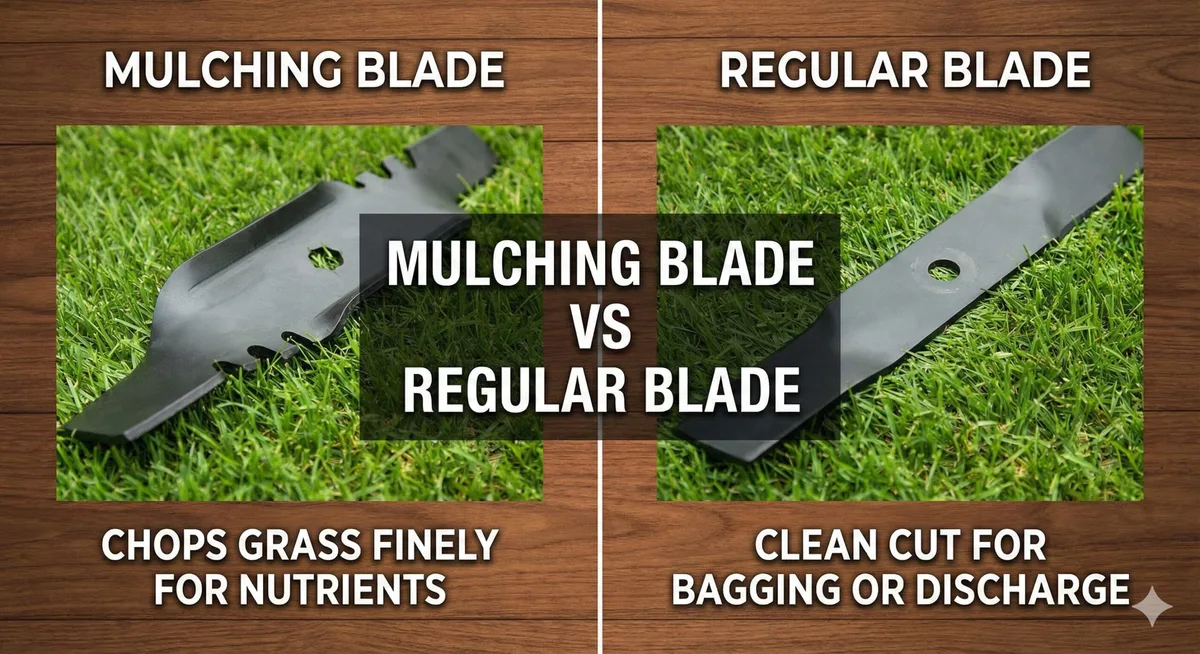
Image source: Web (Bing) / bestlawntools.com (Web image (fair-use with source credit))
Here's how they compare:
| Feature | Mulching Blade | Standard Blade |
|---|---|---|
| Leaf cutting | Shreds into fine pieces | Chops into larger chunks |
| Deck clogging | Low (dry leaves) | Higher |
| Passes needed | 2 to 3 | 3 or more |
A mulching blade (sometimes called a gator blade) has more cutting edges. It chops leaves into smaller pieces that decompose faster on the lawn. A standard blade produces larger chunks that sit on top of the grass.
If you're serious about mowing leaves instead of bagging them, switching to a mulching blade is the single biggest upgrade you can make. Most manufacturers sell them as aftermarket parts that fit common mower models.
Mulch, Bag, or Discharge? A Quick Decision Guide for Leaf Season
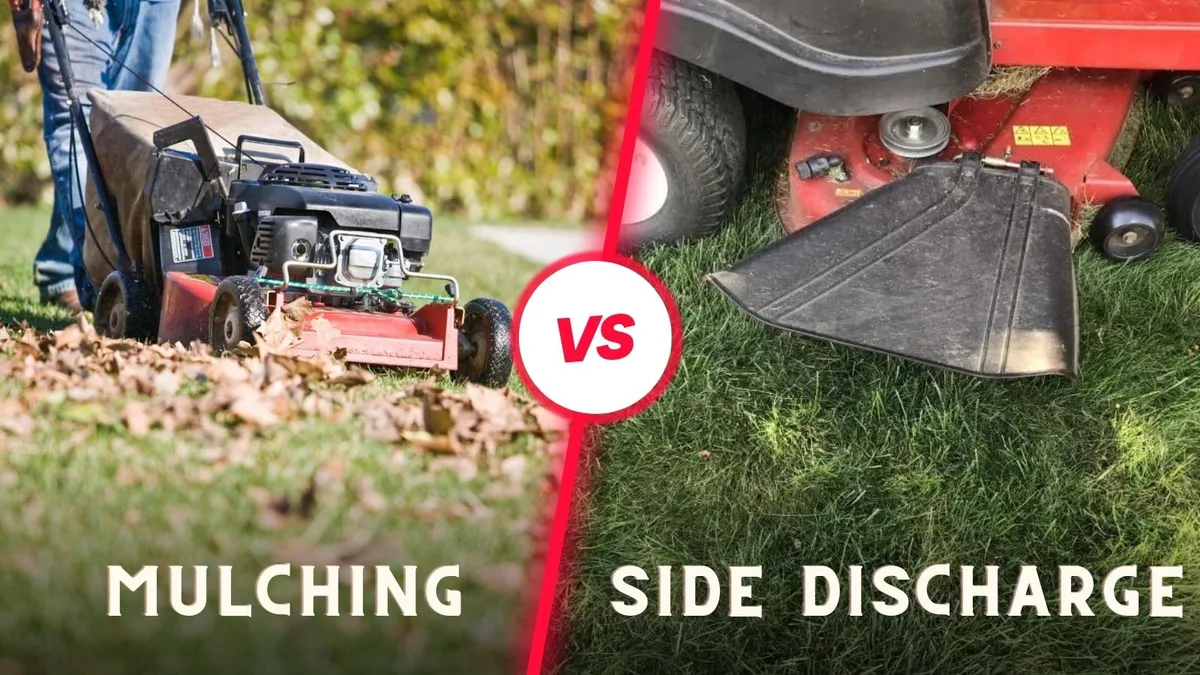
Image source: Web (Bing) / hautelifehub.com (Web image (fair-use with source credit))
Your mower offers three ways to handle leaves. The right choice depends on your conditions. Here's how to pick.
Mulch in place works best when leaves are dry, volume is moderate, and you've got a mulching blade. You return nutrients to the soil without extra work.
Bag the leaves when the volume is heavy or the leaves are wet. You'll also want to bag if your property has a septic drain field. Thick mulch layers can block airflow to the soil there.
Side discharge suits large properties where scattering works fine. Just spread the piles out so they don't smother the grass underneath.
| Situation | Best Option |
|---|---|
| Dry leaves, moderate volume | Mulch in place |
| Thick leaf carpet, 3+ inches | Bag after first pass |
| Wet leaves, light volume | Wait, then mulch |
| Large property, scattered leaves | Side discharge |
If you're unsure, start by mulching. You can always adjust on the second pass.
Common Mistakes That Clog Decks, Kill Grass, and Waste Time
Leaf mowing failures almost always trace back to the same handful of errors.
Cutting wet leaves. This is the most common mistake. Wet leaves turn to pulp under the blade. They clog the deck and strain the engine.
Wait for dry conditions whenever you can.
Starting with the deck too low. A thick leaf mat on grass at 1.5-inch height means scalping. Start at 3 to 4 inches. Lower the deck gradually over subsequent passes.
Letting the deck get dirty. Leaf residue builds up and causes clogging. Clean the underside after every leaf session with a hose and a plastic scraper.
Using a dull blade. A dull blade pushes leaves around instead of chopping them cleanly. Sharpen your blades before leaf season, or install a fresh mulching blade.
Piling mulch too thick in one spot. Thick leaf mats block sunlight and airflow to the grass. Keep the mulch layer thin. If it's more than an inch deep, spread it out or bag some of it.
When Mowing Leaves Won't Cut It: Leaf Blowers, Vacuums, and When to Call In Backup
Sometimes a mower alone isn't enough. Here's when to bring in other tools.
Heavy leaf loads. Three or more inches of leaves covering a large area will take too many passes and strain your engine. Use a leaf blower first to gather the leaves into smaller piles. Then mulch those sections one at a time.
Wet, matted leaves. Clumped wet leaves defeat a mower. A leaf vacuum attachment handles this better. It shreds and collects in one step.
Standalone leaf vacuums also work well for this situation.
Big trees, big volume. If you've got mature oaks or maples dropping heavy leaf loads, a riding mower with a mulching kit handles the job better than a push mower. For really large properties, a zero-turn mower with a bagging system speeds things up considerably.
When to call professionals. If your property has significant acreage or heavy tree coverage, a landscaping crew may cost less than maintaining specialized equipment. This is especially true for commercial-scale leaf loads during peak fall season. Several mower manufacturers also sell OEM mulching kits that fit their existing riding mower models.
FAQs: Leaf Mowing Questions People Actually Ask
Can you mow leaves with any lawn mower?
Yes, most standard mowers can cut dry leaves. Results vary by blade type and deck design. A mulching mower or mulching blade produces finer pieces than a standard blade.
Push mowers work for light loads. Riding mowers handle heavier volumes better.
How many passes does it take to mulch leaves?
Typically 2 to 3 passes for dry leaves with a mulching blade. Thick or damp leaf mats may need 4 or more. The goal is small, even pieces.
If you still see large leaf chunks after 3 passes, bag some and switch your approach.
Is it better to mulch leaves or bag them?
Mulching returns nutrients to the soil and saves time. Bagging removes excess organic material that could smother grass. The USDA supports composting leaves as a soil-building practice.
Mulching works well for moderate volumes. Bagging works better for heavy accumulation.
Can I mow leaves without a mulching blade?
Yes, but results are noticeably coarser. A standard blade chops leaves into larger pieces that take longer to decompose. A mulching blade shreds them finer.
Upgrading to a mulching blade makes a real difference in how quickly the mulch breaks down on the lawn.
Should I mow leaves when they're wet?
No. Always mow when leaves are dry. Wet leaves clog the deck, stall the engine, and turn to paste instead of mulch.
Wait for at least 24 hours after rain before attempting to mow leaves.