Why Is My Lawn Mower Making a Loud Noise?
Why is my lawn mower making a loud noise? If your mower has suddenly gotten louder, rattling, knocking, or grinding, something inside it has changed. Most of the time, the noise points to a specific, fixable issue like a loose blade, a worn belt, or a clogged muffler.
The good news is that you don't need a mechanic's degree to figure out what's going on.
Gas-powered lawn mowers typically produce between 80 and 100 decibels of noise, according to manufacturer specifications. That range covers a healthy mower operating normally. When yours starts exceeding that baseline significantly, it's pointing to a problem we can trace.
Let's walk through the most common causes and how to fix them.
Quick Answer
Most loud lawn mower noise traces to a loose blade or worn drive belt. Low oil, a dirty air filter, or stale fuel also cause it. Check blade bolts, belt tension, oil level, and fuel quality first.
If you hear metallic grinding or engine knock, stop using the mower.
Image source: Bing (Web (fair-use with source credit))
Why Your Lawn Mower Suddenly Sounds Like a Race Car
Something changed. Your mower ran quiet last season, and now it screams when you start it. That doesn't happen randomly.
A sudden increase in noise means a component shifted, wore down, or broke. The real question isn't whether something's wrong. It's what went wrong and how urgent it is.
If you can identify the type of noise, you've already solved half the problem. This guide walks you through that diagnosis step by step, then helps you decide what to do next. You'll also see where most people waste time guessing instead of checking.
Here's the financial context. Small engine repair shops charge $50 to $100 per hour in labor as of 2026. Catching a noise issue early often means a $20 part swap instead of a $200+ repair bill.
Knowing where to look is what saves you money.
The Lawn Mower Noise Diagnostic Decision Tree
Don't guess. Work through this diagnostic flow and you'll narrow the problem down fast.
Step 1: Identify the noise type. Is it a knock, a squeal, a grind, a rattle, a sputter, or loud exhaust? The sound type immediately points to a specific component group.
Step 2: Identify the noise source. Is it coming from the engine block, the blade and deck, the drivetrain, or the muffler? Run the mower briefly and listen from each angle to localize it.
Step 3: Test under load. Run the mower at full throttle on grass. If the noise appears only when cutting, the issue is likely in the blade, belt, or deck. If it appears at idle, the problem is probably in the engine or fuel system.
Step 4: Run these quick checks.
| Check | What to Look For | If It Fails |
|---|---|---|
| Engine oil | Level on dipstick, color, smell | Change oil, then retest noise |
| Spark plug | Clean electrode, proper gap at 0.030 inches | Replace plug, set gap to spec |
| Air filter | No clogging, no dark residue | Clean or replace filter |
| Blade bolt | Tight, no wobble when rocked by hand | Torque to 30 to 50 ft-lbs |
| Drive belt | No cracks, no glazing, proper tension | Replace belt or adjust tension |
Step 5: Match your findings to a specific cause. Once you've identified the noise type and run the quick checks, you can usually narrow the problem down to a single component. From there, the fix is straightforward.
Each fix path is covered in the next section.
Decoding the 6 Loud Noises and What Each One Means
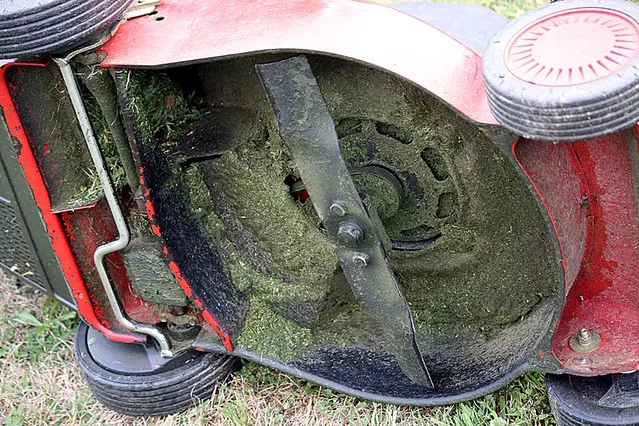
Image source: Bing (Web (fair-use with source credit))
Each type of noise points to a different problem. Here's how to decode what you're hearing.
Engine Knocking or Pinging
Low or dirty engine oil is the most common cause. Carbon buildup and fuel octane issues can also trigger it. Change the oil, inspect the spark plug, and listen again.
If the knock persists after an oil change, internal damage is likely.
Stop using the mower at that point.
Squealing or High-Pitched Whine
A worn drive belt is almost always the culprit. Inspect the belt for cracks and glazing, which is a shiny, hardened surface. Check the tensioner pulley for wear or seizure.
A replacement belt costs $10 to $150 depending on mower type.
Grinding or Scraping Sound
Debris under the blade is the usual suspect. Disconnect the spark plug wire, then rotate the blade by hand. If you feel resistance, something is stuck in the blade deck.
Remove the debris and check the blade for chips or bends.
Rattling or Vibrating Noise
A loose blade bolt or unbalanced blade causes this. Hang the blade on a nail to check balance. If one side dips, the blade is bent or chipped.
Torque the bolt to spec and replace the blade if needed.
Sputtering, Backfiring, or Chugging
Stale fuel, a clogged carburetor, or a dirty air filter causes rough running. Drain old fuel, replace the spark plug, and clean or replace the air filter. If noise continues after fresh fuel and new parts, a carburetor rebuild may be the next step.
Loud Exhaust or Muffler Noise
A clogged, rusted, or cracked muffler produces louder-than-normal exhaust. Inspect the muffler for holes, loose connections, and damaged baffles. A replacement muffler typically costs $20 to $80 for most residential mowers.
When to Stop Using the Mower Immediately
Some noises aren't just annoying. They're warnings. Continuing to run the mower in these situations can turn a small repair into a costly one, and in rare cases, it can cause injury.
Stop mowing and inspect the mower if you notice any of these:
- Burning smell from the engine, which signals overheating or an electrical fault
- Metallic grinding paired with engine vibration, which points to crankshaft or piston damage
- Knocking that's getting louder over time, which means engine seizure is likely
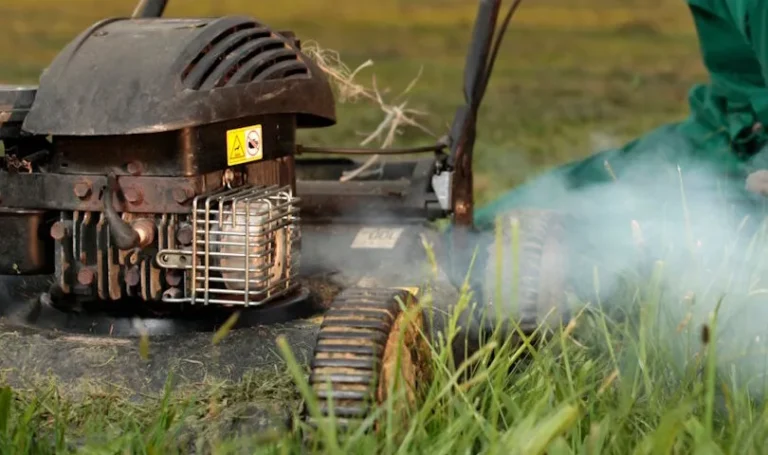
- Excessive backfiring or exhaust smoke, which indicates fuel system or valve damage
- Loose or wobbling blade, which poses a projectile hazard
If you're working on the mower yourself, always disconnect the spark plug wire before touching the blade or deck. The Consumer Product Safety Commission lists this as a standard safety practice for all small engine repair.
Electric and battery mowers operate in the 60 to 75 decibel range. Robotic mowers sit even lower at 55 to 70 decibels. If your gas mower sounds like one of those electric models, something is wrong with the exhaust system.
Per OSHA noise standards, sustained exposure above 85 decibels causes hearing damage over time. If you run a loud mower regularly, wear ear protection. A standard pair of earplugs rated at 25 to 30 decibels of noise reduction brings you into a safe range.
If your mower is under warranty, document the noise before continuing use. Running a mower with a known mechanical issue can void coverage in some cases. Take a short video and note the date you first noticed the problem.
You might also want to check your local noise ordinances. Many cities and HOAs set quiet hours or decibel limits for residential lawn equipment. Fixing the noise quickly protects you from complaints and potential fines.
The 7 Mower Noise Mistakes That Cost You Money
Some noise problems get worse because of how people react to them. Here are the mistakes we see most often, and how to avoid each one.
Ignoring noise that only happens under load. If your mower sounds fine at idle but screams when cutting grass, the problem is in the blade, belt, or deck. These issues don't go away on their own.
Tightening a loose blade bolt without checking the blade. If the blade is bent or unbalanced, a tightened bolt won't fix the vibration. Check the blade balance before you reassemble everything.
Replacing the drive belt without inspecting the pulleys. A new belt on a worn tensioner pulley will squeal again within weeks. Always check the pulley condition first.
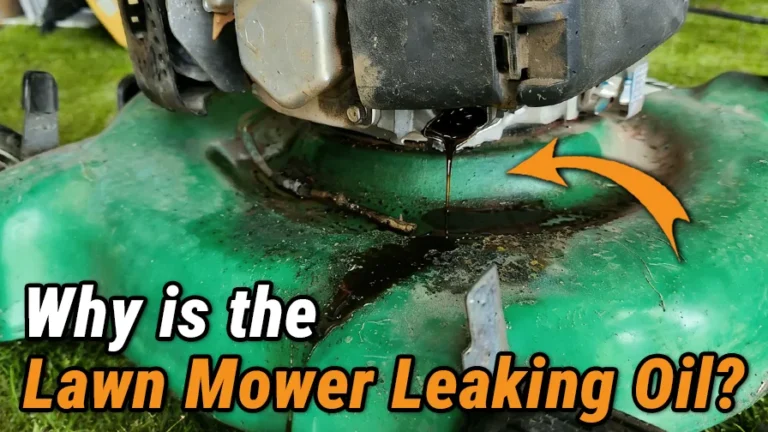
Running the mower with low oil hoping the noise settles. Low oil causes bearing wear. A $50 oil change now prevents a $300+ engine rebuild later. Check your oil every time before you mow.
Treating routine maintenance as optional. Spark plugs, air filters, and oil changes aren't just fix-it tasks. They're scheduled maintenance. Follow the intervals in your owner's manual and many noise issues never develop.
Using the wrong fuel blend. Ethanol content in stored fuel degrades over time and damages mower carburetors. Use fresh fuel with less than 10% ethanol content. Don't leave fuel sitting in the mower over winter.
Running a mower with a damaged blade. Chipped or bent blades stress the engine and spindles, compounding vibration and noise. Replace or sharpen the blade as soon as you notice damage.
Your Action Plan: Repair, Replace, or Call a Pro
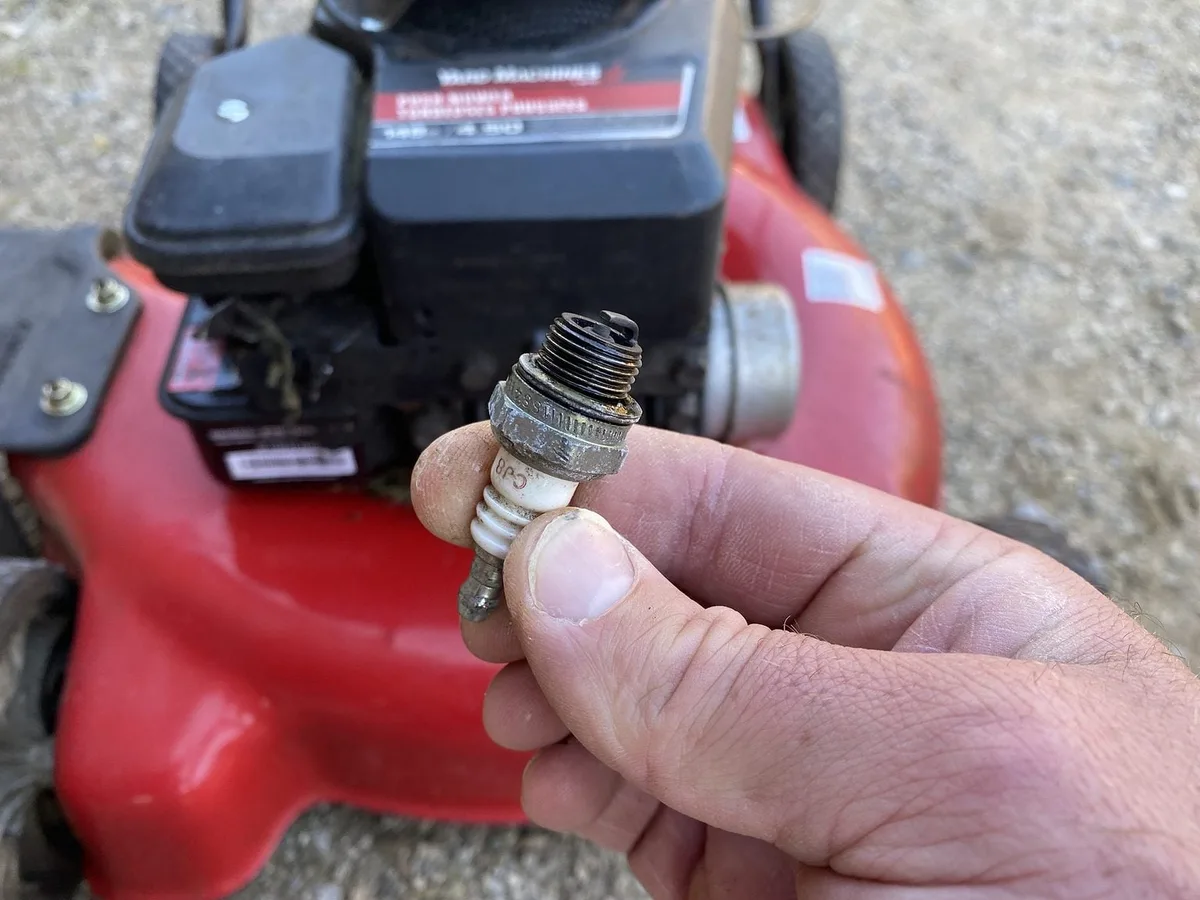
Image source: Bing (Web (fair-use with source credit))
Some noise issues are simple weekend fixes. Others mean the mower is done. Here's how to figure out which category you're in.
DIY territory: blade replacements, spark plug changes, air filter swaps, fuel system flushes, muffler bolts, oil changes, and drive belt replacements. These are all covered in standard owner's manuals. Parts typically run $20 to $100 for residential mowers.
Most take 20 to 60 minutes with basic hand tools.
Professional repair territory: persistent engine knock after basic maintenance, damaged spindles or crankshafts, carburetor rebuilds, and electrical ignition problems. These need specialized diagnosis and tools. Repair shops charge $50 to $100 per hour in labor.
Time to replace: engine knock that survives an oil change and tune-up, a deck that's cracked or warped, or a mower over 10 years old where multiple systems are failing at once. When repair costs approach half the price of a new mower, replacement makes more sense.
Quick decision checklist:
- What type of noise is it?
- How long has it been happening?
- What have you already checked?
- How old is the mower?
- What would a new mower cost?
Blade, belt, and routine maintenance issues account for the majority of what repair shops see. Most of them fall squarely in the DIY range.
Frequently Asked Questions
Why is my lawn mower making a loud noise only when I turn the blade on?
When noise appears only with the blade engaged, the problem is almost always in the blade assembly, deck, or belt system. Check for debris caught under the blade, inspect blade bolt tightness, and look for belt wear. Engine noise under load alone can also point to a carburetor or fuel system issue.
Is it safe to keep using a loud lawn mower?
It depends on what's causing the noise. A slightly louder-than-usual exhaust might not be urgent. Metallic grinding, engine knock, or a wobbling blade are not safe to ignore.
Continued use with these symptoms can cause catastrophic engine damage and increases the risk of injury from a failing blade.
What does a lawn mower knocking noise mean?
A knocking noise usually signals low engine oil, carbon buildup, or worn bearings. Start with an oil change and inspect the spark plug. If the knock continues after that, internal engine damage is likely.
Stop using the mower and have it evaluated before the problem escalates.
How much does it cost to fix a loud lawn mower?
Simple fixes like blade replacement, spark plug changes, and belt swaps cost $20 to $150 in parts. Labor at a repair shop adds $50 to $100 per hour. Most residential mower noise issues fall in the DIY range.
Internal engine repairs can run $200 to $400 or more.
Why is my riding mower making a loud noise from the deck?
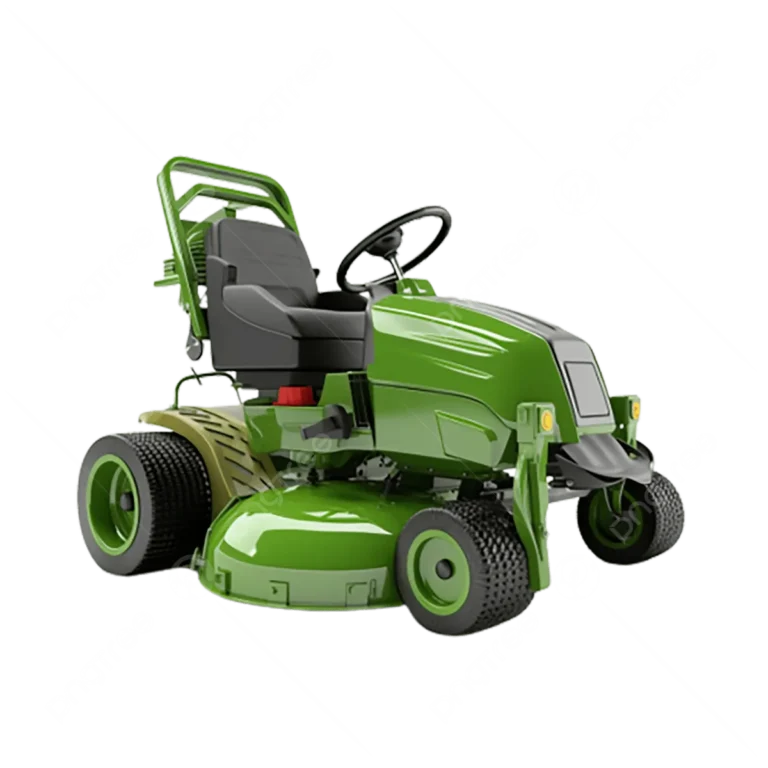
Deck noise on a riding mower usually points to worn spindle bearings, loose blade bolts, or debris under the deck. Zero-turn mowers are especially prone to spindle wear because they run faster and under heavier loads. Inspect the blade, spindle, and belt tension before blaming the engine.