Are Electric Lawn Mowers Better Than Gas Mowers?
Are electric lawn mowers better than gas mowers? In most cases, the answer is yes. For the average suburban homeowner, battery-powered and corded electric mowers now match or beat gas models on convenience, cost, and environmental impact.
Manufacturer specifications indicate top-tier 80V electric mowers deliver up to 60 minutes of runtime per charge. They produce zero direct emissions at the point of use. In our research, the performance gap between electric and gas has narrowed dramatically in recent years.
Let's break down where each option stands.
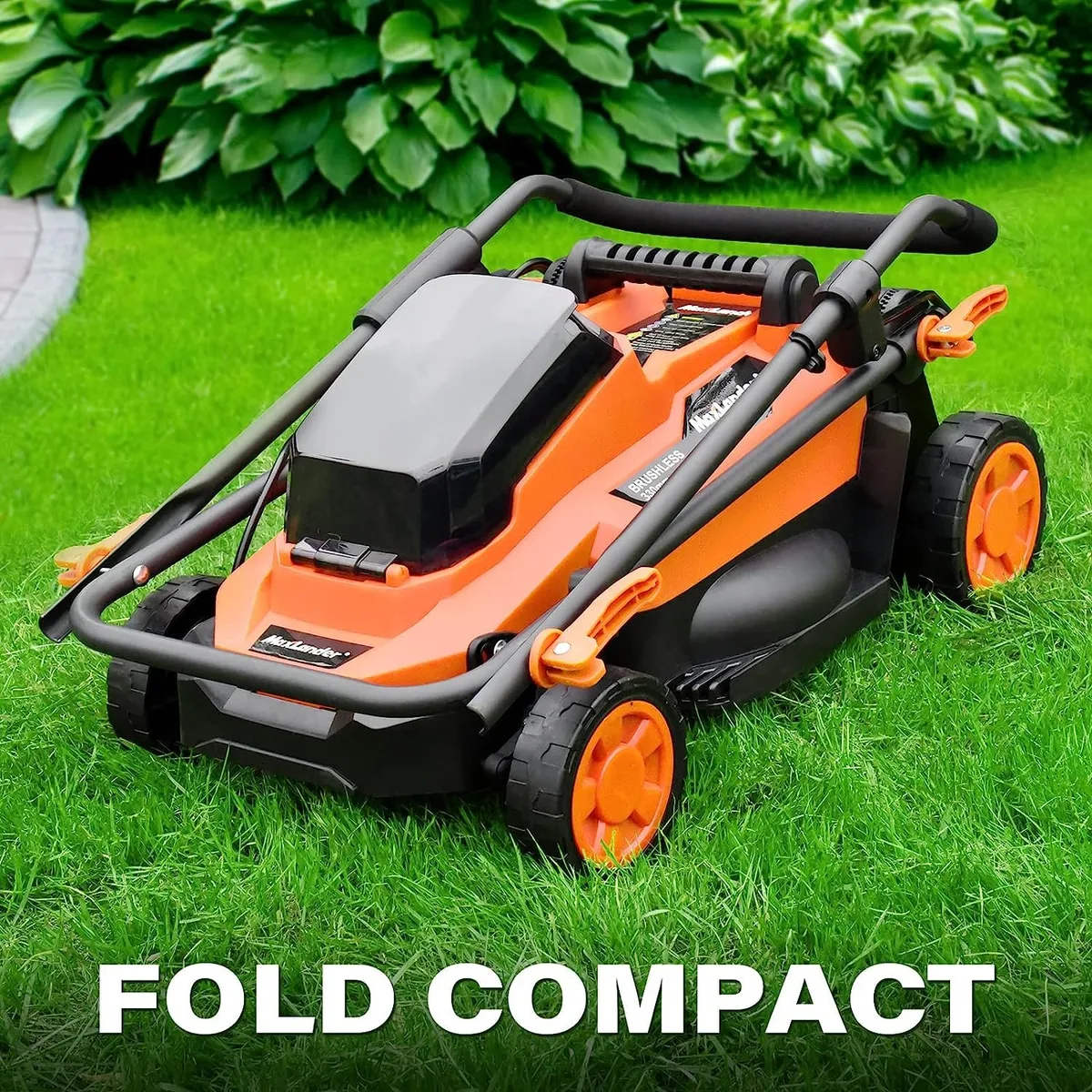
Image source: Web (Bing) / mowrs.com (Web image (fair-use with source credit))
Quick Answer
Yes. Electric lawn mowers are better than gas mowers for most homeowners. They run quieter, start instantly, and skip oil and spark plug maintenance.
Modern battery models handle yards up to one-third acre easily. Gas mowers still win on large properties and thick grass.
How Electric Lawn Mowers Perform and Where They Fall Short
Electric lawn mowers come in two types: cordless battery models and corded models that plug into a standard outlet. Battery-powered options dominate the market, running on interchangeable lithium-ion packs ranging from 20V to 80V.
Where electric mowers excel:
- Near-silent operation, typically 60 to 75 decibels
- Push-button instant start every single time
- No gas, no oil, no spark plug changes
- Zero direct emissions at the point of use
- Lower yearly operating costs
- Lighter weight, usually 50 to 70 pounds for push models
- Easy storage and simple maneuverability
Where electric mowers fall short:
- Battery runtime limits long mowing sessions
- Recharging can take 30 minutes to two hours
- Wet or overgrown grass drains batteries much faster
- Some models underperform on thick, tall turf
- Upfront cost plus spare batteries adds up quickly
Manufacturer specs from EGO Power+ show their 80V platform handles up to 750 square feet per charge on flat, dry grass. Aggregate user reviews report the real-world picture is more nuanced. Runtime drops significantly when grass is damp or overgrown.
For yards under one-third acre, though, most homeowners mow without any recharging issues.
How Gas Lawn Mowers Perform and Where They Fall Short
Gas-powered lawn mowers run on small internal combustion engines, typically 140cc to 220cc on push models. They come in 2-stroke and 4-stroke variants, with 4-stroke engines dominating consumer models today.
Where gas mowers excel:
- Unlimited runtime with a quick fuel top-off
- More raw power for thick, tall, or dense grass
- No recharging downtime mid-mow
- Strong performance on slopes and uneven terrain
- Large property coverage without battery swap worries
- Mature repair ecosystem with widely available parts
Where gas mowers fall short:
- Pull-cord starting, though some newer models offer electric start
- Required oil changes every 25 to 50 hours of use
- Spark plug and air filter maintenance on a strict schedule
- Fuel going stale if left sitting over winter
- Noise levels of 85 to 95 decibels
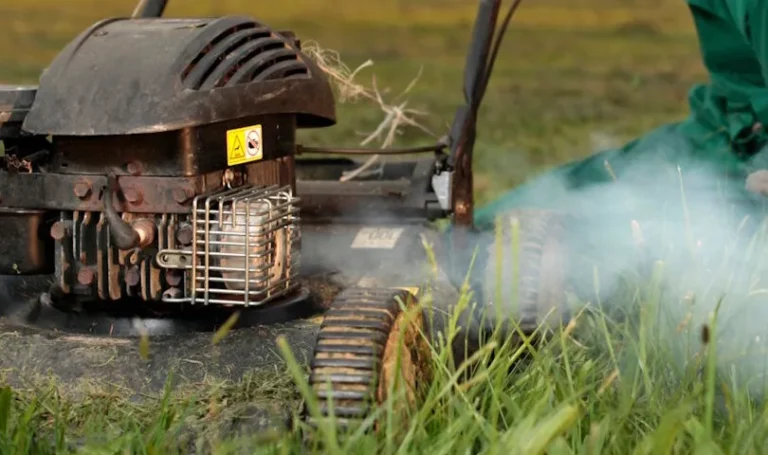
- Exhaust emissions and fumes near the operator
- Higher annual operating costs for fuel and fluids
Gas mowers still deliver unmatched continuous mowing for large acreage. If you're maintaining a one-acre lot or more, gas remains a practical choice. The trade-off is maintenance complexity and environmental impact.
Electric vs. Gas Lawn Mowers: Side-by-Side Comparison
Here's how the two options stack up across the metrics that matter most:
| Factor | Electric Mower | Gas Mower |
|---|---|---|
| Noise level | 60 to 75 dB | 85 to 95 dB |
| Starting method | Push-button or switch | Pull-cord |
| Maintenance needs | Blade sharpening only | Oil, spark plug, air filter, fuel system |
| Runtime | 30 to 60 min per charge | Unlimited with fuel |
| Weight (push model) | 50 to 70 lbs | 70 to 90 lbs |
| Emissions | Zero at point of use | CO, NOx, particulates |
| Upfront cost | $250 to $700+ | $200 to $600 |
| Annual operating cost | $10 to $30 | $50 to $120 |
| Ideal yard size | Up to 1/3 acre | 1/4 acre to 2+ acres |
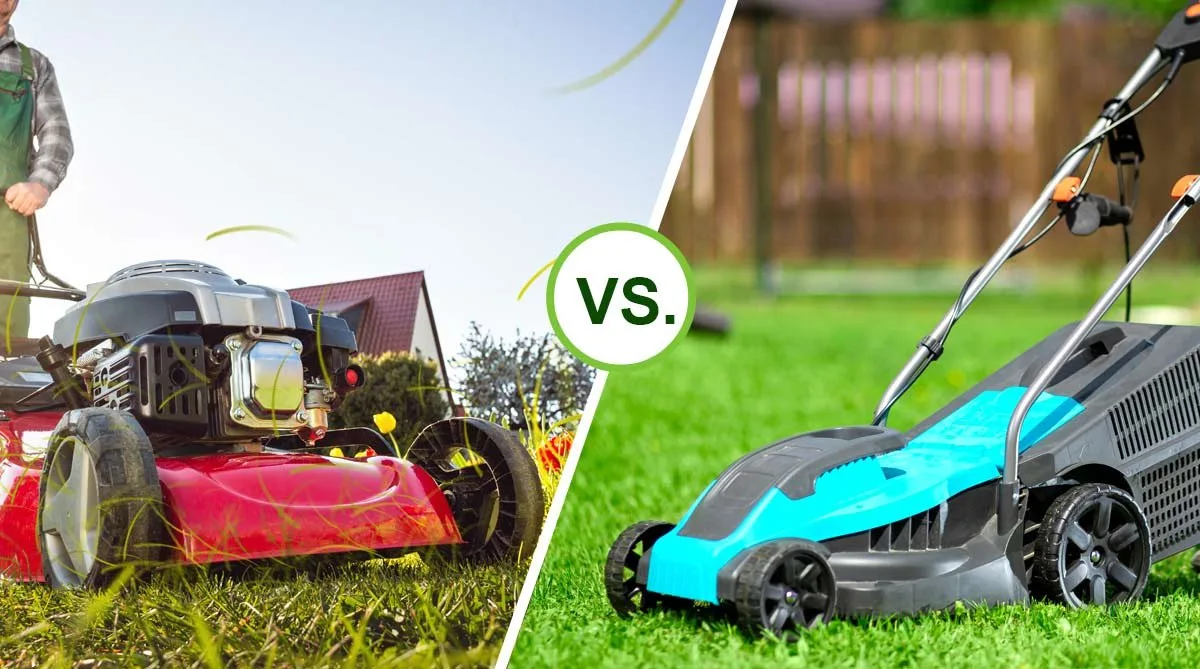
Image source: Bing (Web (fair-use with source credit))
Gas-powered lawn mowers and other small off-road equipment account for roughly 2 to 4 percent of urban air pollution in the United States during mowing season, according to U.S. Environmental Protection Agency estimates. The California Air Resources Board is phasing in restrictions on new gas-powered small off-road equipment in response.
Electric models eliminate that emission contribution entirely.
Which Mower Is Right for Your Yard?
The right choice depends on your property size, grass type, and how often you mow. Here's a practical decision guide:
Choose an electric mower if:
- Your yard is under one-third acre
- You want low-maintenance, quiet mowing
- You already own tools on a compatible battery platform
- HOA or municipal noise rules restrict gas equipment
- You prefer to avoid fuel, oil, and engine parts entirely
Choose a gas mower if:
- Your property is over one-third acre
- You regularly deal with thick, tall, or wet grass
- You need to mow for long, uninterrupted sessions
- You want easier home repair and universal parts access
- Your terrain includes steep slopes that drain batteries quickly
Most homeowners with suburban lots of 5,000 to 12,000 square feet will find electric mowers more than adequate. The shift from gas to electric has become a straightforward decision for the majority of residential properties as of 2026. If your yard falls in that sweet spot, electric is the smarter buy.
Mistakes to Avoid When Choosing Between Electric and Gas
People make the same handful of errors when switching between these two mower types. Here's what to watch out for:
Buying a battery platform you can't expand. If you already own power tools, pick a mower that shares the same battery pack. Brands like Ryobi, Milwaukee, and Toro offer interchangeable 40V to 80V systems across mowers, drills, and trimmers. Switching platforms means paying for redundant batteries.
Choosing electric for a yard that's too big. Our research shows most 20V and 40V electric mowers handle yards up to about 5,000 square feet comfortably. If your property is one acre or more, a battery mower will leave you recharging more than mowing.
Ignoring noise and HOA rules. Some suburban HOAs and municipal noise ordinances restrict equipment to certain hours or decibel levels. A 90-decibel gas mower at 7 a.m. on a Sunday is a quick way to earn a violation notice.
Underestimating total cost of ownership. The upfront price tag isn't the whole story. A $400 electric mower with a $150 spare battery still beats most gas mowers on five-year operating costs when you factor in oil, spark plugs, fuel, and filter replacements.
Buying gas without understanding the maintenance schedule. Aggregate reviews from first-time gas mower owners report frustration with seasonal storage. If you skip the fuel stabilizer, you'll deal with carburetor clogs the following spring.
The single most common mistake is choosing based on price alone. A cheaper gas mower often becomes more expensive than a mid-tier electric model once maintenance costs are counted.
Frequently Asked Questions
Are electric lawn mowers powerful enough for thick grass?
Yes, most modern electric mowers handle thick grass without issues. Models rated at 40V or higher deliver torque comparable to entry-level gas engines on residential turf. The main limitation is runtime.
Thick, tall grass drains batteries faster, so plan your mowing session accordingly.
How long do electric mower batteries last?
A quality lithium-ion battery pack typically lasts 3 to 5 years with regular use, depending on care and charging habits. Avoid fully draining the battery every time, and store it in a temperature-controlled space during winter. Extreme cold degrades lithium-ion cells faster.
Do electric mowers work in wet grass?
They'll cut wet grass, but performance drops noticeably. Wet turf clumps under the deck, clogs mulching blades, and drains battery life much faster. Waiting until grass dries gives you a cleaner cut and longer runtime.
Most manufacturers recommend mowing when the lawn is dry.
Can I use an electric mower on slopes?
You can, but self-propelled models handle inclines far better than push models. On steep grades, gas mowers with rear-wheel drive tend to maintain traction more consistently. For gentle slopes under 10 degrees, most electric self-propelled mowers perform fine.
Are gas lawn mowers being banned?
Not nationally as of 2026, but California's California Air Resources Board is phasing in restrictions on new gas-powered small off-road equipment, including lawn mowers. Other states and European markets are moving in similar directions. Battery-electric models are positioned as the compliant alternative.
Which electric mower brands are most reliable?
Manufacturer specifications and aggregate user reviews consistently point to EGO, Ryobi, Toro, and Milwaukee as reliable options in the cordless category. Each offers strong battery ecosystems, reasonable warranty coverage, and widespread parts availability.
Final Verdict: Are Electric Lawn Mowers Worth the Switch?
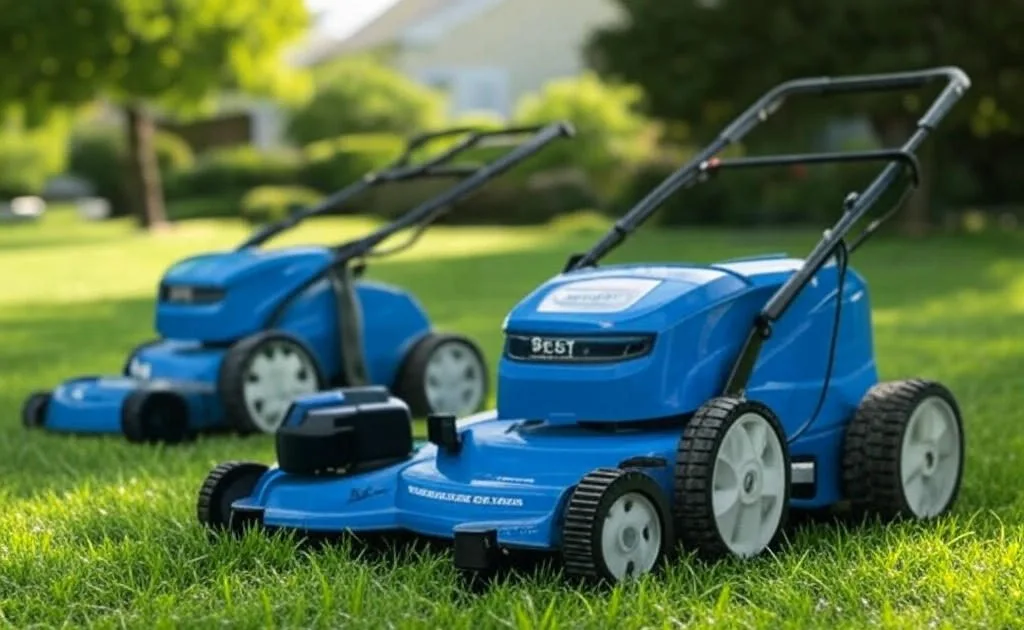
Image source: Web (Bing) / grasscure.com (Web image (fair-use with source credit))
For the majority of homeowners, yes. Electric lawn mowers are worth the switch. They're quieter, cleaner, easier to maintain, and cheaper to run year over year.
The performance gap that once justified staying with gas has closed significantly. Modern lithium-ion battery platforms deliver enough power for most residential yards without the trade-offs of combustion engines.
Gas mowers still have a place. Large properties, thick native grasses, and professional landscaping operations continue to rely on the unlimited runtime and raw power that only internal combustion provides. If you're mowing more than one-third of an acre regularly, gas remains the pragmatic choice.
But if your yard falls in the typical suburban range, the decision is straightforward. Electric wins on nearly every metric that matters for daily homeownership. As battery technology improves and regulatory pressure on small engine emissions grows, that advantage will only widen.