How Long Does It Take to Charge a Lawn Mower Battery?
How long does it take to charge a lawn mower battery? The answer depends on the chemistry inside your mower, the charger you're using, and the temperature outside. One person's 30-minute quick charge is another person's overnight wait.
Manufacturer specifications indicate that lithium-ion batteries typically charge in one to three hours on a standard charger. Lead-acid batteries take six to twelve hours. If you've been using the wrong charger for months, your battery may be failing faster than expected.
Let's break down what actually determines your charging time.
Quick Answer
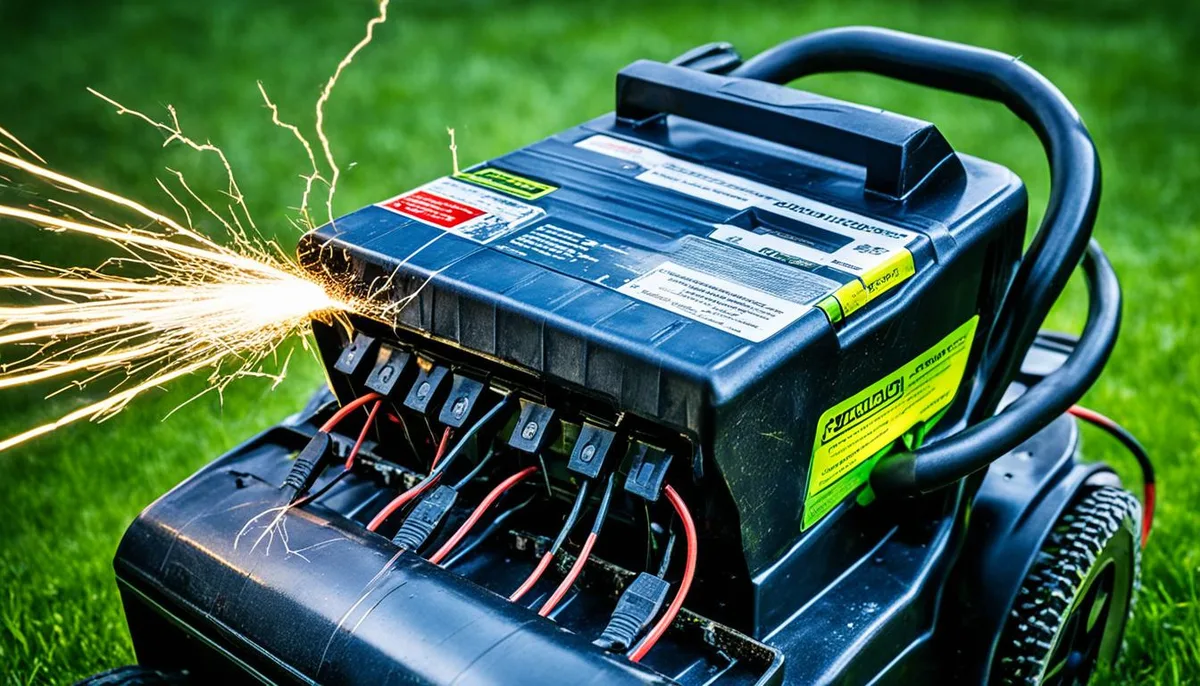
How long does it take to charge a lawn mower battery? Lithium-ion batteries typically charge in one to three hours on a standard charger. Lead-acid batteries take six to twelve hours.
Charging time depends on the battery type, amp-hour rating, and charger amperage. Cold weather below 40°F can slow charging by 20 to 50 percent.
Why You Can't Charge Any Lawn Mower Battery the Same Way
Not all lawn mower batteries are built the same. A 48V lithium-ion pack charges completely differently than a 12V lead-acid battery from a riding mower. The chemistry inside dictates how fast electrons move from charger to cell.
Lithium-ion batteries accept charge at high current without damage. They're built for fast charging. Lead-acid batteries prefer slow, steady current.
Push too much amperage into them and you shorten their lifespan.
As of 2026, lithium-ion dominates the push mower market. Riding mowers still commonly use lead-acid or AGM (Absorbent Glass Mat) batteries. If your mower runs on 40V or higher, you almost certainly have lithium-ion.
If it's a 12V ride-on, check the battery label for lead-acid or AGM.
What Actually Determines How Long Your Lawn Mower Battery Takes to Charge
Five factors decide your charging time, and each one matters more than most people realize.
- Battery chemistry: Li-ion charges faster than lead-acid. Full stop.
- Amp-hour (Ah) capacity: A 6Ah battery takes roughly twice as long as a 3Ah battery on the same charger.
- Charger amperage: A 5A charger fills a battery faster than a 2A charger.
- Depth of discharge: A battery drained to 0% takes longer to recharge than one sitting at 50%.
- Temperature: Below 40°F, lithium charging slows significantly. Below freezing, most smart chargers won't even start.
You can estimate charge time with basic math. Divide the battery's Ah rating by the charger's amperage. Multiply by 1.25 for lead-acid to account for efficiency losses.
Lithium-ion packs are closer to 1.15.
For example, a 10Ah lead-acid battery on a 5A charger takes about 2.5 hours by that formula. In practice, lead-acid batteries can take double that because they slow down as they approach full charge. Smart chargers make the estimate less precise since they adjust amperage as the battery fills.
A basic charger runs at a constant rate, so the math above is more accurate for those units.
Your Decision Guide: Charging Time by Battery Type, Voltage, and Charger
Use this table to match your mower's battery type and find a realistic charging time estimate.

| Battery Type | Typical Voltage | Ah Range | Charger Amperage | Estimated Charge Time |
|---|---|---|---|---|
| Lithium-ion (Li-ion) | 36V to 82V | 2 to 10Ah | 2 to 5A | 1 to 3 hours |
| Lithium-ion fast charge | 40V to 80V | 4 to 8Ah | 8 to 12A | 30 min to 1.5 hours |
| Lead-acid (SLA/AGM) | 12V | 30 to 100Ah+ | 2 to 10A | 6 to 12 hours |
| NiCd | 12V to 36V | 1 to 10Ah | 1 to 5A | 5 to 15 hours |
| NiMH | 12V to 36V | 2 to 8Ah | 1 to 5A | 2 to 8 hours |
If your battery is lithium-ion and your charger is rated at 5A or above, expect one to three hours for a full charge. If it's lead-acid with a standard charger, plan for at least six hours. NiCd and NiMH batteries take longer, and you need to cycle them fully to avoid capacity loss.
The charger type matters too. A smart charger adjusts current based on state of charge. A basic charger delivers constant current until the battery is full.
On a basic charger, the last 20% of lead-acid charging can take as long as the first 80%. That's why many riders charge overnight.
Lithium-ion batteries behave more predictably. They charge at a constant rate until about 80%, then taper slightly. Most fast chargers hit 80% in under an hour on a 6Ah pack.
That last 20% adds another 30 to 45 minutes.
One more variable: charger output. Some aftermarket chargers advertise "universal" compatibility. Cross-check the voltage range printed on your mower battery before connecting anything.
A mismatch can destroy the battery management system (BMS) inside a lithium pack.
Common Charging Mistakes That Kill Lawn Mower Batteries
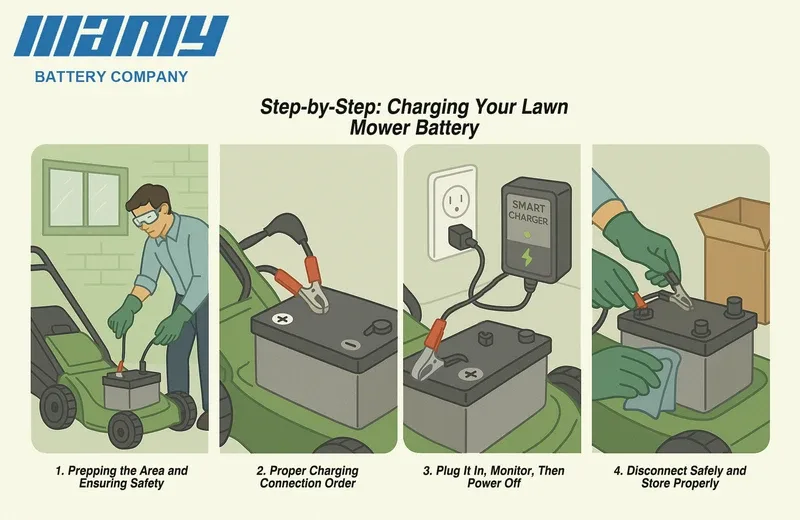
The most common mistake people make is using a trickle charger on a lithium-ion battery. Trickle chargers deliver a constant low current. Lithium-ion batteries don't need that.
They need a smart charger that cuts off when full.
Here are the mistakes that show up most often in warranty claims and user complaints:
- Using the wrong charger: Matching voltage matters, but so does current type. Lead-acid chargers don't suit lithium packs.
- Charging in extreme cold: Below 32°F, lithium charging can damage cells permanently. Most smart chargers refuse to start below freezing.
- Leaving the battery connected after full charge: Overcharging degrades lead-acid batteries and can trigger protection faults on lithium packs.
- Deep-cycling lithium-ion batteries regularly: Unlike lead-acid, lithium-ion packs shouldn't be drained to 0% every time. Aim to recharge above 20%.
- Storing a drained battery all winter: A lithium pack left at 0% for months can enter deep discharge that's hard to recover.
- Ignoring the charger's status lights: If the charger blinks or shows an error, it's telling you something. Ignoring it leads to damage.
The EPA recommends recycling old lawn mower batteries at certified drop-off points rather than tossing them in the trash. Lead-acid batteries contain sulfuric acid and lead. Lithium-ion packs contain heavy metals that require special handling.
How to Charge Your Lawn Mower Battery the Right Way Every Time
Follow these steps to get the most out of every charge cycle and extend your battery's lifespan.
Step 1: Identify Your Battery Type and Voltage
Check the label on the battery itself. It'll list the voltage, amp-hour rating, and chemistry. Write these down.
You'll need them when matching a charger.
Step 2: Match Your Charger
If the charger came with the mower, use it. If you're replacing it, match both voltage and amperage. Never connect a charger rated for a higher voltage than your battery.
Step 3: Prepare the Battery
- Clean any corrosion from the terminals with a wire brush
- Check that the battery isn't swollen, leaking, or physically damaged
- Let the battery reach room temperature before charging in cold weather
Step 4: Connect and Monitor
Plug the charger into the wall first, then connect it to the battery. Watch the charge indicator. Most smart chargers will cycle through green, yellow, or red LEDs.
Unplug once the charger signals full charge.
Step 5: Store Properly Between Uses
If you're storing the battery for the off-season, charge it to about 50% for lead-acid and 50% to 80% for lithium-ion. Store it in a cool, dry place. Avoid garages that freeze.
The U.S. Department of Energy recommends these storage practices for lithium battery longevity.
What Your Lawn Mower Battery Specs Actually Mean
The label on your mower battery tells you more than you think. Understanding those numbers helps you estimate charge time before you plug anything in.
Voltage is the power level. Common mower systems run at 12V, 40V, 48V, 56V, 80V, and beyond. Higher voltage means more mowing power.
It doesn't mean longer charging.
Amp-hours (Ah) measure capacity. Think of it as fuel tank size. A 6Ah battery holds twice the charge of a 3Ah one.
Bigger capacity simply takes longer to fill.
Watt-hours (Wh) combine voltage and capacity. Multiply volts by amp-hours to get Wh. A 40V, 5Ah battery equals 200Wh.
This lets you compare batteries across different voltage systems.
Most mower labels list voltage and Ah directly. If yours doesn't show Ah, check the manufacturer's website or search the part number.
| Spec | What It Means | Effect on Charge Time |
|---|---|---|
| Voltage | System power level | Indirect impact only |
| Amp-hours | Total charge capacity | Higher Ah = longer charge time |
| Watt-hours | Energy storage | Higher Wh = longer charge time |
The EPA's recycling program provides guidance on safe handling and disposal for common lawn mower battery chemistries.
Frequently Asked Questions About Lawn Mower Battery Charging
How long does it take to charge a 40V lawn mower battery?
A 40V lithium-ion battery takes about one to three hours on a standard 2A to 5A charger. Fast chargers rated at 8A or higher can finish most 4Ah to 6Ah packs in under an hour. The exact time depends on how deeply you drained the battery before charging.
Can you leave a lawn mower battery on the charger overnight?
For lithium-ion batteries with smart chargers, yes. Smart chargers cut off automatically when full. For lead-acid batteries, leaving the charger connected past full charge risks overcharging and shortens lifespan.
Only use overnight chargers specifically rated for extended cycles.
How long does a lawn mower battery take to charge in cold weather?
Below 40°F, lithium-ion charging slows by 20 to 50%. Many smart chargers refuse to start below 32°F to protect the cells. Let the battery warm to room temperature before connecting.
Charging a cold pack in a warm space can cause condensation inside the pack.
How do I know when my lawn mower battery is fully charged?
Most chargers signal completion with a green LED or by automatically stopping. Some batteries also include built-in state-of-charge indicators. If your charger runs well past the expected time, stop and check the battery for swelling, heat, or unusual smells.
Is fast charging bad for lawn mower batteries?
Not for lithium-ion packs designed for fast charging. Their battery management system controls current and protects the cells from damage. Regularly fast charging lead-acid batteries can shorten cycle life significantly.
Stick to the charger your manufacturer recommends.
Choosing the Right Charging Setup for Your Mower
The right setup depends on how you use your mower. Match your charger to your routine, and everything else follows.
If you mow large areas regularly, a fast charger rated for your battery's voltage and chemistry is worth the investment. You'll turn the battery around between mows instead of waiting half the day.
For smaller yards or occasional use, a standard charger gets the job done. The longer charge time rarely becomes an issue, and you'll spend less up front.
Riding mowers with lead-acid batteries work best with overnight smart chargers. These units regulate current and prevent overcharging. They're built for the six to twelve hour cycle lead-acid batteries need.
When replacing a battery with an aftermarket unit, verify compatibility first. Voltage must match exactly. Chemistry must be supported.
And the connector should fit your mower's port.
Quick setup checklist:
- Confirm battery voltage and Ah rating
- Match the charger's voltage range to the battery
- Verify the charger supports your battery chemistry
- Check that the connector fits your mower
- Look for UL-listed chargers for safety assurance
- Choose fast or standard charging based on your mowing schedule
The U.S. Department of Energy publishes maintenance guidance for common battery chemistries that applies to lawn mower storage and winterization. Their advice on temperature management is especially useful heading into cold weather.
Bottom line: if the battery and charger specs line up, you're in good shape. If anything looks off, cross-check the manufacturer's documentation before connecting.