How Long Do Lawn Mower Batteries Last?
How long do lawn mower batteries last? For lead-acid batteries, the typical answer is three to five years. AGM batteries run about four to six years.
Lithium-ion models can push eight to ten years with good care.
Real-world results depend heavily on how you maintain the battery and what climate you're in. A standard 12V lead-acid riding mower battery is rated for 300 to 500 full charge cycles. Everything you do with the battery moves that number up or down.
Let's look at what actually determines your battery's lifespan.
Quick Answer
How long do lawn mower batteries last depends mainly on the battery type. Lead-acid batteries typically last 3 to 5 years. AGM batteries usually reach 4 to 6 years.
Lithium-ion batteries can run 8 to 10 years or more. Maintenance habits and climate affect every type equally.
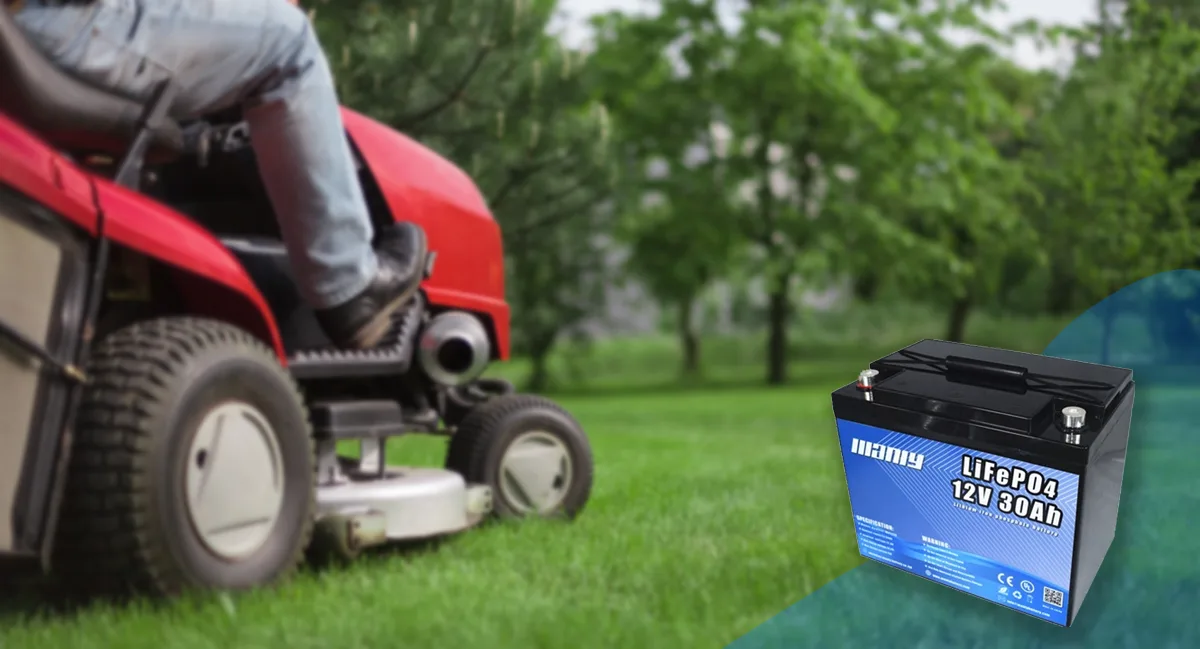
Image source: Web (Bing) / manlybattery.com (Web image (fair-use with source credit))
What Actually Determines How Long Your Battery Lives
There's no single answer because lifespan depends on several interacting factors. Chemistry sets the baseline. Everything else pushes that baseline up or down.
Think of your battery as a limited resource. It comes with a fixed number of full charge and discharge cycles. The faster you work through those cycles, the sooner you'll need a replacement.
Charging habits are the biggest factor you control. Charging to full after every use and avoiding deep discharges extends battery life dramatically. Letting a lead-acid battery sit at partial charge for weeks causes sulfation, which permanently reduces capacity.
Climate and temperature matter more than most owners expect. Extreme heat degrades lithium-ion cells faster than most people realize. Freezing temperatures can crack the casing of a standard flooded lead-acid battery.
Research published by the National Renewable Energy Laboratory at NREL found that lithium-ion capacity drops roughly 20 percent when temperatures fall to 32°F (0°C).
Seasonal storage matters just as much as day-to-day use. A battery left unattended on a cold concrete floor through winter loses charge continuously. Most manufacturers recommend storing batteries fully charged and recharging them every 30 to 60 days during the off-season.
| Factor | Impact on Battery Lifespan |
|---|---|
| Charging frequency | Frequent shallow charges extend cycle life |
| Depth of discharge | Discharging below 50% wears lead-acid batteries fastest |
| Storage conditions | Temperature extremes and partial-charge storage shorten lifespan |
| Usage frequency | Daily commercial use cycles batteries much faster than weekend residential use |
The takeaway is simple. Basic care habits move you toward the upper end of the lifespan range. Neglecting maintenance burns through cycles much faster than you'd expect.
How Battery Chemistry Changes Everything: Lead-Acid vs. AGM vs. Lithium-Ion
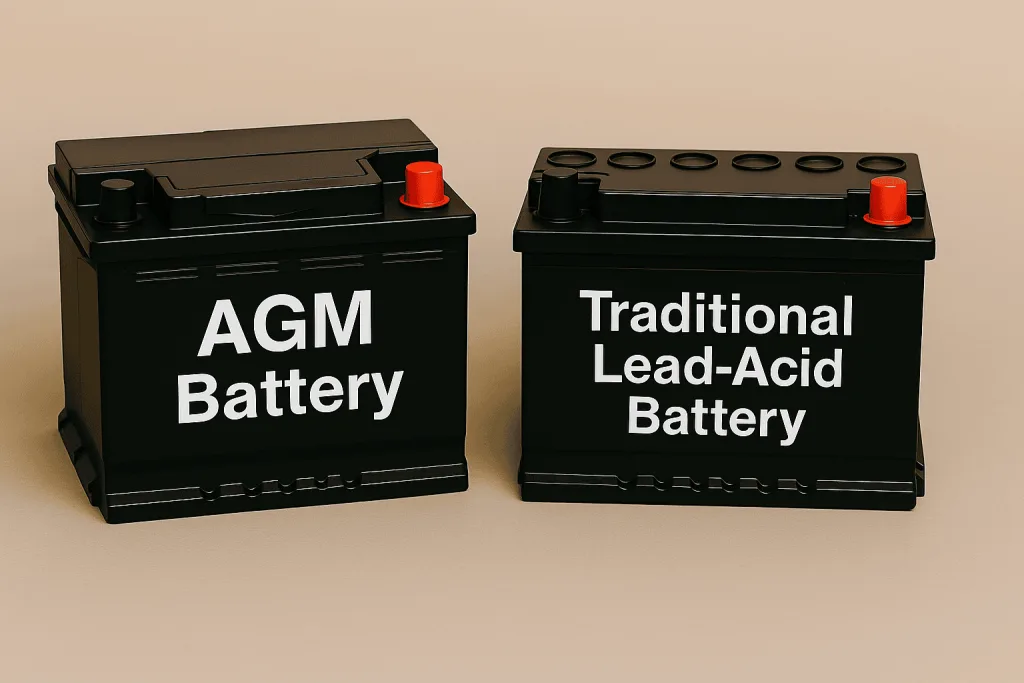
Image source: Bing (Web (fair-use with source credit))
Your battery chemistry sets the lifespan ceiling. How close you get to that ceiling depends on maintenance. Here's how the three main types compare.
Lead-Acid Batteries
Standard flooded lead-acid batteries are the most common type found in riding mowers and lawn tractors. They're affordable, widely available, and have been the industry standard for decades. The trade-off is shorter lifespan and some required maintenance.
Manufacturer specifications for typical 12V lead-acid batteries list 300 to 500 full charge cycles. Under ideal conditions with proper charging, that translates to about 3 to 5 years of residential use. If you mow weekly and charge after each session, you'll likely land near the upper end.
AGM Batteries
Absorbed Glass Mat (AGM) batteries use a sealed design with electrolyte held in glass fiber mats instead of a liquid solution. They're maintenance-free, resistant to vibration, and handle deeper discharges better than flooded lead-acid.
AGM batteries typically deliver 600 to 800 cycles. That works out to roughly 4 to 6 years in most residential settings. They cost more upfront but usually justify the price difference through longer service life.
Lithium-Ion Batteries
Lithium-ion and lithium iron phosphate (LiFePO4) batteries are increasingly common in modern cordless lawn mowers and commercial-grade riding mowers. They're lighter, more efficient, and have dramatically longer lifespans.
Most lithium-ion battery systems rated for lawn mower use are specified at 1,000 to 2,000 cycles or more. As of 2026, several major manufacturers now warranty lithium-ion mower batteries for 3 to 5 years, with projected lifespans of 8 to 10 years under normal residential conditions. They cost significantly more, often two to three times the price of lead-acid equivalents.
| Feature | Lead-Acid | AGM | Lithium-Ion |
|---|---|---|---|
| Typical lifespan | 3–5 years | 4–6 years | 8–10 years |
| Cycle count | 300–500 | 600–800 | 1,000–2,000+ |
| Maintenance | Requires topping off | Maintenance-free | Maintenance-free |
| Cost (12V equivalent) | $40–$80 | $80–$140 | $100–$200+ |
| Weight | Heavy | Moderate | Light |
| Cold weather performance | Poor below 32°F | Moderate | Strong down to 0°F |
Chemistry sets the ceiling. Your maintenance habits determine where you actually land.
Your Battery Lifespan Depends on These 6 Variables
Chemistry gives you a range. These six variables determine where in that range you'll end up.
1. Usage Frequency
How often you mow directly affects cycle consumption. A homeowner mowing weekly from April to October uses roughly 26 to 30 cycles per year. A commercial landscaper running a zero-turn mower daily can burn through 200 to 300 cycles annually.
If you're in the residential camp, your battery has a much longer runway.
2. Climate Conditions
Temperature extremes affect every battery chemistry. Lead-acid batteries lose capacity below 32°F and can crack if they freeze at low charge. Lithium-ion batteries degrade faster in sustained heat above 95°F.
Humid climates accelerate terminal corrosion on all battery types.
3. Charging Habits
If you charge after every use and keep the battery topped off between sessions, you'll extend life significantly. If you let the battery run completely dead before recharging, expect a much shorter lifespan. Deep discharges below 12.0V cause permanent sulfation in lead-acid batteries.
4. Storage Practices
Batteries stored in temperature-controlled garages at full charge last much longer than batteries left on a concrete floor. Most manufacturers recommend a storage charge level of at least 75 percent. Recharge to full every 30 to 60 days during storage.
5. Mower Type and Demand
A small cordless push mower draws far less power than a zero-turn riding mower with headlights and accessories. Heavier mowers push batteries harder per session, which accelerates wear. Match your battery expectations to the mower's actual power draw.
6. Battery Quality and Age at Purchase
New batteries start with their full rated capacity. Reconditioned or aftermarket batteries may have reduced capacity from day one. If you're buying a replacement, stick with batteries that meet the mower manufacturer's voltage, amp-hour, and terminal specifications.
Here's the decision logic in plain terms:
- If you mow weekly in a moderate climate with proper charging, expect the upper end of the range.
- If you mow daily in a hot or humid climate with poor storage habits, expect the lower end.
- If your battery chemistry is lithium-ion with a built-in battery management system (BMS), you've already got a head start.
Decision Guide: How Long Will YOUR Battery Last?
Your lifespan likely falls between 3 and 10 years depending on your specific situation. The breakdown below will help you find your match.
Riding Mower with Lead-Acid Battery
If you own a riding mower or lawn tractor with a standard flooded lead-acid battery, you're looking at 3 to 5 years under normal residential conditions. If you mow weekly, store the battery at full charge in a garage, and use a battery maintainer during winter, you'll likely hit 5 years or more.
If you mow frequently in hot climates or let the battery discharge deeply between sessions, plan on 2 to 3 years instead.
Cordless Push Mower with Lithium-Ion
Modern cordless push mowers from major platforms typically use 40V, 56V, or 80V lithium-ion battery systems. These are rated for 1,000 to 2,000 cycles, which translates to 8 to 10 years for residential use. If you're mowing a small to medium-sized yard weekly, you'll probably reach the upper end of that range.
Commercial Zero-Turn Mower
Commercial operators using zero-turn mowers push batteries much harder. Even with lithium-ion systems, expect a commercial-grade lifespan of 3 to 5 years before replacement. The daily cycle count simply burns through the battery's rated life much faster.
| Your Situation | Battery Type | Expected Lifespan |
|---|---|---|
| Residential weekly mowing, good storage | Lead-acid | 4–5 years |
| Residential weekly mowing, poor storage | Lead-acid | 2–3 years |
| Moderate climate, AGM battery | AGM | 4–6 years |
| Cordless residential mower | Lithium-Ion | 8–10 years |
| Commercial daily use | Lead-acid or Lithium | 2–5 years |
| Cold-climate homeowner | Lead-acid | 3–4 years |
The pattern is clear. Lifestyle and habits multiply or divide the baseline range set by your battery chemistry.
Testing and Maintaining Your Battery to Maximize Its Lifespan
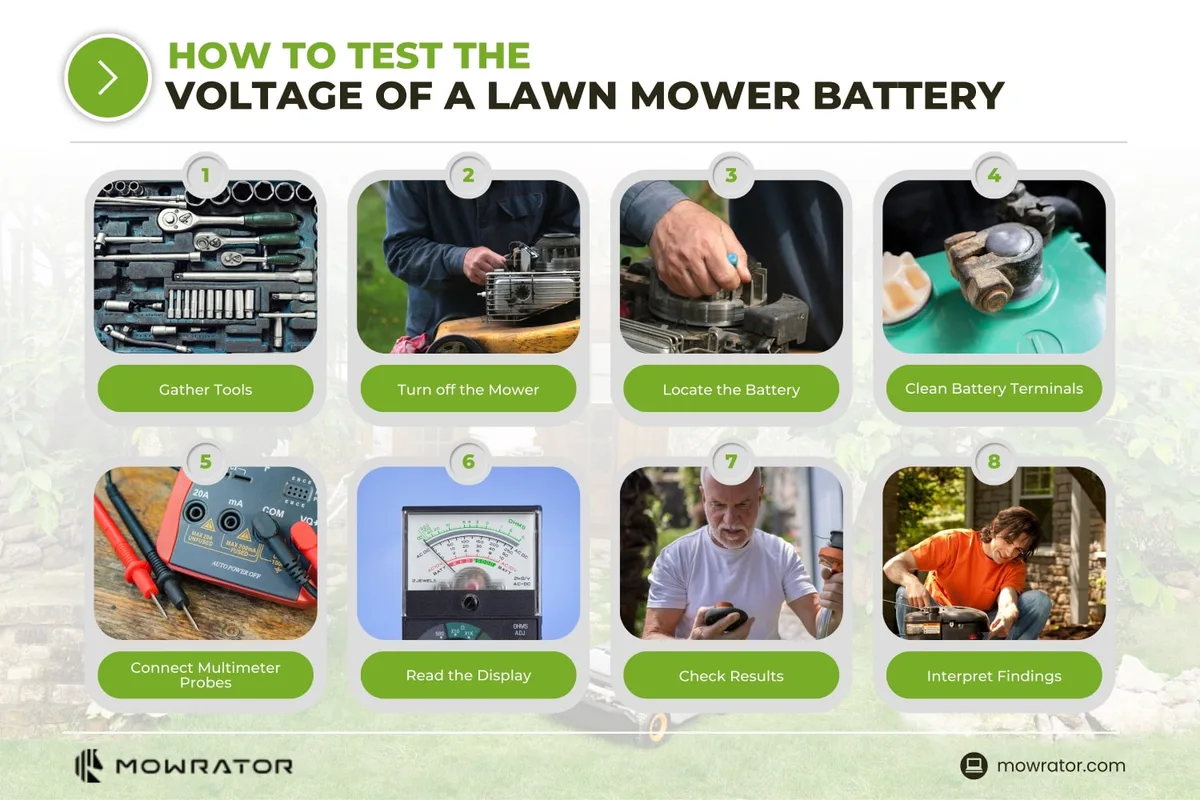
Image source: Bing (Web (fair-use with source credit))
You don't have to guess when your battery is failing. A simple voltage check with a digital multimeter tells you almost everything you need to know.
How to Test Your Lawn Mower Battery
- Turn off the mower and disconnect the negative terminal first.
- Set your multimeter to DC voltage, using the 20V range.
- Touch the red probe to the positive terminal and the black probe to the negative terminal.
- Read the voltage on the display.
Voltage readings reference:
| Voltage | What It Tells You |
|---|---|
| 12.6V–12.8V | Fully charged, good condition |
| 12.4V–12.5V | Needs a charge before use |
| 12.0V–12.3V | Partially discharged, charge soon |
| Below 12.0V | Deeply discharged, sulfation risk |
| Below 11.8V | Battery is failing, replacement likely |
For lithium-ion batteries, use the voltage thresholds specified by the manufacturer, since multi-cell systems operate at higher nominal voltages.
Maintenance Schedule That Extends Battery Life
- Weekly: Inspect terminals for corrosion and clean with a baking soda solution if needed.
- After each mowing session: Recharge the battery fully before storing it.
- Monthly during active season: Check the charging system output to confirm the alternator or charger is delivering the correct voltage.
- Every 30 to 60 days during storage: Recharge to full with a battery maintainer.
- Annually: Perform a load test and inspect the battery for swelling, leaks, or terminal damage.
When to Replace vs. Recondition
If your voltage consistently reads below 12.0V after a full charge cycle, the battery has likely sulfated and won't recover with normal charging. An equalization charge on a lead-acid battery can sometimes revive it, but this only works once or twice before the battery is truly done.
Lead-acid batteries contain sulfuric acid and emit hydrogen gas during charging. Per guidance from the EPA on recycling batteries, always dispose of old lawn mower batteries through an approved recycling facility. Never throw a lead-acid battery in the regular trash.