What Size Solar Water Pump Do I Need: Sizing Guide
Most homes need a solar water pump sized by daily water demand, total lift, flow rate, and available sunlight.
Choosing the right pump is more than picking the largest model you can afford. To answer “What size solar water pump do I need?” you must match the pump’s flow and pressure to your water source, storage tank, pipe system, and daily use. This guide explains the key calculations in plain language, with practical examples and common mistakes to avoid.
What determines solar water pump size?
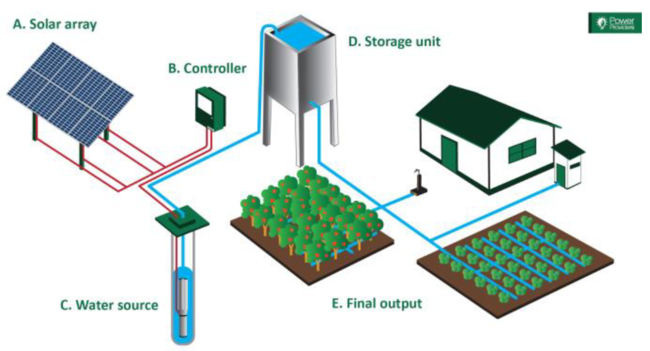
The correct solar water pump size depends on four main factors:
• The amount of water you need each day
• The vertical height the pump must lift water
• The distance and size of the pipes
• The sunlight and power available from the solar panel system
A pump that works well for a shallow well may fail in a deep borehole. Likewise, a pump that fills a small tank may be too weak for farm irrigation.
When people ask, “What size solar water pump do I need?” they often mean the pump’s motor size in watts. However, watts alone do not tell the full story. A 500-watt pump may move more water than a 750-watt pump at a certain height, depending on its design and efficiency.
You should look at three pump ratings:
• Flow rate, usually measured in gallons per minute (GPM) or liters per minute (LPM)
• Total dynamic head, usually measured in feet or meters
• Electrical power, usually measured in watts or horsepower
Think of the pump as a person carrying water up a hill. Flow rate tells you how much water the person carries. Head tells you how steep and high the hill is. Motor power tells you how much energy the person can use.
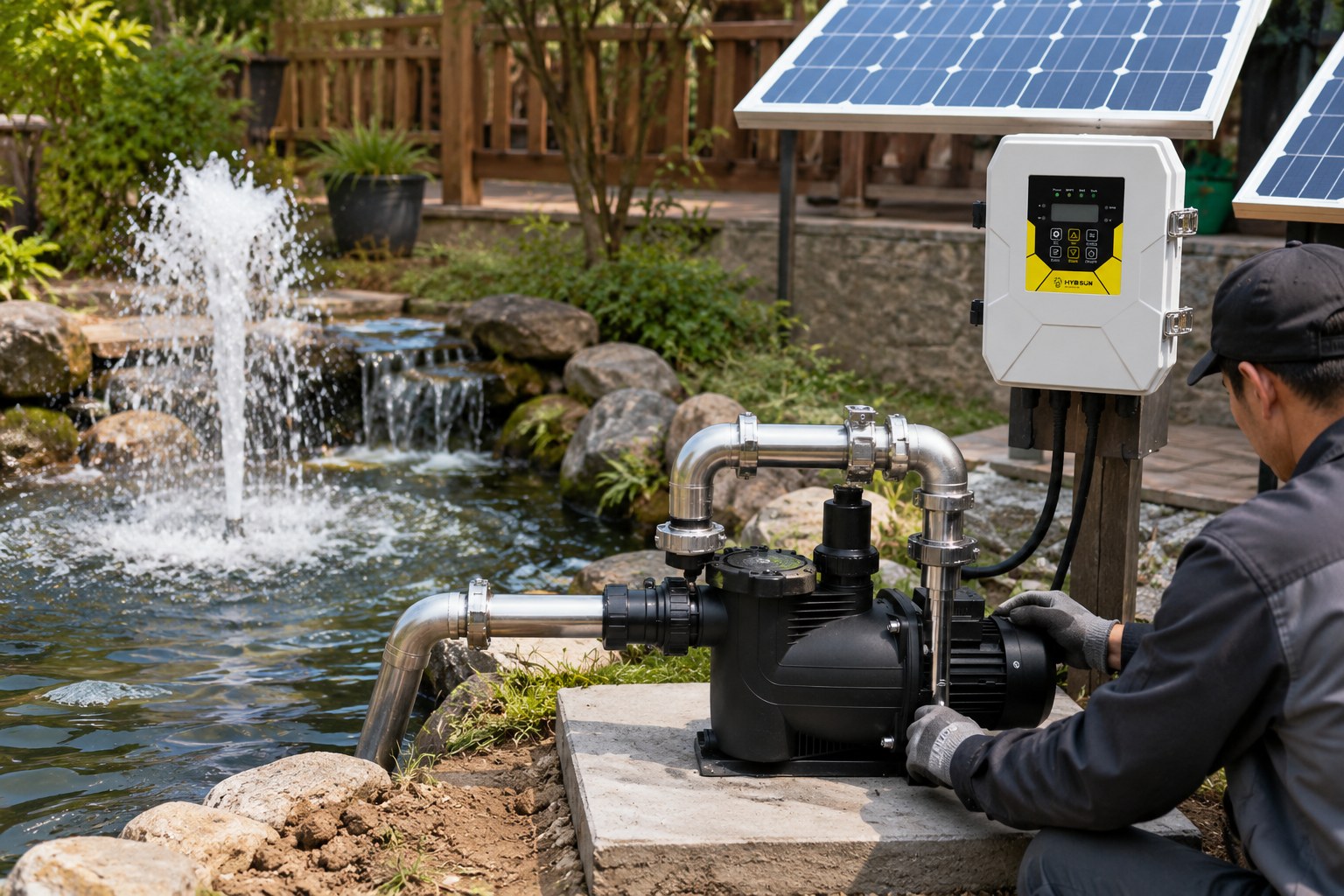
Step 1: Calculate your daily water demand
Start by finding out how much water you need each day. This is the first step in answering, “What size solar water pump do I need?”
For a home, daily water use may include:
• Drinking and cooking
• Showers and baths
• Toilet flushing
• Washing clothes
• Cleaning
• Outdoor watering
• Livestock or other farm use
A typical person may use around 50 to 100 gallons of water per day, depending on local habits, plumbing fixtures, and conservation practices. A home with low-flow fixtures may use much less.
For example, a four-person household might need:
• Four people × 60 gallons per day = 240 gallons per day
• Outdoor use = 100 gallons per day
• Total demand = 340 gallons per day
It is wise to add a safety margin of about 20% to 30%. This covers guests, hot weather, leaks, and higher use on some days.
In this example:
• 340 gallons × 1.25 = 425 gallons per day
The pump does not need to deliver 425 gallons in one minute. It only needs to produce that amount during the available pumping hours.
Water demand for common uses
The following estimates can help with early planning:
• One person: 50 to 100 gallons per day
• Small garden: 20 to 100 gallons per day
• Large garden: 100 to 500 gallons per day
• Small livestock group: 10 to 50 gallons per day, depending on the animals
• Household storage tank: often 300 to 1,000 gallons
These are planning figures, not fixed rules. Local weather, crop type, animal size, and household habits can change the result.

Step 2: Find the required flow rate
After calculating daily demand, determine how quickly the pump must deliver the water.
Use this simple formula:
Required flow rate = Daily water demand ÷ Daily pumping time
If your system needs 425 gallons per day and receives six useful hours of sunlight, the basic flow rate is:
425 gallons ÷ 6 hours = 70.8 gallons per hour
Convert gallons per hour to gallons per minute:
70.8 gallons per hour ÷ 60 = 1.18 GPM
A pump rated near 1.2 GPM at the required head may meet the daily demand. In practice, you would usually choose a pump with some extra capacity, such as 1.5 to 2 GPM at that head.
This example shows why “What size solar water pump do I need?” cannot be answered with wattage alone. The pump must deliver the required flow at the actual lifting height.
Why a storage tank helps
A solar pump often works best when it fills a tank during the day. The tank then supplies water at night or during cloudy weather.
A storage tank can:
• Reduce the need for batteries
• Let the pump run during strong sunlight
• Provide water when the sun is weak
• Smooth out changes in household demand
• Protect the pump from frequent starts and stops
For many homes and farms, pumping water into a tank is simpler and more reliable than trying to run the pump only when someone opens a faucet.
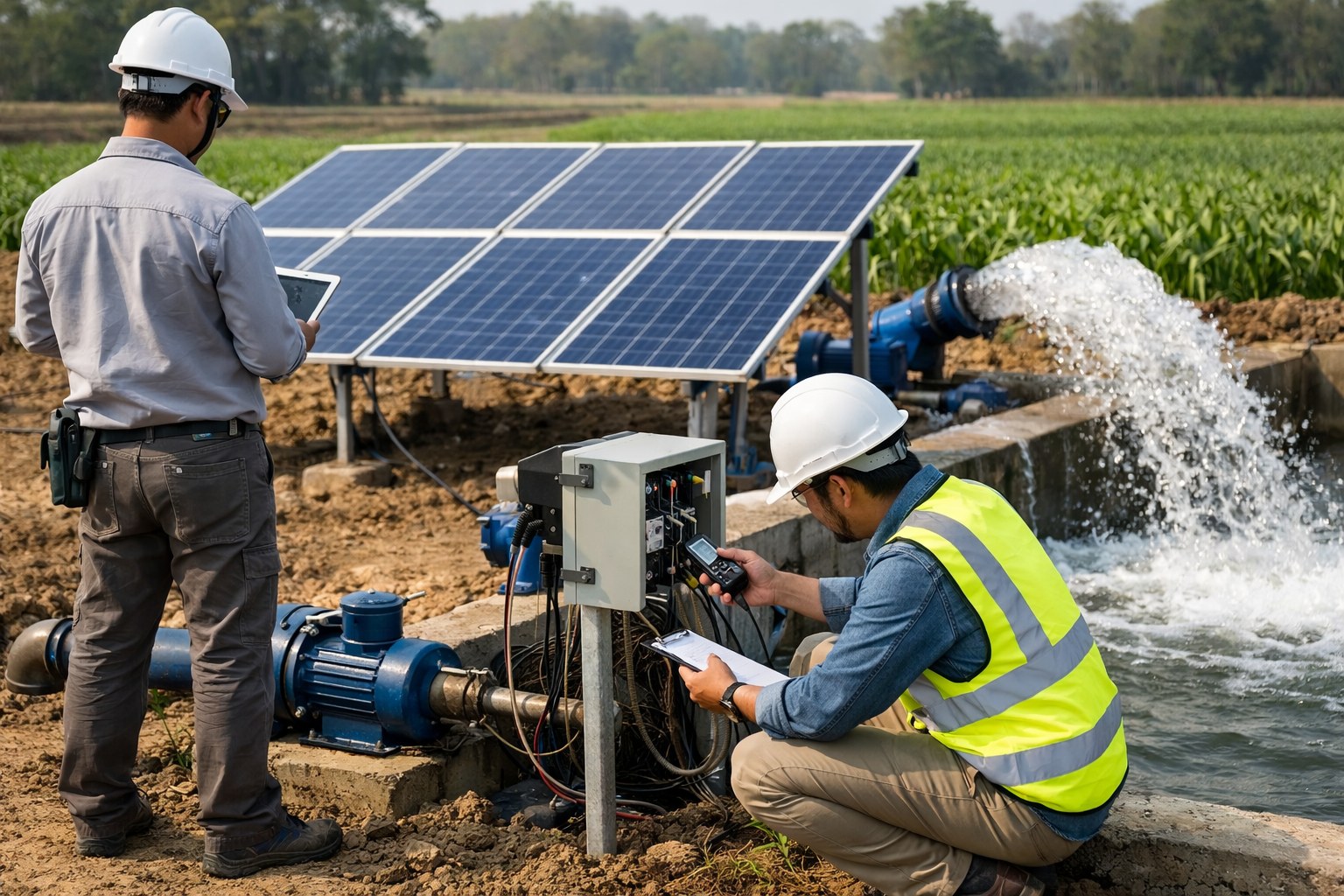
Step 3: Calculate total dynamic head
Total dynamic head, or TDH, is the total resistance the pump must overcome. It includes more than the depth of the well.
Total dynamic head usually includes:
• Static lift from the water level to the delivery point
• The height of the storage tank or outlet
• Pressure needed at the faucet or sprinkler
• Friction inside the pipes
• Losses from elbows, valves, filters, and fittings
A basic formula is:
TDH = Vertical lift + Required pressure head + Pipe friction loss
Vertical lift
Measure from the actual water level to the highest point where water must go. Do not measure only from the ground to the bottom of the well.
For example:
• Water level below ground: 80 feet
• Tank inlet above ground: 20 feet
• Vertical lift: 100 feet
The water level may change during pumping. This is called drawdown. If the water level drops another 15 feet while the pump runs, the system must handle 115 feet of lift.
Pressure head
If you need pressure at the outlet, convert pressure into head.
Useful conversions include:
• 1 psi equals about 2.31 feet of water head
• 1 bar equals about 33.5 feet of water head
• 10 psi equals about 23.1 feet of water head
For example, a sprinkler system needing 30 psi requires about:
30 × 2.31 = 69.3 feet of pressure head
That pressure is added to the vertical lift and pipe losses.
Pipe friction
Water loses energy as it moves through pipes. Small pipes, long runs, rough pipe walls, narrow filters, and many bends increase friction.
A long 1-inch pipe may cause much more loss than a short 2-inch pipe. This is one reason a pump may perform well in a test but poorly after installation.
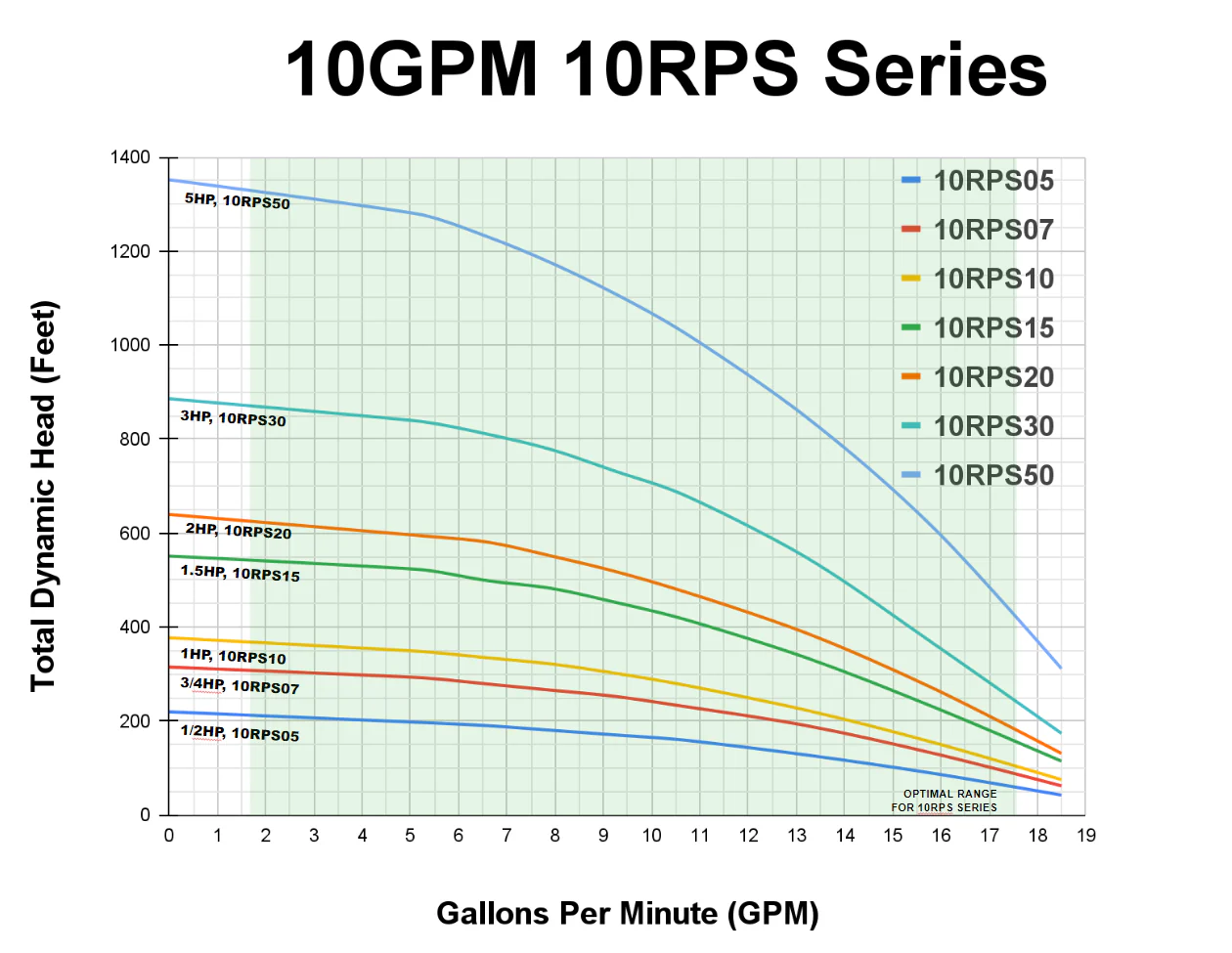
Pump manufacturers often provide performance charts. These charts show the flow available at different head levels. Use the chart rather than relying only on the pump’s maximum lift rating.

Step 4: Match the pump to the water source
The water source affects the type and size of solar water pump you need.
Shallow wells and ponds
Surface pumps can work well when the water is close to ground level. Most standard suction pumps cannot lift water more than about 25 feet in real conditions because of atmospheric pressure and suction losses.
For water deeper than that, a submersible pump is usually a better choice. A submersible pump sits in the water and pushes it upward, rather than trying to pull it from above.
Deep wells and boreholes
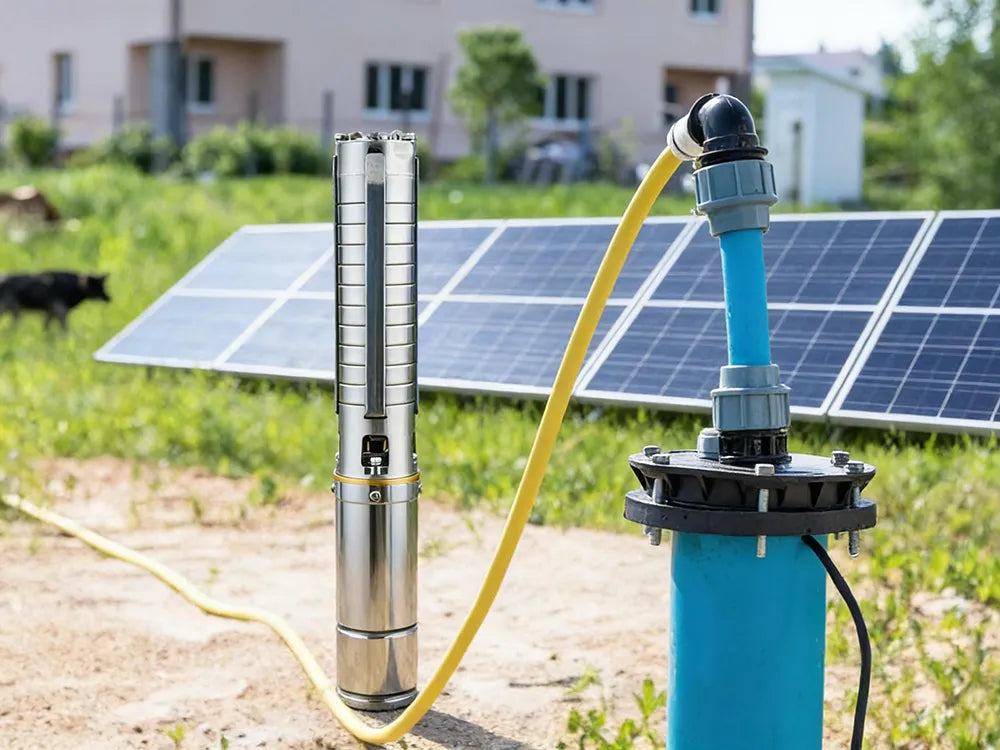
Deep wells usually need a submersible solar pump. The pump diameter must fit inside the well casing, and the pump must be suitable for the well’s depth and water yield.
Before selecting a deep-well pump, check:
• Well depth
• Static water level
• Pumping water level
• Well casing diameter
• Well recovery rate
• Sediment and sand content
• Required flow
A pump that draws water faster than the well can recover may cause low water levels, air intake, or pump damage.
Tanks and rainwater systems
A small transfer pump may be enough for a rainwater tank. The required head is often lower than with a deep well, but pipe friction and outlet pressure still matter.
A float switch can stop the pump when the tank is full. A dry-run sensor can protect it when the source tank is empty.
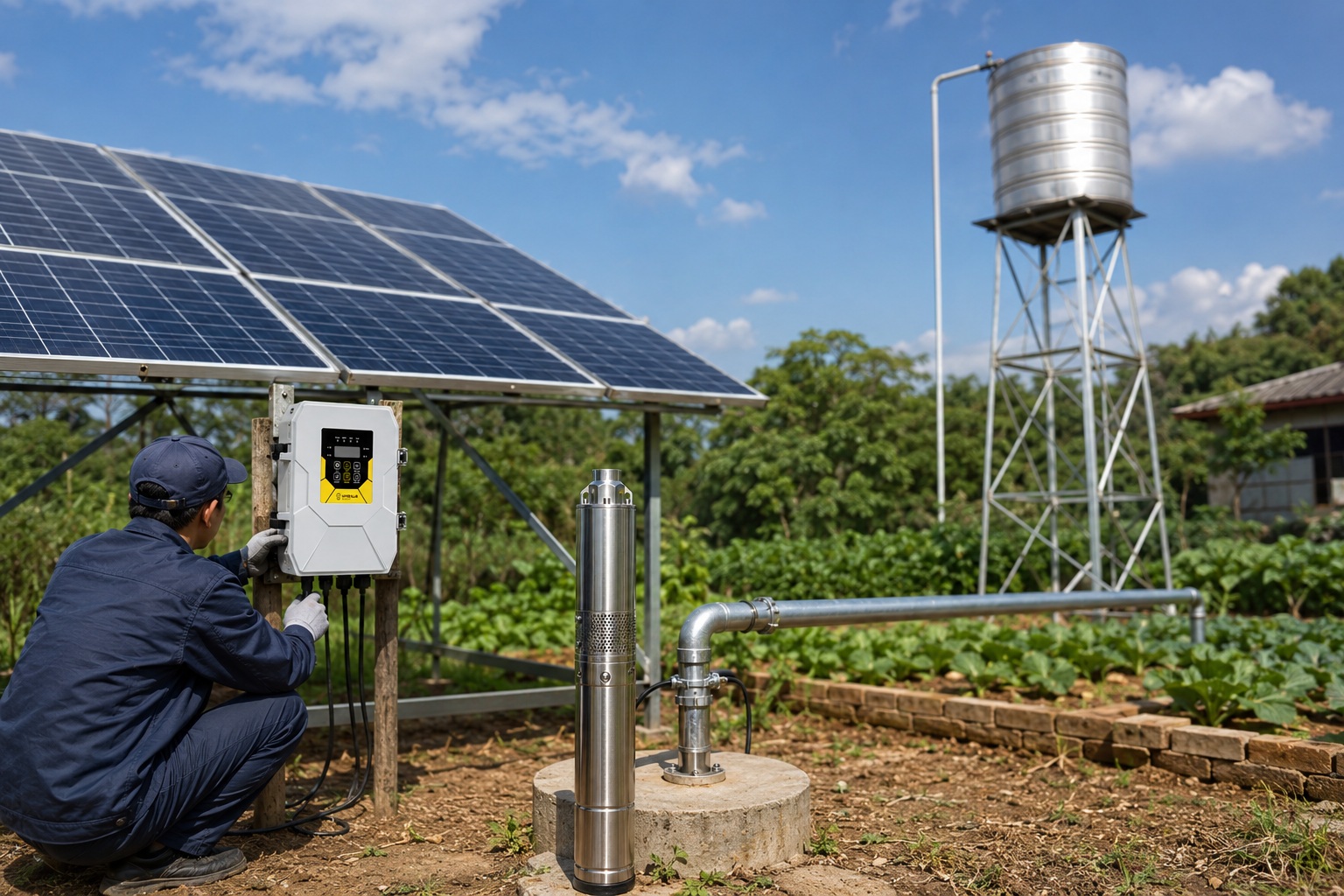
Solar pump size by common application
There is no universal solar water pump size. The following ranges are rough starting points only. The final choice must come from a performance curve.
Small home water system
A small home may need 1 to 5 GPM at a moderate head. The motor may range from about 300 to 1,000 watts.
This could support a storage tank, basic household use, and limited outdoor watering. A larger home or high-pressure plumbing system may need more flow and power.
Garden irrigation
Garden irrigation often needs 2 to 10 GPM. The correct size depends on the number of zones, sprinkler type, pipe layout, and required pressure.
Drip irrigation usually needs less flow than sprinklers. However, drip systems may need filters and pressure regulators, which add some resistance.
Livestock watering
Livestock systems often use a moderate flow rate but need dependable tank filling. A pump may run for several hours each day to fill a raised tank.
It is usually better to pump slowly into a tank than to select a very large pump that empties a well too quickly.
Large agricultural irrigation
Agricultural systems may need tens or hundreds of GPM. These systems often use several solar panels, a variable-speed controller, large pipes, and a large water storage tank.
For larger farms, professional hydraulic design is important. A small error in pipe size or head calculation can waste a great deal of energy.
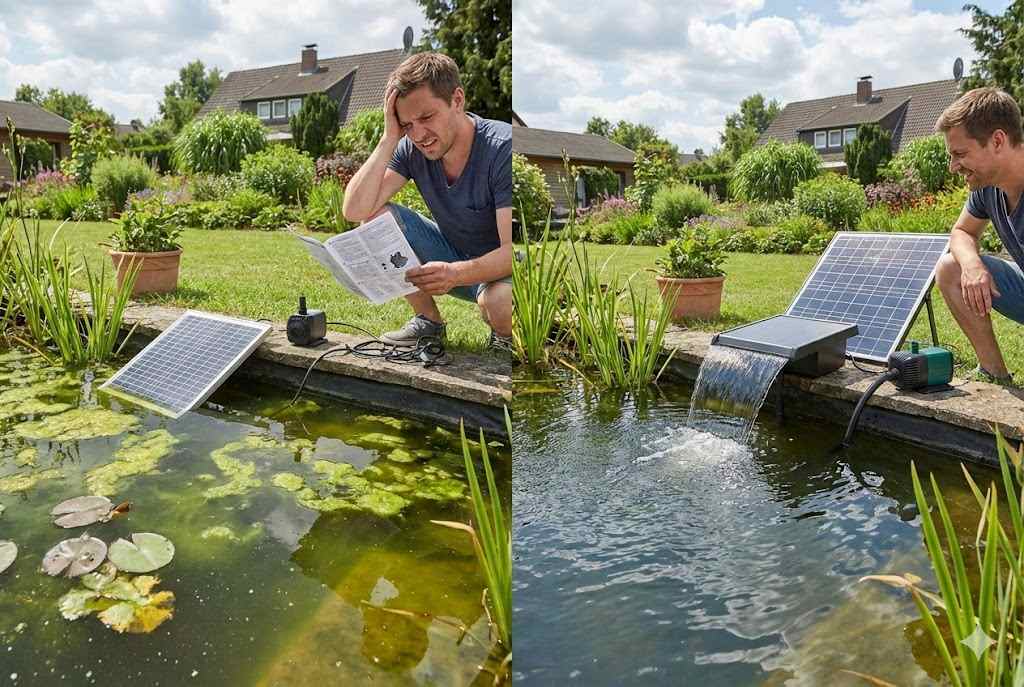
How many solar panels does a water pump need?
The solar array must provide enough power for the pump and controller during real operating conditions.
A simple starting formula is:
Solar array size = Pump power ÷ System efficiency
If a pump uses 600 watts and the total system efficiency is estimated at 75%:
600 watts ÷ 0.75 = 800 watts
An array of about 800 watts may be a starting point. In practice, installers often add more capacity because panels rarely produce their full label rating.
Heat, dust, shading, wiring loss, controller loss, and low sun angles can reduce output. A system may need 900 to 1,000 watts of panels for a 600-watt pump, depending on the site.
The solar pump controller also matters. It should be designed for the pump’s voltage, current, motor type, and panel arrangement. A mismatched controller can cause poor starting, overheating, or unstable operation.
Do you need batteries?
Not always. A water storage tank can act like a battery.
Batteries may be useful when:
• Water is needed at night without a storage tank
• The pump must run during short cloudy periods
• The system also powers household loads
• A pressure system needs steady operation
For basic water pumping, storing water is often more cost-effective than storing electricity. Batteries add cost, weight, maintenance, and replacement needs.
A practical solar pump sizing example
Suppose a rural home has these needs:
• Daily water demand: 500 gallons
• Available sunlight for pumping: 5 hours
• Water level: 100 feet below ground
• Tank inlet: 20 feet above ground
• Pipe and fitting losses: 15 feet
• Required outlet pressure: 20 psi
First, convert outlet pressure to head:
20 psi × 2.31 = 46.2 feet
Now calculate total dynamic head:
100 + 20 + 15 + 46.2 = 181.2 feet
Next, calculate the required flow:
500 gallons ÷ 5 hours = 100 gallons per hour
100 gallons per hour ÷ 60 = 1.67 GPM
The pump should therefore deliver at least 1.67 GPM at about 181 feet of total dynamic head. A practical design may target around 2 GPM at that head to provide a reasonable safety margin.
The motor wattage must then be selected from the manufacturer’s performance chart. Depending on pump efficiency, it might require several hundred watts or more than 1,000 watts. The chart is the deciding factor, not a general wattage estimate.
Common solar water pump sizing mistakes
Many poor results come from a few simple planning errors.
Choosing by horsepower alone
Horsepower does not show how much water the pump can deliver at your actual head. Always check flow at the required total dynamic head.
Using maximum lift as the working rating
A pump’s maximum lift often means zero flow. At that point, the pump may push water no higher but deliver almost no useful water.
Look for the operating point where the pump provides both the required flow and head.
Ignoring drawdown
A well may have a water level of 60 feet when resting but drop to 100 feet during pumping. Sizing for 60 feet alone can lead to poor performance.
Using pipes that are too small
Small pipes increase friction and reduce flow. Larger pipes often improve system performance, especially over long distances.
Forgetting cloudy weather
A system sized only for perfect sunshine may not meet daily demand during cloudy periods. A larger tank, extra panel capacity, or backup source can improve reliability.
Running without dry-run protection
A pump can be damaged if the water source runs dry. Use a float switch, water-level sensor, or controller with dry-run protection.
A common lesson from field installations is that the “bigger pump” is not always the better pump. An oversized pump can waste power, cycle too often, and lower a well faster than it can recover.
How to improve solar pump efficiency
Good design can reduce both pump size and operating cost.
• Use a storage tank instead of relying only on batteries
• Install the correct pipe diameter
• Keep pipe runs as short and straight as practical
• Clean filters and intake screens often
• Reduce unnecessary bends and restrictive valves
• Use drip irrigation where suitable
• Place solar panels where they receive full sun
• Avoid shade from trees, buildings, and poles
• Use a controller made for solar pumping
• Schedule pumping during the strongest sunlight
A well-designed system is like a clear road. The pump spends more energy moving water and less energy fighting resistance.
When should you hire a professional?
A professional installer or pump engineer is strongly recommended when the system involves a deep well, high pressure, drinking water, large irrigation demand, or complex electrical work.
Ask for these items before purchasing:
• A pump performance curve
• A total dynamic head calculation
• A daily water demand estimate
• A solar array design
• Controller specifications
• Dry-run and overvoltage protection details
• Pipe sizing recommendations
• Warranty and service information
For drinking water, also confirm that the pump materials are approved for potable water use. Electrical installation should follow local codes, including proper grounding, disconnects, overcurrent protection, and outdoor equipment ratings.
Reputable technical guidance from water agencies and pump manufacturers consistently stresses the same point: size the pump for the duty point, not for the label’s highest possible rating.
Frequently Asked Questions About What Size Solar Water Pump Do I Need?
What size solar water pump do I need for a house?
Many small homes need about 1 to 5 GPM, but the exact size depends on the number of residents, water pressure, well depth, and storage tank size. Select a pump that provides the required flow at the calculated total dynamic head.
What size solar water pump do I need for a 100-foot well?
A 100-foot well does not always mean 100 feet of total head. Add the tank height, pipe friction, pressure requirement, and possible well drawdown before choosing the pump.
Can a 12-volt solar water pump supply a house?
A 12-volt pump may work for a small tank, garden, or remote cabin with low demand. It may not provide enough flow or pressure for a full home, especially when the water source is deep.
How many solar panels are needed for a water pump?
The number depends on pump wattage, panel output, sunlight, controller efficiency, and local weather. A pump using 600 watts may need roughly 800 watts or more of solar panels to operate reliably.
Is a solar water pump better with a battery or a tank?
For many water-only systems, a storage tank is simpler and cheaper than a battery bank. Batteries make sense when water must be pumped at night or when the system has other electrical loads.
What size solar water pump do I need for irrigation?
Small gardens may need 2 to 10 GPM, while large irrigation systems can need much more. The sprinkler or drip layout, pressure requirement, pipe size, and irrigation schedule determine the final pump size.
Can a solar pump run on cloudy days?
A solar pump may run at reduced flow during light cloud cover, but heavy clouds can stop it. Extra panel capacity, a larger storage tank, or a backup power source can help maintain water supply.
How long can a solar water pump run each day?
It can run whenever the solar array and controller provide enough power, often for several hours around midday. The safe run time also depends on water availability, motor cooling, and the manufacturer’s operating limits.
Conclusion
To answer “What size solar water pump do I need?” begin with daily water demand, then calculate flow rate and total dynamic head. Include the true water level, drawdown, tank height, pressure, pipe friction, and sunlight conditions. Finally, use the manufacturer’s pump curve to match flow and head before choosing the motor and solar panels.
A storage tank, properly sized pipes, dry-run protection, and a suitable controller can make the system far more reliable. Take time to measure your site instead of guessing from horsepower alone, then compare complete pump and solar designs from trusted suppliers.