How Often Should You Sharpen Lawn Mower Blades?
How often should you sharpen lawn mower blades? Most homeowners default to once or twice a season, but that loose guess often leads to a lawn that looks ragged and stressed. The right sharpening schedule depends on what you're mowing, how often you mow, and what your blades go through each week.
A standard rotary blade typically needs sharpening every 20 to 25 hours of mowing time, which works out to several cuts for most residential mowers. As of 2026, even major mower manuals from brands like Honda and Toro now reference service intervals based on operating hours rather than calendar dates. Here's how to find the schedule that fits your lawn.
Quick Answer
How often should you sharpen lawn mower blades? Most residential mower blades need sharpening every 20 to 25 hours of mowing time. For most homeowners, that means 2 to 3 times per growing season.
The exact interval shifts based on grass type, soil conditions, and mowing frequency. If your lawn shows ragged cuts or brown tips, sharpen immediately.
Dull Blades Are Quietly Killing Your Lawn
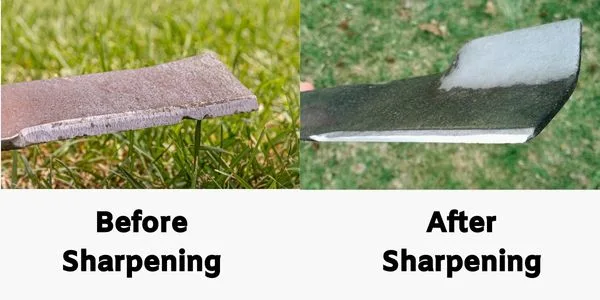
A dull lawn mower blade doesn't just cut grass badly. It tears it open. Instead of a clean slice, the blade rips through each grass blade, leaving jagged edges that brown and wilt within days.
That browning is the main reason lawns look uneven and stressed despite regular mowing. Torn grass tips act like open wounds, inviting diseases like brown patch and dollar spot.
Research from the University of Georgia Extension confirms that clean cuts reduce grass stress and lower disease pressure. If your lawn browns around mowing day more than any other time, dull blades are almost certainly the culprit.
Dull blades also strain your mower. Aggregate testing data shows fuel consumption can climb 10 to 20 percent with a dull blade. The engine works harder, vibration increases, and your fuel bill rises all season.
What looks like a lawn health problem is really a maintenance problem that compounds every time you mow. Sharpening on a consistent schedule prevents most of this damage before it starts.
The Short Answer (And Why It's Not One-Size-Fits-All)
The general guideline most mower manufacturers reference is 20 to 25 hours of mowing time before blades need sharpening. For a typical homeowner mowing once a week, that translates to roughly 3 to 4 sharpening sessions per year.
But that number shifts depending on real-world variables. A homeowner in Florida cutting St. Augustine grass on sandy soil hits different blade wear than someone mowing fescue in Michigan on heavy clay.
Grass type, soil composition, and mowing frequency all pull that range up or down.
Think of 20 to 25 hours as your baseline, not a hard rule. If your lawn shows distress signals between sharpening sessions, pull the interval in. If your lawn looks consistently clean, you're probably in the right range.
That said, 20 to 25 hours works for a lot of homeowners without adjustment. The schedule adapts to your lawn, not the other way around.
What Actually Determines How Often You Sharpen
The 20 to 25 hour guideline is a starting point, not a universal rule. Several practical factors push the real interval higher or lower depending on your lawn and mowing habits.
| Factor | Sharpen More Often | Sharpen Less Often |
|---|---|---|
| Grass type | Tough warm-season grasses like Bermuda and zoysia | Soft cool-season grasses like fescue and ryegrass |
| Soil conditions | Sandy, rocky, or debris-heavy soil | Rich loam or well-maintained soil |
| Mowing frequency | Weekly mowing during peak growth | Every 2 weeks or less |
| Blade material | Standard high-carbon steel | Hardened boron steel or premium alloy |
| Mower type | Walk-behind push mower | Riding mower with high-speed blades |
| Cutting conditions | Untamed lots with mixed grass | Clean, established lawns |
If most of your factors land in the left column, plan on sharpening closer to every 15 to 18 hours. If you lean right, 25 to 30 hours between sessions might work fine.
Grass type deserves extra attention. Warm-season grasses like Bermuda and zoysia grow aggressively in summer heat and put more stress on the blade edge. Soil composition matters too.
Rocky or sandy ground wears blades faster because you're essentially cutting through grit with every pass.
If you're unsure which column fits, default to the left side for the first season. You can always back off if your lawn looks healthy.
Your Sharpening Schedule: Match Your Lawn to the Right Interval
Here's how the sharpening schedule breaks down for different homeowner situations. These intervals assume you're mowing during the active growing season. Dormant-season mowing barely counts toward blade wear.
Small residential lawn (under 0.25 acre)
If you mow a small lawn once a week with a push mower, you'll hit the 20 to 25 hour mark after about 12 to 16 mowing sessions. Plan on sharpening roughly twice a year, once in early spring and once in late summer.
Medium residential lawn (0.25 to 0.5 acre)
A larger lawn mowed weekly accumulates blade hours faster. Sharpening every 6 to 8 weeks during peak growing season is typical. Expect 3 to 4 sessions per year.
Large property or commercial use (0.5 acre or more)
If you're managing a large lot or working commercially, blade hours add up quickly. Sharpening every 4 to 6 weeks during active seasons is standard for professional crews. Commercial operators must also follow OSHA maintenance safety standards that require blade inspection before each use.
Warm-season grasses like Bermuda put more stress on blades during summer heat. Plan on the shorter end of each interval above. Cool-season fescue and ryegrass are gentler and push you toward the longer end.
If you fall somewhere in between, average the two closest matches. You'll get a schedule close enough to work, and you can fine-tune after your first session.
How to Tell If Your Blades Need Sharpening Right Now
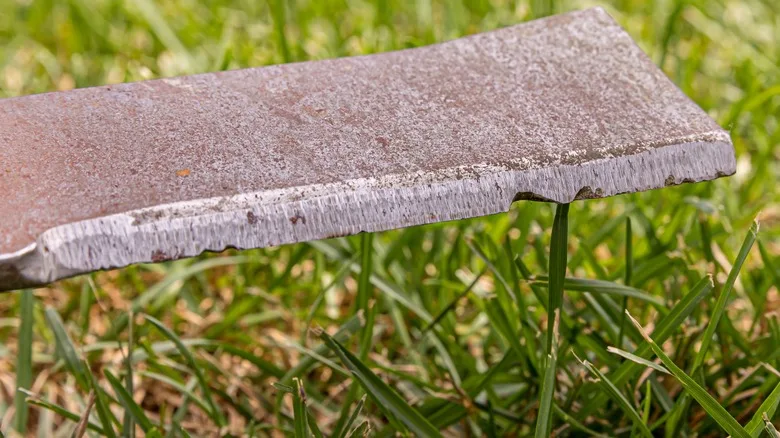
Hour counts and schedules are useful, but your lawn tells you the real story. Here are the clearest signs your blades need sharpening right now:
- Ragged, torn grass tips instead of clean cuts
- Brown or yellowing grass along the cutting line within 1 to 2 days after mowing
- Uneven mowing patterns where some areas cut shorter than others
- Excessive clumping of cut grass on the lawn
- Increased mower vibration during operation
- White streaking on grass tips showing physical tearing stress
- Slower mowing speed needed to achieve the cut you usually get easily
- Lawn scalping in uneven areas
If you're seeing three or more of these signs, sharpen immediately. Waiting on an hours count while your lawn suffers only makes the damage worse.
A quick bench check helps too. Hold the blade under a light source. A sharp blade reflects light along its cutting edge.
A dull blade shows a visible white line or rounded nicks where the edge has worn away.
If the blade shows deep nicks from rocks or debris, it might need more than sharpening. Severe damage can thin the blade too much to safely sharpen. In that case, replacement is the smarter choice.
Blade replacement runs $15 to $60 or more per blade depending on your mower model.
Sharpening Mistakes That Leave Blades Worse Than Before
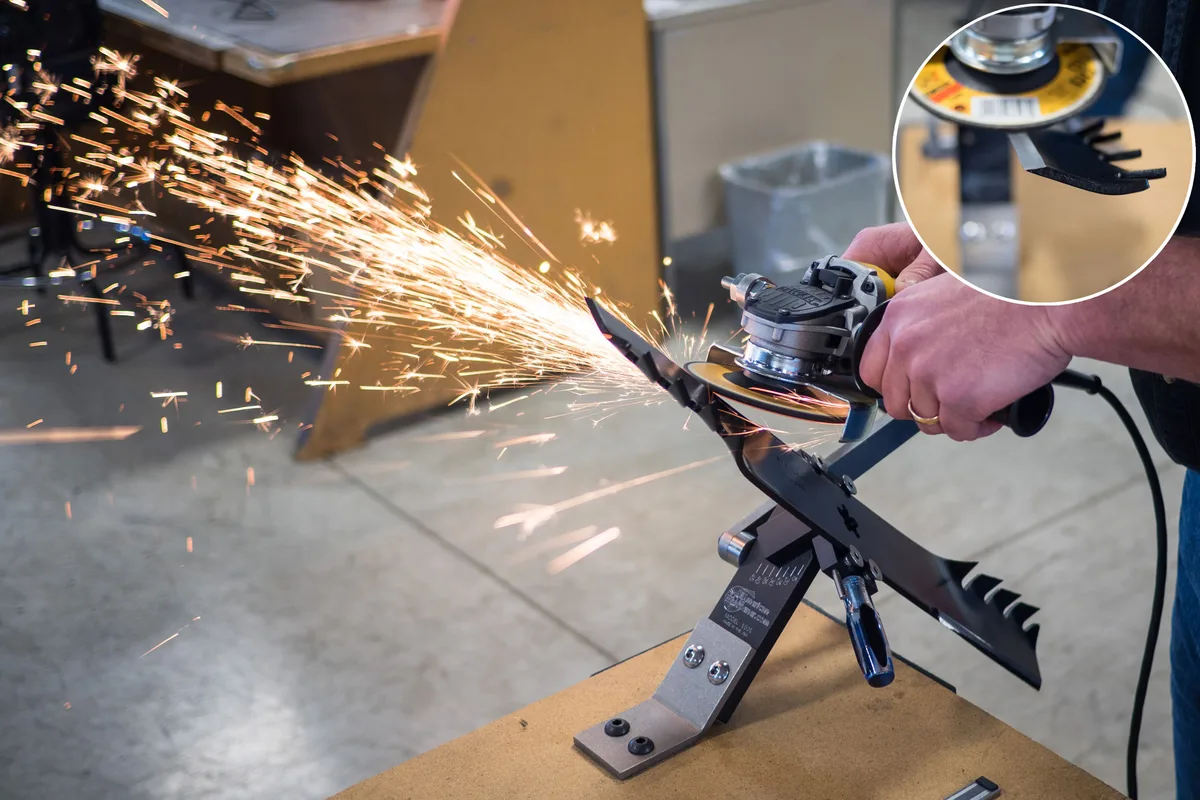
Sharpening a lawn mower blade is straightforward, but a few common mistakes can make things worse. Here are the errors to watch for:
- Sharpening at the wrong angle. Most rotary blades have a factory edge angle between 20 and 30 degrees. Grinding at a steeper angle creates a weak edge that chips and dulls quickly.
- Over-sharpening the same blade repeatedly. Each session removes material. Grind too aggressively, and the blade thins out faster.
- Skipping the balancing step. Both sides of the blade must weigh the same. An unbalanced blade causes heavy vibration that damages mower bearings.
- Reinstalling without checking torque. Manufacturers specify a range, often 28 to 40 foot-pounds. Under-tightened blades can fly off during use.
- Forgetting to disconnect the spark plug. This is the most important safety step before touching any mower blade.
- Ignoring the blade's lift profile. Mulching and gator blades have specific lift shapes. Over-grinding the lifted edge ruins the mulching function.
If you're using a bench grinder, keep the grinding wheel moving in steady passes. Stop once you've reached the existing bevel. You don't need to reshape the blade, just restore its sharp edge.
After sharpening, test balance by hanging the blade on a nail. If one side dips, grind tiny amounts from the heavier side until it hangs level.
For more detail on grinder technique, Penn State Extension has solid guidance on mower maintenance practices.
Sharpening Costs vs. Blade Replacement: What It Actually Costs
Understanding the numbers helps you make the right call each season.
| Service | Typical Cost | Frequency | Annual Cost (Residential) |
|---|---|---|---|
| DIY sharpening (bench grinder) | $5 to $10 in consumables | 2 to 3 times/year | $15 to $30 |
| Professional sharpening | $10 to $25 per blade | 2 to 3 times/year | $20 to $50 |
| Full blade replacement | $15 to $60 per blade | Every 2 to 4 years | $5 to $20/year |
| Commercial sharpening contract | $150 to $400 per year | Ongoing | $150 to $400 |
DIY sharpening is the clear cost winner, but it requires a bench grinder setup and some practice. Most homeowners recover the tool investment within a single season.
Professional sharpening is worth it if you don't own grinder tools or run a commercial operation where downtime costs more than the service fee.
Blade replacement should be reserved for blades that are physically damaged. A nicked or cracked blade can't be safely sharpened. Replacement also makes sense when the blade has been sharpened so many times the edge angle no longer matches factory specs.
For most homeowners, a bench grinder with DIY sharpening two to three times per season keeps costs minimal and the lawn looking clean.
A Sharpening Calendar You Can Actually Follow
The best sharpening schedule adapts to your grass type and local growing season. Here's a practical guide for most homeowners in temperate U.S. climates.
March/April (Early Spring): Sharpen blades before the growing season kicks in. Grass grows fast once temperatures warm up, and a clean edge sets the tone for the whole year.
June (Midsummer): Peak-season checkpoint. If you've been mowing weekly, you've likely logged 12 to 15 hours since spring. Sharpen now if the lawn shows distress signals.
August/September (Late Summer): One more session before fall growth tapers off. Cool-season grasses still need clean cuts during active growth.
October/November (Pre-Winter): Final sharpening before storage. A clean edge rusts less over winter and is ready to go when spring arrives.
That works out to roughly 3 to 4 sessions per year for most homeowners. Adjust based on what your lawn tells you.
How to Sharpen Lawn Mower Blades Step by Step
Sharpening your own blades is one of the simplest maintenance tasks you can do at home. Here's the process:
Disconnect the spark plug or remove the battery. This prevents the engine from starting accidentally while you work on the blade.
Tip the mower on its side with the carburetor facing up on gas models. Oil leaks become a problem if you tip it the wrong way.
Remove the blade using a socket wrench. Note which side faces up for correct reinstallation.
Inspect the blade for deep nicks, cracks, or excessive wear. Replace instead of sharpening if damage is severe.
Clamp the blade securely in a vise. Use steady passes on a bench grinder to restore the edge at the factory bevel angle.
Test balance by hanging the blade on a nail. If one side dips, grind tiny amounts from that side until it hangs level.
Reinstall the blade to manufacturer torque specs. Most residential mowers call for 28 to 40 foot-pounds.
Total time: 15 to 30 minutes once you've done it a few times.
Hand File, Bench Grinder, or Handheld Sharpener
Every sharpening tool works, but they suit different budgets and skill levels.
| Tool | Best For | Cost Range | Skill Level |
|---|---|---|---|
| Hand file | Occasional touch-ups | $5 to $15 | Beginner |
| Bench grinder | Regular sharpening (2+ times/year) | $50 to $150 | Intermediate |
| Angle grinder with disc | Fast material removal | $30 to $80 | Intermediate |
| Handheld blade sharpener | Quick touch-ups | $15 to $40 | Beginner |
For most homeowners, a bench grinder offers the best balance of control, speed, and cost. If you're only sharpening once or twice a season, a hand file keeps things simple without a big upfront investment.
Aggregate user reviews consistently rate bench grinders as the most efficient tool for producing a clean, even edge in under 10 minutes per blade.
Making Each Sharpening Session Last Longer
Sharp blades stay sharp longer when your mower deck is clean and well-maintained. A few habits can push your sharpening interval out to 28 to 32 hours in some cases.
Clean the deck after each mow. Clipped grass buildup corrodes the deck and holds moisture against the blade. Use the deck wash-out port if your mower has one.
Check deck level and blade pitch before each season. Uneven blade height creates extra stress on one edge.
Mow at the right cutting height. Cutting too short forces the mower to work harder and stresses the blade edge more.
Clear debris from your mowing path. Pick up sticks, stones, and metal objects before mowing. Even small rocks cause deep nicks.
Inspect blades after hitting anything unusual. Hit a rock or root, check the blade before your next mow. Small issues become big ones if you ignore them.
Lawn Mower Blade Sharpening FAQs
How often should you sharpen lawn mower blades?
Most residential mower blades need sharpening every 20 to 25 hours of mowing time. For homeowners mowing once a week, that means roughly 2 to 3 times per year during the growing season. Tough grass, rocky soil, and frequent mowing shorten the interval.
Soft grass and clean lawns extend it.
Can I sharpen lawn mower blades too often?
Yes. Over-sharpening removes material from the blade edge too quickly, thinning the blade and reducing its lifespan. Stick to the scheduled interval unless your lawn shows clear distress signals from dull blades.
What angle should lawn mower blades be sharpened at?
Most rotary mower blades are sharpened at a 20 to 30 degree angle, matching the factory bevel. Consult your mower's manual for the exact specification. Grinding at a steeper angle creates a fragile edge that dulls faster.
Should I replace or sharpen my mower blades?
Replace blades if they show deep nicks, cracks, or have been sharpened so many times the blade has become thin. Sharpen dull but intact blades instead. Most residential blades can be sharpened multiple times over their lifespan.
Can I sharpen mower blades without removing them?
Yes, some blade sharpeners are designed to fit on the mower deck. However, removing the blade allows a more thorough sharpening and a proper balancing check. For the best results, remove the blade, sharpen it, balance it, and reinstall it to manufacturer torque specs.
What happens if you don't sharpen your mower blades?
Dull blades tear grass instead of cutting it cleanly. This leads to ragged, browning grass tips that invite disease. Your mower also works harder, consuming more fuel and wearing out faster.
Over time, unsharpened blades cause uneven cutting and poor lawn health.