How Often Should You Change Lawn Mower Oil?
How often should you change lawn mower oil? Most homeowners aren't sure when the right time is, and that uncertainty leads to engines that wear out years too early. The answer isn't one-size-fits-all, because it depends on how much you mow, what kind of mower you have, and whether your engine is brand new.
Manufacturers like Briggs & Stratton and Honda recommend changing oil every 50 hours of use or once per mowing season, whichever comes first. A new engine needs an earlier break-in oil change after about 20 to 30 hours. Those two numbers cover the vast majority of residential mowing situations today.
Quick Answer
How often should you change lawn mower oil? Most residential mowers need an oil change every 50 hours of use. New engines need a break-in oil change after just 20 to 30 hours.
Commercial operators should change oil every 25 to 30 hours. Always follow your owner's manual for the exact interval.
Why Neglecting Lawn Mower Oil Changes Leads to Engine Failure
Small engine oil does a simple but critical job. It lubricates moving parts. It carries heat away from the combustion chamber.
And it traps dirt and metal particles that wear surfaces down.
When you let oil sit too long, that job breaks down. After about 50 hours of use, oil becomes contaminated with fuel byproducts, carbon deposits, and tiny metal shavings. At that point, it can't protect your engine the way it should.
If you skip oil changes for an entire season, the damage compounds fast. The oil thickens into sludge that clogs oil passages and coats internal surfaces. Bearings wear down.
Eventually the engine seizes, and that's a total loss.
Here's what different maintenance habits mean for engine life:
| Situation | Likely Outcome |
|---|---|
| Oil changed every 50 hours | Engine runs 1,000+ hours with proper care |
| Oil changed once per year | Engine lasts 400-600 hours, moderate wear |
| Oil never changed | Engine fails between 150-300 hours |
| First oil change skipped on new engine | Metal debris stays in engine, premature wear |
Per the U.S. Environmental Protection Agency, used oil contains heavy metals and combustion byproducts that never break down on their own. Oil left in a hot engine is even more corrosive than oil sitting in a cold one.
The practical takeaway: if your mower starts smoking, overheating, or hard to start after oil has been sitting a while, damage may already be underway. That's why proactive scheduling matters more than reactive fixes.
How Often Should You Actually Change Lawn Mower Oil? The Real Answer
The short answer: most residential lawn mowers need an oil change every 50 hours of operation or once per season, whichever comes first. If you mow twice a week for 45 minutes each session, that's roughly 4 hours per week. Your oil needs changing about every 12 weeks.
Most owner's manuals from Briggs & Stratton, Honda, Toro, and Husqvarna specify the same 50-hour interval for residential use. These numbers are based on engine testing under normal mowing conditions. They assume correct viscosity oil and moderate operating temperatures.
For commercial or heavy-duty use, the story changes.
| Mowing Type | Hours Per Week | Oil Change Interval |
|---|---|---|
| Residential (homeowner) | 2-4 hours | Every 50 hours or once per season |
| Heavy residential (large yard) | 5-8 hours | Every 40-50 hours |
| Commercial / professional | 20-30+ hours | Every 25-30 hours |
New engines throw in one more wrinkle. The first oil change should happen after just 20 to 30 hours, not 50. That early change flushes out metal particles and assembly lubricants from the manufacturing process.
Skipping it is the most common mistake new mower owners make.
As of 2026, manufacturer specs have largely standardized on these intervals. Some newer models with improved oil filtration push the interval out to 100 hours, but only when synthetic oil is used continuously. When in doubt, your owner's manual wins.
What Variables Change Your Oil Change Schedule
The 50-hour default assumes average conditions. But real-world mowing rarely looks average. Here are the variables that push your schedule either direction.
Mowing Frequency and Hours
This is the biggest factor. If you mow for 20 minutes twice a month, you'll accumulate only 5-6 hours per season. Calendar-based scheduling (once per year) works fine in that case.
If you're mowing for 2-3 hours every week, you'll hit 50 hours in about 3-4 months. That's when hour-based scheduling becomes critical.
Engine Type
| Engine Type | Typical Oil Change Interval |
|---|---|
| New engine (first season) | 20-30 hours (break-in) |
| Push mower, 143cc-190cc | 40-50 hours or per season |
| Riding mower, 420cc-720cc | 50 hours or per season |
| Zero-turn mower | 50 hours (check manual) |
Climate and Season Length
In northern states, you might mow 6 months a year. In the South, it's closer to 10-11 months. If you're in a year-round mowing zone, oil can sit degraded for months during the shorter winter breaks.
How You Mow
Mulching puts more stress on the engine than bagging or side-discharge. Running the mower at full throttle constantly, even when it's not necessary, also degrades oil faster.
The Decision Rule
Here's the practical framework:
- If you mow under 40 hours per season and store the mower dry, one oil change per season is enough.
- If you mow 40-100 hours per season, change oil every 40-50 hours.
- If you mow 100+ hours per season, change oil every 25-30 hours.
- If the engine is brand new, always do the first change after 20-30 hours regardless of schedule.
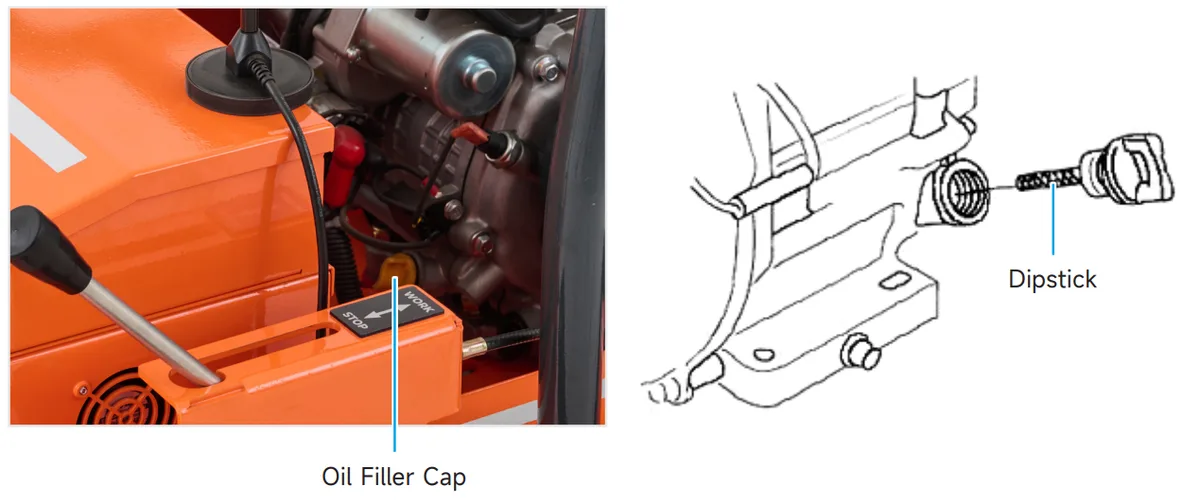
One more variable worth mentioning: oil level. A mower that runs low on oil wears faster even with a fresh oil change. Check the dipstick every time before you start mowing.
Synthetic vs. Conventional Oil: Matching Oil Type to Your Mowing Schedule
The type of oil you use directly affects how often you need to change it. Here's how the two main options compare.
Conventional (Mineral) Oil
Conventional oil is made from crude oil with basic refining. It's what most mowers ship with, and it's what you'll find at any hardware store for a few dollars.
Best for: older mowers, low-frequency mowing (under 30 hours per season), and budget-conscious maintenance. It needs changing at the standard 50-hour interval or less in hot climates.
Synthetic Blend and Full Synthetic Oil
Full synthetic oil is chemically engineered for stable viscosity and better heat resistance. Synthetic blends offer a middle ground.
Best for: new mowers with warranty requirements that specify synthetic oil, commercial operators, and anyone mowing in hot climates where oil thins out fast.
| Factor | Conventional Oil | Synthetic Oil |
|---|---|---|
| Typical price per quart | $3-$6 | $7-$15 |
| Change interval | 30-50 hours | 50-100 hours |
| Heat resistance | Standard | Superior |
| Cold-weather starts | Slower | Easier |
| Best for | Budget, low usage | Heavy use, warranty |
The cost difference looks significant on paper. But synthetic oil typically lasts twice as long between changes. Over a full season, the difference in oil change costs is often under $10.
Per American Petroleum Institute standards, synthetic oils carry the same API service classifications (SJ, SL, SM, SN) as conventional oils. They're a compatible upgrade, not a different product category.
If your owner's manual specifies SAE 10W-30 or 5W-30, stick with those viscosity grades regardless of the oil type you choose. The wrong viscosity causes more damage than the wrong oil formulation.
Step-by-Step: How to Change Lawn Mower Oil the Right Way
Now that you know the schedule, here's the actual process. It takes 20 to 30 minutes once you've done it a couple of times.
What You'll Need
- Engine oil (correct viscosity per owner's manual)
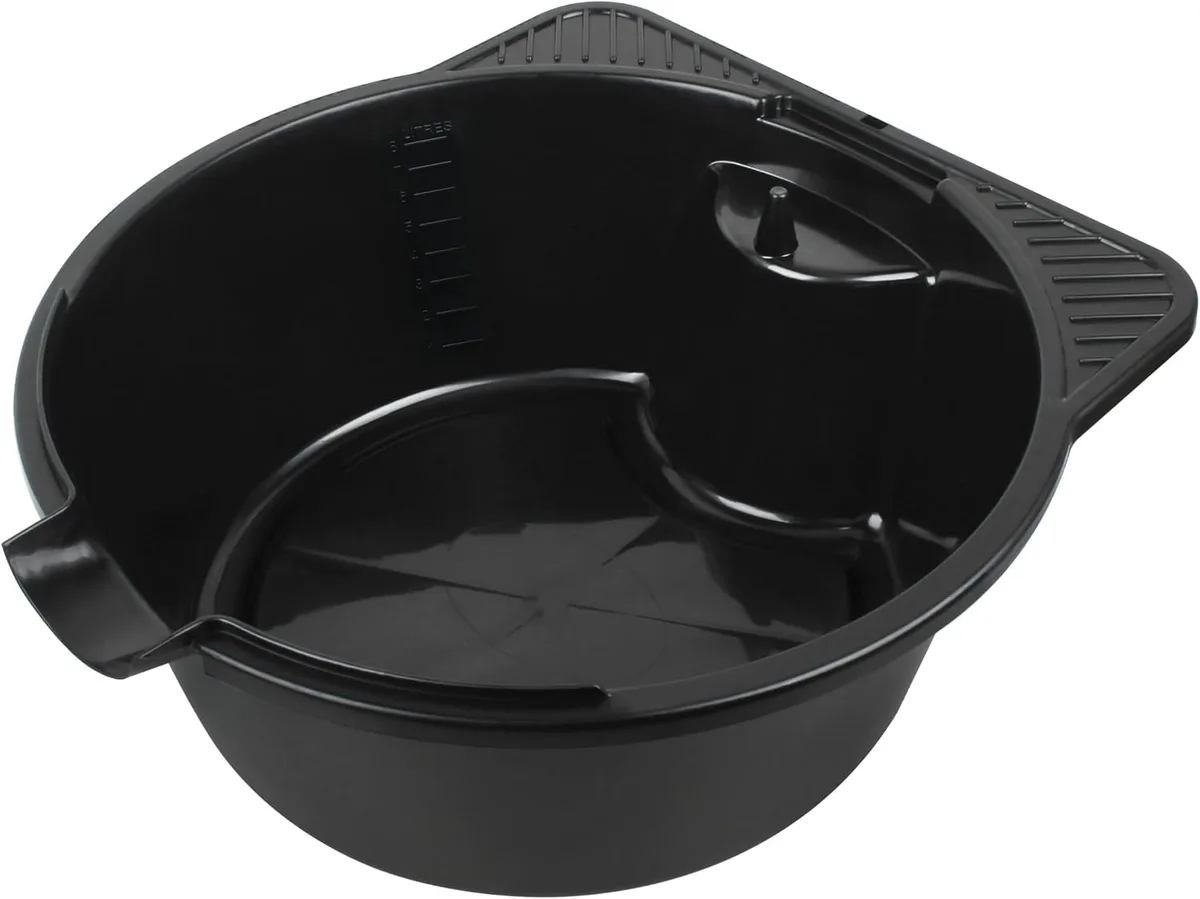
- Drain pan
- Socket or wrench for the drain plug
- Funnel
- Rags or paper towels
- Old oil disposal container
The Process
Warm up the engine. Run the mower for 3-5 minutes. Warm oil flows out faster and carries more contaminants with it.
Turn off the engine and disconnect the spark plug wire. Remove the wire from the spark plug to prevent accidental starting.
Locate the drain plug. On most push mowers, it's on the bottom of the engine. On riding mowers, it's usually accessible from the side.
Place the drain pan under the plug. Position it so it catches all the oil without spilling onto the mower deck.
Remove the drain plug and let oil flow. This takes 5-10 minutes. Tilt the mower toward the drain side if needed.
Replace the drain plug. Tighten it snugly, but don't over-torque it. The threads strip easily on small engines.
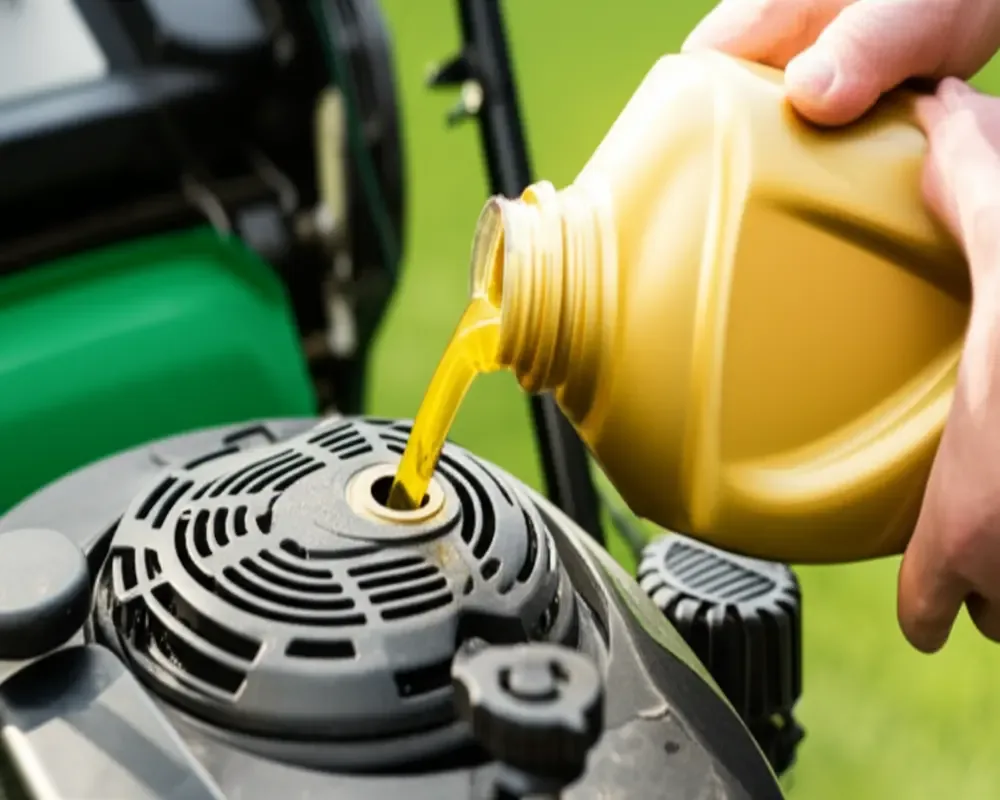
Refill with fresh oil. Most push mowers take 15 to 18 oz. Riding mowers range from 16 to 22 oz. Check your manual for the exact amount.
Check the dipstick and start the engine. Verify the oil level sits between the min and max marks. Run the engine for 2-3 minutes and recheck.
Dispose of used oil properly. Take it to an auto parts store or local recycling center. Never pour it down a drain or into the ground.
The whole job gets easier with practice. Many homeowners develop a routine where they change oil right after the last mow of the season and again at the start of spring.
Frequently Asked Questions
How much oil does a typical lawn mower hold?
Most push mowers hold 15 to 18 oz. Riding mowers range from 16 to 22 oz. Zero-turn mowers can hold up to 25 oz depending on the engine.
Check your owner's manual for the exact capacity before you refill.
What type of oil should I use in my lawn mower?
Most small engines take SAE 30 viscosity oil for warm-weather use, or 10W-30 for a wider temperature range. If your manual specifies synthetic oil for warranty compliance, use that. Stick to the viscosity grade listed in your manual, not what's on sale.
Can I use car oil in my lawn mower?
You can, as long as it matches the viscosity grade and API classification in your owner's manual. SAE 10W-30 car oil works fine in most small engines. But automotive oil may contain additives not ideal for air-cooled engines, so small engine oil is the safer bet.
How do I know if my lawn mower oil needs changing?
Check the oil color and level before every mow. Oil that looks dark brown or black, smells like gasoline, or feels gritty between your fingers needs changing. Low oil level also signals that it's time to top off or drain and refill.
Is synthetic oil better for lawn mowers?
Synthetic oil performs better under high heat and lasts longer between changes. It's a smart choice for commercial operators, new mowers with warranty requirements, and anyone mowing in hot climates. For low-frequency residential mowing, conventional oil works fine at a lower cost.
How should I dispose of used lawn mower oil?
Pour used oil into a sealed container and take it to an auto parts store or municipal recycling center. The EPA recommends recycling used oil rather than dumping it. Never pour it down a drain, into a storm sewer, or onto the ground.