How Often Should You Mow Your Lawn?
"How often should you mow your lawn?" is one of the most common questions homeowners ask, and the honest answer frustrates a lot of people because there isn't a single number that works everywhere. The right mowing frequency depends on your grass type, your climate zone, and what your lawn is actually doing right now.
The good news is that one simple principle can answer the question almost every time. Turfgrass research consistently points to the one-third rule: never cut more than one-third of the grass blade's current height in a single mow. Combine that rule with a few basic variables and you'll always know when it's time to cut, regardless of the calendar.
Quick Answer
Most lawns need mowing every 7 to 14 days during the growing season. Cool-season grasses peak in spring and fall. Warm-season grasses grow fastest in summer heat.
The one-third rule is your best guide. Never cut more than one-third of the grass blade at once.
Why There's No Fixed Mowing Schedule (And Why That's Actually Good News)
A lot of lawn guides will tell you to mow on a fixed weekly or biweekly schedule. In our research across university extension resources, that advice gets qualified almost immediately. What works for your neighbor's lawn in a different climate zone won't necessarily work for yours.
The reason is straightforward. Grass doesn't grow on a calendar. It grows in response to temperature, water, sunlight, and soil conditions.
When those conditions shift (and they shift constantly), the growth rate shifts right along with them.
Think about it for a second. A wet spring week can double how fast your cool-season lawn pushes out new growth. A hot dry stretch can slow that same lawn to a crawl.
Stick to a rigid weekly schedule and you're either mowing grass that isn't ready or cutting too late.
The upside? Once you understand a few key variables, knowing when to mow becomes almost automatic. The next few sections break it all down step by step.
The One Rule That Tells You Exactly When to Mow
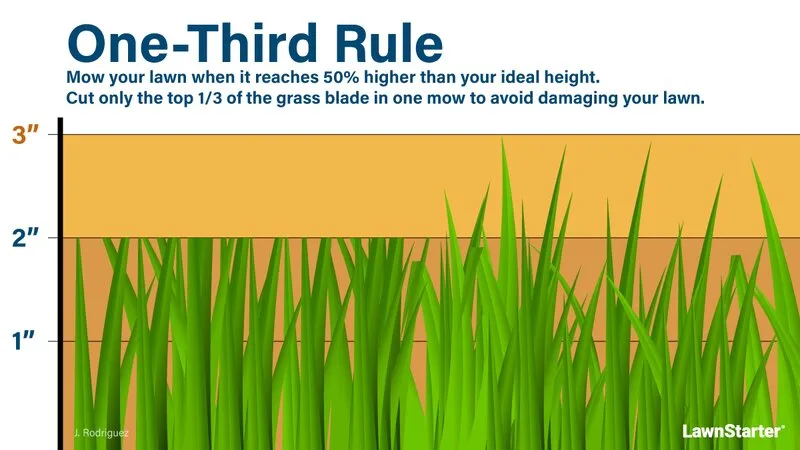
If there's one number to remember, it's this: never cut more than one-third of the grass blade's current height in a single mow. Turfgrass scientists call this the one-third rule, and it applies to virtually every grass species you'll work with.
Here's why it matters. Grass blades produce energy through photosynthesis. Cut too much of the blade at once and you strip away the plant's food source.
It stops growing and becomes vulnerable to weeds, disease, and drought stress.
In practice, here's how it works. Say your ideal height for tall fescue is 3.5 inches. Your grass is currently sitting at 4.5 inches.
That's a full inch over target, which exceeds one-third of 3.5 inches. You'd mow in two passes. First at 4 inches, then again a few days later at 3.5 inches.
The one-third rule also explains why mowing frequency varies so much. If grass is growing fast and you want to stay at 3.5 inches, you'll mow more often. Slow growth means less frequent mowing.
The rule tells you when to cut, not how often. It's the single most useful principle in all of lawn care.
What Determines How Often You Should Mow
Several factors work together to set your mowing schedule. Knowing each one helps you predict when to mow instead of guessing.
Grass type is the biggest variable. Cool-season grasses (Kentucky bluegrass, tall fescue, perennial ryegrass) grow most actively at soil temperatures between 60°F and 80°F. Warm-season grasses (Bermuda, Zoysia, St.
Augustine) prefer 80°F to 95°F. Identifying your category gets you halfway there.
Season is the next big one. Cool-season lawns typically need mowing every 3 to 5 days in peak spring. They slow to every 10 to 14 days in midsummer.
Fall brings another surge. Warm-season lawns reverse that pattern entirely. Summer is their heaviest growth period.
As of 2026, data from university extension programs remains consistent across regions on these temperature thresholds. Water, sunlight, and soil type all play supporting roles. A well-watered lawn in full sun will outgrow a shaded lawn with irregular irrigation by a wide margin.
| Factor | Speeds Up Growth | Slows Growth |
|---|---|---|
| Soil temperature | 60°F to 95°F range | Below 50°F or above 100°F |
| Water | Consistent rain or irrigation | Drought conditions |
| Sunlight | Full sun (6+ hours daily) | Deep shade |
| Soil type | Clay (retains moisture) | Sandy (drains quickly) |
| Fertilizer | Regular feeding | Low or no fertility |
How to Figure Out Your Personal Mowing Schedule (Step by Step)
You don't need special equipment to work out your mowing schedule. Just a little observation and about 15 minutes.
Step 1: Identify your grass type.
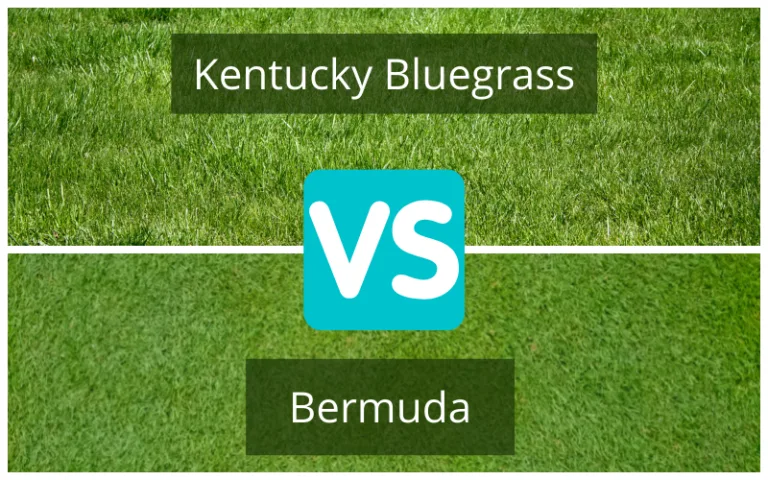
Look at blade texture and color. Kentucky bluegrass has a smooth blue-green blade with a boat-shaped tip. Bermuda is fine-textured and light green.
St. Augustine is coarse and wide. If you're unsure, your local extension office can ID it from a photo.
Step 2: Measure your current height and ideal height.
Stand a ruler next to a few grass plants. Compare that number to the recommended height for your species. If you're more than one-third above ideal height, you're overdue for a cut.
Step 3: Track how fast it's growing.
Measure again in 3 to 5 days. If the grass grew more than one-third of the ideal height in that window, it's time to mow. If it didn't, you've got a few more days.
Step 4: Adjust for the season.
Cool-season lawns need mowing every 3 to 5 days in spring. Fall often brings a second surge in September and October. Warm-season lawns peak in summer.
Dormant periods mean mowing every 2 to 3 weeks or stopping entirely.
Step 5: Reassess every few weeks.
Your schedule will shift as conditions change. What works in April won't work in July. Check in every 2 to 3 weeks and adjust accordingly.
This step is the one most people skip, and it's the reason so many lawns look uneven.
Mowing Height and Frequency by Grass Type
Not all grasses are created equal. Your mowing height and frequency depend heavily on the species. Use this table as your baseline.
| Grass Type | Category | Ideal Height | Peak Mowing Frequency |
|---|---|---|---|
| Kentucky bluegrass | Cool-season | 2.5 to 3.5 in | Every 3 to 5 days (spring) |
| Tall fescue | Cool-season | 3 to 4 in | Every 7 to 10 days (spring) |
| Perennial ryegrass | Cool-season | 2.5 to 3 in | Every 5 to 7 days (spring) |
| Bermuda grass | Warm-season | 0.5 to 1.5 in | Every 3 to 7 days (summer) |
| Zoysia | Warm-season | 1 to 2 in | Every 5 to 10 days (summer) |
| St. Augustine | Warm-season | 3.5 to 4 in | Every 7 to 10 days (summer) |
| Centipede | Warm-season | 1 to 1.5 in | Every 7 to 10 days (summer) |
A few practical notes. Bermuda grass thrives when cut short, which is why golf courses treat it like a putting green. St.
Augustine is the opposite. Leave it tall and you'll mow less often, though each pass removes more material.
If you're in the transitional zone, both categories work. Check the USDA Plant Hardiness Zone Map to confirm your zone first. Per Penn State Extension's turfgrass guidelines, matching grass type to region is the single most important decision in long-term lawn health.
Picking the wrong species for your climate is a mistake that causes years of mowing headaches.
Seasonal Mowing Breakdown: Cool-Season vs. Warm-Season Grasses
Your mowing schedule should shift dramatically between seasons, and knowing which pattern you follow makes all the difference.
Cool-season grasses follow a bimodal growth pattern. Spring and fall are the big months. Summer heat slows them down significantly.
If you're in this category, expect a heavy mowing load in April through June and again in September through November.
Here's a rough monthly breakdown for a cool-season lawn in a northern US climate:
| Month | Growth Level | Mowing Frequency |
|---|---|---|
| March to April | Very high | Every 3 to 5 days |
| May to June | Moderate to high | Every 5 to 7 days |
| July to August | Low | Every 10 to 14 days |
| September to October | Moderate to high | Every 5 to 7 days |
| November to December | Dormant or near-dormant | Every 2 to 3 weeks or stop |
Warm-season grasses follow the opposite rhythm. They stay dormant through winter. Summer heat is their power window.
Bermuda grass can need cutting every 3 to 5 days when temps stay consistently above 85°F. Zoysia slows down a bit compared to Bermuda but still needs regular summer attention.
One critical exception exists in both categories. When temperatures drop below about 50°F, growth basically stops. Grass enters dormancy.
You can stop mowing entirely at that point, though one final cleanup mow before deep winter keeps things neat and reduces fungal buildup over the dormant months.
Common Mowing Mistakes That Slow Down Your Lawn
Even people who understand the one-third rule still fall into a few traps. Here are the mistakes that show up most often in turfgrass research and extension clinic reports.
The biggest offender is mowing too tall in the spring. When cool-season grasses surge in April, many homeowners wait too long before the first cut. By the time they mow, the grass is far beyond one-third above ideal height.
The result is scalping, stress, and clumping that chokes out new growth.
Mowing wet grass is another common problem. Wet blades bend instead of cutting cleanly. Clippings stick to the deck and clump on the ground.
Over time, these clumps kill the grass underneath and invite disease. Always wait until the lawn is dry to the touch before you start.
Sharpening blades gets neglected more than it should. Dull blades tear the grass rather than slicing it cleanly. Torn tips turn brown within a day or two and open the door to fungal infection.
Turfgrass scientists recommend sharpening at least once per season, or every 20 to 25 hours of mowing time.
A few quick fixes worth remembering:
- Mow high and often instead of low and rarely
- Alternate mowing direction each week to prevent soil compaction
- Bag clippings only when the lawn is overgrown or diseased
- Water deeply and less frequently to support healthy root growth
- Raise your deck height slightly going into summer heat
- Leave clippings on the lawn when mowing at the correct height (this returns roughly 2 to 3 lbs of nitrogen per 1,000 sq ft per year)
Frequently Asked Questions
Should I mow my lawn every week or every two weeks?
It depends on how fast your grass is growing. During peak spring or summer growth, most lawns need mowing every 5 to 10 days. Slower periods like late fall or midsummer drought stretch that out to every 2 to 3 weeks.
The one-third rule is your best signal for when it's actually time to cut.
What happens if I mow my lawn too often?
Mowing too frequently isn't usually damaging by itself, but it creates wear. You're running the mower over the same area more times, which can compact the soil and stress the roots. In hot weather, extra passes can also damage heat-sensitive grass.
Keep mowing when the grass needs it, not just because the calendar says so.
Can I mow my lawn in winter?
Yes, but only if it's still actively growing. Cool-season lawns in milder climates can slow down enough that mowing stops for months. Dormant warm-season grasses shouldn't be mowed until spring green-up.
A final low mow before the first hard frost cleans things up and prevents winter disease buildup.
How long should I wait after mowing before watering?
Give the grass a few hours to dry after mowing before watering. Mowing produces open cut surfaces that are temporarily vulnerable to disease and stress. Watering too soon after cutting can promote fungal growth.
In most climates, waiting 24 to 48 hours between mowing and watering works well.
Does grass type really affect mowing frequency that much?
Yes. It's the single biggest factor. Bermuda grass growing in summer heat can need cutting every 3 to 4 days.
St. Augustine in the same climate only needs mowing every 7 to 10 days because it grows taller and slower. Identifying your grass type gets you most of the way to a reliable schedule.
Should I fertilize and mow on the same day?
Fertilizer is best applied shortly after mowing, when the grass has a fresh cut and can absorb nutrients through the openings in the soil. Watering in the fertilizer right after application helps it move down to the root zone. Don't fertilize on extremely hot days though.
The stress compounds and can burn the turf.