How Deep Can A Solar Water Pump Draw Water: Depth Guide
A solar water pump can lift water about 20 to 25 feet with suction, while submersible models can reach hundreds of feet.
The real answer depends on the pump type, well depth, water level, pipe size, solar power, and total pumping head. After years of reviewing pump layouts and troubleshooting poor installations, I have found that many depth problems come from confusing suction lift with pumping head. This guide explains how deep a solar water pump can draw water, how to measure the true depth, and how to choose a system that will work reliably.
The short answer: how deep can a solar water pump draw water?
A surface-mounted solar water pump usually works well when the water level is no more than 20 to 25 feet below the pump. In ideal conditions, some pumps may lift water close to 30 feet, but this leaves little room for pipe losses, hot weather, air leaks, and seasonal changes.
The physical limit comes from atmospheric pressure. At sea level, air pressure can theoretically support a water column of about 33.9 feet. A pump cannot create a perfect vacuum, though. Water vapor, pipe friction, fittings, air leaks, and reduced air pressure at high elevations lower the practical limit.
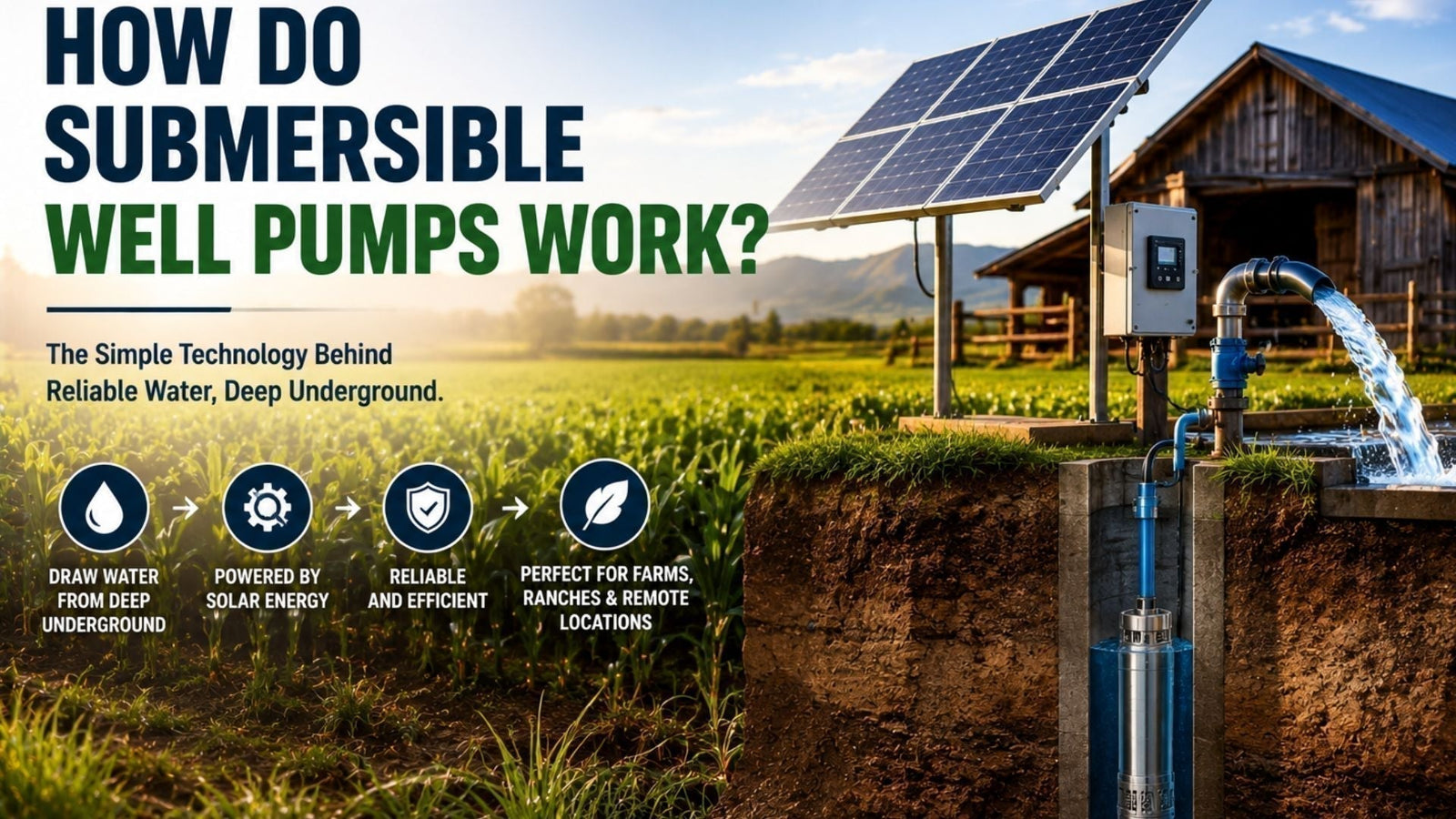
A submersible solar pump is different. It sits below the water and pushes water upward. It does not rely on atmospheric pressure to pull water through a long suction pipe. Depending on its motor, pump curve, solar array, pipe size, and well conditions, it may lift water 100, 200, or even more than 500 feet.
So, when someone asks how deep a solar water pump can draw water, the first question should be: Is the pump above the water or inside the well?
Surface solar pumps and suction lift
A surface solar pump sits beside a tank, pond, shallow well, or cistern. It pulls water through an intake pipe and then sends it to the delivery point. This design is simple and easy to inspect, but its suction depth is limited.
For most surface solar pumps, these are practical guidelines:
• Up to 10 feet: Usually easy if the suction pipe is short and airtight.
• 10 to 20 feet: Common for a good-quality pump and careful installation.
• 20 to 25 feet: Possible, but the system needs proper sizing and a good water source.
• 25 to 30 feet: Risky for many pumps and often unreliable.
• More than 30 feet: A submersible pump is normally the better choice.
The vertical distance must be measured from the pump inlet to the actual water surface. It is not measured from the ground to the bottom of the well. For example, if a well is 60 feet deep but the water stands 12 feet below the pump, the suction lift is 12 feet.
This point causes many failed installations. A pump may be advertised as lifting water 100 feet, but that number may describe total discharge head, not suction depth. The pump may push water 100 feet uphill while still needing the water surface to remain within its suction limit.
Submersible solar pumps for deep wells
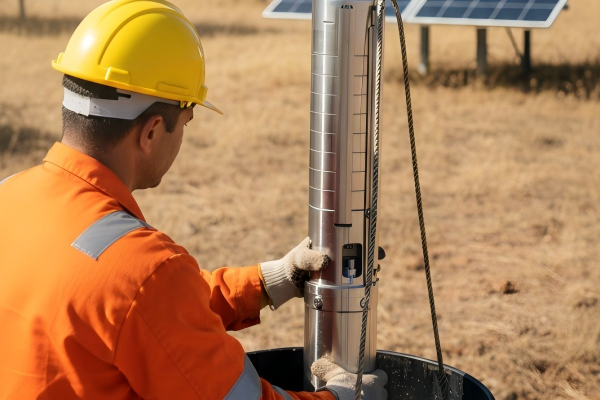
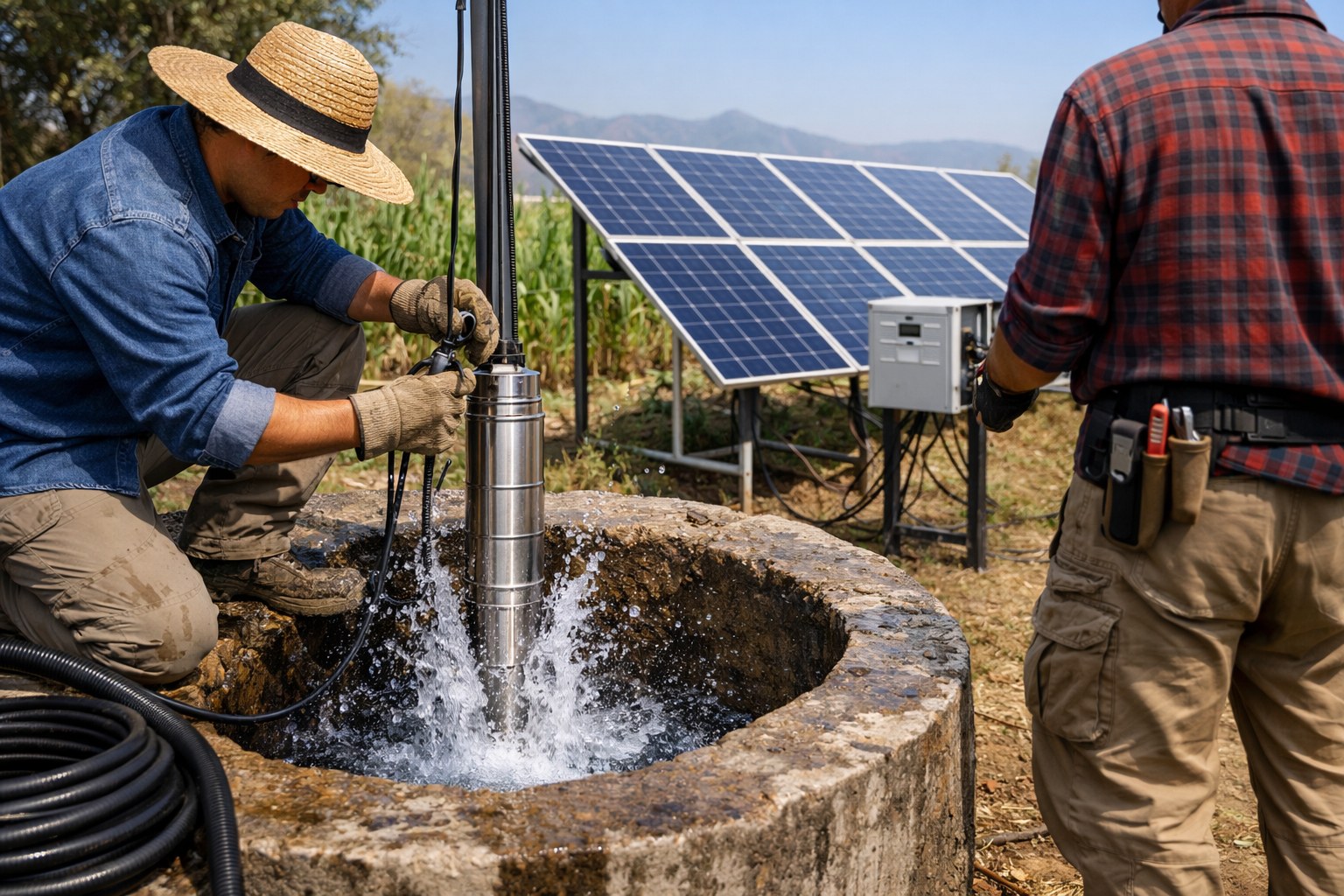
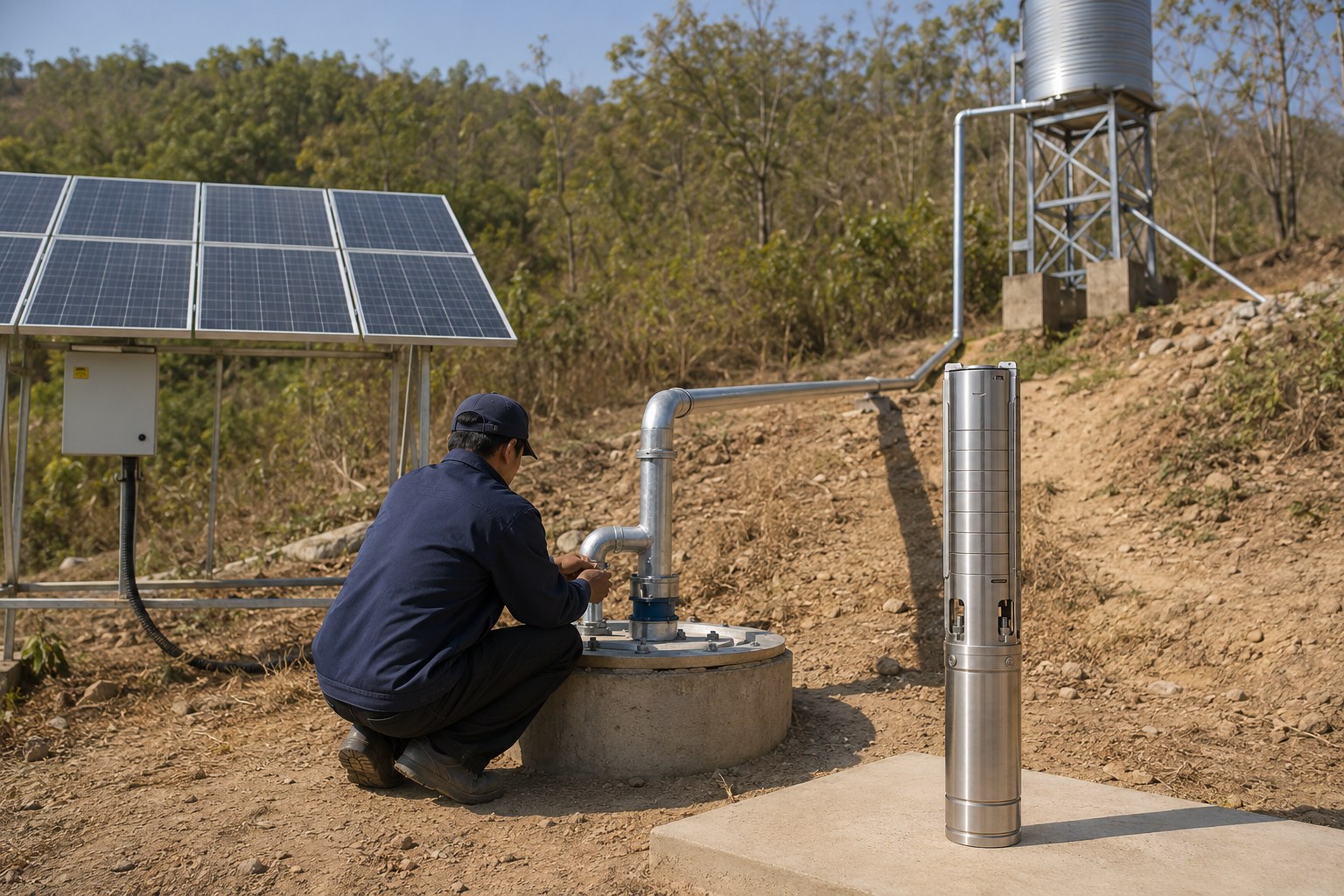
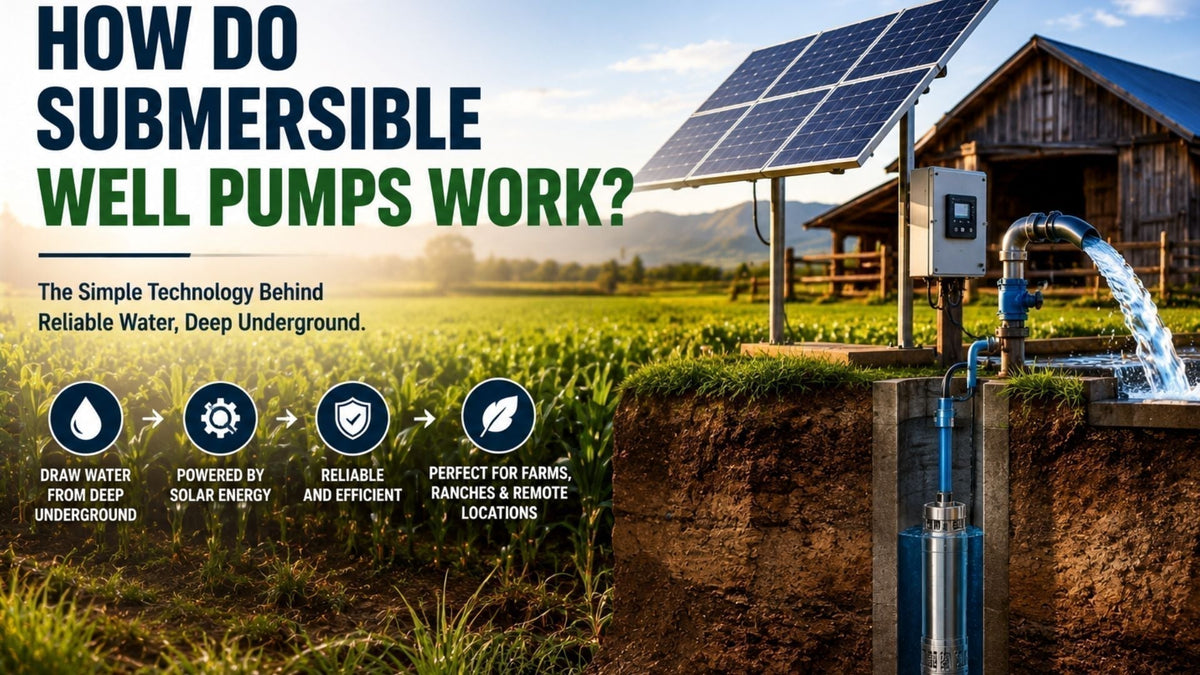
A submersible solar water pump is installed underwater, usually inside a well or borehole. Its motor turns an impeller that pushes water up the rising pipe. Because the pump is close to the water, it avoids the main weakness of surface suction systems.
A deep-well solar pump may work at several depths:
• 50 to 100 feet for small homes, livestock tanks, and gardens.
• 100 to 300 feet for many rural wells and irrigation systems.
• 300 to 500 feet or more for specialized systems with enough solar power.
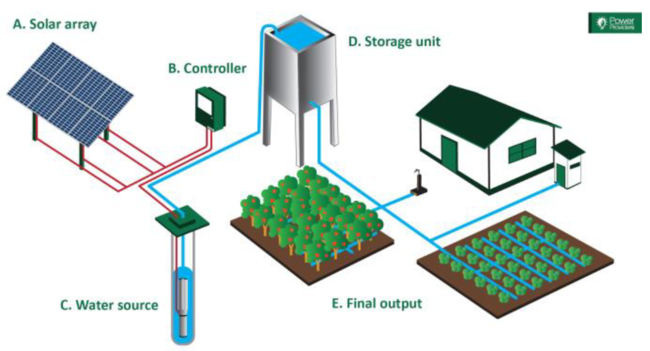
The maximum depth is not a single number. It depends on the total dynamic head, or TDH. TDH includes the vertical lift, pipe friction, water pressure, fittings, valves, and the change in water level while pumping.
For example, a pump placed 180 feet below ground may need to push water to a tank 20 feet above ground. If pipe friction adds 25 feet, the pump may need to handle about 225 feet of total head. A pump rated for 180 feet may not supply enough water in this case.
A submersible pump also needs enough water around its intake. If the well produces water slowly, the water level can fall during pumping. This lower level is called the drawdown level. The pump must be sized for the lowest expected water level, not just the level measured when the well is resting.
Source: hybsun.com
Why pump depth ratings can be confusing
Manufacturers use several terms to describe pump performance. These terms do not always mean the same thing.
Suction lift
Suction lift is the vertical distance from the water surface to a surface pump inlet. This is the key limit for a pump located above the water.
Total head
Total head is the pressure the pump must overcome. It includes vertical lift and resistance in the piping system. Total head is often shown in feet.
Maximum head
Maximum head is the highest point where a pump can produce almost no flow. It does not mean the pump will deliver useful water at that height.
Operating head
Operating head is the height where the pump delivers a useful flow rate. This is the number that matters in real use.
Flow rate
Flow rate tells you how much water the pump can move, often in gallons per minute or gallons per hour. As head increases, flow rate usually decreases.
A pump curve shows the relationship between flow and head. Always check the curve instead of relying on a single headline number. A pump listed as “200 feet maximum head” may deliver only a small trickle at 200 feet.
What affects how deep a solar water pump can draw water?
Several conditions affect how deep a solar water pump can draw water or push water from a well. Looking at depth alone can lead to an undersized system.
Water level
The resting water level is the level before pumping begins. The pumping water level is the level while the pump runs. The second measurement is more important because it shows the real lift during operation.
A well may have water at 15 feet when idle but fall to 35 feet during pumping. A surface pump that works at 15 feet may fail when the water drops to 35 feet.
Elevation
Atmospheric pressure decreases at higher elevations. This reduces the practical suction limit of a surface pump. A system that works near sea level may struggle in a mountain area at the same measured depth.
Pipe length and diameter
Long, narrow pipes create more friction. A 1-inch pipe may lose much more pressure than a 1.5-inch pipe at the same flow rate. Increasing pipe size can improve performance, especially on a long uphill run.
Pipe fittings
Elbows, check valves, foot valves, filters, and connectors all add resistance. A clogged filter can act like a partial blockage and make a pump seem too weak.
Water temperature
Warm water has a higher vapor pressure. This makes cavitation more likely in a suction system. Cool, clean water is easier for a surface pump to lift.
Air leaks
Even a small leak on the suction side can stop a pump from working. Water may not leak out, but air can leak in when the pump creates negative pressure. Thread sealant, tight clamps, and a proper foot valve are important.
Solar power
Clouds, shade, dust, short winter days, and poor panel direction reduce pump output. A pump may reach its rated flow only under strong sunlight and correct voltage.
Well recovery rate
A well must refill as fast as the pump removes water. If the pump is too large, it can lower the water level below the intake or run dry. Dry running can damage the motor and pump stages.
Source: rocksolar.io
How to calculate the required pumping head
You can estimate the required head with a simple formula:
Total dynamic head = vertical lift + elevation to outlet + pipe friction + pressure requirement
Consider this example:
• The pumping water level is 80 feet below ground.
• The storage tank inlet is 15 feet above ground.
• Pipe and fitting losses equal 20 feet.
• The system needs 10 feet of pressure at the outlet.
The estimated total head is:
80 + 15 + 20 + 10 = 125 feet
The selected pump should provide the desired flow at 125 feet of head. Do not choose a pump rated for only 125 feet maximum head. Look for a pump curve showing useful flow at that point, with some safety margin.
For household use, the required flow may be modest. A storage tank can allow the pump to run during sunny hours and supply water later. This is often more efficient than trying to power a large pump for instant water pressure.
How deep can a solar water pump draw water from a well?
A surface solar pump can usually draw from a well with a pumping water level of about 20 to 25 feet. The total well depth does not matter as much as the distance from the pump to the water surface.
A submersible solar pump can serve a much deeper well. Many models handle 100 to 300 feet of total head, while high-head systems can go much deeper. The correct answer depends on the pump curve and the required flow.
Suppose the well is drilled to 250 feet, but the water level stays at 40 feet below the pump. A surface pump may still struggle because 40 feet exceeds its practical suction range. A submersible pump set below the water level would be a better design.
If the well water level changes during the year, use the lowest expected level for planning. Drought, nearby irrigation, and seasonal demand can lower the water table. Good system design plans for these changes rather than using the most optimistic measurement.
Can a solar pump lift water uphill?
Yes, a solar pump can lift water uphill. The pump must overcome the vertical rise between the water source and the discharge point, plus pipe friction and any needed pressure.
For instance, water pumped from a spring to a tank 70 feet higher may require more than 70 feet of head. If pipe friction adds 15 feet, the pump needs at least 85 feet of total head before adding a safety margin.
A tank at the top of a hill is often a smart setup. The pump fills the tank when sunlight is available, and gravity sends water to the home or field. This approach reduces battery use and makes the system more dependable during cloudy weather.
Surface pump or submersible pump: which is better?
Choose a surface pump when the water level is shallow and easy access matters. It can be useful for ponds, rainwater tanks, shallow wells, and small irrigation systems.
Choose a submersible pump when the water is deep, the water level changes, or the system needs reliable well pumping. It costs more to install and service, but it avoids the suction limits of surface equipment.
A basic comparison can help:
| Feature | Surface solar pump | Submersible solar pump |
|---|---|---|
| Pump location | Above the water | Below the water |
| Practical suction depth | About 20 to 25 feet | Not limited by suction |
| Deep-well use | Usually poor | Usually preferred |
| Maintenance access | Easy | More difficult |
| Air leak risk | High on suction side | Low |
| Noise | Often more noticeable | Usually quiet |
| Dry-run protection | Important | Essential |
| Best use | Shallow sources | Deep wells and boreholes |
In field troubleshooting, the most common mistake is using a surface pump because it costs less. Once the water level drops, the system loses prime and stops. Replacing it with a correctly sized submersible pump is often cheaper than repeatedly repairing an unsuitable installation.
Source: hybsun.com
Common mistakes that reduce pumping depth
Even a strong pump may fail when the system layout is poor. Avoid these common problems:
• Measuring well depth instead of measuring the pumping water level.
• Treating maximum head as the normal working head.
• Using a narrow suction pipe for a long distance.
• Installing too many elbows, filters, or restrictive valves.
• Leaving a small air leak on the suction line.
• Putting a foot valve too far above the water.
• Choosing a pump by voltage alone instead of checking its curve.
• Ignoring voltage drop between the solar panels and pump controller.
• Installing panels where trees shade them during part of the day.
• Running a submersible pump without dry-run protection.
• Forgetting that the water level may drop during drought.
One practical lesson is worth remembering: water systems fail at their weakest link. The pump, pipe, solar array, controller, well, and storage tank must work as one system.
How to choose the right solar pump for depth
Start with accurate measurements. Write down the water level when the well is resting, the level while pumping, the height of the outlet, and the distance to the tank or field.
Then follow these steps:
- Measure the lowest expected pumping water level.
- Measure the vertical height to the delivery point.
- Estimate pipe friction using the pipe size, length, and flow rate.
- Add any pressure needed at the faucet, sprinkler, or irrigation line.
- Select a pump that provides the target flow at the calculated total head.
- Check the pump’s voltage, current, controller, and panel requirements.
- Add protection against dry running, overload, low water, and high voltage.
- Test the system in bright sun and during weaker sunlight.
Do not oversize the pump without checking the well yield. A powerful pump can empty a slow well. In many homes and farms, a smaller pump running into a storage tank is safer and more efficient than a large pump running directly to the final use.
Source: rocksolar.io
Improving the performance of a deep solar water pump
A few design choices can increase reliability without making the system much more complex.
Use a larger delivery pipe when the run is long. Lower friction means more water reaches the tank. Keep the intake clear and use a screen that is large enough to avoid restricting flow.
Place solar panels in full sun and aim them correctly for the location. Keep dust, leaves, and bird droppings off the panels. A small loss in panel output can cause a pump controller to shut down at midday.
Use a water-level sensor or dry-run controller. This protects the pump when the well level falls. A float switch can also stop the pump when a storage tank is full.
Avoid batteries when a storage tank can meet the need. Batteries add cost, maintenance, and energy loss. In many rural water systems, storing water is simpler than storing electricity.
Safety and maintenance tips
Electrical and well work can be dangerous. Solar panels can produce power whenever they receive light, even when the main switch is off. Use correct disconnects, grounding, fuses, and cable sizes.
Inspect the system at least a few times each year:
• Check panel condition and clean heavy dust.
• Look for damaged cables and loose connections.
• Inspect pipes for leaks and sun damage.
• Test the check valve and foot valve.
• Watch for reduced flow or cloudy water.
• Compare the current water level with older records.
• Confirm that the pump stops when the tank is full.
If a surface pump loses prime, stop it rather than letting it run dry. Find the air leak, refill the pump housing, and inspect the foot valve before restarting.
Frequently asked questions about how deep can a solar water pump draw water?
How deep can a surface solar water pump draw water?
A surface solar water pump usually draws water from about 20 to 25 feet below the pump. Some systems may reach close to 30 feet in ideal conditions, but that depth is not a dependable target.
Can a solar pump work in a 100-foot-deep well?
Yes, a submersible solar pump can work in a 100-foot well. The pump must be sized for the pumping water level, desired flow, pipe losses, and height of the outlet.
What is the maximum depth for a submersible solar water pump?
There is no universal maximum depth. Some submersible solar pumps handle 100 to 300 feet of head, while specialized systems can handle more than 500 feet with enough power and the correct pump curve.
Does well depth equal pumping depth?
No. Well depth is the distance to the bottom of the well. Pumping depth is the distance from the pump or ground level to the water surface while the pump is running.
Can a solar water pump run without batteries?
Yes. Many solar water pumps run directly from solar panels through a pump controller. A storage tank can hold water for use at night or during cloudy periods, reducing the need for batteries.
Why does my solar pump stop when the water level drops?
The pump may be reaching its suction limit, losing prime, or activating a low-water protection feature. A falling water level can also expose a submersible pump intake and trigger dry-run protection.
Is a bigger solar panel enough to pump from deeper water?
More panel power can improve flow, but it cannot fix an unsuitable pump design. The pump must still be rated for the required total head, and the motor, controller, pipe, and well must match the system.
Conclusion
A surface solar water pump usually draws water from no more than 20 to 25 feet in practical conditions. For deeper sources, a submersible solar pump is the safer choice because it pushes water instead of relying on limited suction. The final design must account for pumping water level, total dynamic head, flow rate, pipe friction, solar power, and well recovery.
Measure the water level while pumping, study the pump curve, and plan for the lowest seasonal water level. These simple steps can prevent weak flow, lost prime, motor damage, and costly replacements. If you are planning a system, compare your measurements with a qualified pump installer or engineer, and share your project details in the comments for further guidance.