How Does A Solar Water Pump Work: Simple Guide
Solar panels turn sunlight into electricity that powers a pump, moving water from a source to a tank or outlet.
Understanding how does a solar water pump work? helps homeowners, farmers, and communities choose the right system. A solar pump can lift water without grid power or fuel, but its output depends on sunlight, pump size, water depth, and daily demand. This guide explains the parts, process, costs, benefits, limits, and setup tips in clear terms.
How does a solar water pump work?
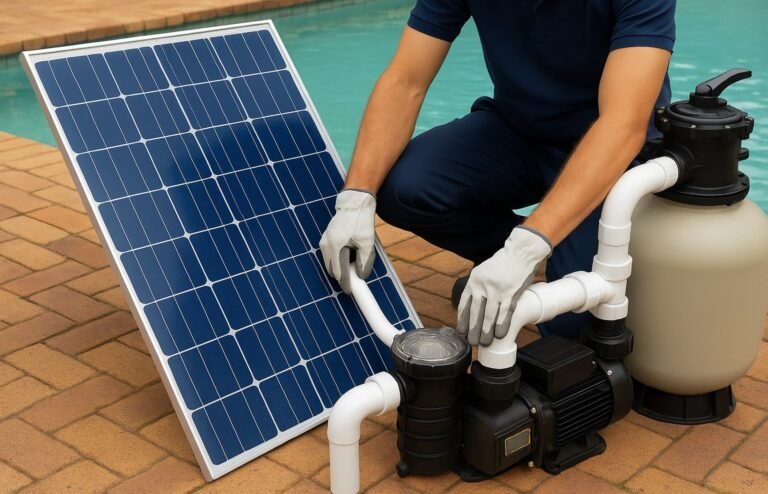
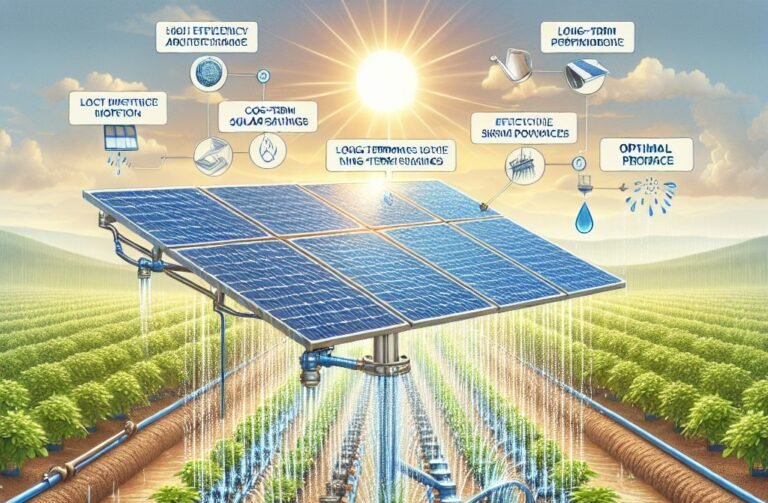
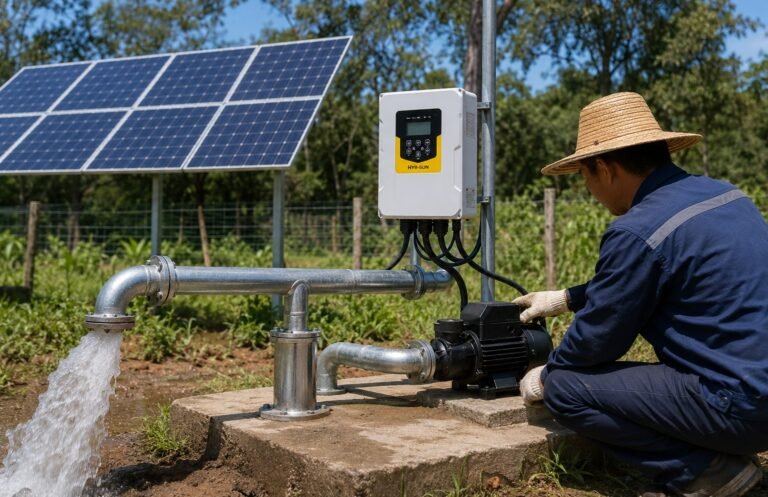
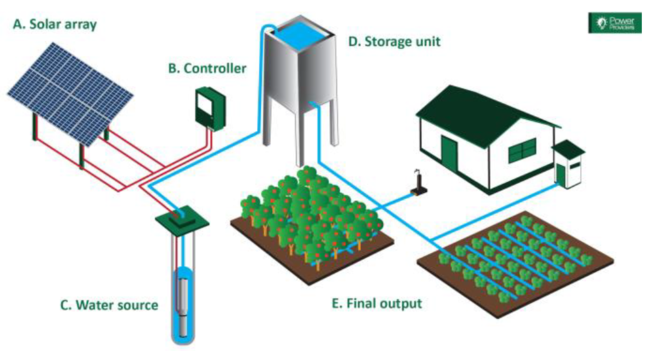
A solar water pump uses photovoltaic panels to convert sunlight into electrical power. That power runs a motor, which spins an impeller or drives a piston to move water. The water may travel from a well, pond, river, storage tank, or borehole.
The basic process has four steps:
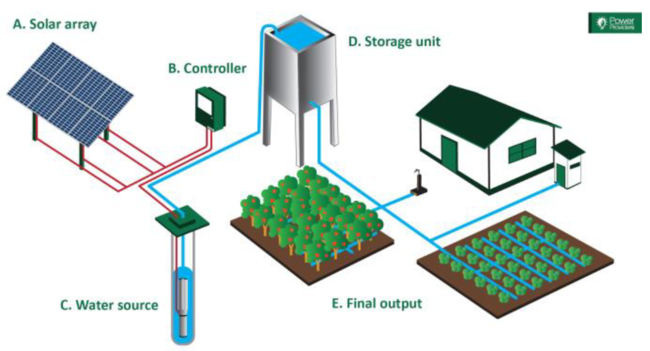
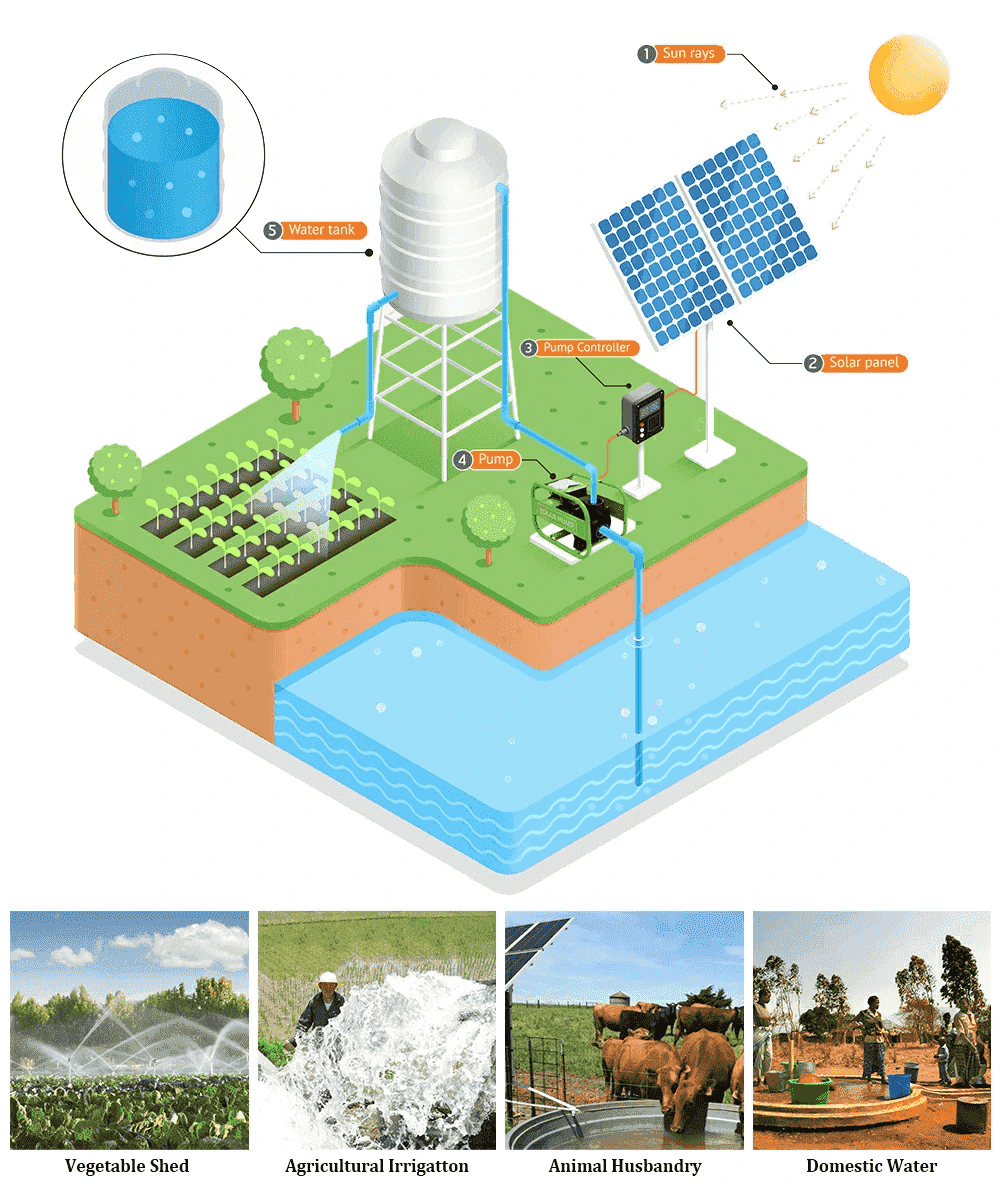
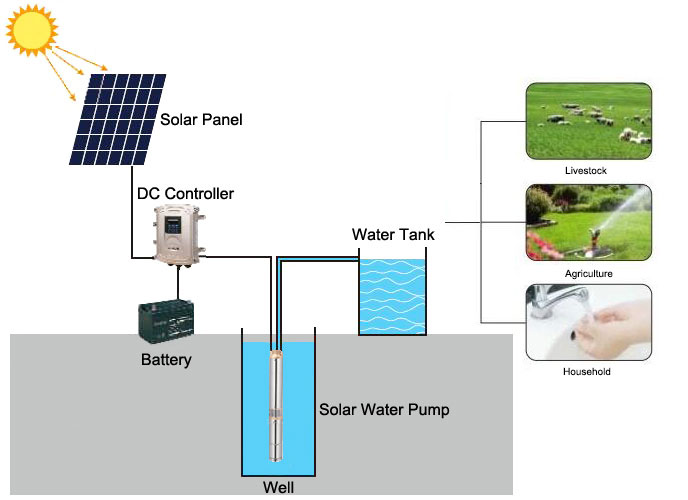
- Solar panels capture sunlight and produce direct current electricity.
- A controller manages the power and protects the system.
- The pump motor uses that electricity to create movement.
- Pipes carry water to a tank, irrigation line, livestock trough, or home.
So, how does a solar water pump work? Think of it as a sunlight-powered lift system. The panels provide the energy, the motor provides the force, and the pipes provide the path.
Most systems pump more water around midday because sunlight is stronger. They pump less in cloudy weather and stop at night unless batteries or another power source are available.
Source: whcsolar.com
Main parts of a solar water pumping system
A complete solar water pump system has more than just panels and a pump. Each part affects water flow, reliability, and operating cost.
Solar panels
Solar panels produce electricity from sunlight. Their total wattage must match the pump motor and the amount of water needed each day.
Panel output changes with:
• Sun intensity
• Panel angle
• Shade
• Temperature
• Dust and dirt
• Seasonal daylight hours
A small pump may use a few hundred watts. A large farm system may need several kilowatts or more.
Pump motor
The motor changes electrical energy into mechanical energy. It turns the pump mechanism and pushes water through the pipe.
Common motor types include:
• DC motors, which can connect directly to solar panels
• AC motors, which need an inverter
• Brushless DC motors, which often offer good efficiency and long service life
Pump body
The pump body creates the pressure that moves water. Two common designs are centrifugal and positive displacement pumps.
Centrifugal pumps use spinning impellers. They work well when a high flow rate is needed from a shallow source. Positive displacement pumps move a set amount of water with each cycle and often suit deeper wells or higher pressure needs.
Solar pump controller
The controller manages the electricity between the panels and motor. It can help the pump start smoothly, protect it from dry running, and adjust its speed as sunlight changes.
Some controllers include maximum power point tracking, often called MPPT. This feature helps draw useful power from the panels when sunlight is weak or changing.
Pipes, valves, and storage tanks
Pipes carry water from the source to the delivery point. Check valves help stop water from flowing backward. Float switches can stop the pump when a tank is full.
A storage tank often works better than a battery for water systems. Instead of storing electricity, the system stores water. This can reduce battery cost and make the setup simpler.
Source: inverter.com
The water pumping cycle explained
To understand how does a solar water pump work? in real conditions, follow the water from its source to its final use.
1. Sunlight reaches the panels
Solar cells absorb sunlight and release electrical energy. The panels produce direct current, or DC, but the amount changes throughout the day.
Bright, direct sunlight gives the strongest output. Clouds do not always stop pumping, but they reduce power and water flow.
2. The controller regulates power
The controller checks the power level and sends suitable electricity to the motor. It may increase or reduce motor speed based on available sunlight.
This matters because a motor can stall or overheat if it receives unstable power. A good controller also adds protection against overload, low voltage, and dry operation.
3. The motor drives the pump
The motor turns an impeller, diaphragm, screw, or piston. That movement creates pressure and flow inside the pump.
The pump does not “pull” water in the same way a straw pulls a drink. Atmospheric pressure helps push water toward many surface pumps, while submersible pumps push water upward from inside the well.
4. Water moves through the pipe
The pump sends water through a rising pipe and toward its destination. The system must overcome both vertical lift and pipe friction.
For example, lifting water 100 feet requires more pressure than lifting it 20 feet. Long, narrow, or blocked pipes also reduce flow.
5. Water reaches the tank or outlet
The water may fill a tank, run through drip irrigation, or supply a household line. A float switch or pressure sensor can control when the pump stops.
A well-designed system pumps water when sunlight is available and stores it for later use. This approach often works better than trying to power a large pump at night.
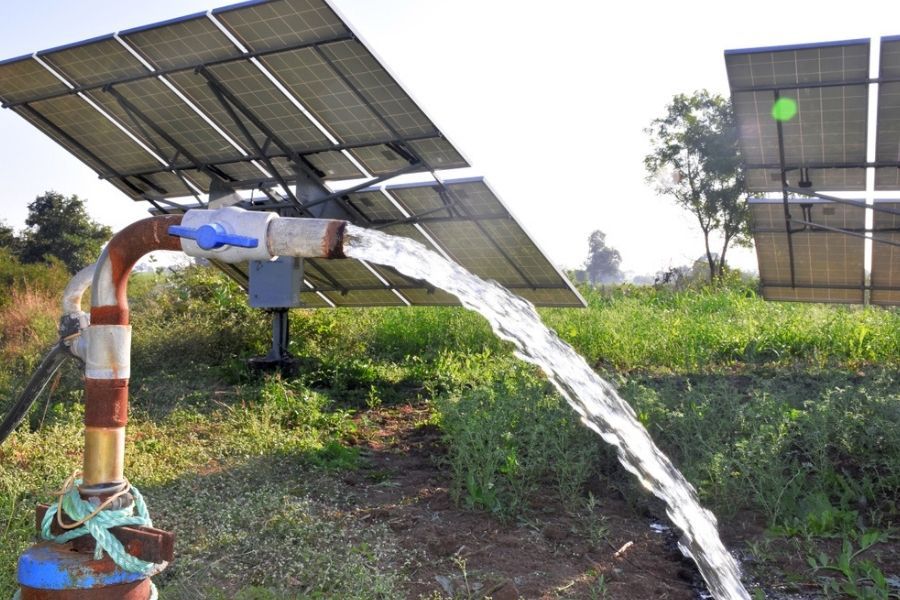
Source: healingwaters.org
Direct solar pumping versus battery systems
There are two main ways to use solar energy for water pumping.
Direct solar pumping
A direct system powers the pump only when solar panels produce enough electricity. It usually includes panels, a controller, a pump, pipes, and a tank.
Advantages include:
• Lower installation cost
• Fewer parts to replace
• No battery storage losses
• Simple maintenance
• Good performance for daytime irrigation
The main limitation is that flow changes with the weather. A large tank can solve much of this problem.
Solar pumping with batteries
A battery system stores electrical energy for later use. It can run the pump after sunset or during short periods of cloud.
This setup may help when water is needed at night or when a tank cannot store enough water. However, batteries add cost, weight, maintenance, and replacement needs.
Battery life depends on temperature, charging habits, discharge depth, and battery type. Many modern systems use lithium batteries, while some lower-cost systems still use lead-acid batteries.
Which option is better?
For many farms and homes, water storage is more practical than electrical storage. Pumping into a tank during the day can provide water after dark without using batteries.
A battery makes more sense when the system needs steady pressure, nighttime pumping, or backup power for other devices.
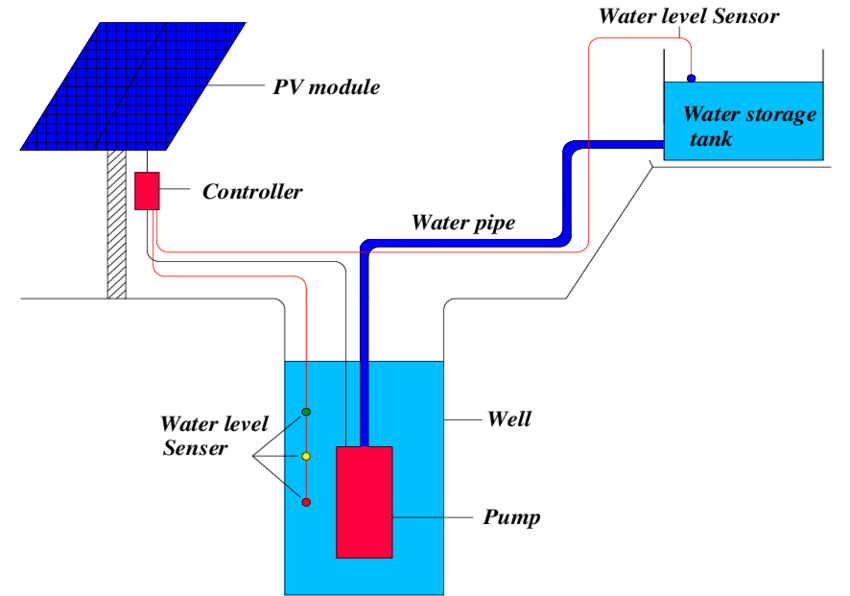
Source: informo.hr
Types of solar water pumps
The best pump type depends on water depth, flow needs, and the distance to the delivery point.
Surface solar pumps
A surface pump sits above the water source. It draws water through an intake pipe and sends it to the destination.
Surface pumps suit:
• Shallow wells
• Open tanks
• Ponds
• Streams
• Rainwater storage systems
They are easy to inspect and repair. However, they cannot lift water from unlimited depths. In practice, suction height is limited by atmospheric pressure, pipe losses, and pump design.
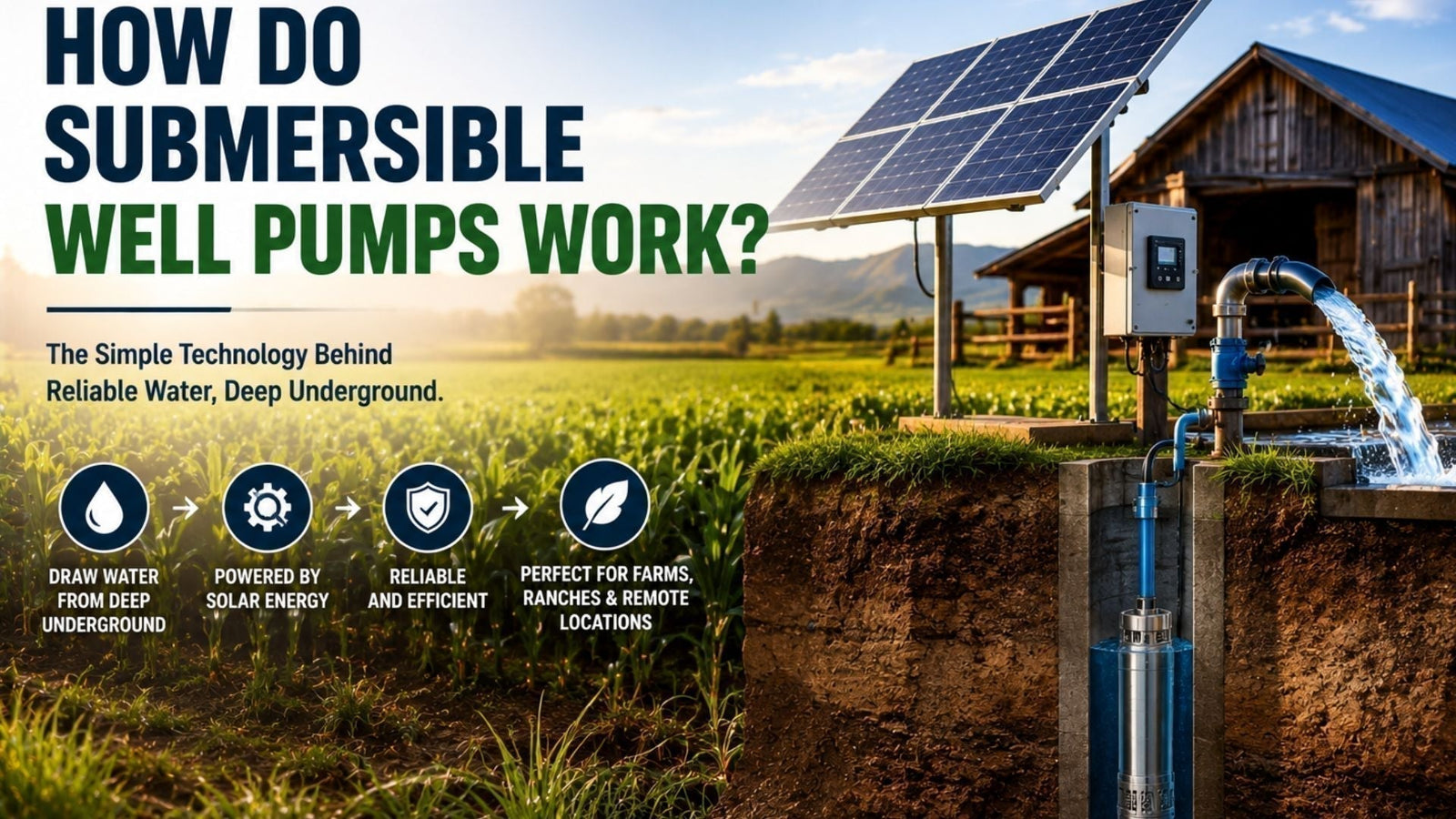
Submersible solar pumps
A submersible pump sits underwater, often inside a well or borehole. It pushes water upward instead of trying to pull it from above.
Submersible pumps work well for deep wells. They also avoid many suction problems, but installation and removal can take more time.
The pump must match the well’s diameter and water yield. A pump that removes water faster than the well refills can cause dry running and damage.
Centrifugal pumps
Centrifugal pumps use a rotating impeller to increase water speed and pressure. They are common for high-flow applications.
They work best when the required lift is moderate and the water source is reasonably clean. They may lose performance with air in the intake line or very high lifting requirements.
Positive displacement pumps
Positive displacement pumps move a fixed volume of water with each cycle. Examples include diaphragm, piston, and helical rotor pumps.
They often suit deep wells and high-pressure needs. Their flow rate may be lower, but they can provide strong lifting ability with efficient motor control.
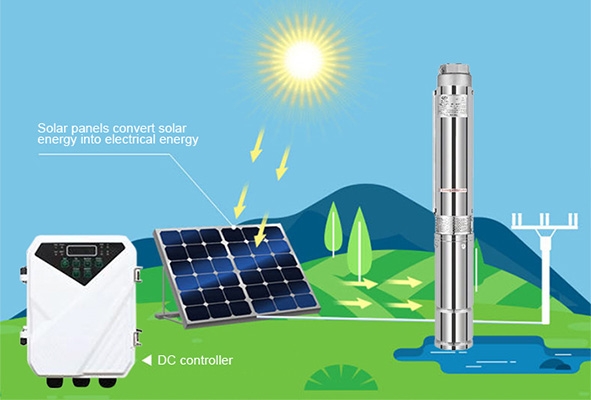
Source: infinibandta.org
How much water can a solar pump deliver?
The answer depends on more than panel wattage. A small system may supply drinking water for a home, while a larger system may support livestock or crop irrigation.
Important factors include:
• Pump power
• Solar panel capacity
• Total lifting height
• Pipe length and diameter
• Water source depth
• Sunlight hours
• Pump efficiency
• Daily water demand
Manufacturers often list flow in gallons per minute or liters per minute. They may also provide a pump curve. This curve shows how flow changes as the required head increases.
“Head” means the total resistance the pump must overcome. It includes vertical height, pressure needs, and pipe friction.
For example, a pump may deliver 15 gallons per minute at a low head but only 5 gallons per minute at a much higher head. Always check the performance curve instead of relying on the maximum flow number.
A simple sizing example
Suppose a small farm needs 1,500 gallons per day. The well is 100 feet below the tank, and the system receives about five strong sun hours per day.
The pump must average about 300 gallons per sun hour, before accounting for losses. That equals about 5 gallons per minute during pumping, so the installer must select a pump that can provide at least that flow at the full operating head.
This example is only a starting point. A professional design should also consider seasonal sunlight, well recovery, pipe friction, and reserve capacity.
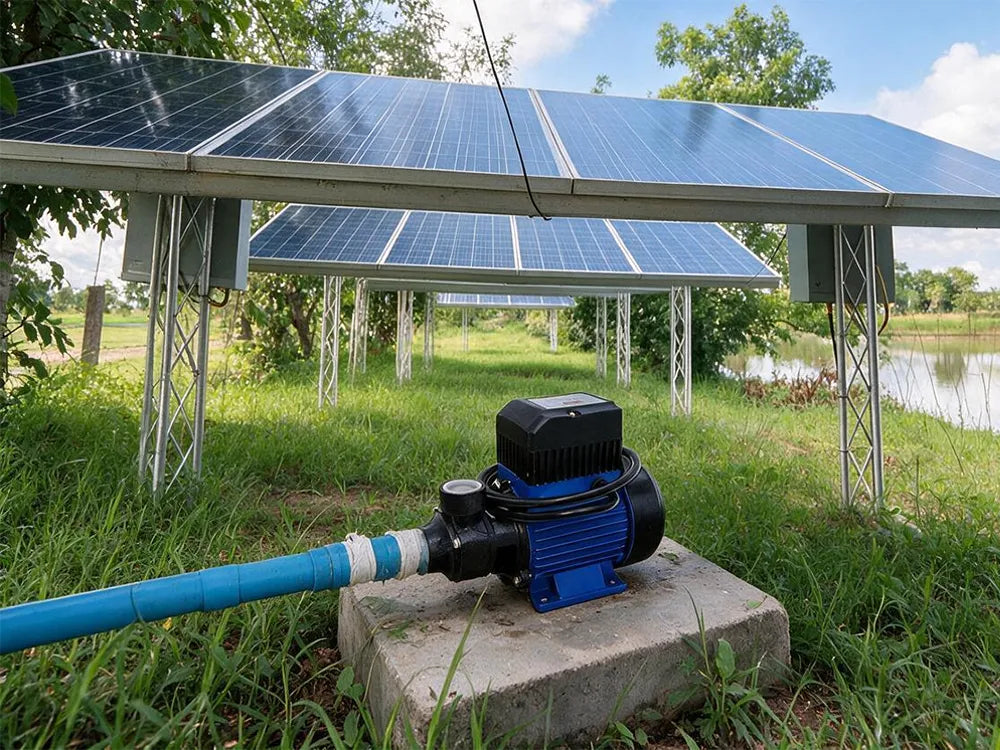
Source: flowatts.com
How to size a solar water pump
Correct sizing prevents weak flow, wasted energy, and early equipment failure. Begin with water demand, not with the pump or panels.
Step 1: Estimate daily water use
List every use, such as:
• Drinking and cooking
• Toilets and showers
• Livestock
• Crop irrigation
• Cleaning
• Emergency reserve
Use realistic figures. A system that barely meets average demand may fail during hot, dry periods.
Step 2: Measure the total dynamic head
Total dynamic head includes:
• Vertical distance from water level to outlet
• Pressure required at the outlet
• Friction inside pipes and fittings
• Changes in water level during pumping
Do not measure only the well depth. The water level may sit far above the bottom of the well, and the final outlet may be much higher than the tank base.
Step 3: Check the water source
A well must refill fast enough to support the pump. Ask for a well yield test when possible.
For ponds and tanks, check whether sediment, algae, or floating debris can enter the intake. A screened intake can protect the pump and reduce blockages.
Step 4: Match the pump to the power supply
The pump’s voltage, current, and wattage must match the controller and solar array. A qualified installer can calculate panel size using local sunlight data and seasonal conditions.
Oversizing panels may improve performance in weak sunlight. Yet every part must remain within its safe voltage and current limits.
Source: energypedia.info
Benefits of solar water pumps
Solar water pumping can be useful in places with strong sunlight and limited grid access.
Lower fuel use
A solar pump does not burn gasoline or diesel while operating. This can reduce fuel purchases, transport needs, noise, and exhaust near water sources.
Access to remote water
Solar pumping can supply water to remote homes, farms, and livestock areas. It can work where extending a utility line would cost too much.
Lower operating costs
After installation, sunlight is free. The system still needs inspections and occasional part replacement, but its daily energy cost can be very low.
Cleaner operation
Solar pumping creates no direct exhaust at the pump site. Its full environmental impact still includes panel manufacturing, transport, and disposal, so it is not impact-free.
Useful during power outages
A well-designed system can continue pumping during grid failures. A storage tank provides extra resilience, especially during storms or emergencies.
Source: rocksolar.io
Limitations and common problems
Solar water pumps are not perfect for every site. A fair answer to how does a solar water pump work? must include the conditions that limit performance.
Cloudy weather
Clouds reduce solar output. The pump may run slowly or stop if power falls below its start level.
A larger tank, extra panel capacity, or backup power can improve reliability.
High upfront cost
Panels, controllers, pumps, tanks, pipes, and installation can cost more at the start than a basic utility-powered pump. The long-term value depends on water demand, fuel savings, local labor, and system life.
Water storage needs
A direct solar pump may not provide steady water pressure all day. Storage tanks solve this issue, but they need space, a strong base, and protection from contamination.
Pump wear and dry running
A pump can suffer damage if it runs without water. Low-water sensors, well probes, and automatic shutoff controls help prevent this problem.
Theft and weather damage
Panels and exposed cables may attract theft or suffer damage from hail, wind, animals, or poor installation. Secure mounting and protected wiring are important.
Poor system sizing
A pump can work but still fail to meet daily demand. This often happens when someone selects a pump by maximum flow rather than by flow at the required head.
Installation and maintenance tips
Good installation has a major effect on how does a solar water pump work? over the long term.
Use a clear, shade-free location for the solar array. Even a small shadow across part of a panel can reduce output, depending on the panel design and wiring.
Keep electrical connections sealed and protected from moisture. Use proper grounding, fuses, disconnects, and overcurrent protection. Electrical work near water should follow local codes and be completed by a qualified professional.
Useful maintenance tasks include:
• Clean dusty panels when safe and needed
• Inspect cables, brackets, and connectors
• Check for pipe leaks
• Clean intake screens
• Test float switches and sensors
• Watch for unusual motor noise
• Confirm that the well does not run dry
• Check tank hygiene and cover condition
One practical lesson from field installations is simple: protect the water intake. Sediment and debris can reduce flow long before the motor shows a serious problem.
Another common mistake is using a pipe that is too small. A larger pipe may cost more, but it can reduce friction and help the pump deliver more water with less strain.
Solar pump safety considerations
Water and electricity require careful planning. Never treat a solar pump as a low-risk do-it-yourself project just because sunlight powers it.
Follow these safety practices:
• Turn off all power sources before servicing
• Use a DC-rated disconnect for DC systems
• Ground metal frames and electrical equipment
• Keep wiring away from sharp edges and standing water
• Install protection against lightning and surges where needed
• Use weather-rated boxes and cable glands
• Keep children away from open wells and tanks
• Follow local electrical and plumbing rules
A solar array can produce dangerous voltage even when the pump is switched off. Panels may continue generating power whenever light reaches them.
For drinking water, use materials approved for potable water. Test the water source regularly, because a solar pump does not remove bacteria, chemicals, salt, or other contaminants by itself.
Real-world uses of solar water pumps
Solar water pumps serve many needs across the United States and worldwide.
Home water supply
A rural home can pump groundwater into a pressure tank or elevated storage tank. The system may work with a battery, a generator, or water storage for backup.
Livestock watering
A pump can fill troughs far from a barn or electrical service. A float valve can control filling, while a tank provides water during low-sun periods.
Crop irrigation
Solar pumps often pair well with drip irrigation. Drip lines use water slowly and can reduce the flow rate required from the pump.
Irrigation planning must still account for evaporation, crop type, soil, and local water rules. A solar pump does not create more water than the source can provide.
Community water systems
Larger systems can supply village tanks or shared water points. These projects need careful design, water testing, community planning, and long-term maintenance support.
Pond and fountain circulation
Small solar pumps can circulate water in ponds or decorative features. These systems usually have lower pressure needs than a deep-well pump.
What affects solar water pump efficiency?
Efficiency describes how well the system turns sunlight into useful water movement. A high-quality pump may still perform poorly if the design has major pipe losses or shade.
Efficiency improves when you:
• Use the correct pump type
• Choose the right pipe diameter
• Reduce unnecessary bends and fittings
• Keep panels clean and unshaded
• Match panel voltage to the controller
• Pump into a tank rather than against needless pressure
• Maintain filters and intake screens
• Use efficient drip irrigation where suitable
Temperature also matters. Solar panels often produce less power as their temperature rises, even under strong sunlight. Good airflow beneath the panels can help reduce heat buildup.
The best design balances water demand, head, sunlight, equipment cost, and reliability. The cheapest pump is not always the lowest-cost system if it needs frequent repairs or cannot meet demand.
Frequently Asked Questions About How Does a Solar Water Pump Work?
Does a solar water pump work at night?
A direct solar water pump usually stops when sunlight is gone. It can operate at night if the system includes batteries, grid power, or a generator.
Can a solar water pump work on cloudy days?
Yes, many solar water pumps can run during cloudy weather, but their flow may drop. The panels produce less electricity, so the controller may slow the motor or stop it.
How deep can a solar water pump draw water?
The maximum depth depends on the pump type and model. Submersible pumps are usually better for deep wells, while surface pumps have limited suction height and work best with shallow sources.
Do solar water pumps need batteries?
No, batteries are not always needed. Many systems pump water into a storage tank during the day, which stores water instead of electricity.
How long does a solar water pump last?
Service life varies by pump quality, water conditions, operating hours, and maintenance. A well-maintained pump may last many years, but seals, bearings, controllers, and batteries can require replacement sooner.
Can a solar water pump supply drinking water?
Yes, it can move drinking water when the source, pipes, tank, and pump materials are suitable for potable water. The pump itself does not purify water, so testing and treatment may still be necessary.
How much maintenance does a solar water pump need?
Maintenance is usually light but important. Inspect panels, wiring, pipes, intake screens, sensors, and pump performance at regular intervals.
Conclusion
A solar water pump turns sunlight into electricity, uses that energy to drive a motor, and moves water through pipes to a useful destination. The system can include panels, a controller, a surface or submersible pump, valves, sensors, and a storage tank.
The strongest systems are sized around real water demand, total head, well yield, pipe design, and local sunlight. Storage tanks often provide a simple way to maintain water access when clouds pass or the sun sets.
Now that you understand how does a solar water pump work?, compare your water needs with a pump curve and get a qualified design review before buying equipment. Explore local solar resources, check water quality, and share your questions or experience with solar pumping in the comments.