How Does A Solar Pool Pump Work?: Complete Guide
A solar pool pump uses sunlight to power water circulation, filtration, and cleaning without relying fully on grid electricity.
How does a solar pool pump work? It combines solar panels, a controller, a pump motor, and your pool’s plumbing system. Sunlight becomes electrical power, the motor moves pool water through the filter, and the clean water returns to the pool. This guide explains the full process, the main parts, real-world performance, costs, limits, and tips for choosing the right system.
How Does a Solar Pool Pump Work?
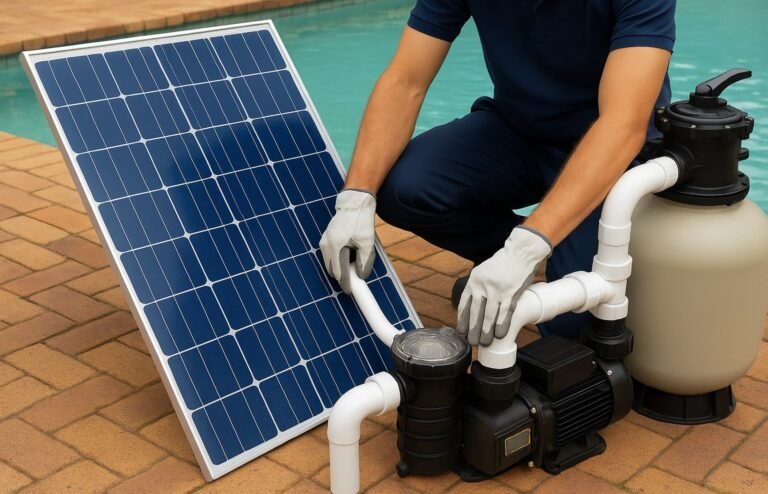
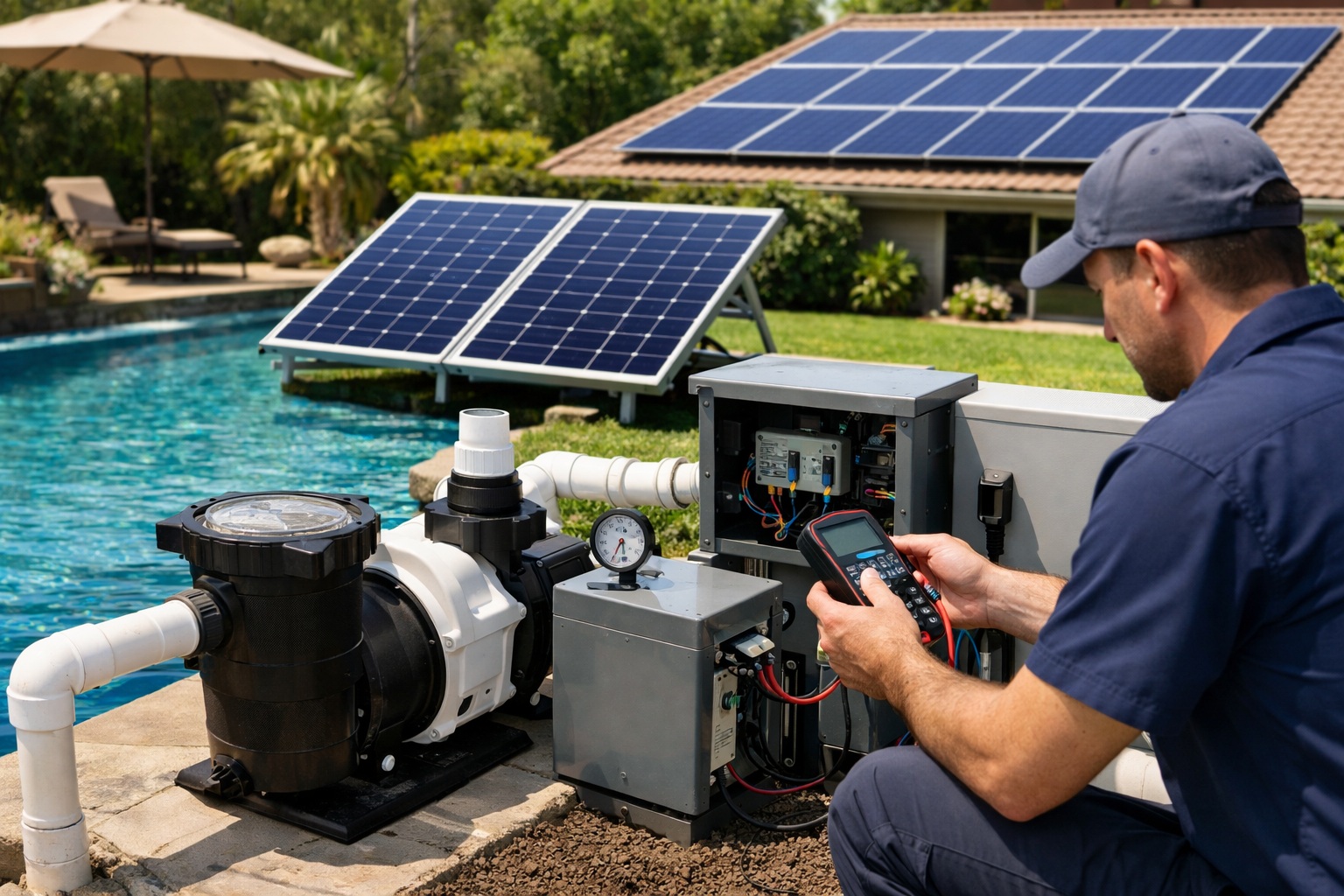
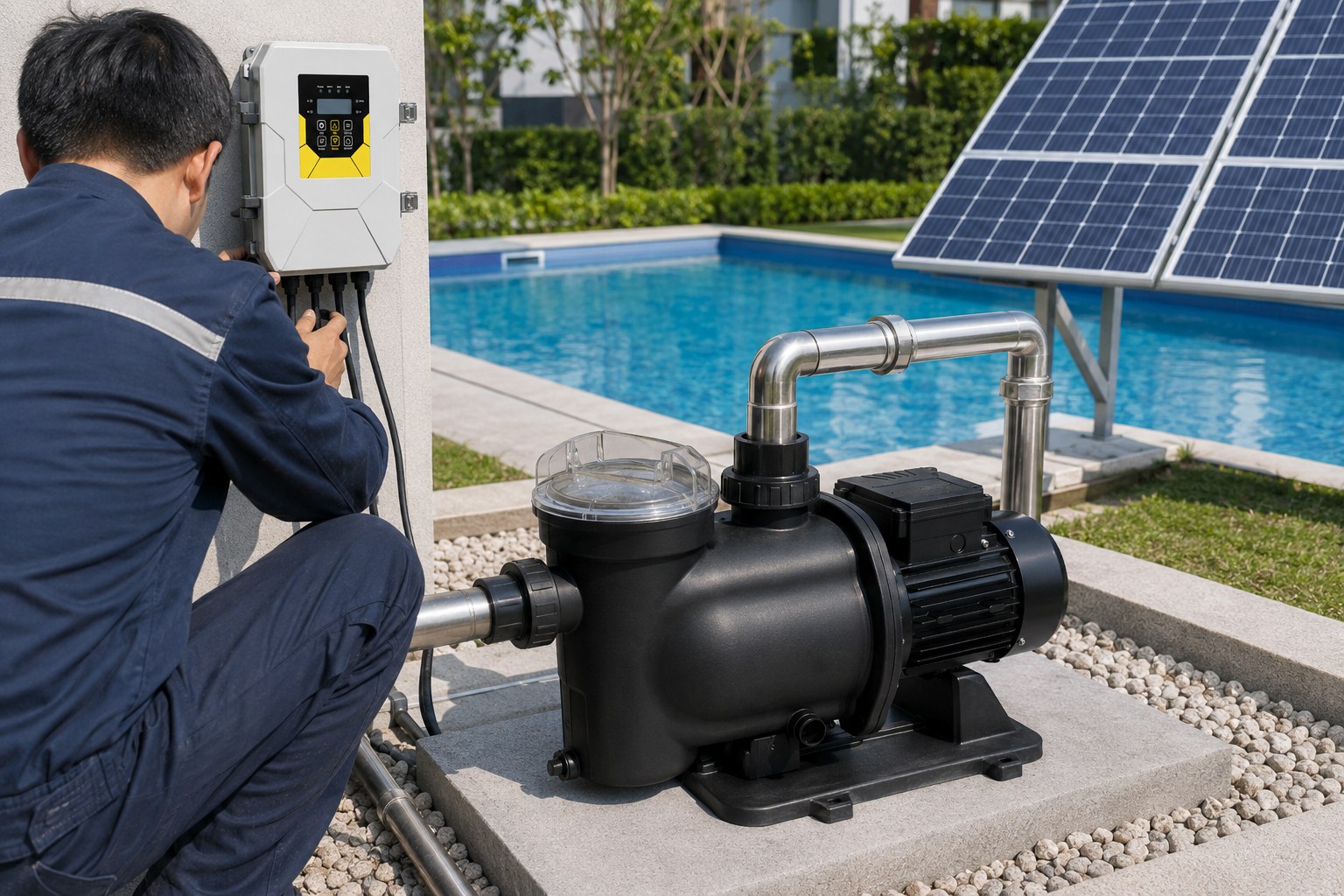
How does a solar pool pump work in simple terms? Solar panels capture sunlight and turn it into direct-current electricity. That energy powers a pump motor, which pulls water from the pool, sends it through the filtration system, and returns it through the pool’s return jets.
Most solar pool pumps use either a direct-current motor or an alternating-current motor with an inverter. Direct-current systems can run from solar panels with fewer conversion steps. Alternating-current systems may use a solar inverter or connect to an existing electrical supply.
The basic water cycle looks like this:
- Solar panels receive sunlight.
- The panels produce electrical power.
- A controller manages the power sent to the pump.
- The pump draws water from the pool through the skimmer and main drain.
- Water passes through the filter.
- Clean water flows back into the pool through return jets.
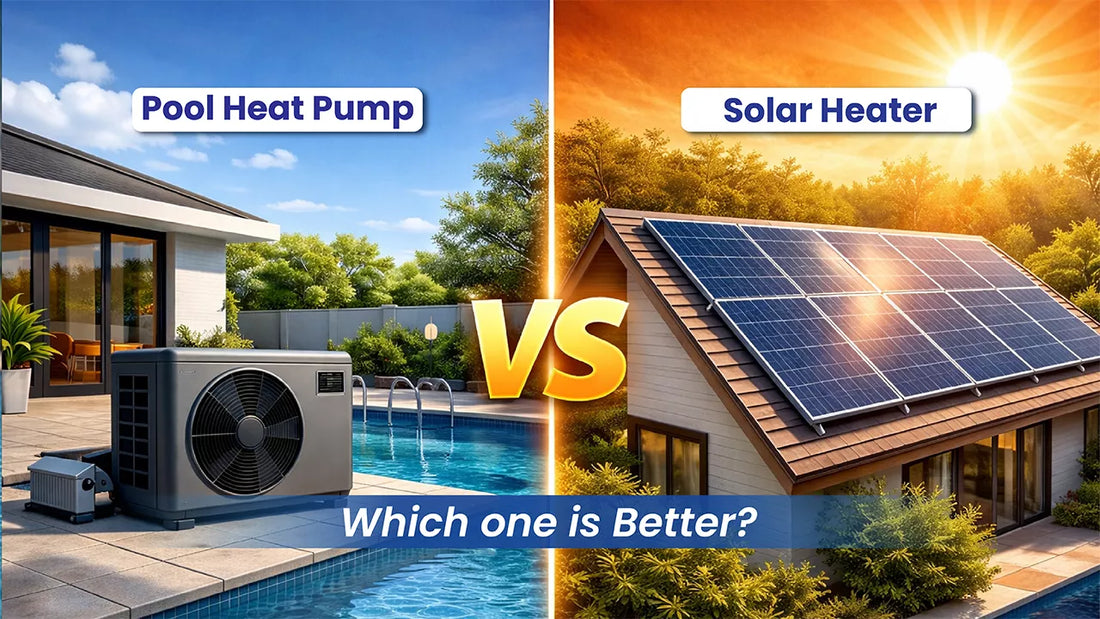
The pump does not heat the pool by itself. Its main job is circulation. Some systems can work with solar pool heaters, but the pump and heater are separate components.
How does a solar pool pump work when clouds pass over the panels? It may continue running at a lower speed if enough light reaches the panels. Some systems stop and restart automatically as sunlight changes. Others use batteries or a grid connection to keep the pump running during low-light periods.
Source: hybsun.com
Main Parts of a Solar Pool Pump System
Understanding the parts makes it easier to see how does a solar pool pump work in a real installation. Each part has a clear role, much like the organs in a living system.
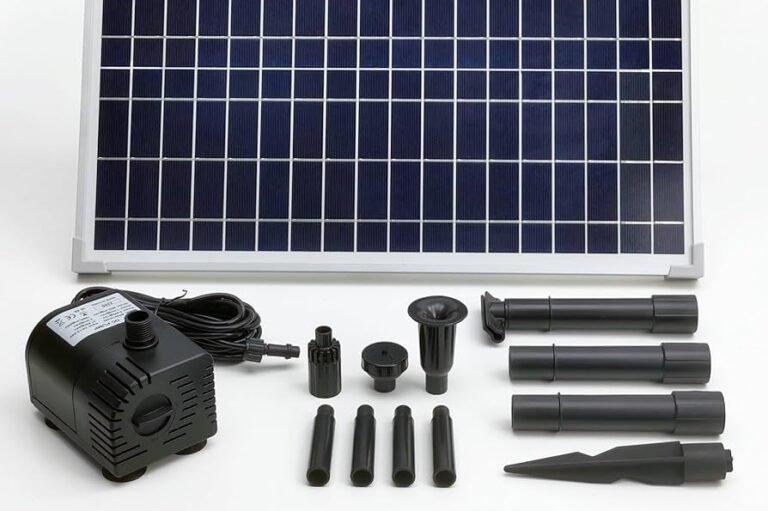
Solar panels
Solar panels produce electricity from sunlight. Their output depends on:
• Panel size
• Sun angle
• Shade
• Temperature
• Panel direction
• Cloud cover
• Dust and debris
A small pool may need only a modest solar array. A large pool, long plumbing run, or high-flow feature may need more panel capacity.
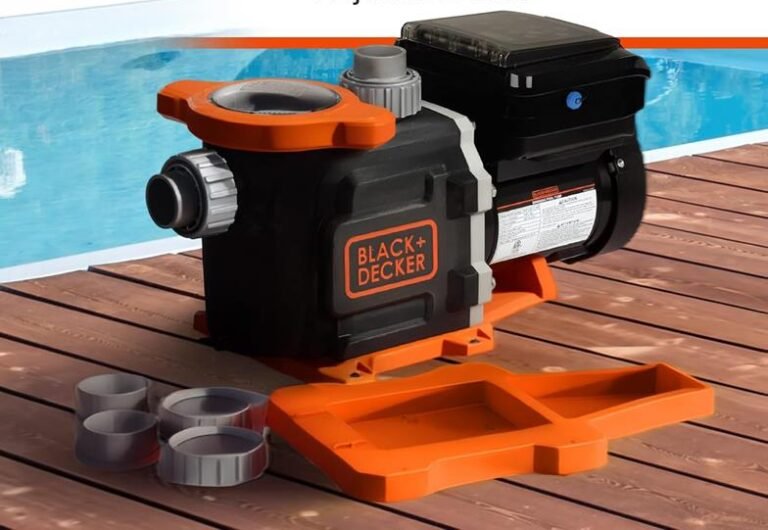
Solar pump motor
The motor converts electrical energy into mechanical energy. That mechanical force spins the pump impeller, which pushes water through the plumbing.
Many solar pool pumps use variable-speed motors. These motors can run slowly for regular circulation and faster when the pool needs stronger flow. Lower speeds often use much less energy than full-speed operation.
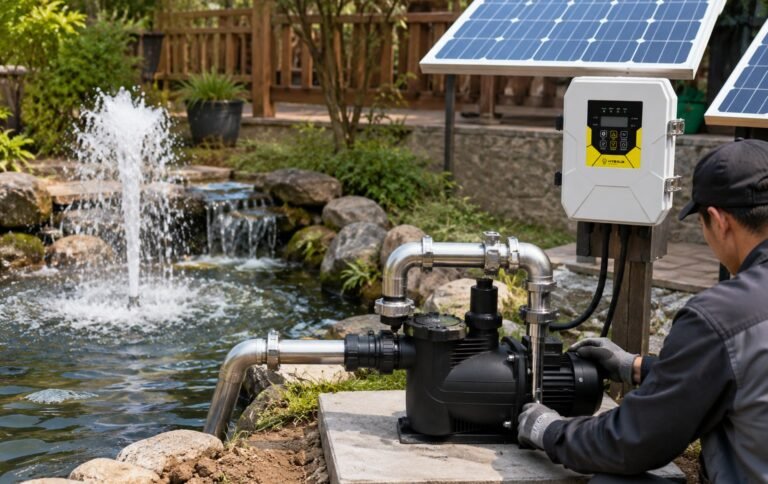
Pump controller
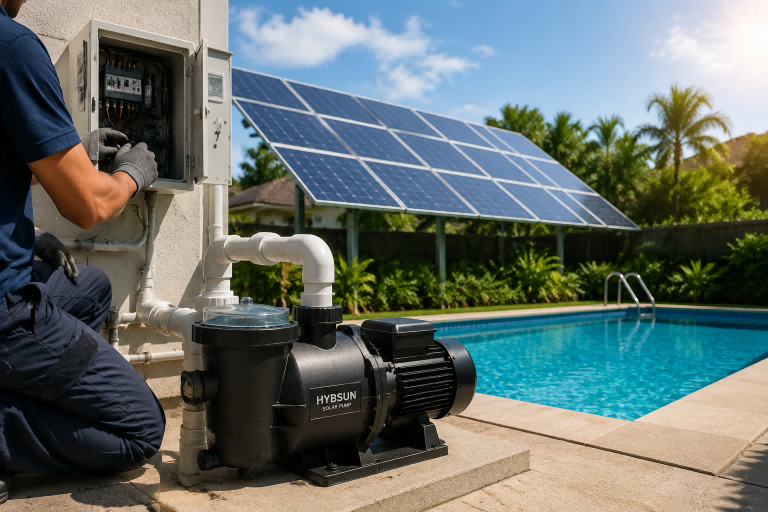
The controller acts as the system’s brain. It regulates power from the panels and may adjust pump speed based on available sunlight.
Advanced controllers can include:
• Timer settings
• Maximum and minimum speed controls
• Dry-run protection
• Overload protection
• Automatic restart
• Battery management
• Remote monitoring
Inverter
An inverter changes direct-current power from the solar panels into alternating-current power when the pump requires it. Not every system needs an inverter. The need depends on the pump motor and system design.
Filter
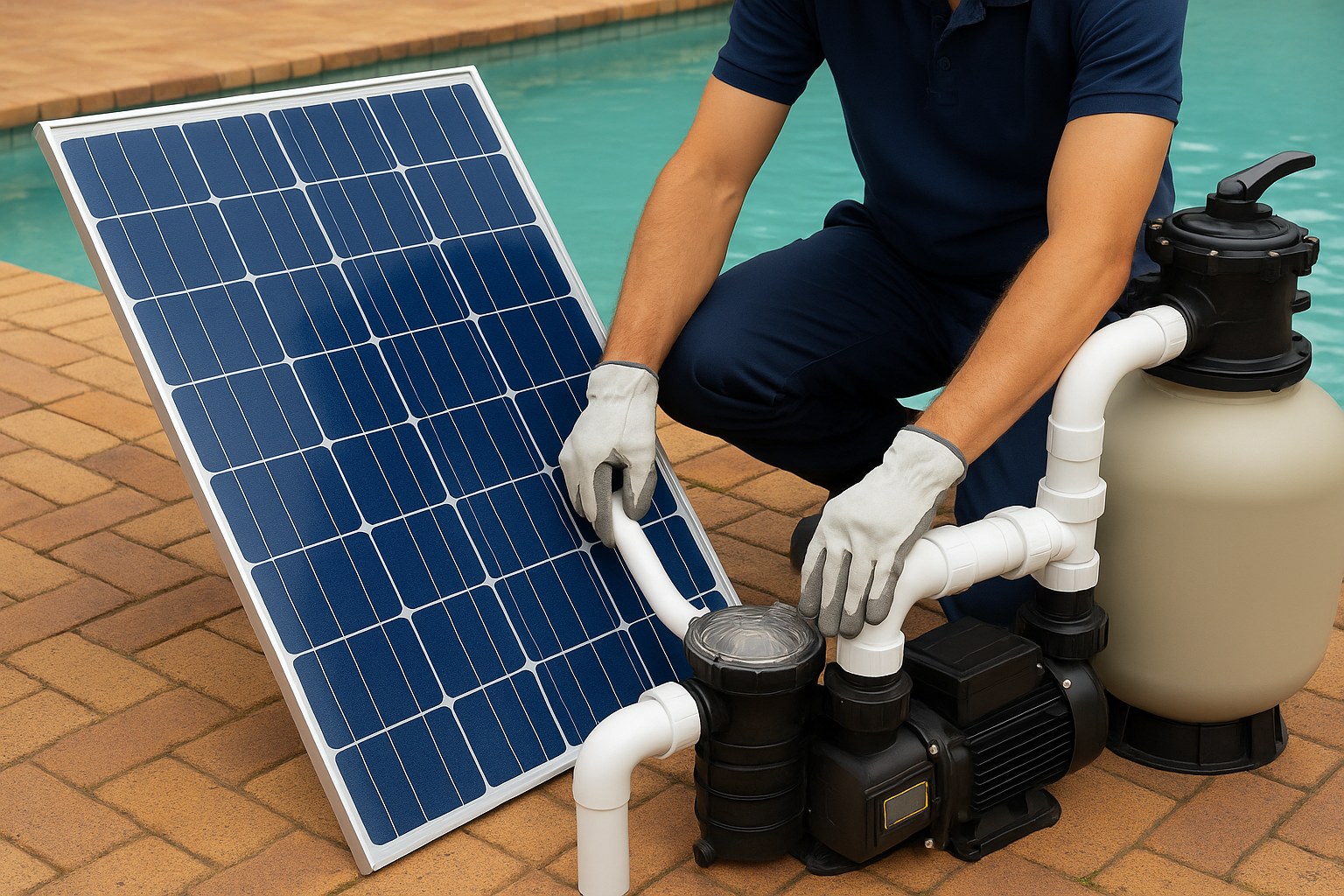
The filter removes dirt, leaves, hair, dust, and other particles from the water. Common pool filters include sand, cartridge, and diatomaceous earth systems.
A solar pump cannot keep a pool clear if the filter is dirty or too small. The pump and filter must be sized as a pair.
Plumbing and valves
Pipes carry water from the pool to the pump and filter. Valves control water direction and flow. A poorly designed plumbing system can create too much resistance and reduce pump performance.
Optional battery
A battery stores extra solar energy for later use. It may allow the pump to run in the evening, at night, or during short cloudy periods.
However, batteries add cost, weight, maintenance, and replacement needs. Many pool owners choose daytime-only circulation because pools usually do not require constant nighttime pumping.
Source: com.br
The Water-Circulation Process Explained
How does a solar pool pump work during a normal filtration cycle? The process follows the same basic path as a standard electric pool pump.
1. Water leaves the pool
Water enters the circulation system through the skimmer and main drain. The skimmer removes floating debris from the surface. The main drain pulls water from a lower point in the pool.
2. The pump creates flow
The motor turns an impeller inside the pump housing. The spinning impeller creates pressure that moves water through the pipes.
The pump does not “suck” water in the way a straw works. It creates a pressure difference. Atmospheric pressure and the pump’s impeller work together to move water through the system.
3. The filter removes debris
Water enters the filter under pressure. The filter traps unwanted particles. Clean water then continues toward the return plumbing.
A clogged filter increases resistance. The pump may need to work harder, flow may fall, and the motor may use more power.
4. Water returns to the pool
The filtered water returns through jets placed around the pool. These jets help spread clean water and move chemicals through the pool.
Good circulation prevents stagnant areas. It also helps distribute chlorine, salt, and other treatment chemicals.
5. The cycle repeats
The system continues until the timer stops the pump or sunlight drops below the required power level. The number of daily operating hours depends on pool size, weather, water temperature, and pump flow.
Source: hybsun.com
Direct Solar Pumps vs. Solar-Assisted Pumps
Not every solar pool pump system works in the same way. The two main designs are direct solar systems and solar-assisted systems.
Direct solar pool pumps
A direct solar pump runs mainly from electricity produced by solar panels. It may operate only during daylight hours.
Advantages include:
• Lower operating cost
• Simple design
• No battery replacement
• Low electrical demand
• Good performance in sunny regions
The main limitation is variable output. The pump may run more slowly in the morning, late afternoon, or during cloudy weather.
Solar-assisted pool pumps
A solar-assisted system may use solar panels, batteries, and the electrical grid. The controller selects the available power source.
For example, the system may use solar energy during the day and grid electricity at night. A battery can provide another option when sunlight is weak.
Advantages include:
• More consistent operation
• Greater scheduling flexibility
• Better performance in cloudy weather
• Possible nighttime filtration
The tradeoff is higher installation cost and more equipment to maintain.
How does a solar pool pump work in a hybrid setup? Solar panels supply power first when enough sunlight is available. The controller then switches to stored or grid power when solar output cannot meet the motor’s needs.
Source: rafsun.com
What Affects Solar Pool Pump Performance?
How does a solar pool pump work efficiently in one home but poorly in another? The answer often depends on site conditions rather than the pump alone.
Sunlight and shade
Solar panels need direct sunlight for strong output. Shade from trees, fences, chimneys, or nearby buildings can reduce production.
Even partial shade may affect a panel string, depending on the panel layout and controller design. A professional installer should check the roof or ground location throughout the day.
Pool size
Larger pools hold more water and need more total circulation. A pump must move enough water to complete the recommended turnover period.
Pool turnover means circulating a volume of water equal to the pool’s total capacity. It does not mean every drop is perfectly filtered once. Real mixing is more complex.
Plumbing length and height
Long pipes, narrow pipes, sharp bends, and raised equipment increase resistance. This resistance is called total dynamic head.
A pump rated for high flow at low resistance may perform poorly when the plumbing system has high head. Always compare pump performance at the expected head, not only the maximum flow number.
Filter condition
A dirty filter restricts flow. Clean the filter according to the manufacturer’s instructions and watch the pressure gauge if your system has one.
Water temperature
Warm water can encourage algae growth and increase the need for good circulation and sanitation. A solar pump may need a longer daily run time during hot weather.
Weather patterns
A direct solar pump usually works best in areas with reliable sun. In regions with long winters or frequent storms, a hybrid system may offer more dependable filtration.
Source: hybsun.com
Benefits of Using a Solar Pool Pump
How does a solar pool pump work as a money-saving tool? It uses free sunlight as its main energy source, which can reduce grid electricity use over time.
Lower operating costs
Pool pumps can run for several hours each day. A solar system may reduce the electricity needed for this routine task.
Savings depend on:
• Local electricity rates
• Solar exposure
• Pump size
• Daily run time
• Installation cost
• Maintenance needs
A high-efficiency variable-speed pump often saves more energy than an older single-speed model, even before adding solar panels.
Cleaner energy use
Solar power produces electricity without direct combustion at the point of use. This can reduce the pool’s dependence on fossil-fuel-based grid power.
The full environmental effect also includes panel manufacturing, transport, installation, and eventual disposal. Solar is not impact-free, but it can provide useful low-carbon energy over a long service life.
Quiet operation
Many modern solar pool pumps use efficient motors and lower operating speeds. A slower pump often produces less noise than a traditional single-speed pump.
Better energy independence
A solar pool pump can keep basic circulation running during some grid outages, especially if it has battery backup. A direct solar system may still stop when sunlight disappears.
Flexible installation options
Some systems use ground-mounted panels near the pool equipment. Others connect to rooftop panels or a larger home solar array.
A ground-mounted array may be easier to access for cleaning. A roof installation may save yard space but can cost more to service.
Source: hybsun.com
Limitations and Common Problems
Solar pool pumps have clear benefits, but they are not perfect for every pool. Knowing the limits helps prevent disappointment.
Variable flow
Direct solar power changes with the weather. The pump may provide strong flow at noon and weak flow early in the day.
This is not always a serious problem. A variable-speed pump can still circulate water at a lower rate. However, features such as waterfalls, spa jets, and robotic cleaners may need stronger, steadier flow.
Higher upfront cost
Solar panels, mounting hardware, controllers, wiring, and installation can make the initial price higher than a basic electric pump.
The system may pay for itself over time, but the payback period varies. Ask for a written estimate that includes equipment, labor, permits, electrical work, and future battery replacement if applicable.
Battery replacement
Batteries do not last forever. Their service life depends on chemistry, temperature, cycling, and storage conditions.
A system that depends heavily on a battery may have a higher long-term cost than a daytime-only system.
Installation mistakes
Common mistakes include:
• Using too few panels
• Choosing a pump with excessive flow
• Ignoring pipe resistance
• Installing panels in shade
• Pairing a large pump with a small filter
• Forgetting bonding and grounding requirements
• Skipping local electrical permits
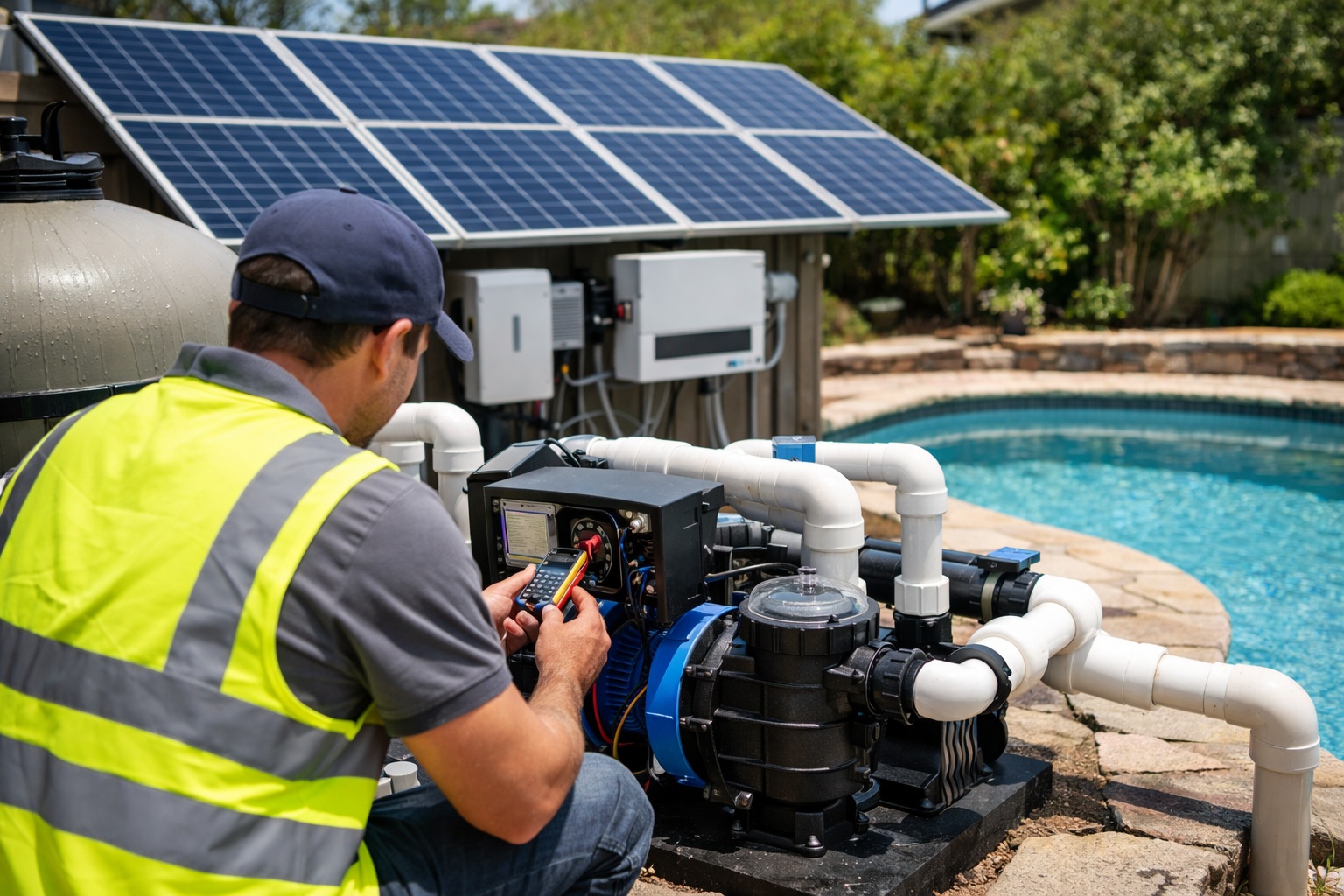
Pool water and electricity create serious safety risks. A qualified electrician should handle electrical connections, grounding, bonding, and required protection devices.
Not a replacement for sanitation
A pump moves water, but it does not kill germs by itself. You still need proper chlorine or another approved sanitizer, correct pH, and regular testing.
How to Choose the Right Solar Pool Pump
How does a solar pool pump work well when it is correctly sized? The system must match the pool, plumbing, filter, climate, and cleaning plan.
Use this step-by-step approach:
- Measure the pool volume.
Estimate the number of gallons in the pool. A pool professional can verify the calculation. - Check the existing plumbing.
Note pipe size, pipe length, bends, elevation changes, and equipment location. - Identify the filter type and size.
The filter must handle the pump’s flow rate without excessive pressure. - Set a circulation goal.
Determine how many hours of daily operation the pool needs. Your climate and sanitation system affect this number. - Compare flow at total dynamic head.
Do not select a pump based only on its advertised maximum gallons per minute. - Review solar conditions.
Check panel orientation, tilt, shade, and seasonal sunlight. - Decide whether you need backup power.
A battery or grid connection may be useful if the pump must run during cloudy periods or at night. - Check safety requirements.
Use proper grounding, bonding, circuit protection, and installation practices for pool equipment.
As a practical rule, an oversized pump is not automatically better. It may waste energy, create high filter pressure, and increase wear. A correctly sized variable-speed pump often provides a better balance of flow, quiet operation, and energy use.
Installation and Maintenance Tips
How does a solar pool pump work reliably for many years? Regular care protects both the water system and the solar equipment.
Keep panels clean
Dust, pollen, bird droppings, and leaves can reduce solar output. Inspect panels several times each year. Follow the panel maker’s cleaning instructions and avoid walking on the panels.
Check the pump basket
Turn off power before opening the pump basket. Remove leaves and debris so the pump can maintain good flow.
Watch filter pressure
A rising pressure reading often signals a dirty filter or a flow restriction. Clean or backwash the filter as recommended for its type.
Inspect for air leaks
Air bubbles in the pump basket or return jets may indicate a loose lid, worn gasket, or suction-side air leak. Persistent air can reduce performance and damage the pump.
Monitor system output
Notice changes in:
• Water clarity
• Return-jet strength
• Pump noise
• Daily operating time
• Solar controller warnings
• Filter pressure
A gradual change can reveal a problem before it becomes expensive.
Protect equipment from flooding
Place the pump controller, inverter, and other electrical parts above areas that may flood. Pool equipment pads should drain well.
Use a service professional for electrical work
Do not improvise with pool wiring. Electrical codes often require special protection near water. A licensed professional can confirm that the system meets local rules.
A lesson worth remembering from pool equipment evaluations is that many “pump failures” begin with poor flow. A blocked basket, clogged filter, or air leak can make a healthy motor look defective. Check the simple flow problems first, then call for service if the issue remains.
Solar Pool Pump Cost and Payback
How does a solar pool pump affect your long-term budget? You need to compare the installation price with expected electricity savings and maintenance costs.
The total price may include:
• Solar panels
• Pump and motor
• Controller
• Inverter
• Mounting structure
• Wiring and disconnects
• Labor
• Permits
• Battery storage
• Plumbing changes
A simple direct solar pump may cost less than a full hybrid system. However, equipment prices vary widely by pool size, region, panel capacity, and installation complexity.
To estimate payback, compare your current annual pump electricity cost with the new system’s expected operating cost. Then include routine maintenance and possible battery replacement.
For example, a pool owner with high electricity rates and strong year-round sunlight may see faster savings. A shaded property with low electricity rates may not recover the upfront cost as quickly.
Tax credits and local incentives can change the calculation. Confirm current rules with an official tax adviser or local energy program because incentives can change by location and year.
Is a Solar Pool Pump Worth It?
How does a solar pool pump work as a good investment? It can be worthwhile when the property has strong sunlight, the pump runs often, and the system is sized correctly.
A solar pump may suit you if:
• Your pool receives reliable sun
• Electricity prices are high
• You want lower operating costs
• You have space for panels
• You plan to own the property for several years
• You are comfortable with daytime filtration
A traditional or hybrid pump may suit you better if:
• The pool area is heavily shaded
• You need strong flow at night
• Your region has long cloudy seasons
• You run a spa, waterfall, or water feature
• You want predictable flow at all times
• The solar installation would require major structural work
The best answer is not always the system with the most panels. It is the system that meets your circulation needs at a reasonable total cost.
Frequently Asked Questions About How Does a Solar Pool Pump Work?
How does a solar pool pump work at night?
A direct solar pump usually stops when sunlight is too weak to power the motor. A hybrid system can use a battery or the electrical grid to keep running at night.
Can a solar pool pump run on cloudy days?
Yes, many solar pool pumps can run during light cloud cover, but they may operate at a lower speed. Heavy clouds can reduce power below the level needed for reliable pumping.
Does a solar pool pump heat pool water?
No. A solar pool pump circulates and filters water. A separate solar pool heating system uses panels or collectors designed to transfer heat into the water.
Can a solar pool pump replace a regular pool pump?
Yes, if it provides enough flow for the pool, filter, plumbing, and required equipment. A professional should confirm the pump’s performance at the system’s actual head pressure.
Do solar pool pumps need batteries?
No. Many direct solar pool pumps run only when sunlight is available. Batteries are optional and mainly help provide nighttime or backup operation.
How many hours should a solar pool pump run?
The correct time depends on pool size, pump speed, weather, water temperature, and sanitation needs. Many pools need several hours of circulation each day, but your installer or pool professional should calculate a suitable schedule.
Are solar pool pumps safe?
They can be safe when installed with correct grounding, bonding, circuit protection, and pool electrical practices. Use a qualified professional because water and electricity require strict safety controls.
Conclusion
How does a solar pool pump work? Solar panels create electricity, a controller manages that power, and a motor moves pool water through the filter and back into the pool. The system can reduce grid electricity use, but its performance depends on sunlight, pump size, plumbing, filtration, and proper maintenance.
Before buying, compare direct solar and hybrid designs, check your daily circulation needs, and calculate the full installation cost. Get a professional assessment of panel placement, pump flow, electrical safety, and local requirements. Explore more pool energy guides, compare qualified installers, and share your questions or experience in the comments.