How Often Should You Service a Lawn Mower?
How often should you service a lawn mower? It depends on your mower type, how often you mow, and the climate you live in. Most manufacturers recommend servicing residential mowers once per season or every 25 to 50 engine hours, whichever comes first.
Regular servicing can double a mower's lifespan and keep fuel costs down by 10 to 15 percent. Skipping maintenance is one of the fastest ways to turn a healthy $400 push mower into an expensive repair project. Here's how to figure out the right schedule for your situation.

Image source: Web (Bing) / gardenitemreviews.com (Web image (fair-use with source credit))
Quick Answer
Service a lawn mower once per season. If you mow over 50 hours yearly, service more often. Change the oil every 50 engine hours.
Sharpen blades every 20 to 30 hours. Commercial mowers require service every 50 to 100 hours.
The Problem: Skipping Maintenance Costs More Than You Think
Most mower owners skip servicing for the same reason. The mower works, so why touch it? A clean start in April is easy to take for granted.
But small issues compound fast during a full mowing season.
Dull blades don't just cut poorly. They tear grass instead of slicing it, which invites disease and weeds. A dirty air filter forces the engine to work harder and run hotter.
Stale fuel gumming up the carburetor is one of the most common reasons a mower won't start the following spring.
Per OSHA guidelines for commercial lawn care operations, equipment maintenance records are expected for professional operators. For homeowners, the stakes are simpler. The average residential lawn mower tune-up costs $100 to $200 at a shop.
A new push mower runs $350 to $600. That math makes the case.
What Servicing Actually Includes
"Servicing" isn't one thing. It's a collection of tasks that keep your mower running well through the season. Here's what a standard lawn mower tune-up covers, per manufacturer specifications from brands like Briggs & Stratton and Honda Power Equipment.
| Task | Typical Interval |
|---|---|
| Oil change | Every 50 engine hours or once per season |
| Spark plug replacement | Every 2 to 3 seasons |
| Air filter cleaning | Every 25 to 50 hours |
| Blade sharpening | Every 20 to 30 hours |
| Belt inspection | Once per season |
| Deck cleaning | After every mow |
| Fuel system treatment | Before storage |
Each task protects a different part of the mower. Skipping any one of them puts stress on the others. A sharp blade, for example, reduces engine load, which means oil lasts longer and the air filter stays cleaner.
For detailed maintenance intervals, Briggs & Stratton publishes official service schedules for their engines. Their recommendations are a solid benchmark even if you own a different brand.
What Changes Your Service Frequency
If you're running the same mower model, the service schedule still varies. Usage, climate, and storage habits each shift how often you should service.
Usage matters most. If you mow your lawn twice a week during a 20-week season, that's roughly 40 to 60 mowing hours. In that range, a once-per-season service covers it.
If you're mowing 75 or 100 hours a year, you'll need at least two services per season.
Climate changes the math too. In humid, southern climates, grass grows nearly year-round and decks corrode faster. You'll need more frequent oil changes and air filter cleaning.
In northern regions with shorter seasons, end-of-season storage prep becomes the priority.
Fuel habits matter more than people think. If you leave fuel sitting in the mower over winter without a stabilizer, the carburetor will likely need cleaning in spring regardless of usage level.
As of 2026, most manufacturer manuals recommend a minimum of two checkups per mowing season regardless of mower type. That baseline accounts for fuel system maintenance and seasonal wear.
Decision Tree: Service Schedule by Mower Type and Usage
Your service schedule should branch on two things: what kind of mower you own and how many hours you put on it each season. Here's how that plays out.
Residential Push Mower Schedule
Standard push mower, small to medium lawn, under 50 engine hours per season. This is the simplest schedule on the list.
- Oil change: once per season, before first mow
- Blade sharpening: once per season
- Air filter: clean every 25 hours or once per season
- Spark plug: every 2 to 3 seasons
- Deck cleaning: after every mow
Most push mowers have small 140 to 160cc four-stroke engines. They don't run hard, so their maintenance needs stay low.
Self-Propelled Mower Schedule
Self-propelled mowers run the same engine as push mowers, but the drive belt and transmission add wear.
- Everything in the push mower schedule applies
- Belt inspection: once per season
- Drive system check: before spring season
- Tire pressure: check twice per season
The belt is the weak point. Aggregate reviews of self-propelled models consistently report belt replacement at 3 to 5 seasons, especially if the mower runs over rough ground. Replacing the belt early costs $20 to $40.
Waiting too long often means a full transmission repair.
Riding Mower and Zero-Turn Schedule
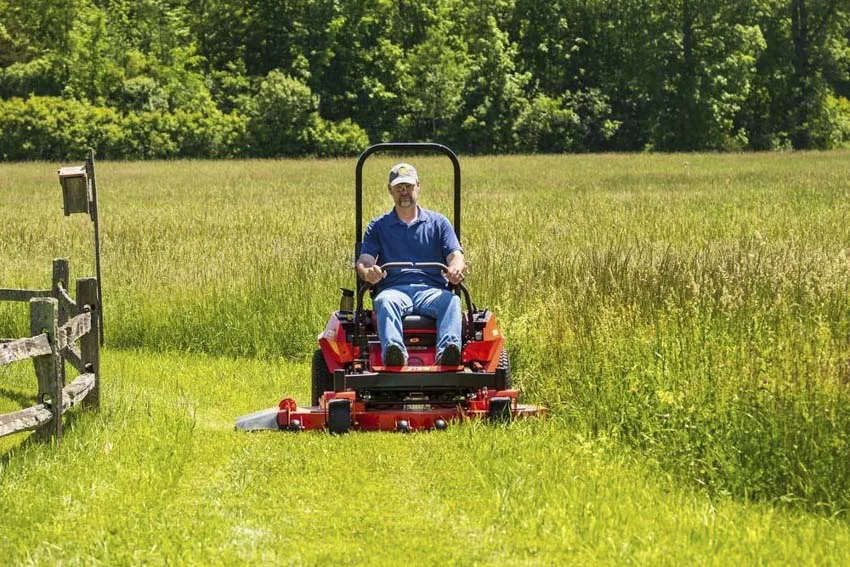
Image source: Bing (Web (fair-use with source credit))
Riding mowers and zero-turn models scale up in maintenance frequency. These machines have larger engines, hydrostatic transmissions, and multiple drive belts. They also run for much longer per session.
| Task | Riding Mower | Zero-Turn |
|---|---|---|
| Oil change | Every 50 hours | Every 50 hours |
| Hydrostatic fluid change | Every 300 to 400 hours | Every 300 to 400 hours |
| Blade sharpening | Every 30 to 40 hours | Every 25 to 35 hours |
| Belt inspection | Every season | Every 2 seasons |
| Air filter | Every 25 to 50 hours | Every 25 to 50 hours |
Husqvarna and John Deere both publish detailed service schedules for their riding mower lines. Their manuals recommend full service at 50-hour intervals regardless of brand. Zero-turn models, because they run faster and work harder, usually need a slightly tighter schedule.
If you're mowing 2 acres on a riding mower, expect 30 to 50 engine hours per season. That means at least one full service, and likely two if you mow frequently.
Electric Mower Schedule
Battery and corded electric mowers need far less mechanical maintenance. There's no oil, no spark plug, and no fuel system to worry about.
- Blade sharpening: same as gas, every 20 to 30 hours
- Deck cleaning: after every mow
- Blade bolt check: once per season
- Battery care: follow manufacturer charging guidelines
The main failure point on electric mowers is the battery itself. Lithium-ion cells degrade faster if stored fully charged or fully drained for months. Store the battery at roughly 50 percent charge in a cool, dry place over winter.
Commercial Mower Schedule
Commercial mowers are a different animal. Landscapers running these machines put 500 to 1,500 engine hours on them per season.
- Oil change: every 50 engine hours
- Air filter: every 25 hours, especially in heavy dust
- Blade sharpening: every 15 to 20 hours
- Belt and drive system inspection: every 100 hours
- Hydrostatic fluid: every 300 to 400 hours
- Full tune-up: every 200 to 300 hours
Commercial operators who skip maintenance consistently report higher repair costs over time. The small engine runs hotter, burns more fuel, and fails sooner when neglected. OSHA documentation on commercial lawn care safety reinforces this.
Equipment that's well-maintained is safer equipment.
Year-Round Maintenance Workflow
Service isn't just one moment. It's a cycle. Here's how to break it down across the year.
Spring Prep Checklist
Before your first mow of the season, run through this list:
- Change the oil and check the spark plug
- Clean or replace the air filter
- Sharpen or replace the blades
- Inspect the drive belt
- Check tire pressure on riding mowers
- Add fresh fuel or start with a fresh battery charge
- Clean the deck and check for rust damage
If you stored fuel without a stabilizer, drain it out. Pour in fresh fuel and run the mower for a few minutes to cycle it through.
Mid-Season Maintenance
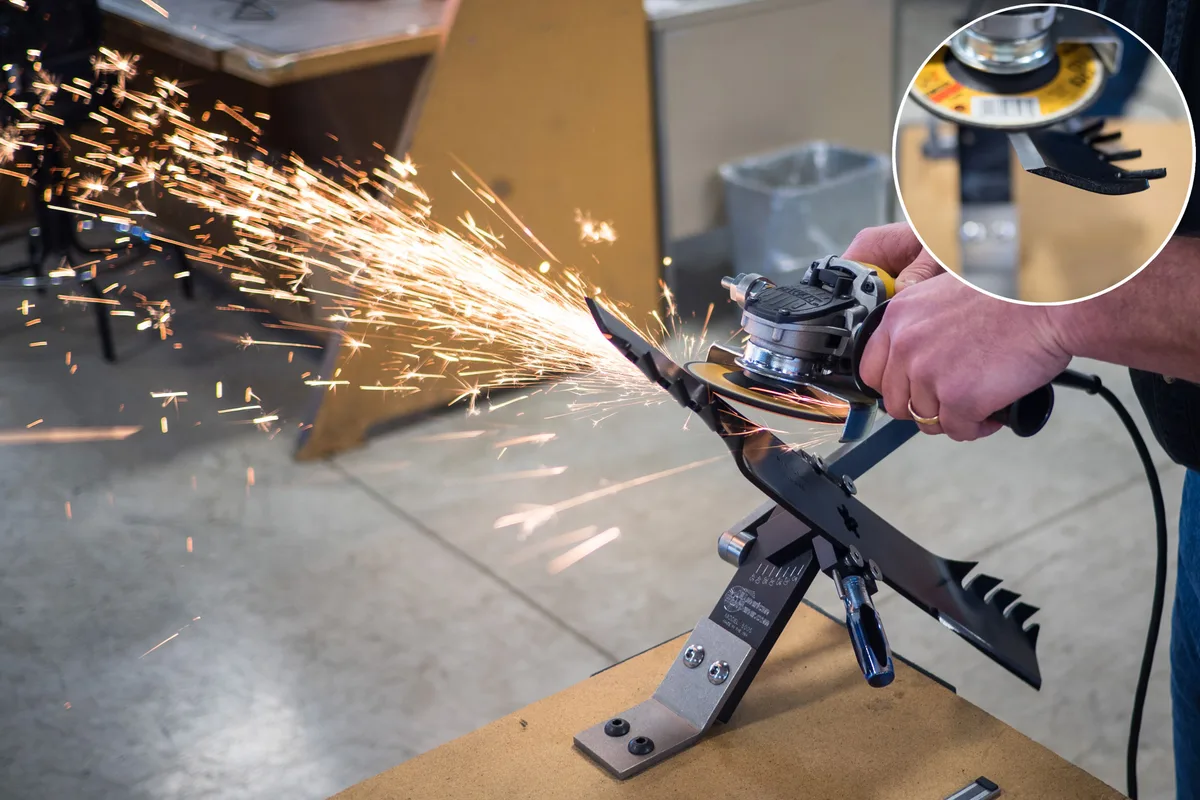
Image source: Bing (Web (fair-use with source credit))
Mid-season is when most people forget about maintenance. The mower is working fine. Nothing seems wrong.
But wear is building up in the background.
Here's what to check halfway through your mowing season:
- Blade sharpness, re-sharpen if you're past 15 to 20 hours
- Oil level and color, dark oil means it's time to change it
- Air filter condition
- Deck buildup and potential rust spots
- Belt tension and alignment
- Tire pressure and wear
A quick blade check every third mow catches problems before they turn into bigger ones. Sharp blades reduce engine strain, improve cut quality, and lower fuel consumption over the rest of the season.
End-of-Season Storage
How you store a mower over winter often matters more than how you maintain it during the season.
- Run the engine dry or use a fuel stabilizer
- Change the oil one final time
- Clean the deck thoroughly
- Disconnect the battery on riding mowers
- Store in a dry, sheltered location
- Cover the mower to keep out moisture and pests
For electric mowers, charge the battery to about 50 percent and store it in a climate-controlled space. Avoid garages that swing below freezing. Extreme cold shortens lithium-ion battery life significantly.
Mistakes That Shrink Your Mower's Life
Even with a good schedule, certain mistakes cut years off a mower's lifespan.
- Running a dirty air filter. The engine overheats and burns oil faster.
- Ignoring dull blades. A torn cut damages your lawn and strains the engine.
- Letting fuel sit without stabilizer. Ethanol-blended fuel degrades in as little as 30 days.
- Using the wrong oil. Check your manual. Most small engines take SAE 10W-30 or SAE 30.
- Skipping deck cleaning. Grass buildup holds moisture against the metal and accelerates rust.
- Never checking the blade bolt. A loose blade is a safety hazard and a sign of wear.
None of these are hard to avoid. They just require showing up for the maintenance instead of waiting for something to break.
Frequently Asked Questions
How often should you service a lawn mower?
Most lawn mowers need servicing once per season or every 25 to 50 engine hours. Commercial mowers require more frequent service at every 50 to 100 hours. The key factor is total annual mowing hours.
How often should lawn mower blades be sharpened?
Sharpen blades every 20 to 30 mowing hours, or once per season at minimum. Dull blades tear grass instead of cutting cleanly. They also strain the engine and reduce fuel efficiency.
When should you change lawn mower oil?
Change the oil every 50 engine hours or once per mowing season. If the oil looks dark or smells burned, change it sooner. Most small engines use SAE 10W-30 or SAE 30 oil.
Do electric lawn mowers need maintenance?
Yes, but far less than gas models. Electric mowers need blade sharpening, deck cleaning, and battery care. There is no oil change, spark plug, or fuel system to service.
What happens if you never service a lawn mower?
The engine burns oil faster, uses more fuel, and eventually fails. Fuel systems gum up and the mower won't start. Neglected mowers often last only 3 to 5 years instead of 8 to 15.
Is it worth servicing an old lawn mower?
Yes, if the engine still runs strong. A basic tune-up costs $50 to $200 and can add several years of life. But if the deck is rusted through or the transmission is failing, replacement is smarter.
Final Recommendation: Match Your Mow Hours to a Schedule
The best service schedule is the one you'll actually follow. Start with your mower type, estimate your annual mowing hours, and match the schedule below.
| Annual Hours | Service Frequency |
|---|---|
| Under 30 hours (small yard, 1–2×/week) | Once per season |
| 30 to 75 hours (medium yard, 2–3×/week) | Twice per season |
| 75 to 150 hours (large yard or fast growth) | Three to four times per season |
| 150+ hours (commercial or extreme residential) | Every 50 engine hours |
If you're not sure where you land, count mowing sessions this season and multiply by your typical mow time. That gives you a rough engine-hour estimate.
The cheapest maintenance you'll ever do is the work that keeps a small problem from becoming a big one. A $25 bottle of oil and a fresh spark plug now is a lot easier to accept than a $500 engine repair later.
Expert Tips That Actually Save You Money
Most mower owners spend money in the wrong places. They buy a new mower when the old one just needs a carburetor clean. They pay a shop $150 for a tune-up they could do themselves in 30 minutes.
A few practical habits make a big difference. Add a fuel stabilizer every time you fill up if you don't mow weekly. Check the air filter every third mow instead of waiting for performance problems.
Keep a spare spark plug and blade on hand for quick swaps.
The best-kept secret in mower maintenance is the hour meter. Many modern riding mowers come with one built in. Aftermarket units cost under $30 and stick right onto the dashboard.
If you don't know how many hours are on your mower, you're guessing at every service interval.
Buy the oil specified in your manual, not what's on sale. SAE 10W-30 works for most four-stroke engines. Two-stroke models need a fuel-oil mix at a specific ratio.
Using the wrong oil or mix ratio causes premature engine wear that no other maintenance can fix.
How to Spot a Mower That Needs Service Before It Fails
A mower rarely breaks without warning. There are always signs. Learning to read them saves you from mid-season breakdowns.
Blue or white smoke from the exhaust means the engine is burning oil. Black smoke means a clogged air filter or too much oil in the crankcase. Either way, shut it down and check before continuing.
A loud knocking or rattling sound during operation often points to a loose blade bolt or worn-out bearings. Ignoring it leads to blade damage and potentially a thrown blade.
If it takes five or six pulls to start when it used to take two, old fuel or a fouled spark plug is the likely culprit. Service it before you're stuck pushing it across the yard.
| Symptom | Most Likely Cause | Urgency |
|---|---|---|
| Won't start | Old fuel, fouled spark plug | Fix same week |
| Blue or white smoke | Oil leaking into cylinder | Fix immediately |
| Uneven cut | Dull or bent blade | Fix this week |
| Excess vibration | Loose blade or worn bearing | Fix immediately |
| Poor acceleration | Clogged air filter, dirty carburetor | Fix within a few days |
When to Service vs. When to Replace
Every mower has a ceiling. No amount of maintenance will save an engine that's worn past the point of return. Knowing where that line sits is just as important as following a service schedule.
If your mower is under 10 years old and the engine runs strong, servicing almost always wins. A basic tune-up runs $50 to $200 depending on what's needed. That's a fraction of replacement cost.
If the deck is rusted through, the crankshaft is scored, or the transmission is slipping on a riding mower, you're likely throwing good money after bad. In those cases, repair costs approach 50 to 70 percent of a new mower price. That's the signal to shop for a replacement.
Electric mowers complicate the decision a bit. Their motors are durable and rarely fail, but battery replacement can cost $150 to $300 depending on the model. If a battery that cost $200 new is being replaced after 5 years, a new mower with a fresh warranty may be the better buy.
The general rule from mower longevity data is simple. If the repair bill exceeds half the mower's current value, replace it. Otherwise, service it and keep mowing.