How Do You Change a Lawn Mower Air Filter?
A clogged air filter is the silent killer of lawn mowers. How do you change a lawn mower air filter? You disconnect the spark plug wire, open the housing, swap out the filter, and close it back up.
The whole job takes about five minutes once you know where everything is.
Manufacturer specifications indicate most lawn mower air filters need replacement every 100 to 200 operating hours. For a typical homeowner mowing a quarter-acre lawn, that works out to roughly one change per season. In this guide, we'll walk through exactly how to do it, what to watch out for, and how much it costs.
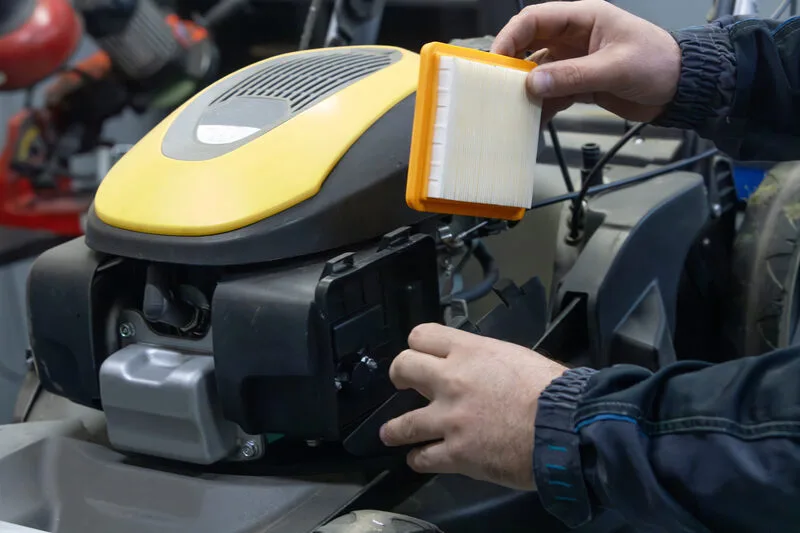
Image source: Bing (Web (fair-use with source credit))
Quick Answer
To change a lawn mower air filter, disconnect the spark plug wire first. Open the air filter housing on the engine block. Remove the old filter element and wipe out any debris inside.
Install the new filter with the gasket facing the housing. Reconnect the spark plug and start the engine to confirm smooth operation.
Why a Clogged Air Filter Is Quietly Killing Your Mower
A dirty air filter restricts airflow into the carburetor. When that happens, the engine runs rich. Too much fuel, not enough air.
The symptoms pile up quickly.
Here's what you'll notice if your filter is clogged:
- Reduced power, especially when the blade is engaged
- Hard starting, particularly in cold weather
- Black smoke from the exhaust
- Surging or rough idle
- Higher fuel consumption
- Excessive engine vibration
Aggregate user reports from Briggs and Stratton and Honda owner communities consistently list these same symptoms. The fix is almost always the same: replace or clean the air filter.
Per the EPA's nonroad engine guidelines, properly maintained air intake systems are critical to keeping small engines within emission standards. A clogged filter doesn't just hurt performance. It pushes the engine past those limits.
The damage compounds over time. Dirty air carries abrasive particles into the cylinder. Those particles accelerate wear on the piston rings and cylinder walls.
Manufacturer service data from Briggs and Stratton confirms that neglecting filter maintenance is a leading cause of premature engine failure.
If you're seeing multiple symptoms at once, check the air filter first. It's the cheapest thing you'll fix.
Step-by-Step: How to Change a Lawn Mower Air Filter
This is one of the simplest maintenance tasks you can do on a small engine. No special tools needed. No mechanical experience required.
Just follow the steps below.
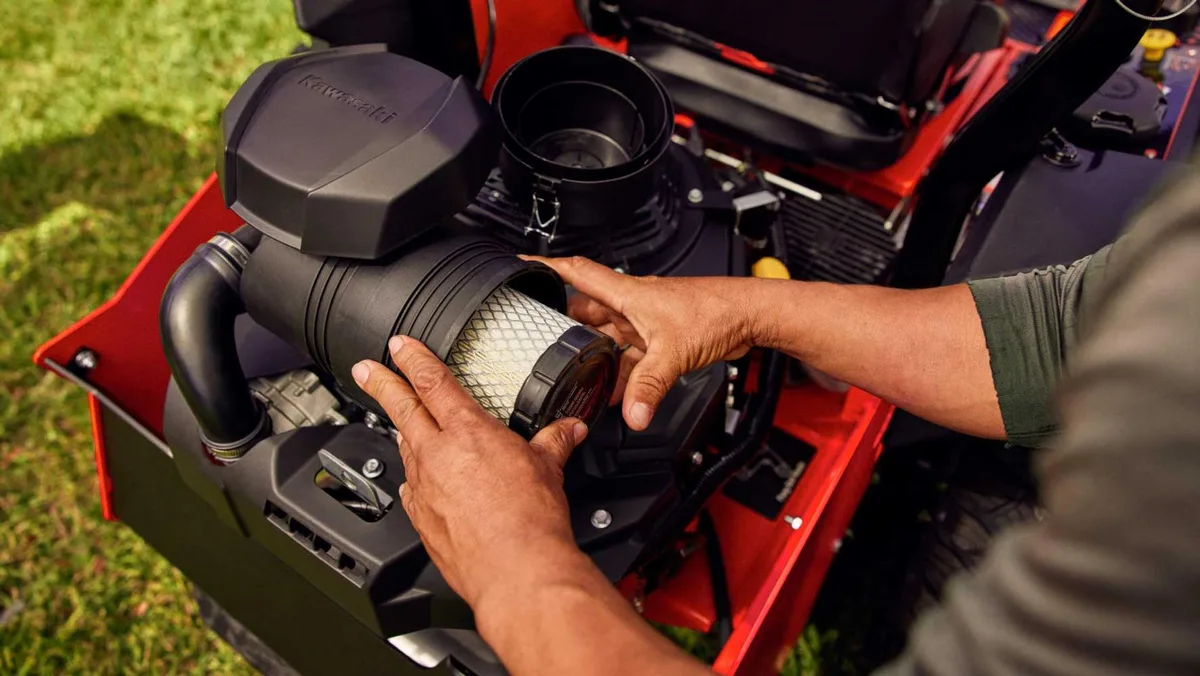
Image source: Bing (Web (fair-use with source credit))
Tools and Materials
| Item | Purpose |
|---|---|
| Replacement air filter | New element for your specific mower model |
| Flat-head screwdriver | Removing housing screws or clips |
| Clean rag or shop towel | Wiping out the filter housing |
| Socket wrench (optional) | If the housing uses bolts instead of clips |
Before You Start
Disconnect the spark plug wire. This is the one step you never skip. Pull the rubber boot off the spark plug and tuck it away from the plug terminal. This prevents the engine from firing while your hands are near moving parts.
If you're working on a riding mower, disconnect the battery's negative terminal too. This removes any risk of electrical shorts while you work under the hood.
The Replacement Steps
Locate the air filter housing. On most push mowers, it's on the side or top of the engine, near the carburetor. On riding mowers, check behind the engine shroud or under the hood. Consult your owner's manual if you're unsure.
Open the housing cover. Most covers are held by two or three screws, metal clips, or a snap-fit latch. Use a screwdriver or your fingers to release them.
Remove the old filter. Lift it straight out. Note how it sits. In many dual-element setups, a foam pre-cleaner sits in front of a paper element.
Inspect the housing. Look for debris, insects, oil residue, or rust. Wipe everything clean with a rag. Don't skip this step.
Install the new filter. If your mower uses a dual-element setup, place the foam pre-cleaner first, then the paper element behind it. Make sure the gasket seats properly against the housing rim.
Reattach the housing cover. Tighten screws or clips snugly. Don't over-torque. You don't want to crack the plastic housing.
Reconnect the spark plug wire. Push the boot firmly onto the plug terminal.
Start the engine. Let it idle for a minute. Check for smooth operation and proper throttle response.
If you're working on a Honda GCV or GX engine, the process follows the same pattern. Honda's official owner's manuals confirm that air filter access is tool-free on most residential models. Briggs and Stratton uses a similar two-screw housing design across their push mower line.
If the engine runs rough after the change, double-check that the filter isn't crushed or installed backward. A loose housing cover can also cause an air leak around the carburetor.
Clean vs. Replace, Foam vs. Paper, OEM vs. Aftermarket: What Should You Choose?
This is where the decision tree starts. The right action depends on what type of filter your mower uses and how bad the condition is.
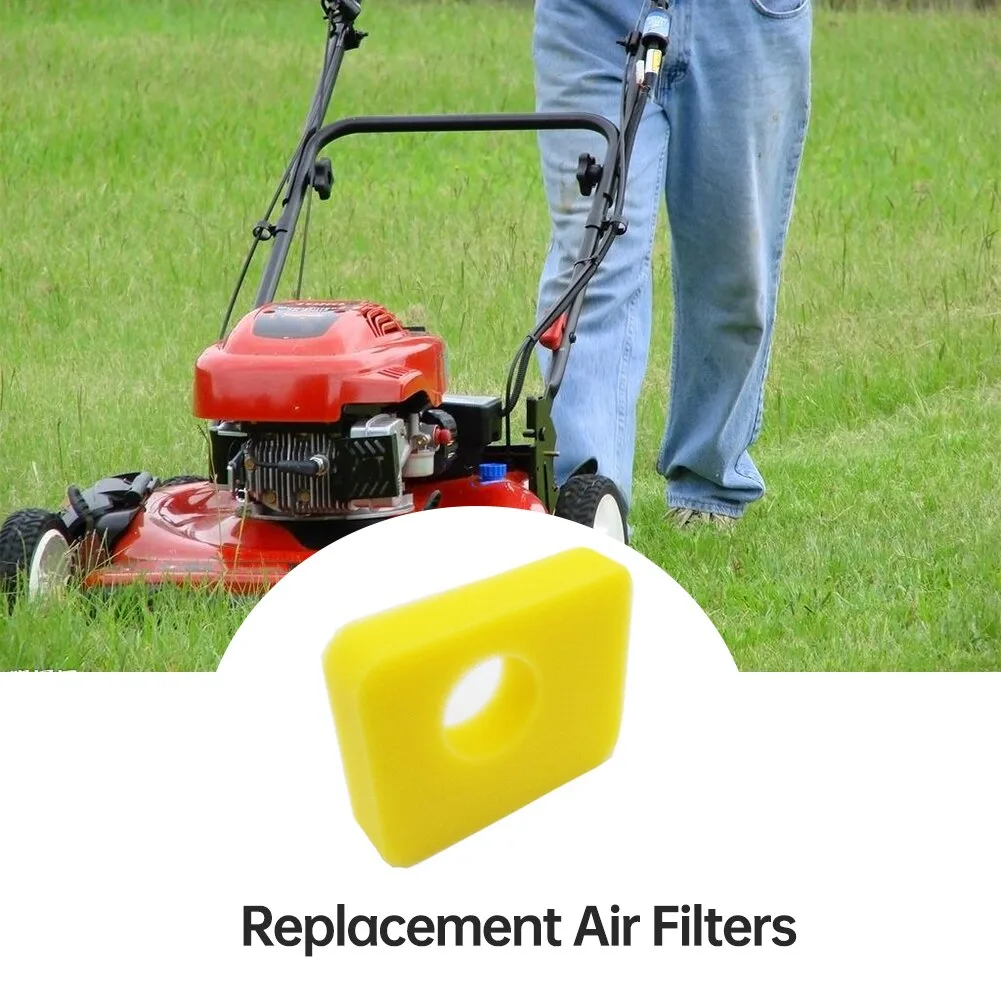
Image source: Bing (Web (fair-use with source credit))
If Your Mower Has a Foam Pre-Cleaner
If you have a dual-element filter, the foam part is washable. Remove it, rinse it in warm soapy water, squeeze out the excess, and let it air dry for at least two hours.
If the foam is torn, hardened, or won't return to its shape, replace the pre-cleaner assembly. A damaged foam element won't seal properly against the paper filter behind it.
If Your Mower Has a Paper-Only Filter
If the filter is paper or pleated, you can't wash it. Blowing compressed air from the inside out can remove loose debris, but it won't restore full airflow. Once a paper element is clogged, it's done.
Replace paper elements that look dark, torn, or saturated with oil. Don't try to squeeze them or bend them back into shape.
OEM vs. Aftermarket Filters
OEM filters are made by the manufacturer of your mower or engine. Aftermarket filters are made by third-party companies and cross-referenced by size and shape.
| Factor | OEM Filter | Aftermarket Filter |
|---|---|---|
| Fit | Exact match for your model | May vary slightly in dimensions |
| Seal quality | Consistent gasket sealing | Some units have thinner gaskets |
| Price | $8 to $25 | $3 to $15 |
| Warranty impact | No risk | Rare risk if poor fit causes damage |
| Availability | Dealer or manufacturer site | Widely available online |
Aggregate reviews of aftermarket filters show that most perform fine when the size and part number are correct. The risk comes from filters that look similar but don't seal properly. If you go aftermarket, cross-reference the part number against your owner's manual first.
If you're unsure, go with the OEM filter. The price difference is small, and you'll skip the headache of a bad fit.
How Much Does a Lawn Mower Air Filter Change Cost?
The cost of changing a lawn mower air filter is surprisingly low. It's one of the best-value maintenance tasks you can do on any small engine.
Parts Cost
| Filter Type | Typical Price Range |
|---|---|
| Aftermarket paper filter | $3 to $10 |
| OEM paper filter | $8 to $20 |
| Foam pre-cleaner replacement | $5 to $15 |
| Dual-element assembly (OEM) | $10 to $25 |
As of 2026, these prices have held steady for several years. Small engine parts have stayed affordable compared to other equipment costs.
Labor Cost
If you pay a small engine repair shop to do it, expect $30 to $60 in labor on top of parts. For a job that takes 5 to 10 minutes, that's a steep premium. That's why most homeowners handle it themselves.
What It Saves You
Spending $15 on a filter every season saves you from far bigger bills down the road.
| Outcome | Estimated Cost |
|---|---|
| Air filter replacement | $5 to $25 |
| Carburetor cleaning | $75 to $150 |
| Carburetor rebuild | $100 to $200 |
| Engine rebuild or replacement | $300 to $800+ |
Per Kohler's maintenance specifications, regular filter changes extend engine life significantly and reduce the risk of carburetor damage.
If your mower is still under warranty, use the OEM filter. Manufacturer guidance indicates that non-approved parts can void warranty coverage on certain components.
Mistakes That Make the Problem Worse (and How to Avoid Them)
Most people don't make mistakes changing a lawn mower air filter because it's complicated. They make mistakes because it's easy. Here's what goes wrong.
Not Disconnecting the Spark Plug
This is the most common safety mistake. If the engine has residual compression and you bump the flywheel, it can fire. Always pull the spark plug wire first.
It takes two seconds.
Installing the Filter Backward
Air filters have a specific orientation. The paper element usually has a visible gasket side. That side faces the housing.
Install it backward and air leaks around the edges. The filter does nothing.
Over-Oiling a Foam Pre-Cleaner
If your mower uses an oiled foam filter, a light mist of air filter oil is all you need. Too much oil soaks into the paper element and chokes airflow. Follow the bottle's instructions.
A light, even coat is plenty.
Ignoring the Housing Gasket
The rubber gasket around the filter housing degrades over time. If it's cracked, flat, or missing, air bypasses the filter entirely. Inspect it every time you change the filter.
Replace it if it's worn.
Using the Wrong Part Number
Aftermarket filters that "look right" may not seal correctly. Always cross-reference the part number from your owner's manual before buying. Briggs and Stratton lists part numbers on their site, and most OEM sites have cross-reference tools.
Waiting Too Long
Manufacturer specs indicate most filters need changing every 50 to 200 operating hours depending on the engine type. If you wait until the mower runs poorly, you've already done damage you can't undo.
Lawn Mower Air Filter FAQ
How often should you change a lawn mower air filter?
Most manufacturer specifications recommend changing the air filter every 100 to 200 operating hours for riding mowers and every 50 to 100 hours for push mowers. For seasonal residential use, once per year at the start of the mowing season is usually enough.
Can you clean a paper lawn mower air filter instead of replacing it?
You can blow compressed air through a paper filter to remove loose debris, but this doesn't restore full airflow once the pleats are clogged. Paper elements are disposable. Once they look dark or saturated, replace them rather than trying to clean them.
Where is the air filter located on a lawn mower?
On most push mowers, the air filter housing sits on the side or top of the engine near the carburetor. On riding mowers, it's usually behind the engine shroud or under the hood. Consult your owner's manual for the exact location on your model.
Can you use an aftermarket filter instead of an OEM filter?
Yes, as long as the aftermarket filter is cross-referenced to match your mower's part number and dimensions. Aggregate reviews show aftermarket filters perform adequately when the fit is correct. The risk comes from filters that don't seal properly against the housing gasket.
What happens if you don't change the air filter?
A clogged air filter restricts airflow into the carburetor, causing the engine to run rich. Symptoms include black smoke, hard starting, reduced power, and surging. Over time, dirty air accelerates piston and cylinder wear, leading to expensive engine repairs or full replacement.
Should you oil a foam lawn mower air filter?
Only if your mower manufacturer specifies an oiled foam pre-cleaner. Follow the oil bottle's instructions carefully. A light, even coat is enough.
Over-oiling soaks the paper element behind the foam and chokes airflow into the engine.