How Do You Store a Lawn Mower for Winter?
How do you store a lawn mower for winter? If you leave gasoline sitting in the tank all season, you're setting yourself up for a spring headache. The fuel gums up the carburetor, the battery degrades if stored wrong, and the deck starts rusting from trapped moisture.
Proper winter storage takes about an hour and saves you from hundreds in repair bills.
Per EPA guidance on ethanol-blended fuel, gasoline containing up to 10% ethanol degrades within 30 days when left untreated. That's the biggest winter storage killer for gas mowers. Battery-electric mowers face their own set of risks, but the good news is that proper prep takes about an hour.
Quick Answer
How do you store a lawn mower for winter? Treat the fuel with stabilizer and run the engine until it stalls. Change the oil, clean the deck, and sharpen or remove the blade.
For battery mowers, store the battery at 40 to 60 percent charge. Keep everything dry, covered, and in a sheltered location.
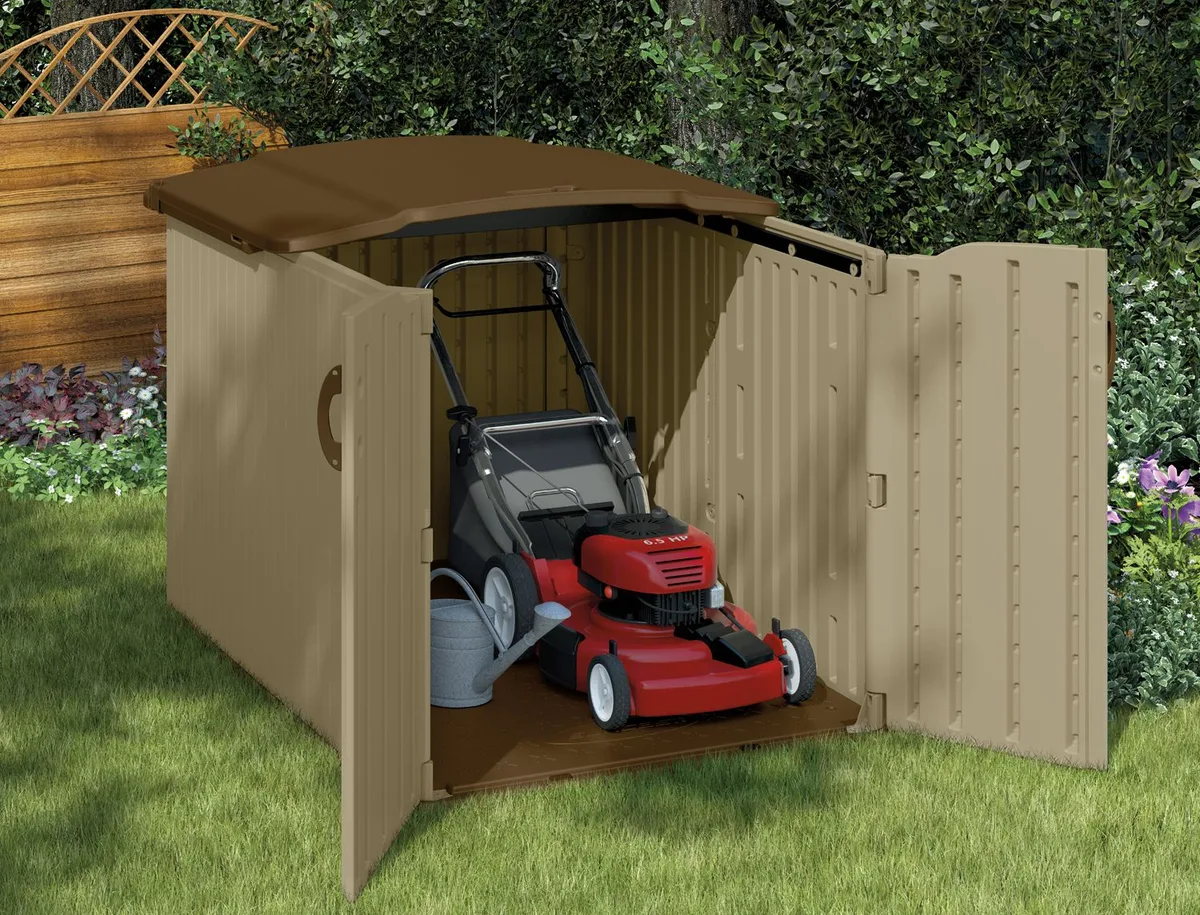
Image source: Bing (Web (fair-use with source credit))
Why Lawn Mower Winter Storage Goes Wrong (And Why It Costs You in Spring)
The biggest mistake people make is assuming their mower will sit dormant all winter and then start right up. That almost never happens with gasoline-powered equipment. What actually happens is a slow, expensive chain of failures that all starts with one untreated fuel tank.
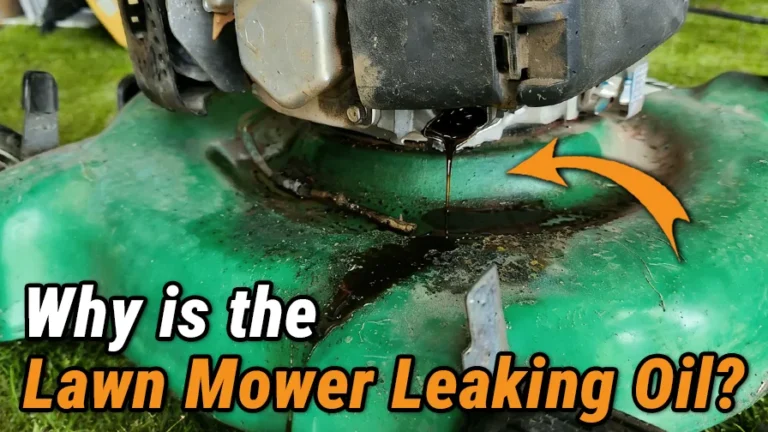
Gasoline degrades in as little as 30 days. Most pump fuel contains up to 10% ethanol, which absorbs moisture from the air. Over months of sitting, that ethanol-water mixture separates from the gasoline and starts corroding fuel lines, carburetor jets, and metal components.
The EPA identifies ethanol-blended fuel as a leading contributor to small engine carburetor failures across the United States.
That corrosion compounds fast. Clogged fuel lines starve the engine. Gummed-up carburetor jets throw off the air-fuel mixture.
Starter motors burn out trying to crank engines that can't get fuel. What could've been a $10 bottle of fuel stabilizer becomes a $150 carburetor rebuild in spring.
Battery-electric mowers have their own winter failure mode. Lithium-ion batteries stored at full charge degrade faster. Storing them fully discharged hurts just as much.
The safe zone is around 40 to 60 percent charge, but most people either leave them plugged in or let them die completely.
Rust is the silent killer. The mower deck collects grass clippings, moisture, and salt from treated driveways. Over winter, that mixture eats through paint and starts corroding bare metal.
Aggregate manufacturer data consistently ranks deck corrosion as a top preventable winter storage issue.
Rodents make it worse. Mice and rats love the warmth of engine compartments. They'll chew through wiring harnesses, pack air filters with nesting material, and leave corrosive droppings throughout the fuel system.
Bottom line: winter prep costs you an hour and a bottle of stabilizer. Skip it, and you're looking at spring repair bills that run from $75 to $300 or more depending on the damage.
The Two Questions That Decide How You Store Your Mower
Storage isn't one-size-fits-all. The right approach depends on two things: what kind of mower you own and where you live.
What type of mower do you own?
Gas-powered mowers carry the biggest winter risk because of their fuel systems. Battery-electric mowers need charge management and corrosion protection. Riding mowers combine all of those concerns plus transmission fluid, hydraulic components, and tire maintenance.
What's your climate zone?
Your USDA Plant Hardiness Zone tells you roughly when the mowing season ends. Zones 4 through 7 typically see a final mow in October or early November. Zones 8 through 10 might mow into December or even January.
Here's the core decision logic:
| Mower Type | Climate | Winter Priority |
|---|---|---|
| Gas push mower | Cold zones (4-7) | Fuel stabilization, oil change, indoor storage |
| Gas push mower | Mild zones (8-10) | Fuel stabilization, deck cleaning, covered storage |
| Battery-electric | Any zone | Store battery at 40-60% charge, clean contacts |
| Riding mower | Any zone | Full prep: fuel, oil, blades, tires, battery |
Manufacturer maintenance guides from Honda and Briggs & Stratton consistently rank fuel system damage as the top cause of spring failures. Battery neglect comes in second. If you skip those two areas, the rest of your prep won't save you.
One more variable matters: storage location. A heated garage keeps fuel stable longer and prevents battery degradation from extreme cold. An unheated shed works fine if you treat the fuel and cover the mower with a breathable tarp.
Outdoor storage should be your last resort.
Timing also matters. The ideal window to winterize is after your last mow of the season, not after the first hard freeze. By then, moisture has already settled into the fuel system, the battery is sitting at full charge, and the deck is holding water.
Early prep protects you from the conditions that cause the most damage.
Gas Mowers: Should You Stabilize the Fuel or Drain the Tank?
Both approaches work. Fuel stabilizer is the simpler, more reliable choice for most homeowners. Draining the tank completely is a valid alternative, but it takes more time and effort.
Here's how the two methods compare:
| Factor | Fuel Stabilizer | Full Fuel Drain |
|---|---|---|
| Time required | 15-20 minutes | 45-60 minutes |
| Best for | Most gas mowers | Mowers used rarely or not at all |
| Reliability | High, if treated correctly | High, if done completely |
| Risk if done wrong | Under-dosing leaves fuel untreated | Residual fuel in the carburetor still degrades |
| Equipment needed | Fuel stabilizer bottle | Drain pan, siphon or fuel pump |
If you use your mower regularly during the season, fuel stabilizer is the better choice. Add it at the recommended dosage (typically 1 ounce per 2.5 gallons of gasoline). Fill the tank with fresh fuel.
Run the engine for a few minutes to distribute the treated fuel through the system.
Shut the mower off and let it sit. The treated fuel stays fresh in the system for months. Most manufacturer maintenance guides recommend this as the standard approach for mowers used regularly through the season.
If you prefer to drain the tank completely, siphon out as much fuel as possible first. Disconnect the fuel line at the carburetor. Run the engine until it stalls naturally.
That last step burns off any fuel still sitting in the carburetor bowl.
Once the fuel system is handled, the remaining prep steps follow the same pattern:
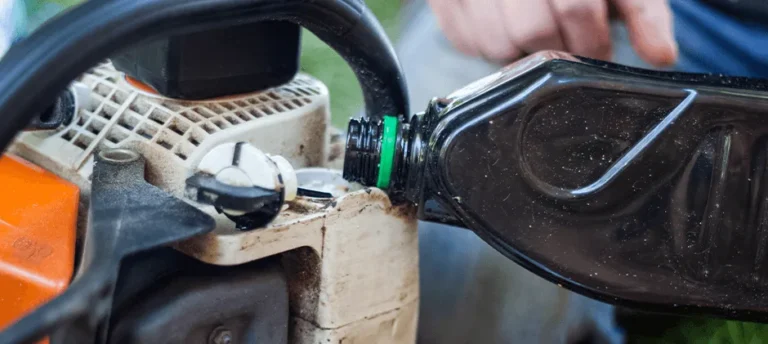
Engine oil. Warm the engine for a few minutes. Drain the old oil while it's still hot. Refill with fresh oil at the spec level in your manual, typically SAE 10W-30 for residential models.
Spark plug. Remove it and inspect for fouling. Clean or replace as needed. A fresh plug makes spring startup dramatically easier.
Deck and blade. Scrape dried grass clumps from the deck underside. Hose it down. Apply a light coat of silicone spray to slow rust.
Sharpen the blade to a 30-degree angle, or remove it and store it flat.
Storage location. Keep the mower indoors if at all possible. A dry garage or shed prevents moisture damage and slows fuel degradation. If outdoor storage is your only option, use a breathable cover and park on an elevated surface.
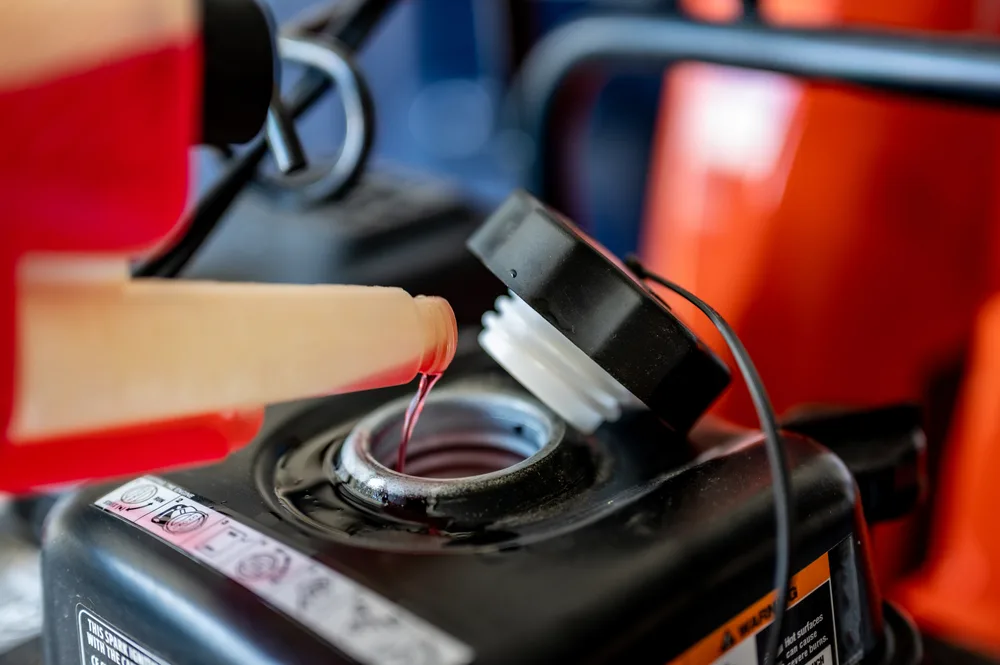
Image source: Bing (Web (fair-use with source credit))
Battery-Electric Mowers: How to Store a Lithium-Ion Mower Correctly
Battery mowers have fewer moving parts than gas models, but they still need careful winter storage. The single most important thing you can do is manage the battery's charge level correctly.
The 40 to 60 percent rule. Store your lithium-ion battery somewhere between 40 and 60 percent charge. Lithium-ion cells degrade fastest when sitting at full charge. They also suffer when left completely drained.
Partial charge is the sweet spot for long-term storage. Unplug the battery from the mower before you store it.
Why full charge causes damage. A cell sitting at 100 percent charge experiences constant chemical stress internally. Over months of storage, that stress breaks down the electrolyte and reduces the battery's capacity permanently. Manufacturer specs from EGO, Greenworks, and Ryobi all confirm this behavior across their lithium-ion mower lines.
Cleaning and prep. Wipe down the mower deck and remove any grass clippings stuck to the housing. Clean the battery contacts with a dry cloth. Check the air filter for debris or rodent nesting material.
Storage temperature. Keep the battery somewhere between 32 and 86 degrees Fahrenheit. Extreme cold damages lithium-ion cells permanently. If your storage space drops below freezing regularly, bring the battery indoors and keep it at room temperature.
Cable and connector care. Coil the charger cable loosely to prevent kinks. Inspect the charging port for corrosion. A small amount of dielectric grease on the battery terminals helps protect against moisture damage over winter.
Per University of Minnesota Extension guidance on seasonal equipment care, storing lithium-ion batteries at partial charge rather than full charge preserves 20 to 30 percent more capacity across multiple storage seasons.
Riding Mowers and Zero-Turns: The Complete Winterization Workflow
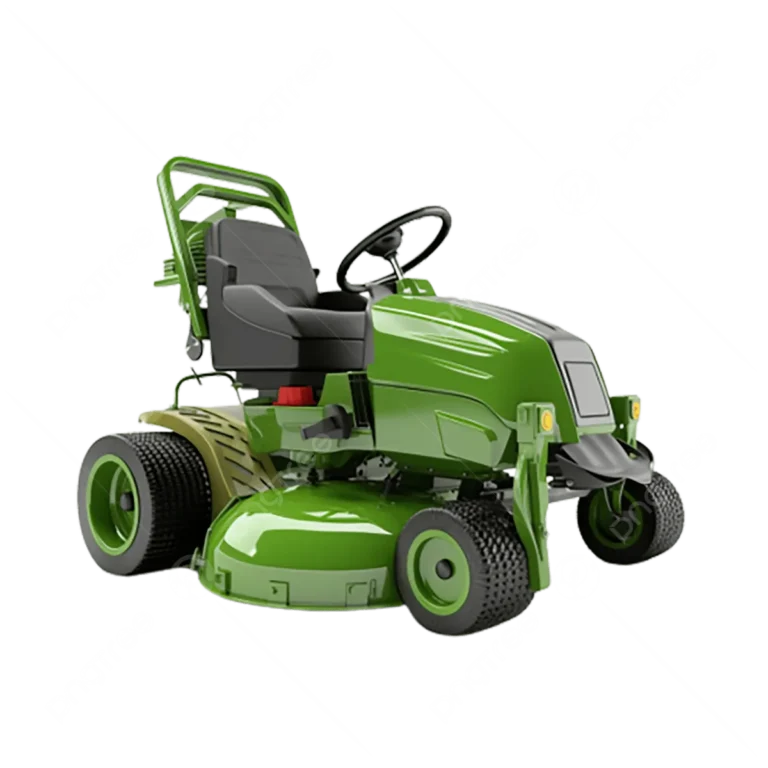
Riding mowers need the most thorough winter prep of any mower type. They combine every fuel system concern you'd handle with a gas push mower, plus transmission fluid, hydraulic components, and larger batteries. Plan for about 45 minutes to an hour.
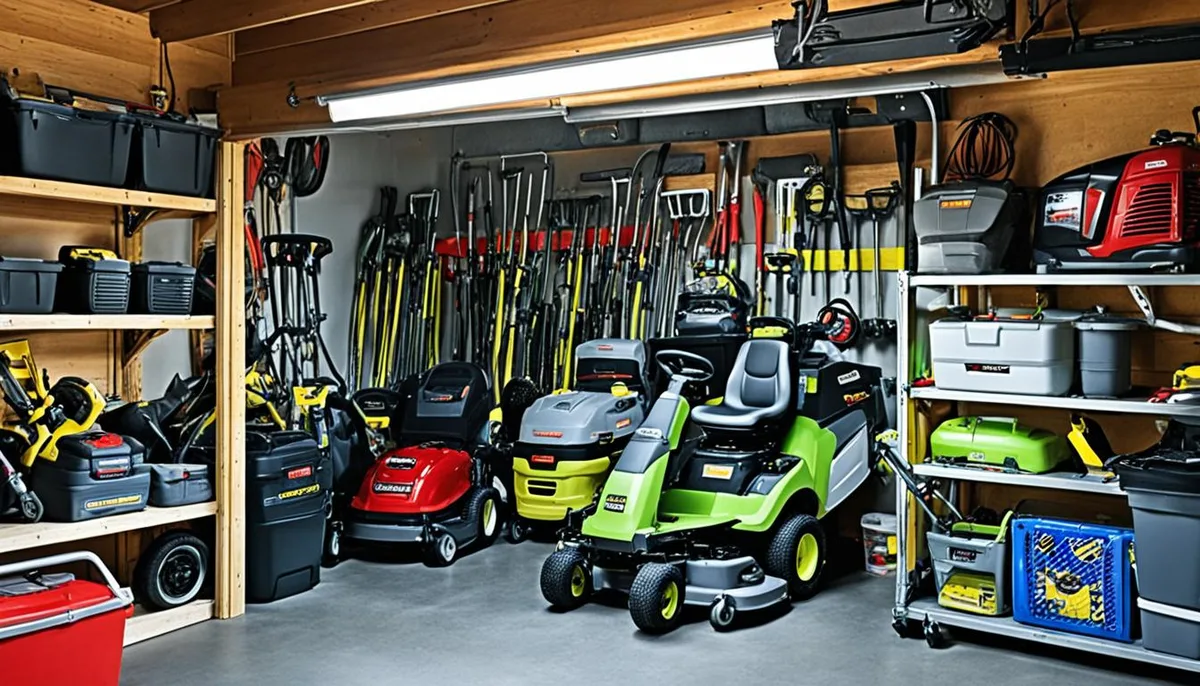
Image source: Bing (Web (fair-use with source credit))
Here's the step-by-step workflow:
Step 1: Fuel system. Treat the tank with stabilizer at the manufacturer-recommended dose, or drain it completely. Riding mowers often have larger tanks, 10 to 15 gallons. Filling with fresh stabilized fuel costs more upfront but prevents sediment buildup across the larger system.
Step 2: Engine oil and filter. Warm the engine for 10 minutes to thin the oil. Drain it while hot. Replace the oil filter if your mower has one.
Refill at the spec level in your operator's manual, usually SAE 10W-30 or synthetic 5W-30 for cold climates.
Step 3: Blade inspection. Check the blade for nicks, cracks, or dulling. Sharpen to a 30-degree angle if needed. Replace any damaged blade before storage.
Starting a season with a bent blade is one of the most common and avoidable mistakes.
Step 4: Hydraulic fluid. Hydrostatic transmissions need their hydraulic fluid checked and topped off. Run the transmission through its full range for a few minutes before storage. This works out any trapped air bubbles.
Step 5: Tire pressure. Check each tire and bring them to the manufacturer spec, typically 12 to 14 PSI. Slightly underinflated tires are prone to flat spots and cracking over winter storage.
Step 6: Battery removal. Disconnect and remove the 12-volt battery. Store it indoors at 40 to 60 percent charge. Larger riding mower batteries discharge faster in cold weather.
Leaving one connected and drained through the winter is a fast way to ruin it.
Step 7: Final storage position. Park on a flat surface with the parking brake set. Leave the controls in neutral if the mower has a hydrostatic transmission. Cover it with a breathable tarp if indoor storage isn't available.
Riding mower owners who skip any single step often pay for it in spring. A clogged fuel line, a drained battery, or a cracked tire can each turn a quick first mow into a multi-day repair job. Fuel system and battery neglect consistently top the list of preventable winter storage failures.
Frequently Asked Questions
How long can fuel sit in a lawn mower before it goes bad?
Gasoline containing up to 10% ethanol starts degrading within 30 days. Untreated fuel sitting in a mower tank for an entire winter season will gum up the carburetor and corrode fuel lines. Treat the fuel with stabilizer before storage, or drain the tank completely.
Should I remove the spark plug before storing a mower?
Not necessarily. Removing the spark plug and fogging the cylinder with oil protects against rust, but it's not required for every storage scenario. A clean, installed plug in a dry, indoor storage environment is perfectly fine.
Is it okay to store a lawn mower in an unheated garage?
Yes, with proper fuel treatment and a breathable cover. Unheated garages expose fuel to wider temperature swings, which accelerates degradation. Fuel stabilizer is even more important when your storage space isn't climate-controlled.
Can I store a battery mower outdoors under a tarp?
A breathable tarp works for deck protection, but don't store the lithium-ion battery outside. Extreme cold permanently damages lithium-ion cells. Bring the battery indoors and keep it at partial charge, between 40 and 60 percent.
What is fuel stabilizer, and how does it work?
Fuel stabilizer is a chemical additive that slows gasoline degradation. It prevents ethanol from separating from the fuel and protects carburetor components from corrosion. Add it at roughly 1 ounce per 2.5 gallons of fuel before you park the mower for winter.
How do I know if my lawn mower battery is stored at the right charge level?
Use a multimeter to check the voltage. For a typical 12-volt lithium-ion mower battery, a storage charge sits between 12.4 and 12.8 volts. If the reading is higher, run the battery briefly to bring it down.
If it's lower, top it off to around 40 to 60 percent.