How Long Do Solar Motion Lights Typically Last?: Quick Guide
Most solar motion lights last three to five years, while their LEDs and solar panels may work much longer.
How long do solar motion lights typically last? The answer depends on the battery, solar panel, weather, build quality, and daily use. A well-placed light can keep working for years, but its rechargeable battery often needs replacement before the light itself wears out. This guide explains each part’s lifespan, the warning signs to watch for, and simple ways to extend service life.

How long do solar motion lights typically last?
Most solar motion lights last about three to five years under normal outdoor conditions. Some low-cost models may fail within one or two years, while premium lights can work for seven years or more with regular care.
The whole fixture does not age at one speed. Each part has its own useful life:
• LED bulbs often last 25,000 to 50,000 hours.
• Rechargeable batteries commonly last one to three years.
• Solar panels may produce power for 10 to 25 years, though output slowly drops.
• Motion sensors often last several years if water does not enter the housing.
• Plastic cases may crack or fade after long exposure to sun and cold.
This means a light may still have a healthy LED and solar panel but stop working because the battery can no longer hold a charge. In many cases, replacing the battery costs less than replacing the entire fixture.
What affects the lifespan of solar motion lights?
The answer to how long do solar motion lights typically last depends on several conditions. The same model may last five years in a mild, sunny area but only two years in a place with harsh winters, heavy rain, or salty air.
Battery quality
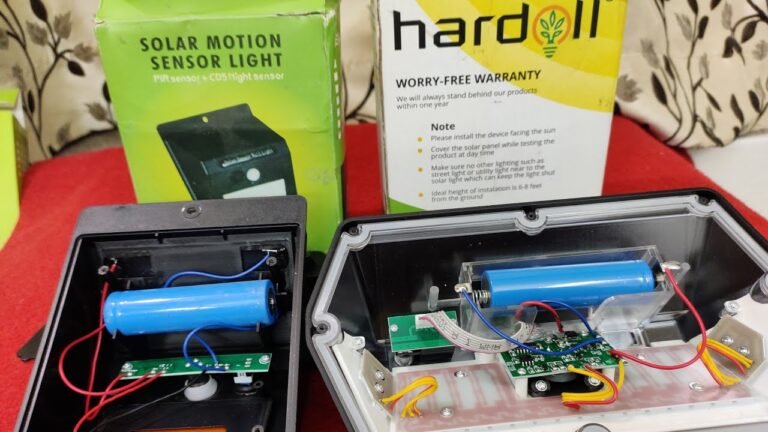
The battery is often the first part to fail. Most solar motion lights use a rechargeable nickel-metal hydride battery, lithium-ion battery, or lithium iron phosphate battery.
Battery life depends on:
• Charge and discharge cycles
• Heat exposure
• Cold temperatures
• Battery size and quality
• How often the light turns on
• How long the light stays on each night
A light that activates 30 times each night may drain its battery much faster than one that turns on five times. Heat is also a major issue. A battery stored inside a sealed, dark housing can become very hot during summer afternoons.
Sunlight and panel placement
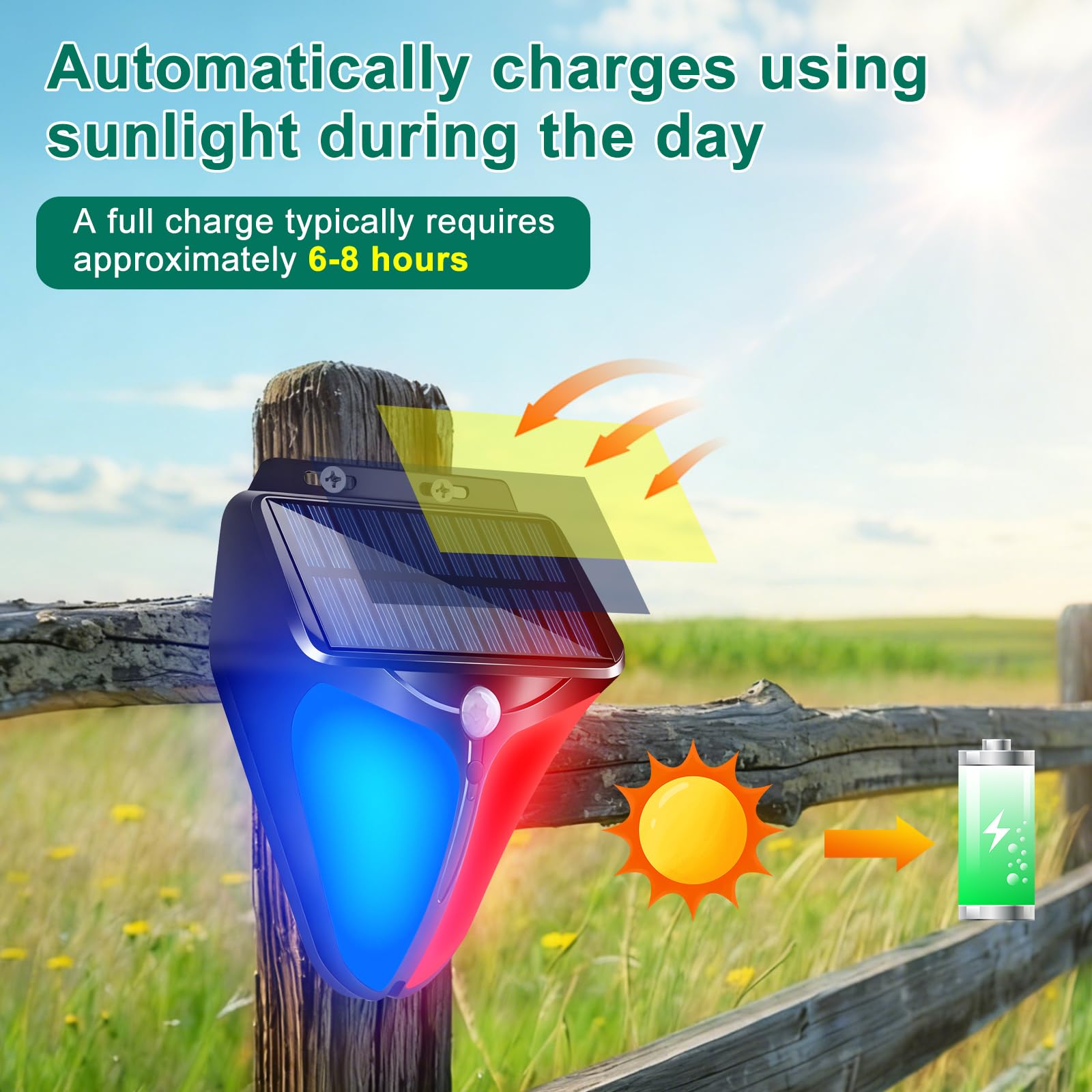
Solar panels need direct sunlight to charge well. A panel under a porch roof, behind a tree, or beneath heavy dust may not collect enough energy.
A north-facing panel in the United States may also receive less useful sun than a south-facing panel. Seasonal changes matter, too. Short winter days can reduce charging time and cause the light to shut off early at night.
Weather exposure
Rain, snow, ice, wind, and humidity all affect outdoor lighting. A fixture with a strong seal and an IP65 or higher rating usually handles outdoor use better than an indoor-rated product.
Salt air near the coast can corrode metal contacts. Freezing water can also expand inside small cracks. Over time, these problems may damage the circuit board or sensor.
Build quality
Cheap plastic can become brittle under ultraviolet light. A stronger case, sealed battery compartment, and tempered solar panel usually help a light last longer.
Price does not guarantee quality, but extremely cheap lights often use smaller batteries, weaker seals, and less efficient panels. These choices may reduce the upfront cost while shortening the working life.

Which part usually fails first?
For most solar motion lights, the rechargeable battery fails before the LED, motion sensor, or solar panel. This is why a light may become dim, shut off early, or stop working after one or two years.
A worn battery often shows these signs:
• The light works for only a few minutes.
• The light turns on at dusk but fades quickly.
• The light works after a sunny day but fails after cloudy weather.
• The panel appears clean, but charging remains poor.
• A fresh battery restores normal operation.
Before replacing the battery, check the power switch. Many solar lights have a small switch inside the battery compartment. It may be set to “off” after installation or service.
Also inspect the battery contacts. White or green buildup can block power. Clean light corrosion with a dry cloth or a small amount of electrical contact cleaner. Do not use water inside the housing.
How long do solar motion lights typically last before the battery needs replacement?
The battery in a solar motion light often lasts one to three years. High heat, frequent activation, and poor charging can reduce that period.
Some lithium iron phosphate batteries may last longer than standard nickel-metal hydride batteries. Always match the replacement battery type, voltage, size, and connector to the manufacturer’s instructions. Never install a battery with the wrong voltage.
How long do LED bulbs and solar panels last?
LEDs usually last much longer than the complete solar light. A rated life of 25,000 to 50,000 hours does not mean the entire fixture will operate for that long. It means the LED can produce light for that approximate period under suitable conditions.
The LED may still fail sooner if heat builds up inside the housing. A poor heat sink, damaged circuit board, or water leak can reduce its life.
Solar panels are also durable. A good panel can continue producing power for 10 to 25 years. However, its output may slowly decline because of ultraviolet exposure, dirt, microcracks, and weather damage.
The panel can look clear and still produce less power. This gradual loss may appear as shorter nighttime run time rather than a sudden failure.
Why do solar lights become dim?
Solar lights often become dim for one of five reasons:
• The battery is old.
• The panel is dirty.
• The panel receives too little direct sunlight.
• The LED or circuit has degraded.
• The light’s brightness setting has changed.
Start with simple checks. Clean the panel, move the light into stronger sun, confirm the switch position, and test it with a fresh compatible battery. These steps solve many problems without replacing the full fixture.
How to make solar motion lights last longer
Good care can add years to the life of a solar motion light. You do not need special tools or advanced skills.
1. Install the light in a sunny location
Choose a spot that receives several hours of direct sunlight each day. Keep the panel away from tree shade, roof shadows, and bright nighttime lights.
Do not aim the panel only for the best view. Aim it for the best daily charging. A small change in angle can make a clear difference during winter.
2. Clean the solar panel
Dust, pollen, bird droppings, and hard-water marks can block sunlight. Wipe the panel with a soft, damp cloth every few months.
Avoid rough sponges and strong cleaners. They can scratch the surface or damage its protective coating.
3. Protect the light from standing water
Install the fixture where water will not pool around the battery cover or sensor. Make sure seals and covers close fully after maintenance.
If the light is mounted under an eave, confirm that the panel still receives enough sun. Shelter from direct rain can help, but deep shade can hurt charging.
4. Adjust the motion sensor
Set the sensor to cover the area you need. If it points toward a busy road, sidewalk, or swaying branch, it may activate too often.
Frequent activation uses more battery power and may shorten battery life. A lower sensitivity setting can reduce false triggers.
5. Use a sensible lighting duration
A 30-second setting is often enough for a walkway or entry. A five-minute setting may drain the battery before sunrise.
Use the shortest time that meets your safety needs. This small adjustment can improve nighttime performance.
6. Check the fixture before winter
Cold weather can reduce battery capacity. Before winter, clean the panel, inspect the seal, and confirm that the battery compartment is dry.
In areas with severe freezing weather, follow the product instructions. Some removable units may perform better when stored indoors during long periods of snow and ice.
7. Replace the battery correctly
When the battery becomes weak, replace it with the same chemistry and electrical rating. Take a photo of the old battery before removing it so you can match the connector and wire position.
Dispose of old rechargeable batteries through a local recycling program. Do not place damaged lithium batteries in household trash.
Signs it is time to replace a solar motion light
Sometimes a battery replacement is enough. In other cases, the full fixture has reached the end of its useful life.
Replace the light when:
• The case has deep cracks.
• Water or condensation remains inside.
• The solar panel is badly cloudy or broken.
• The sensor stays on or fails in all conditions.
• A new battery does not improve performance.
• The circuit smells burned or shows scorch marks.
• The mounting hardware is unsafe.
A light that flickers after rain may have internal moisture damage. Do not keep testing it if you see melted plastic, exposed wires, or a swollen battery.
Repair or replace?
Repair makes sense when the battery is easy to access and the rest of the light looks sound. Replacement is often better when the panel, circuit board, seal, and case all show wear.
From a practical standpoint, compare the battery cost with the price of a new fixture. If a replacement battery costs nearly as much as a better new light, upgrading may offer more value.

Are expensive solar motion lights worth it?
A higher-priced solar motion light can be worth it when you need dependable light, better weather resistance, or a larger coverage area. Premium models may include stronger panels, larger batteries, aluminum housings, and better seals.
However, a costly light still needs proper placement. Even the best panel cannot charge well in deep shade. Good installation often matters as much as brand or price.
Look for these features:
• A clearly stated battery type and capacity
• Replaceable batteries
• An IP65 or higher outdoor rating
• A durable mounting system
• A panel with enough surface area
• Adjustable brightness and timer settings
• A warranty with clear coverage
Be careful with claims such as “permanent solar light” or “lifetime LED.” These phrases usually describe one component, not the complete product. The battery and electronics still have a limited service life.

My practical lessons from using solar motion lights
One of the most common mistakes I have seen is placing a light where it looks attractive instead of where the panel gets strong sun. A fixture may illuminate a doorway well but fail every night because a nearby tree blocks the afternoon light.
Another lesson is to avoid aiming the sensor at moving objects. Branches, flags, pets, and passing cars can trigger the light again and again. This drains the battery and makes the light seem defective.
I also recommend checking the battery before discarding the fixture. In many cases, a fresh compatible battery brings an older light back to life. Still, do not repair a unit with a cracked case, swollen battery, or signs of water damage.
The best routine is simple: clean the panel, check the seal, reduce false triggers, and test the light before you need it. A few minutes of care can prevent a dark walkway on a night when safety matters most.
What is the expected yearly cost?
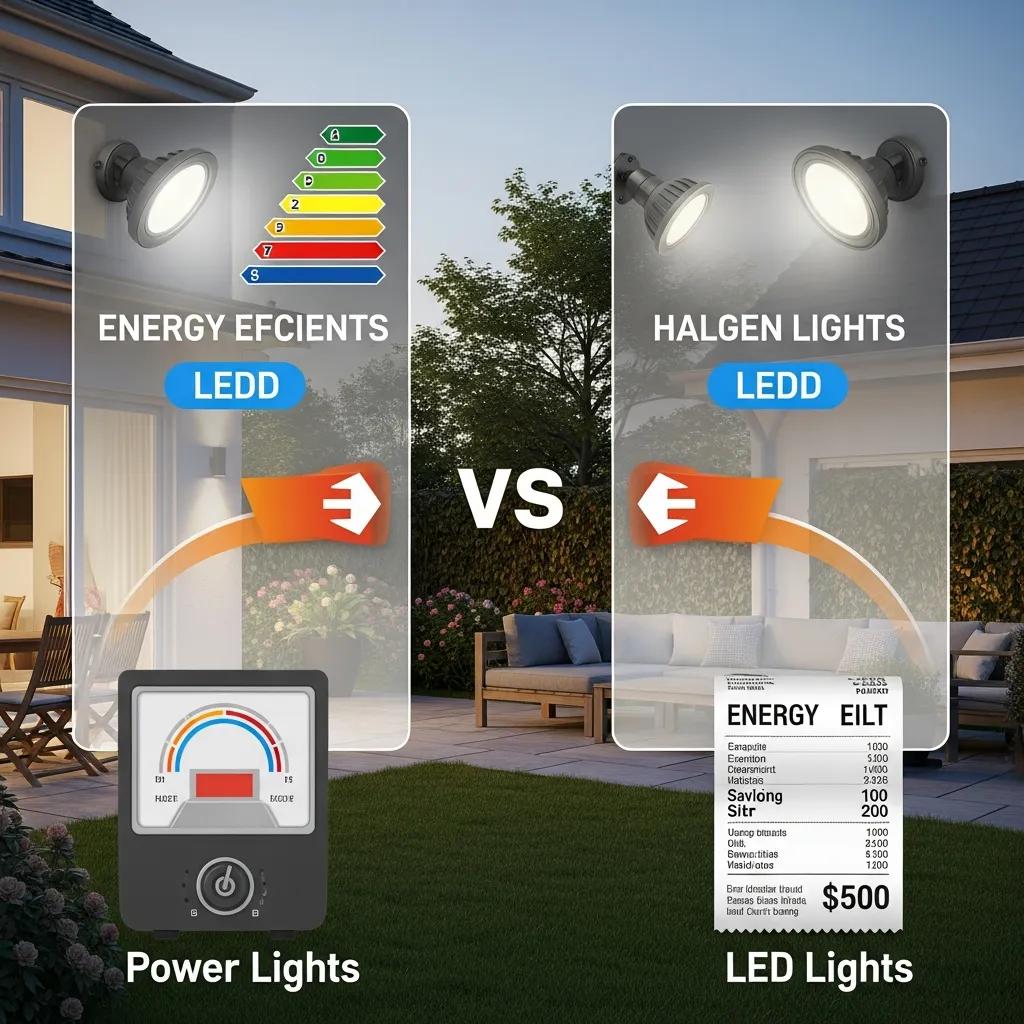
The cost depends on whether you replace batteries or the complete light. A replaceable battery may cost around $5 to $20, while a new solar motion light can range from about $15 to more than $100.
A low-cost fixture may be fine for a garden path or temporary project. For a driveway, stairway, or security area, a stronger model may provide better long-term value.
Do not use a small solar motion light as a complete security system. It can improve visibility and may discourage some unwanted activity, but it does not replace a camera, alarm, or wired security light.
Frequently Asked Questions About How Long Do Solar Motion Lights Typically Last?
How long do solar motion lights typically last in winter?
Solar motion lights may work less effectively in winter because days are shorter and sunlight is weaker. Cold weather can also reduce battery capacity, but proper placement and a clean panel can help maintain performance.
Can a solar motion light last all night?
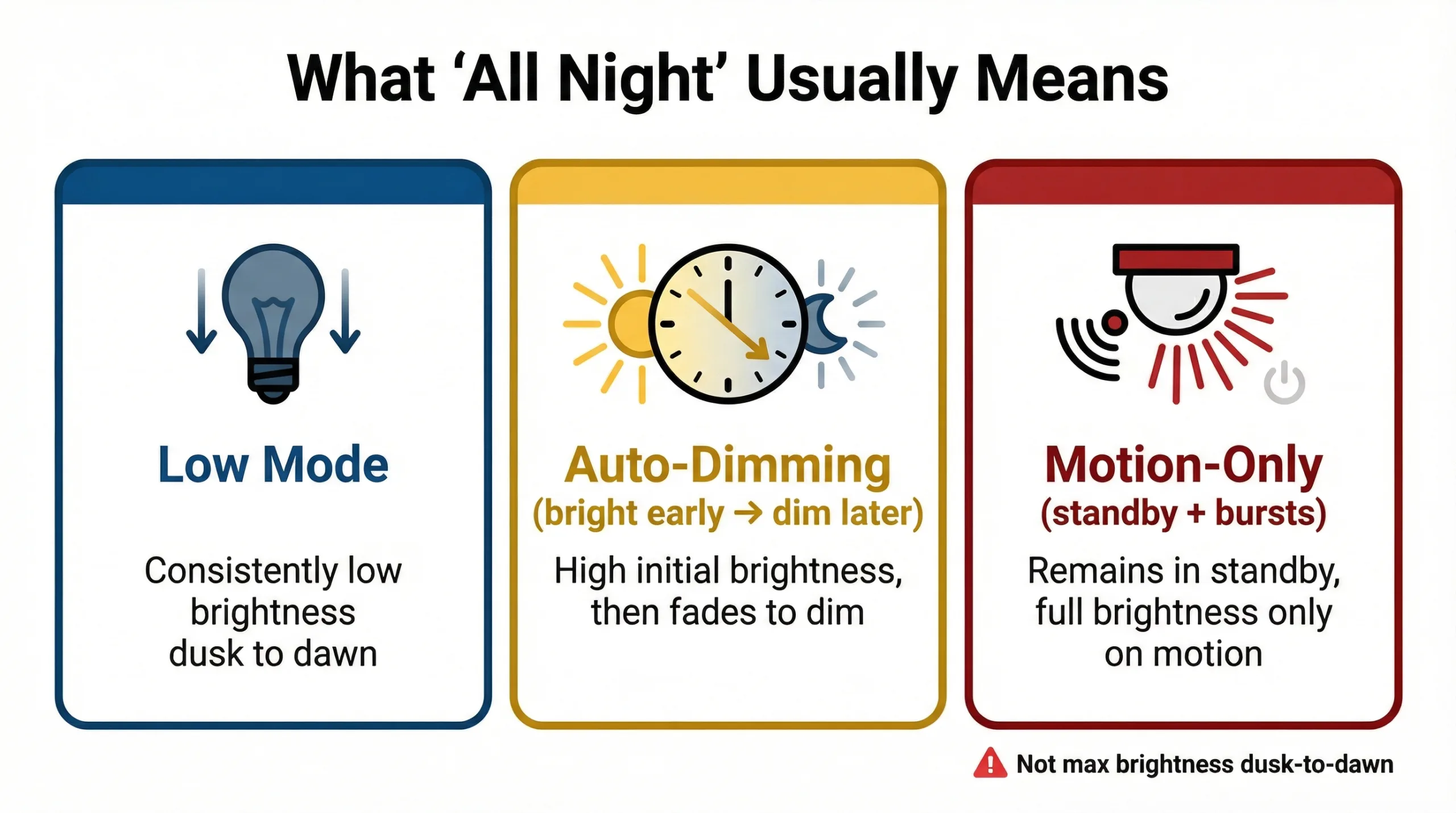
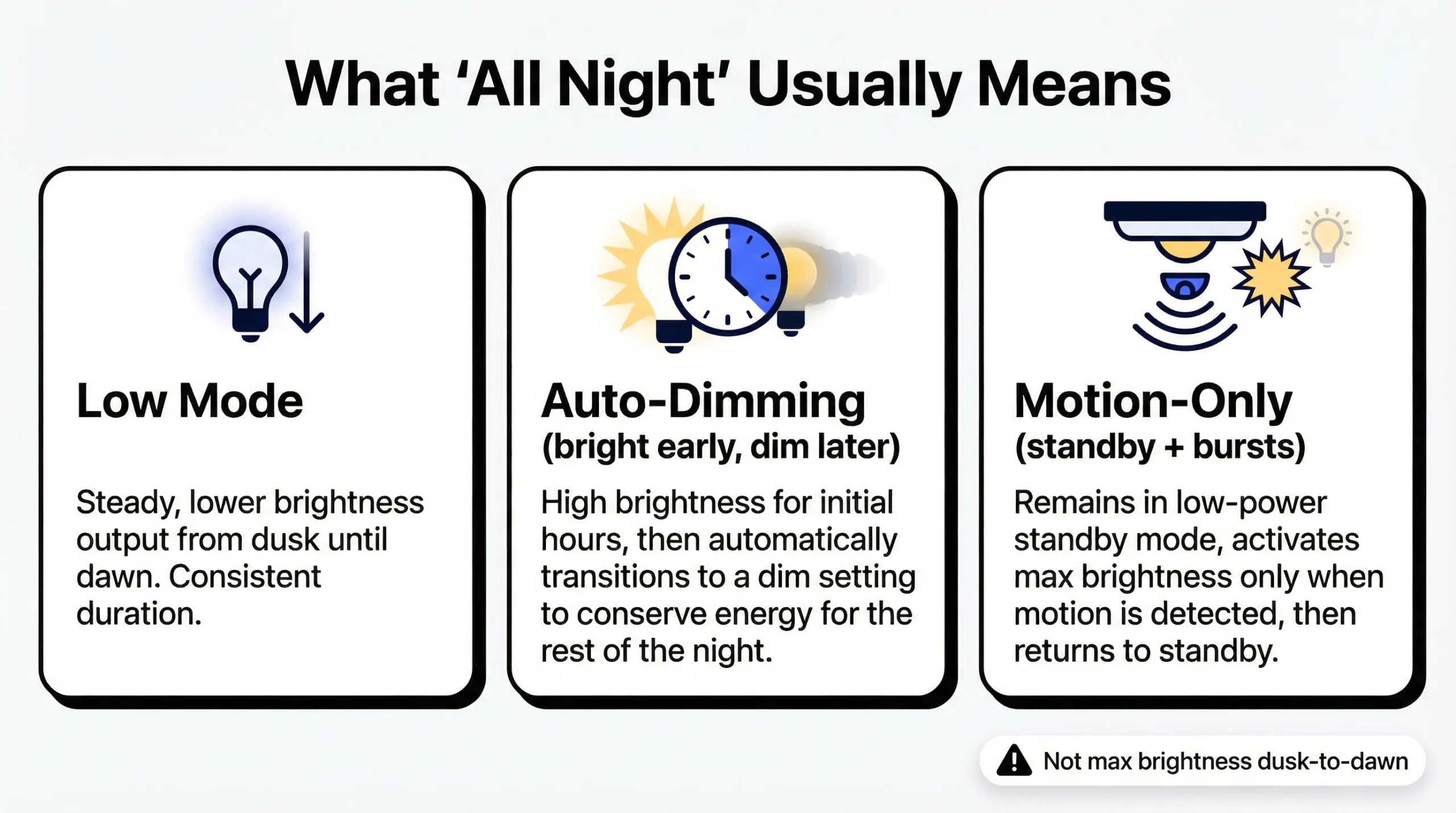
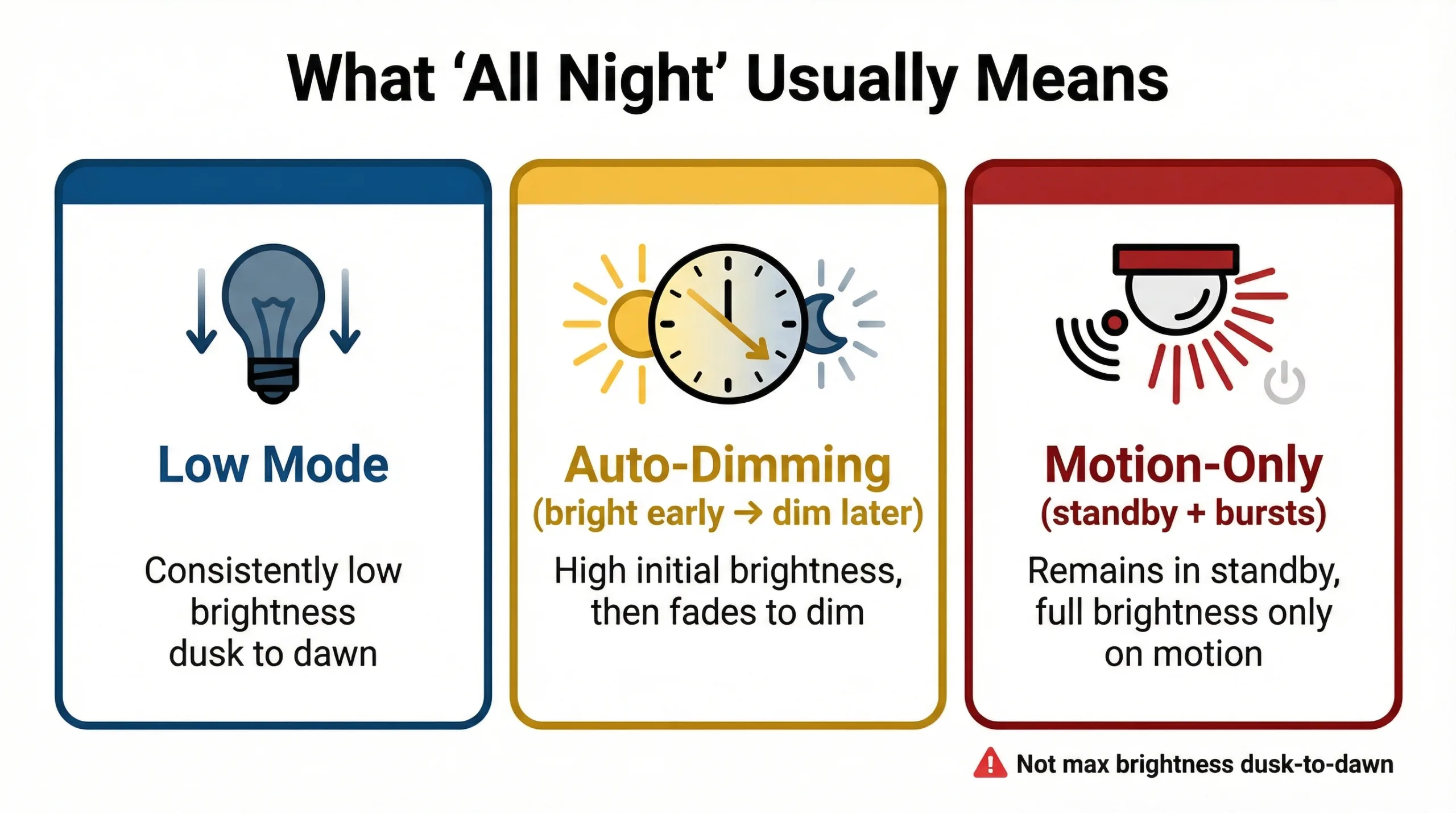
It can, but the result depends on battery size, sunlight, brightness, and the number of motion events. Most motion lights conserve energy by turning on only when movement is detected.
How often should I replace the battery?
Many batteries need replacement every one to three years. Replace one sooner if the light becomes dim, runs briefly, or fails after a full sunny day.
Do solar motion lights work on cloudy days?
Yes, they can still charge in cloudy weather, but charging is slower because less sunlight reaches the panel. Several cloudy days in a row may reduce nighttime run time.
Are solar motion lights waterproof?
Some are designed for rain and outdoor use, but not every model is fully waterproof. Check the IP rating and install the light so water does not collect around the battery cover or control switch.
Why does my solar motion light stop working after a year?
An old or overheated battery is the most likely cause. Dirty panels, shade, corrosion, water entry, and a faulty switch can also cause early failure.
Can I leave solar motion lights outside all year?
Most outdoor-rated models can remain outside year-round. In areas with extreme snow, ice, hurricanes, or freezing temperatures, follow the care instructions and inspect the fixture often.
Should I turn solar motion lights off during the day?
Many models charge while switched on, but some require a specific switch setting. Follow the product manual, and confirm that the panel is receiving direct sunlight during the day.
Conclusion
How long do solar motion lights typically last? A realistic estimate is three to five years for the complete fixture, with the battery often lasting one to three years. LEDs and solar panels can last much longer, so a battery replacement may restore an otherwise healthy light.
Choose a durable outdoor model, place it in direct sun, clean the panel, limit false motion triggers, and protect the battery compartment from water. These simple steps can improve brightness, extend service life, and reduce replacement costs.
Before buying or discarding a light, inspect the battery and panel first. Use these tips to make a smarter purchase, and explore more solar lighting guides to improve your outdoor setup.