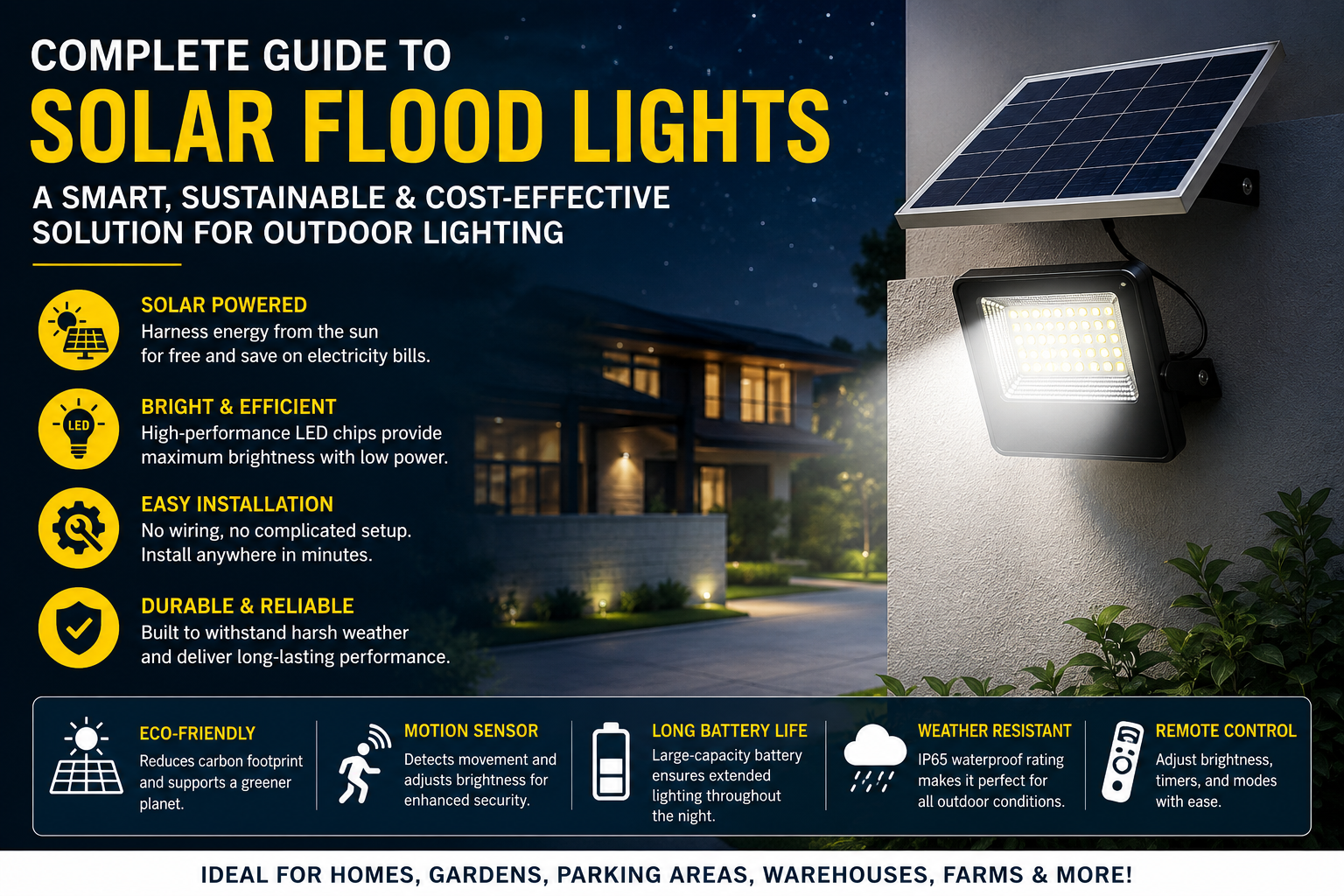
How Far Can A Solar Motion Light Detect Movement: Range
Most solar motion lights detect movement from 20 to 40 feet, though some reach 70 feet.
How far can a solar motion light detect movement? The answer depends on its passive infrared sensor, lens shape, mounting height, weather, and the size of the moving object. A good light can cover a path, driveway, porch, or side yard, but its advertised range is not always its useful range.
This guide explains solar motion light detection range in clear terms. It also covers how motion sensors work, what affects performance, how to test coverage, and how to choose the right light for your space.
How Far Can a Solar Motion Light Detect Movement?
Most solar motion lights detect movement between 20 and 40 feet away. Basic models may sense motion at only 10 to 20 feet, while high-end floodlights can reach 50 to 70 feet under good conditions.
The sensor usually uses passive infrared technology, often called PIR. It does not send out a signal like radar. Instead, it notices changes in heat as a warm object, such as a person, dog, or car, moves across its viewing area.
How far can a solar motion light detect movement? A product may claim a range of 70 feet, but that figure often applies to ideal test conditions. In real use, the reliable range may be shorter, especially when the sensor faces a person walking straight toward it.
Typical detection ranges include:
- Small pathway lights: 10 to 20 feet
- Standard wall lights: 20 to 40 feet
- Wide-angle security lights: 40 to 70 feet
- Premium solar floodlights: Up to 80 feet in some conditions
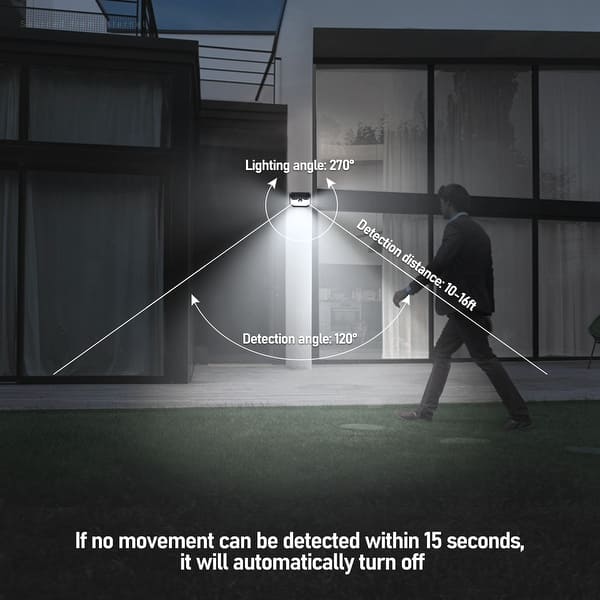
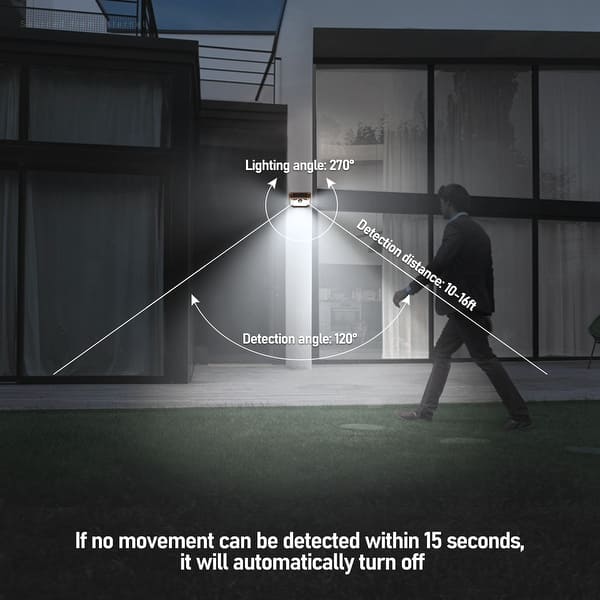
The sensing distance is only one part of performance. The sensor’s viewing angle matters just as much. A light with a 120-degree field of view may cover more ground than one with a longer range but a narrow lens.

How PIR Motion Sensors Work
A PIR sensor detects infrared energy from warm objects. Every person and animal gives off heat, and the sensor looks for changes in that heat pattern across its detection zones.
The sensor works best when movement crosses its field of view. For example, a person walking from left to right may trigger the light sooner than someone walking directly toward the sensor.
This difference explains why advertised range can feel confusing. A person moving across the sensor’s path creates a stronger change than a person approaching head-on.
How far can a solar motion light detect movement? The sensor may notice a large moving object at a greater distance than a small object. A car can trigger the light far away, while a small cat may need to come much closer.
Most PIR sensors include a Fresnel lens. This plastic lens divides the viewing area into several zones. When a warm object crosses from one zone to another, the sensor detects the change and activates the light.
PIR sensors have several useful traits:
- They use very little power.
- They work well for outdoor lighting.
- They do not record images.
- They can detect people, animals, and vehicles.
- They may respond poorly to steady or slow movement.
Unlike a camera, a PIR sensor does not identify who or what caused the trigger. It simply detects a change in infrared energy.

What Affects Solar Motion Light Detection Range?
The stated detection distance is only a starting point. Several conditions can make the actual range longer or shorter.
Sensor quality
A high-quality PIR sensor usually has better sensitivity and more stable detection. Cheap sensors may have a narrow range, delayed activation, or false triggers.
The sensor’s design also affects the result. Some models use multiple sensing zones, while others use a single basic element.
Mounting height
Most outdoor solar motion lights work best when mounted about 6 to 10 feet above the ground. This height gives the sensor a useful view while keeping it out of easy reach.
If the light is mounted too high, the sensor may look over people’s heads. If it is mounted too low, walls, plants, or parked cars may block the view.
Sensor angle
The sensor should point toward the area where movement is expected. A slight downward angle often works better than pointing it straight ahead.
A sensor aimed at a driveway may detect cars well. A sensor aimed at a narrow path may need a more focused position.
Temperature
PIR sensors detect heat contrast. On a cool night, a warm person may stand out clearly. On a very hot day, the person and the surrounding air may have similar temperatures, which can reduce detection reliability.
Extreme cold can also affect the battery and electronics. The sensor may still work, but the light may run for less time if the solar battery is weak.
Weather
Rain, fog, snow, and heavy dust can reduce performance. Water droplets may also create false triggers if they move close to the sensor.
Strong sunlight can cause problems when it shines directly into the sensor. Placing the light under an eave or angling it away from direct glare can help.
Object size and motion
A large object is easier to detect than a small one. A moving vehicle may trigger the light at 50 feet, while a rabbit may need to be within 20 feet.
Fast movement often creates a strong signal. Very slow movement may not cross the sensor zones quickly enough to trigger the light.
Lens obstruction
Dirt, spider webs, leaves, and insects can reduce detection range. A web close to the lens may also create repeated false activations.
Clean the sensor lens with a soft, damp cloth. Avoid harsh cleaners that may cloud the plastic.
How Far Can a Solar Motion Light Detect Movement at Night?
Darkness does not usually stop a PIR sensor from detecting movement. The sensor responds to heat, not visible light. This allows many solar motion lights to detect people at night, even before the lamp turns on.
Nighttime range can still vary. A cold person wearing thick clothing may produce less heat contrast than someone wearing light clothing. A warm vehicle or animal may be easier to detect.
The light itself may also affect how the sensor behaves. Some models reduce sensitivity at night to save battery power. Others allow you to adjust sensitivity, timer length, and operating mode.
For dependable night coverage:
- Keep the sensor free from dirt and webs.
- Point it across the expected walking route.
- Avoid aiming it at hot vents or air-conditioning units.
- Keep nearby branches from moving in front of the lens.
- Test the light after dark, not only during the day.
How far can a solar motion light detect movement at night? In many cases, the useful range remains close to the daytime rating, but poor placement can reduce it by half or more.
Detection Range Compared With Lighting Coverage
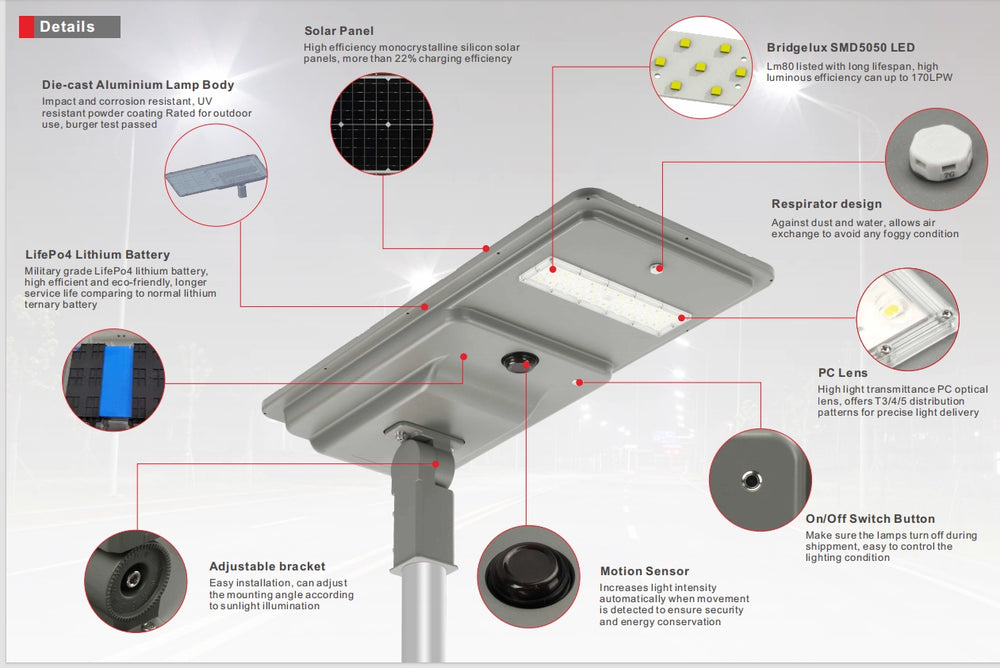
Detection range and lighting range are not the same thing. A sensor may detect a person 40 feet away, while the lamp only provides useful light across 20 to 30 feet.
This distinction matters for security. A light that detects motion far away but produces a weak beam may not clearly illuminate the person or area.
Check these two specifications separately:
- Detection range: The farthest distance at which the sensor may activate.
- Lighting distance: The area where the lamp produces useful brightness.
- Beam angle: The width of the illuminated area.
- Sensor angle: The width of the motion detection zone.
For a driveway, you may want long detection range and a wide flood beam. For a narrow walkway, a shorter range with a focused beam may be more useful.
A light with a 1,000-lumen output may appear bright near the fixture but less powerful at the edge of a wide beam. Lumens measure total light output, not how brightly every part of the yard will look.
Think of the sensor as a lookout and the lamp as a flashlight. The lookout may notice someone at a distance, but the flashlight still needs to point in the right direction.
How to Position a Solar Motion Light for Maximum Range
Correct placement can improve performance more than buying a stronger light. Before mounting the unit, watch how people and vehicles move through the area.
The best position usually allows movement to cross the sensor’s view rather than approach it directly.
Use these setup steps:
- Mount the light about 6 to 10 feet high.
- Point the sensor toward the center of the target area.
- Angle the sensor slightly downward.
- Keep the solar panel exposed to several hours of direct sunlight.
- Remove branches, fences, and objects that block the view.
- Set the sensitivity to a middle level.
- Walk across the area from different directions.
- Adjust the angle until the light triggers where you need it.
For a driveway, mount the light on a wall or post near the entrance. Aim it across the vehicle’s path instead of directly toward approaching cars.
For a walkway, place the light at one end and aim it toward the center. If the path is long, two lights may work better than one light with extreme sensitivity.
During installation tests, one common mistake is mounting the light too high because it seems safer. That can create a large blind spot below the sensor. A lower, well-aimed position often gives better real-world coverage.

How to Test the Detection Distance
A simple walk test can show the actual range of your solar motion light. Test at night after the battery has had a full day of sunlight.
Start by standing close to the light. Walk away from it in several directions. Mark the point where the light stops responding.
Then repeat the test:
- Walk directly toward the sensor.
- Walk across the sensor from side to side.
- Walk diagonally through the coverage area.
- Test while wearing different clothing.
- Test with a vehicle if the light covers a driveway.
- Repeat the test after rain or cold weather.
Wait for the light’s timer to switch off between each test. Otherwise, you may think the sensor detected you again when the lamp was still running from the first trigger.
Record the results in feet. You may find that the light detects side-to-side movement at 35 feet but detects direct movement at only 20 feet.
This test gives a more useful answer to how far can a solar motion light detect movement than the box alone. Product claims are useful, but your wall, yard, climate, and walking patterns decide the final result.
Common Reasons a Solar Motion Light Misses Movement
A solar motion light may fail to activate even when someone walks within its listed range. The cause is often placement rather than a defective sensor.
Common problems include:
- The person walks directly toward the sensor.
- The sensor is aimed too high.
- A wall or plant blocks part of the lens.
- The battery did not receive enough sunlight.
- The sensitivity setting is too low.
- The sensor lens is dirty.
- The weather is extremely hot, cold, wet, or foggy.
- The person moves too slowly.
- The sensor timer is still active.
- The light is mounted near a heat source.
Solar battery power is another major factor. Short winter days, shade, dust on the panel, and overcast weather can leave less stored energy for the sensor and lamp.
If the light works early in the evening but stops later, check the battery charge first. The sensor may still detect movement, but the lamp may not have enough stored power to turn on brightly.
A false trigger can also hide a real problem. Moving tree branches, insects, pets, and passing headlights may activate the light again and again. Lowering sensitivity and changing the angle can reduce these triggers.
How to Choose the Right Detection Range
The best detection range depends on the area, not on the largest number printed on the package.
For a small porch, a 10 to 20-foot range is often enough. A 40-foot sensor may trigger whenever someone walks on the sidewalk.
For a driveway, look for a range of 30 to 50 feet. Choose a wide beam if you want to illuminate both the vehicle and the surrounding ground.
For a backyard or large side yard, a 40 to 70-foot model may help. However, large spaces often need two lights because one sensor may not cover corners or areas behind walls.
Consider these features before buying:
- Adjustable sensitivity
- Adjustable sensor angle
- A detection range that fits the space
- A wide lighting beam
- A strong weather-resistant housing
- A separate solar panel when shade is a problem
- A replaceable battery when possible
- A long enough timer setting
- A manual-on or steady-light mode
The term “waterproof” can mean different things. Look for an outdoor protection rating, such as IP65 or higher, when the light will face rain and dust. The rating does not guarantee perfect operation in every storm, but it gives a clearer measure of protection.
How far can a solar motion light detect movement? Choose a model with a little more range than you need, then reduce sensitivity if it creates false triggers. It is easier to lower sensitivity than to make a weak sensor reach farther.
Solar Motion Light Range and Home Security
Motion lighting can improve visibility, but it is not a complete security system. A bright light may discourage unwanted activity and help you see a person, gate, or vehicle.
Still, a light cannot identify a threat. It does not replace strong locks, cameras, alarms, or safe outdoor habits.
For better security coverage:
- Light entry doors from several angles.
- Cover dark corners near gates and sheds.
- Avoid aiming the sensor at public sidewalks if false triggers are common.
- Keep the light high enough to discourage tampering.
- Use more than one light around large buildings.
- Check the battery and panel each season.
- Combine motion lights with cameras when video evidence matters.
A solar light can also improve safety. It may help prevent trips on steps, highlight uneven paths, and make it easier to find keys at night.
Avoid pointing a bright light into a neighbor’s window or toward drivers. Good lighting should improve safety without creating glare or conflict.
Frequently Asked Questions About How Far Can a Solar Motion Light Detect Movement?
How far can a solar motion light detect movement in feet?
Most models detect movement from 20 to 40 feet. Some basic units detect only 10 to 20 feet, while advanced solar floodlights may reach 50 to 70 feet.
Can a solar motion light detect a person walking toward it?
Yes, but the effective distance may be shorter than the advertised range. PIR sensors usually respond more strongly when a person moves across the sensor’s view.
Do solar motion lights work through glass?
Usually, no. Glass can block or weaken the infrared energy that PIR sensors need to detect movement, so the light should be installed outside the window.
Why does my solar motion light detect animals but miss people?
Animals may cross the sensor zones at a better angle or move closer to the light. Adjust the sensor angle and sensitivity, then test the light while walking across its field of view.
Does cold weather reduce solar motion light detection range?
Cold weather can reduce battery performance and may lower the heat contrast between a person and the surrounding area. The sensor may still work, but the lamp may run for less time.
Can rain cause a solar motion light to turn on?
Yes. Heavy rain, moving water, insects, and nearby branches can cause false triggers. Cleaning the lens and changing the sensor angle often helps.
Is a longer detection range always better?
No. A very long range can cause unwanted activation from sidewalks, roads, pets, or passing cars. The best range is one that covers your target area without creating frequent false alarms.
Conclusion
How far can a solar motion light detect movement? Most detect people at about 20 to 40 feet, while stronger models may reach 50 to 70 feet. The real range depends on the PIR sensor, movement direction, mounting height, weather, battery charge, and sensor position.
For the best results, mount the light 6 to 10 feet high, aim it across the expected path, keep the lens clean, and test it at night. Choose detection range and lighting coverage separately, since a sensor may notice movement farther away than the lamp can illuminate.
Take a few minutes to test your current light or compare these features before buying a new one. A well-positioned solar motion light can make a porch, path, driveway, or yard safer with little upkeep.
2 Comments