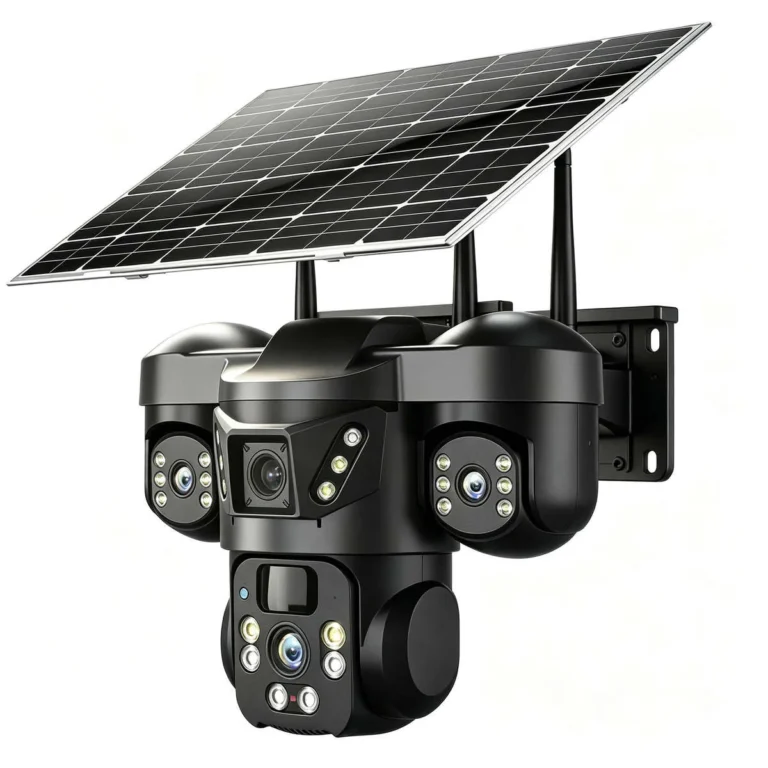
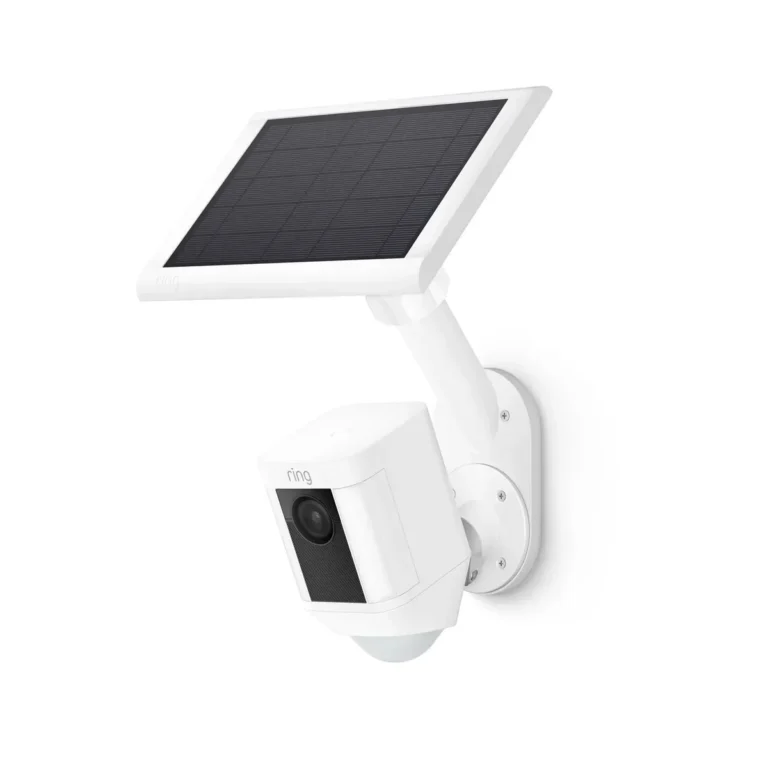
Can Solar Security Cameras Detect Vehicles?
Can solar security cameras detect vehicles? The short answer is yes, but only certain models do it well. Basic solar cameras with PIR motion sensors can tell you something moved.
They can't tell you it was a car.
AI-powered solar security cameras, though, can classify vehicles separately from people and animals. As of 2026, most mid-range models include some form of vehicle detection. Understanding how each type works will help you set up yours the right way.
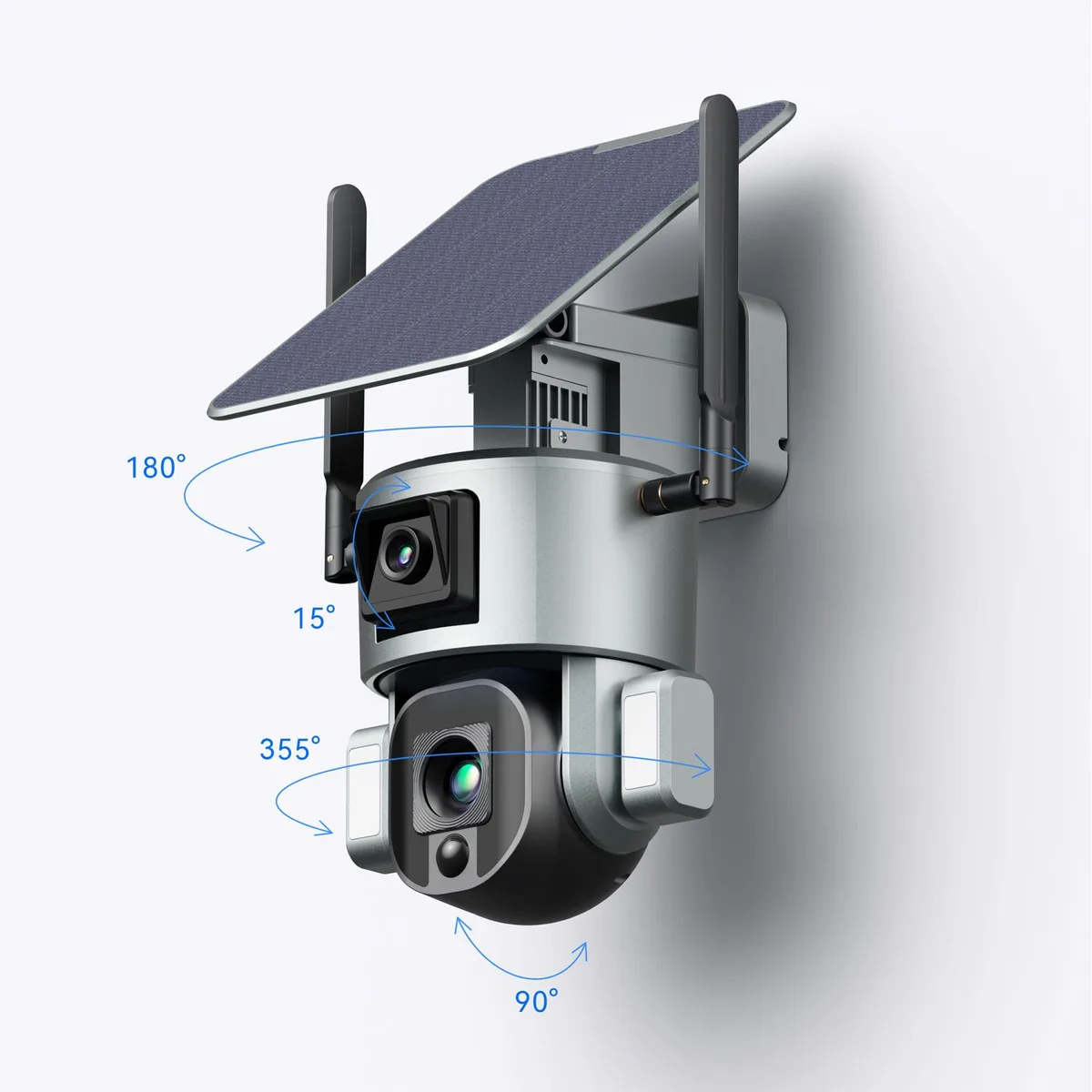
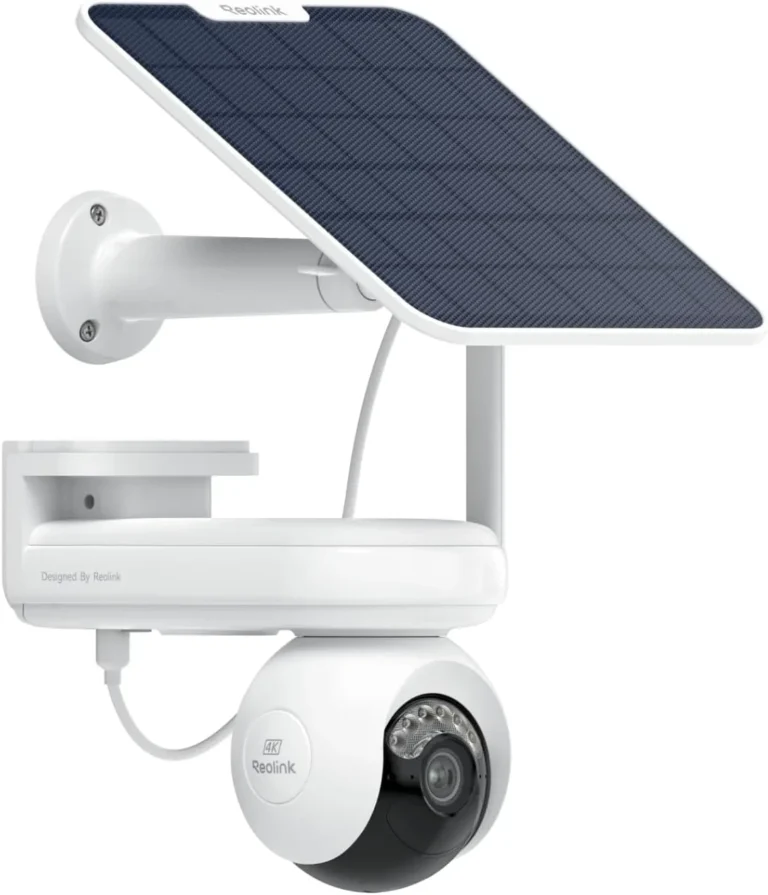
Image source: Web (Bing) / vtlpower9418.en.made-in-china.com (Web image (fair-use with source credit))
Quick Answer
Yes, but only certain solar camera models detect vehicles properly. PIR-only cameras sense motion without identifying what triggered it. AI-powered solar cameras classify vehicles separately from people and animals.
Detection accuracy typically ranges from 85% to 95%. Solar power, camera placement, and night vision all affect real-world performance.
Can Solar Security Cameras Detect Vehicles? The Short Answer
Yes, solar security cameras can detect vehicles. But the capability depends on what type you're running.
A PIR-only solar camera will trigger an alert when a vehicle crosses its detection zone. But it treats that vehicle the same way it treats a person, a deer, or a branch swaying in the wind. You get a "motion detected" notification.
Nothing tells you a car was involved.
An AI-equipped solar camera works differently. It uses onboard processing to classify the moving object as a vehicle. Then it sends a vehicle-specific alert to your phone.
Manufacturer specifications indicate that AI solar cameras with dedicated vehicle classification deliver detection accuracy between 85% and 95%.
Here's a quick breakdown:
| Camera Type | Vehicle Detection | Alert Quality |
|---|---|---|
| PIR-only solar camera | Motion only, no classification | Generic motion alert |
| AI solar camera with vehicle mode | Classifies vehicles vs. people vs. animals | Vehicle-specific alert |
| 4G LTE solar camera with AI | Vehicle detection without Wi-Fi dependency | Vehicle-specific alert |
So yes, solar cameras can detect vehicles. But the quality depends on the camera type, how you've placed it, and whether you've configured detection zones properly.
How Vehicle Detection Actually Works in Solar Security Cameras
There are three detection methods solar security cameras use. Each works on a different principle.
PIR (Passive Infrared) motion sensing is the simplest method. A PIR sensor detects heat signatures moving across its field of view. When warm body temperature crosses the sensor zone, it triggers recording and an alert.
It doesn't distinguish between a car and a person. It just knows something warm moved.
AI vehicle classification is the method that actually delivers vehicle-specific alerts. The camera's onboard processor, or sometimes the cloud, analyzes the detected motion and assigns it a label: person, vehicle, animal, or package. The [U.S.
National Institute of Standards and Technology](https://www.nist.gov) has published benchmarks for evaluating AI object detection accuracy. Manufacturers reference these standards in their published specs.
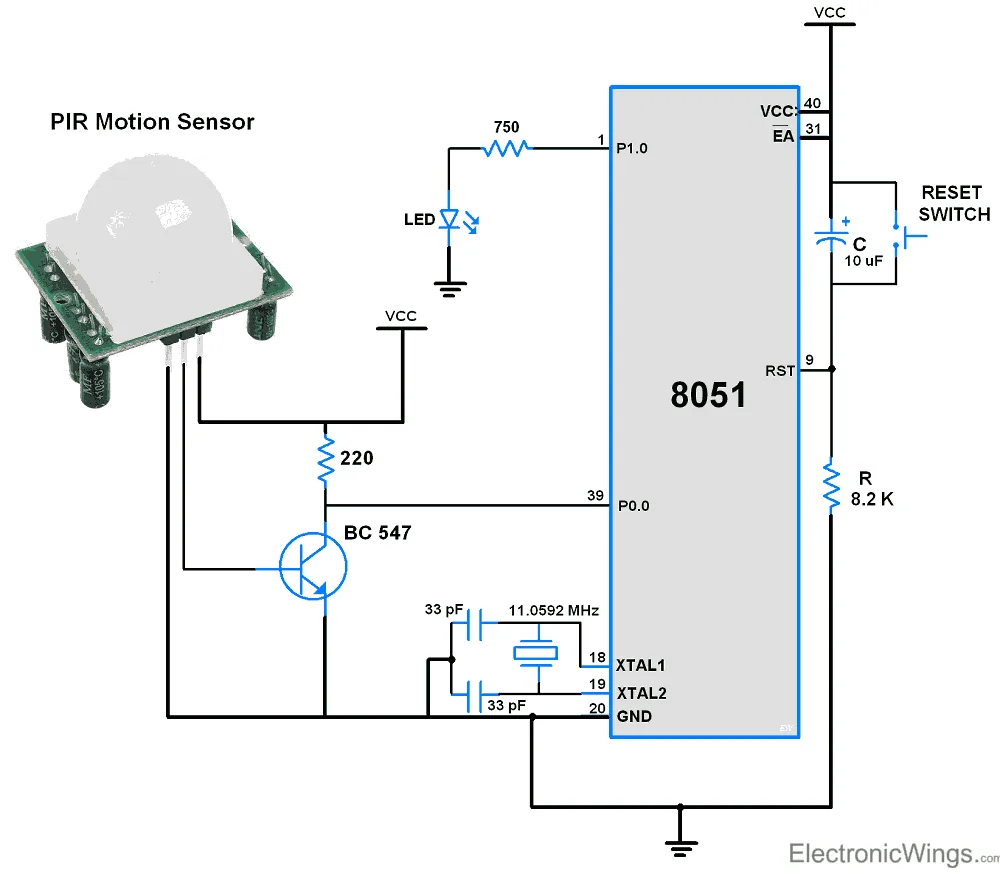
Image source: Web (Bing) / circuitdiagram.co (Web image (fair-use with source credit))
Radar-based detection sends out radio waves and measures their reflection. Some solar cameras combine radar with PIR for better accuracy. Radar doesn't rely on heat signatures, so it can detect vehicles more reliably at night.
The key takeaway: if you want solar cameras to detect vehicles specifically, you need a model with AI classification built in. PIR alone won't cut it.
The 5 Variables That Decide Whether Vehicle Detection Works for You
Whether your solar security camera actually detects vehicles well comes down to five things.
1. Solar power availability. If the panel gets consistent sun, the battery stays charged, and the camera runs its AI processor normally. In cloudy regions, solar autonomy drops to 2 to 3 days instead of 4.
Low battery means the camera may fall back to basic motion detection.
2. AI processing vs PIR-only. This is the biggest factor. If your camera has AI classification, it can identify vehicles.
If it only has PIR, it can't. Simple as that.
3. Placement and field of view. Camera angle matters a lot. A 110° field of view aimed at your driveway captures vehicles well.
Same camera pointed at the street captures every passing car and floods your phone with noise.
4. Night vision quality. Standard IR night vision helps, but it's grayscale and often blurry at distance. Color night vision with built-in spotlights does a much better job identifying vehicles after dark.
5. Internet connectivity. AI processing happens on-device or in the cloud. If your camera needs Wi-Fi and the connection drops, you lose vehicle-specific alerts. 4G LTE solar cameras avoid this problem entirely by using cellular data instead.
PIR-Only Solar Cameras vs AI-Powered Solar Cameras: Two Very Different Experiences
Here's where the decision really branches. These two camera types deliver wildly different results when a vehicle shows up.
What a PIR-only solar camera does when a car pulls in:
- The PIR sensor detects heat movement
- The camera starts recording
- You get a generic "motion detected" push notification
- The footage shows a car, but you'll never know it was one until you check manually
What an AI-powered solar camera does when a car pulls in:
- PIR or radar detects the motion
- The onboard AI processor classifies the object as a vehicle
- You get a notification that says "vehicle detected" or similar
- The camera logs the event separately from person or animal alerts
For property owners who want specific alerts about vehicle activity, the AI-powered option is the only real choice. Per FCC regulations, all wireless security cameras must comply with radio emission standards, regardless of detection type.
If you're just looking for basic motion awareness on a budget, a PIR-only solar camera does the job. But don't expect vehicle-specific intelligence from it.
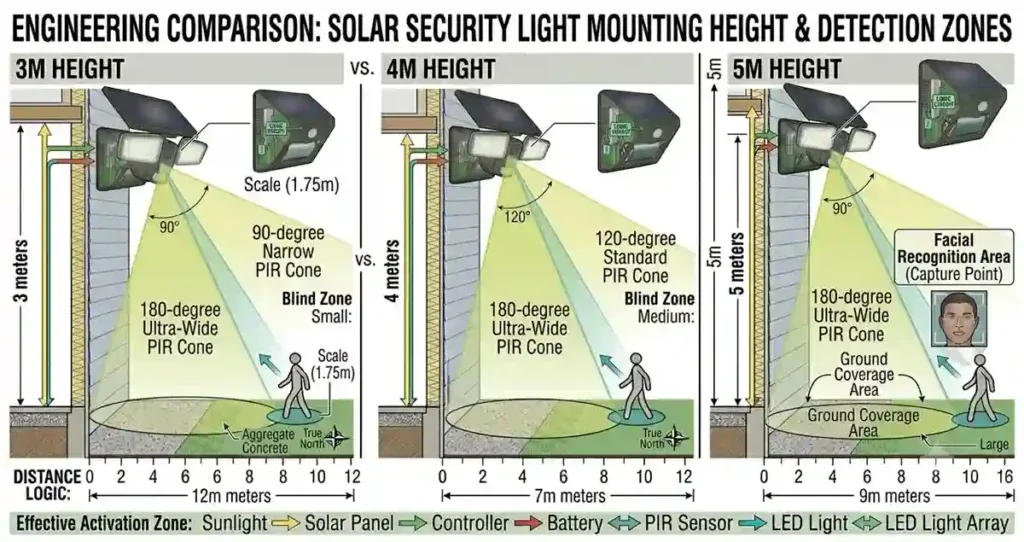
Image source: Bing (Web (fair-use with source credit))
Where Solar Vehicle Detection Breaks Down: Placement, Power, and Night Hours
Even the best AI solar camera can miss vehicles if you haven't thought through three failure points.
Placement problems. If your camera sits too high, it may look over vehicles entirely. If it's aimed too wide, it captures the street and generates nonstop false alerts. The sweet spot is usually 8 to 10 feet off the ground, angled down toward your driveway entry.
Solar power limitations. In northern latitudes, winter cuts solar output by 30% to 50%. If the battery drops below a certain threshold, some cameras switch to a low-power mode that disables AI processing. You're back to basic motion detection with no vehicle classification.
Night detection gaps. Standard IR night vision covers about 15 to 30 meters, but it's grayscale and often blurry at distance. A moving vehicle at 50 feet in total darkness can be hard for even AI to classify. Color night vision with spotlights fixes this, but it draws more battery power.
None of these issues are dealbreakers. They're just variables you need to account for when choosing and positioning your camera.
Mistakes to Avoid When You're Relying on a Solar Camera to Catch Vehicles
Several mistakes keep showing up in verified buyer feedback. Here are the ones that actually cost you vehicle detection.
Expecting license plate reading from a standard solar camera. Most solar security cameras detect that a vehicle is present. They don't reliably capture readable plate numbers, especially at night or distance. A dedicated LPR camera is a completely different device with specialized lenses and controlled IR lighting.
Skipping detection zone configuration. If you don't set a detection zone, your camera flags every car on the public street. You'll be drowning in alerts within a day and probably delete the app before week two.
Ignoring solar panel angle. A misangled panel loses 20% to 40% of output. Over weeks, that chronic undercharging degrades the battery and weakens AI processing capability. Tilt the panel 10° to 20° above your local latitude for best results.
Buying budget solar cells. Low-quality panels can lose up to 30% efficiency within 12 months. Aggregate reviews report that cheap cameras often need panel replacement inside a year, defeating the whole point of going solar.
Assuming all solar cameras classify vehicles. Only AI-powered models with vehicle classification can do this. PIR-only cameras detect motion but can't tell you a vehicle triggered it.
Solar Camera Vehicle Detection: Frequently Asked Questions
Can solar security cameras detect vehicles at night?
Yes, but performance depends heavily on the model. Solar cameras with AI classification, color night vision, and built-in spotlights do the best job after dark. Standard IR-only models capture grayscale footage that's often too blurry for AI to classify reliably.
If nighttime vehicle detection matters to you, look for a camera with color night vision and supplementary IR range of at least 20 meters.
Do I need Wi-Fi for a solar camera to detect vehicles?
No, not necessarily. 4G LTE solar cameras use cellular data instead of Wi-Fi for connectivity. This makes them ideal for remote properties, farms, and construction sites with no internet access. AI vehicle detection runs on the camera's onboard processor.
The internet connection is only needed to push alerts to your phone.
How far can a solar security camera detect a moving vehicle?
Most PIR-based solar cameras detect motion within 10 to 15 meters, which is roughly 33 to 50 feet. AI classification range depends on resolution and night vision quality. Manufacturer specs for mid-range solar cameras typically list detection zones up to about 20 meters in daylight conditions.
Can a solar security camera read a license plate?
Generally, no. License plate recognition requires specialized LPR cameras with specific lens configurations, high resolution (usually 4K), and controlled lighting. Standard solar security cameras, even AI models with vehicle detection, aren't designed for plate reading.
You'd need a dedicated LPR unit with supplementary IR and a more robust power source.
How long can a solar security camera run without direct sunlight?
Quality solar cameras maintain 2 to 4 days of operation on battery alone after a full charge. Budget models with smaller lithium-ion batteries may only last 1 to 2 days. LiFePO4 battery models handle deep cycles better and retain capacity longer.
During extended cloudy periods, some cameras drop to low-power mode and disable AI processing.
Do solar security cameras with vehicle detection require a subscription?
Many AI solar cameras offer free vehicle detection and push notifications without any subscription. Cloud storage for recorded footage typically requires a paid plan of $2 to $10 per month. Some cameras store footage locally on a MicroSD card (up to 128GB or 256GB) with no ongoing fees.
Check the manufacturer's terms before you buy.
Your Decision Guide: Which Solar Security Camera Setup Actually Detects Vehicles
The right setup depends on what you're protecting and where it's located.
Driveway monitoring at home: Choose an AI-powered solar camera with 2K or higher resolution and color night vision. Set the detection zone to cover your driveway entry only. Mount the camera 8 to 10 feet high, angled downward.
Budget range: $100 to $200 per unit.
Remote property with no Wi-Fi: Go with a 4G LTE solar camera that has onboard AI vehicle classification. You'll need a SIM card with a data plan ranging from 100MB to 500GB monthly, depending on recording frequency. Budget range: $150 to $250 per unit.
Parking lot or multi-space area: A solar PTZ camera with vehicle tracking gives you the widest coverage. If the area is large, two fixed AI solar cameras often outperform a single PTZ unit.
Construction site: Deploy multiple AI solar cameras with cellular connectivity. Mount them high for visibility across the site. Enable vehicle-specific alerts and disable person alerts if vehicles are the main concern.
Before you deploy anything, verify three checkpoints:
| Checkpoint | What to Confirm |
|---|---|
| Solar panel angle | 10° to 20° above local latitude |
| Detection zone | Isolated to your monitored area, not the public street |
| AI vehicle mode | Vehicle classification enabled in the camera app settings |
If those three things are right, your solar security camera will detect vehicles the way you actually need it to.