Do Solar Motion Lights Work In Winter: Cloudy Days Explained
Yes, solar motion lights work in winter and on cloudy days, but they may shine less brightly or for fewer hours.
Solar motion lights can still be useful when sunlight is weak. Their performance depends on panel placement, battery size, daylight hours, snow cover, and the quality of the light. After testing and troubleshooting outdoor solar lights in changing weather, I have found that small setup details often matter more than the season itself. This guide explains why solar motion lights work in winter or on cloudy days, when they struggle, and how to keep them reliable.

How solar motion lights work
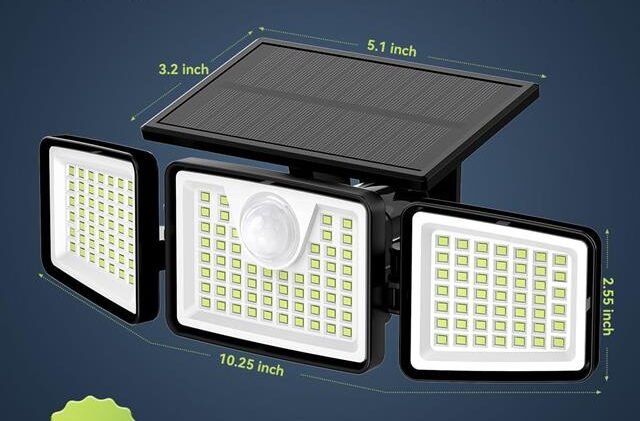
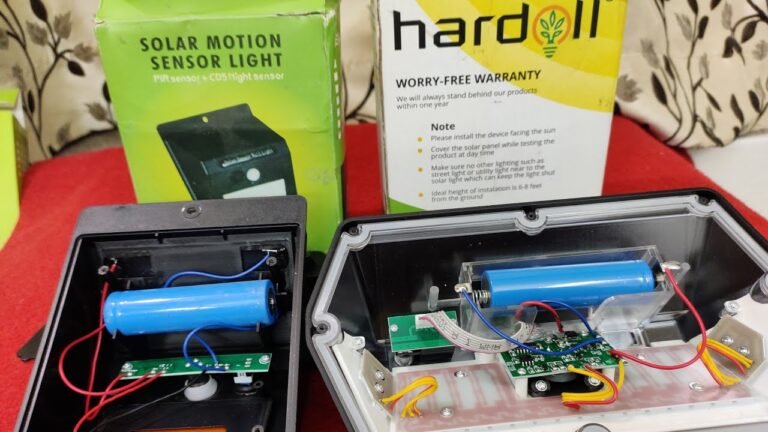
A solar motion light has four main parts:
• A solar panel collects sunlight and changes it into electrical energy.
• A rechargeable battery stores that energy for use after dark.
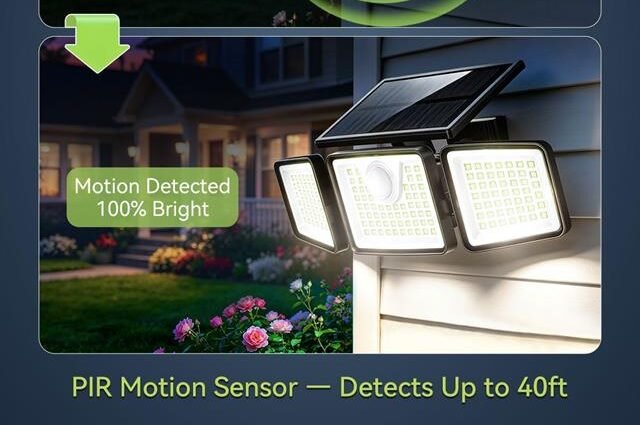
• A motion sensor detects movement near the light.
• LED bulbs use the stored power to produce light.
The panel does not need bright, direct sun every minute. It can also collect some energy from indirect daylight. That is why solar motion lights work in winter or on cloudy days, although charging is usually slower.
Think of the solar panel as a small water cup. A clear summer day may fill the cup quickly. A short winter day or cloudy sky may fill it only partway. The light can still work, but it has less stored energy to use at night.
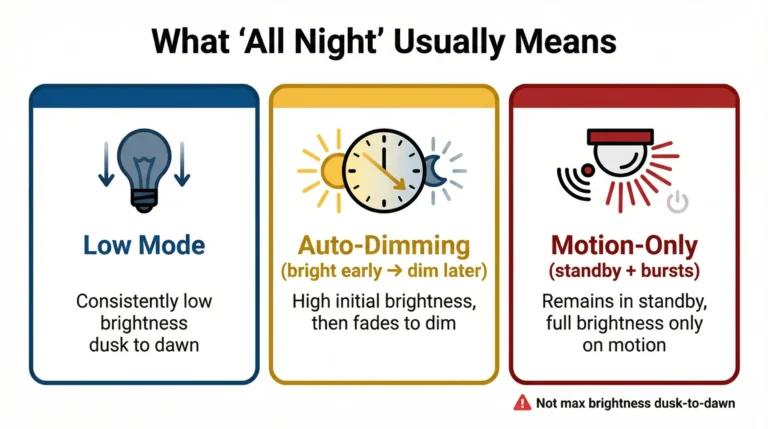
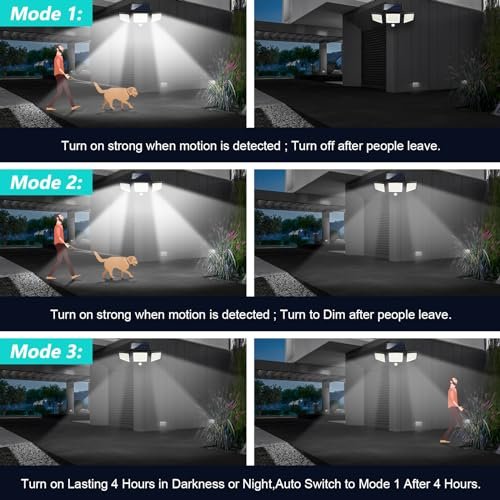
Most solar motion lights stay off until the sensor detects movement. This saves power and helps the battery last through the night. A model with a low-power standby mode usually performs better than one that stays fully lit for hours.

Do solar motion lights work in winter?
Yes, solar motion lights work in winter, but their run time can drop. Winter brings shorter days, weaker sun angles, cloud cover, snow, and colder temperatures. Each of these factors can reduce the energy stored in the battery.
The panel may receive enough light to power a few motion events. However, it may not collect enough energy for a full night of repeated use. This is most common in northern states, areas with long winter nights, and locations shaded by trees or buildings.
Cold weather affects the battery more than the solar panel. Lithium batteries often handle cold better than some older battery types, but all batteries can lose usable capacity at low temperatures. A light that works for eight hours in July may work for only three to five hours during a cold winter night.
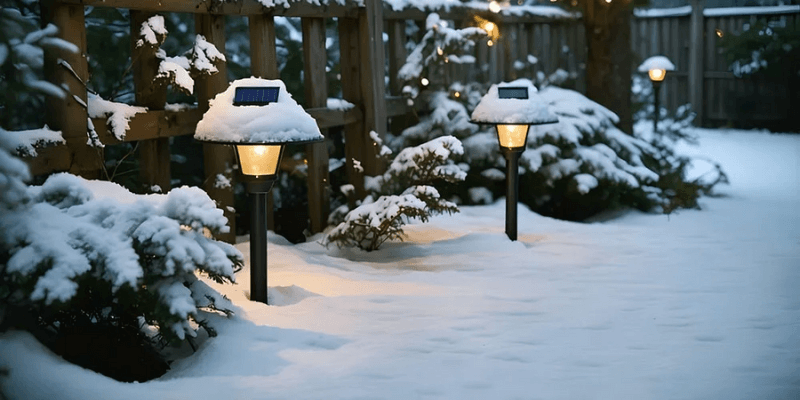
Snow creates another problem. A thin layer on the panel can block much of the incoming light. Even a clean panel may charge slowly when the sun stays low near the horizon.
In my own winter checks, the lights that worked best had three traits: a wide panel, a large battery, and a motion sensor set to a short lighting period. Lights with tiny panels often looked fine in warm weather but failed after several cloudy winter days.
Do solar motion lights work on cloudy days?
Yes, solar motion lights work on cloudy days because solar panels can use diffuse light. Clouds reduce the amount of solar energy that reaches the panel, but they do not block all daylight.
A thick storm cloud may reduce solar output far more than a thin, bright cloud layer. The exact result depends on the panel type, the weather, and the number of daylight hours. A cloudy day in June may still provide more charging time than a sunny day in December.
This explains why solar motion lights work in winter or on cloudy days but may not stay bright all night. The light can charge during the day, yet the battery may not reach its full capacity.
Cloudy weather becomes a problem after several days in a row. The battery may begin each night with less stored energy than the night before. Once the charge drops too low, the light may become dim, shut off early, or stop turning on.
The motion sensor still works during cloudy weather. It does not need sunlight to detect movement. The real issue is whether the battery has enough energy to power the LEDs.
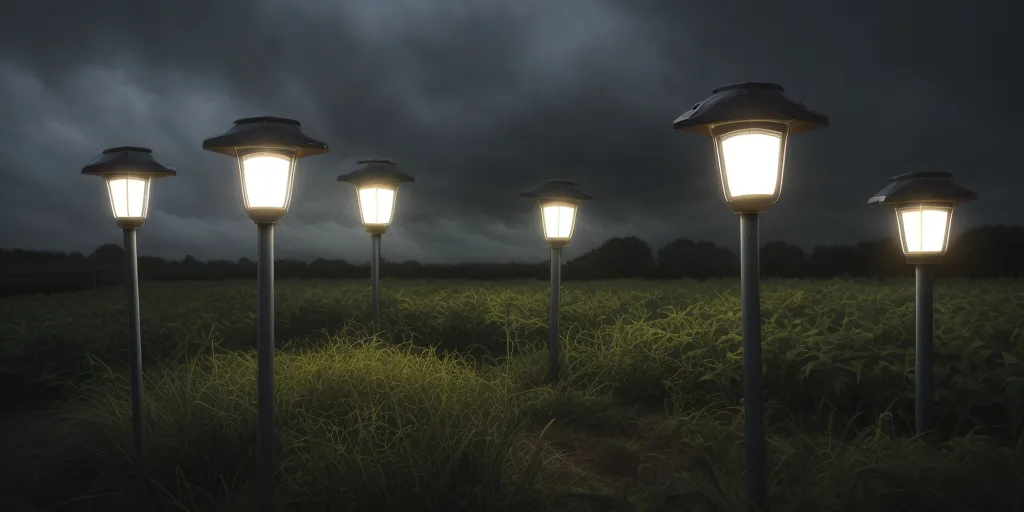
What affects winter and cloudy-day performance?
Several conditions decide how well solar motion lights work in winter or on cloudy days. Two homes on the same street may see very different results because their panels receive different amounts of daylight.
Panel location
Place the panel where it can see the open sky for most of the day. A south-facing position often works well in the United States, but the best direction depends on your location and season.
Avoid these common obstacles:
• Roof overhangs
• Tall fences
• Trees and branches
• Neighboring buildings
• Porch ceilings
• Outdoor decorations
A panel that receives four hours of clear light may outperform a panel that faces the sun but stays shaded for most of the day.
Panel angle
A tilted panel usually collects more useful light than a flat panel. The correct angle varies by location, but a modest tilt can help water, leaves, and snow slide away.
Follow the manufacturer’s mounting instructions. Do not force a panel into a sharp angle if the bracket is not designed for it.
Battery capacity
Battery capacity is measured in milliamp hours or watt-hours. A larger battery can store more energy, but it also needs more sunlight to charge fully.
A large battery paired with a very small panel may not perform well. The panel and battery must be matched. Look for product details that explain expected lighting time and charging conditions.
Light brightness
A bright light uses more power. A 1,000-lumen light may provide strong security lighting, but it can drain its battery faster than a 300-lumen model.
For a walkway, steps, or driveway edge, moderate brightness may be enough. Choose the output for the job rather than buying the brightest light available.
Motion settings
Motion settings have a major effect on battery life. A light that stays on for 60 seconds after every trigger may drain quickly in a busy yard.
Use these settings when available:
• Short lighting time
• Medium brightness
• Lower motion sensitivity when practical
• Dim standby mode instead of full-time brightness
These changes help explain why solar motion lights work in winter or on cloudy days for some users but fail for others.

How long do solar motion lights last in winter?
There is no single answer because weather and design vary. A well-placed light may run through the night after a sunny winter day. After several dark, cloudy days, it may operate for only a few hours.
Typical results may look like this:
• Sunny winter day: Several hours of useful light, often with normal motion performance
• Bright cloudy day: Shorter run time and less frequent strong output
• Several cloudy days: Dim light, early shutoff, or limited motion events
• Snow-covered panel: Little or no charging until the panel is cleared
Treat these figures as general examples, not guarantees. Product claims often come from ideal laboratory conditions. Real yards have shade, dust, low temperatures, and uneven weather.
Solar motion lights work in winter or on cloudy days best when they are used for brief security events rather than continuous lighting. If you need all-night illumination, a wired fixture or a solar system with a separate large panel and battery may be a better choice.
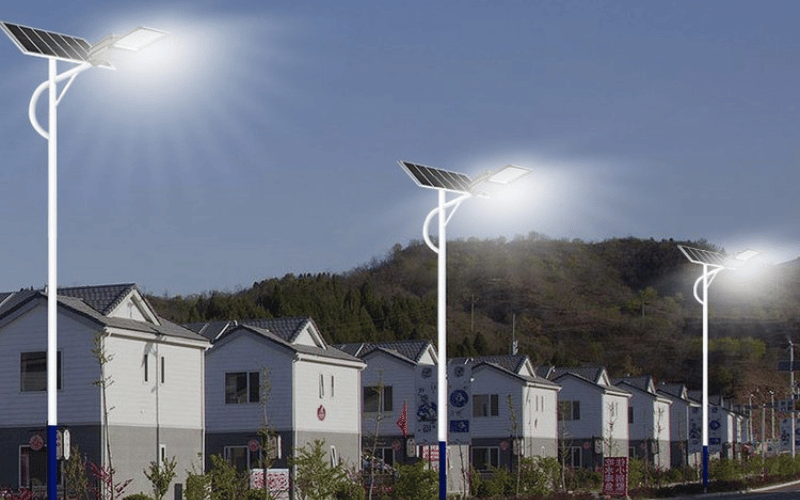
How to improve solar motion lights in winter
You can make a large difference with simple care. Before winter arrives, inspect the panel, battery, sensor, and mounting bracket.
-
Clean the solar panel with a soft, damp cloth. Dust, pollen, and bird marks can reduce charging.
-
Remove snow as soon as it is safe. Use a soft cloth or a gentle brush, not a metal tool.
-
Move the panel away from seasonal shade. The sun’s path changes during winter, so a summer location may no longer work well.
-
Reduce the light duration. A 10 to 20-second setting often saves more energy than a long setting.
-
Check the battery. Replace it with the same type and voltage listed by the manufacturer.
-
Inspect the seal and housing. Cracks or water inside the unit can damage the battery and circuit board.
-
Test the light after sunset. Cover the panel during the day to simulate darkness, then walk through the detection area.
One mistake I often see is mounting the panel under a porch roof because it keeps the light neat and dry. That location may protect the fixture, but it can leave the panel without enough daylight. A slightly exposed, clear location usually gives better winter results.
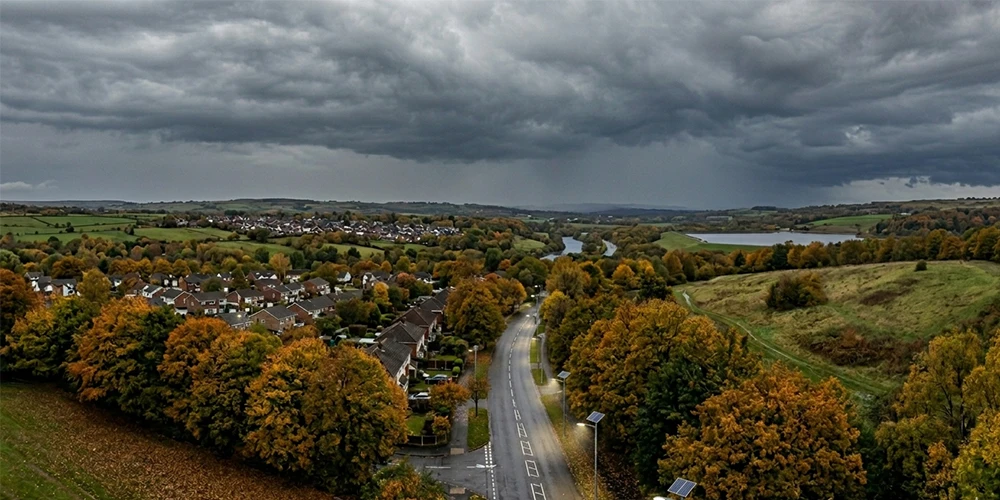
How to choose a solar motion light for cloudy climates
If you live in a rainy or cloudy region, shop for performance features rather than appearance alone. The best solar motion lights for cloudy weather usually have a larger panel, an efficient LED system, and a battery designed for outdoor use.
Look for:
• A separate or adjustable solar panel
• A lithium-ion or lithium iron phosphate battery, when suitable for the product
• A clear charging indicator
• A weather rating of at least IP65 for many exposed locations
• Adjustable motion range and lighting time
• A replaceable battery
• A wide solar panel surface
• A manual charging option on some models
A separate panel gives you more freedom. You can place the light near a doorway while placing the panel in a sunnier area. This design often performs better than an all-in-one fixture mounted in a shaded spot.
Do not judge quality by lumen claims alone. Ask how long the light runs at its stated brightness and whether that figure applies after a full charge. Reliable product instructions should explain charging time, battery type, operating temperature, and weather limits.

Solar motion lights versus wired lights in winter
Solar lights are easy to install and can work well for paths, sheds, gates, and driveways. They do not need trenching or an electrical outlet. They also cost less to operate because sunlight supplies their energy.
Wired lights offer more consistent power. They are often a better choice for areas that need bright light all night, such as a large driveway or commercial walkway.
Here is a simple comparison:
• Solar motion lights: Easy to install, low operating cost, but affected by weather and shade
• Plug-in lights: Reliable power, but they need an outlet and protected cable
• Hardwired lights: Strong and dependable, but installation may require electrical work
• Solar lights with remote panels: More flexible and better for shaded locations, but often more expensive
Solar motion lights work in winter or on cloudy days when their limits match your needs. They are not a perfect replacement for every wired fixture.
Common problems and practical fixes
A solar motion light that stops working may not be broken. Start with the simplest causes.
The light does not turn on
Check whether the panel is still in daylight. Many lights have a sensor that prevents daytime operation. Cover the panel with your hand or a dark cloth to test the night mode.
Then check the power switch. Some models ship with the switch turned off.
The light is dim
Clean the panel and inspect the battery. A weak battery, shade, or a dirty lens can reduce brightness.
Also check whether the light is set to a low-power mode. Some products dim after repeated motion events to protect the battery.
The light turns off early
This usually means the battery did not receive enough charge or has lost capacity. Several cloudy days, snow, or cold temperatures can cause this result.
Move the panel to a brighter location and shorten the lighting time. If the problem continues in clear weather, replace the battery if the design allows it.
The light turns on too often
Wind-blown branches, pets, passing cars, and warm air from vents can trigger some motion sensors. Aim the sensor away from busy areas and lower its sensitivity.
These small corrections often restore the way solar motion lights work in winter or on cloudy days.
Are solar motion lights worth using in winter?
For many homes, yes. They are useful as local security lights and do not need to provide the same output as a main floodlight.
They work well for:
• Front doors
• Garden gates
• Walkways
• Garbage areas
• Sheds
• Steps
• Small driveways
They may be less suitable for large yards or places that need steady light for many hours. In those cases, consider a hybrid system with solar charging and backup power.
The best approach is to view solar motion lights as rechargeable outdoor tools. They store energy when conditions allow it, then spend that energy when movement matters. With realistic expectations and good placement, solar motion lights work in winter or on cloudy days far more reliably than many people expect.
Frequently Asked Questions
Do solar motion lights work in winter?
Yes, solar motion lights work in winter, but short days, low sun, snow, and cold temperatures can reduce charging and run time. Good placement and a fresh battery help maintain performance.
Do solar motion lights charge when it is cloudy?
Yes, solar panels can charge from diffuse daylight. Charging is slower under heavy clouds, so the light may not stay on as long at night.
Will snow stop a solar motion light from working?
Snow covering the panel can block most charging. Clear the panel gently after snowfall, and make sure the fixture is mounted where snow does not collect easily.
Should I turn off my solar light during cloudy weather?
You usually do not need to turn it off. Instead, reduce the brightness or lighting duration if the model allows it, so the battery can last through periods of weak sunlight.
What is the best battery for a winter solar light?
Many outdoor models use lithium-ion batteries because they offer good energy density and often perform better than older battery types. Always use the battery type and voltage approved by the manufacturer.
How many hours of sunlight do solar motion lights need?
Many need several hours of daylight for a strong charge, but the exact time depends on the panel, battery, weather, and light settings. Direct, unobstructed daylight gives the best result.
Conclusion
Solar motion lights work in winter or on cloudy days, but they need enough daylight to refill their batteries. Winter sun, cloud cover, snow, shade, cold, and long lighting times can all reduce performance.
Place the panel in an open area, keep it clean, clear snow quickly, use a short motion timer, and replace a worn battery. If your property needs bright light all night, choose a wired or hybrid option instead. Put these tips into practice before the next cloudy week, and explore more outdoor lighting guides to build a safer, more efficient home.