Can A Solar Water Pump Run Without Batteries: Explained
Yes, a solar water pump can run without batteries when sunlight provides enough power for its motor.
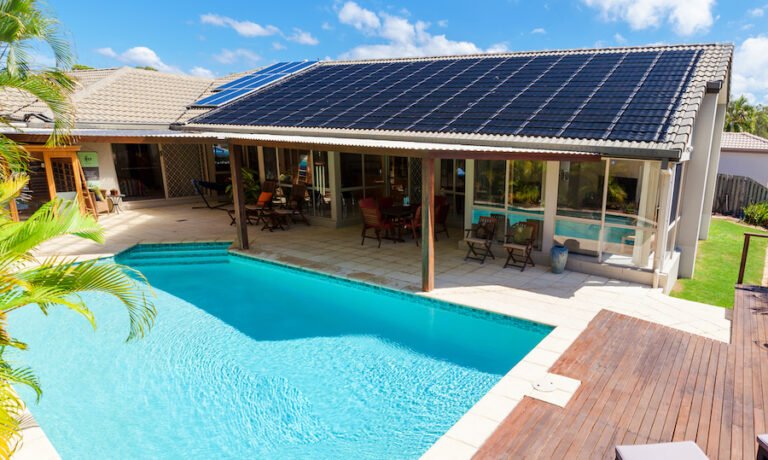
Can a solar water pump run without batteries? Yes, and this setup is common for farms, livestock tanks, gardens, homes, and remote water systems. The key is matching the solar panels, pump, and controller to the water demand and available sunlight.
This guide explains how battery-free solar pumping works, when it makes sense, what happens during cloudy weather, and how to design a reliable system. It also covers common mistakes that can reduce flow or damage equipment.
Can a solar water pump run without batteries?
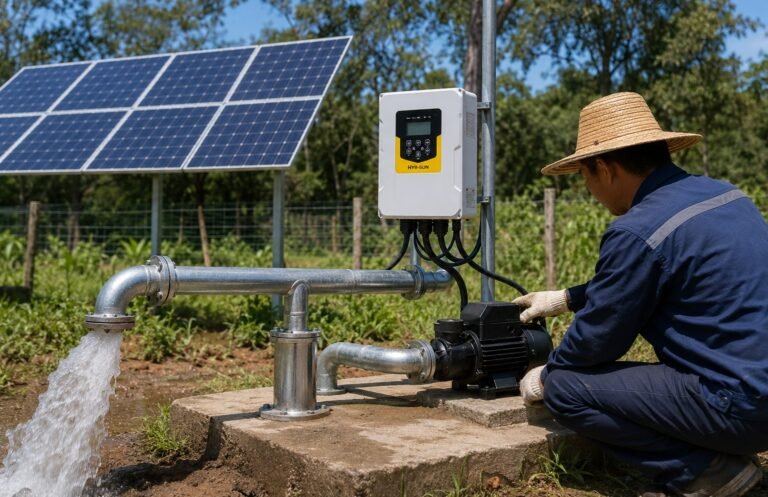
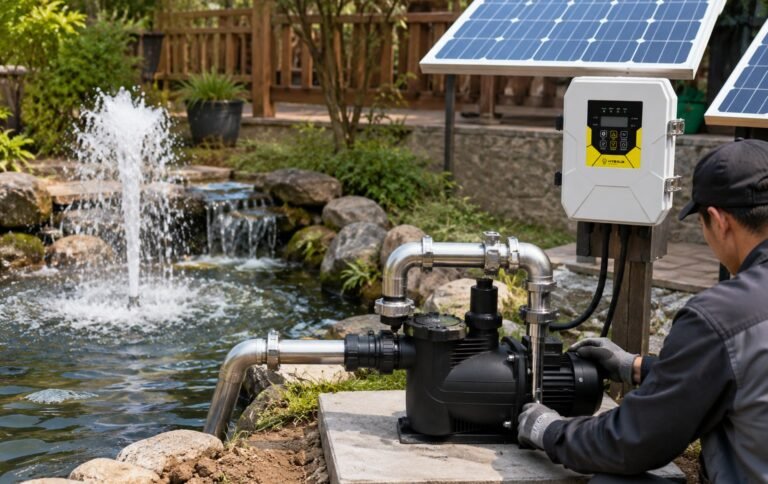
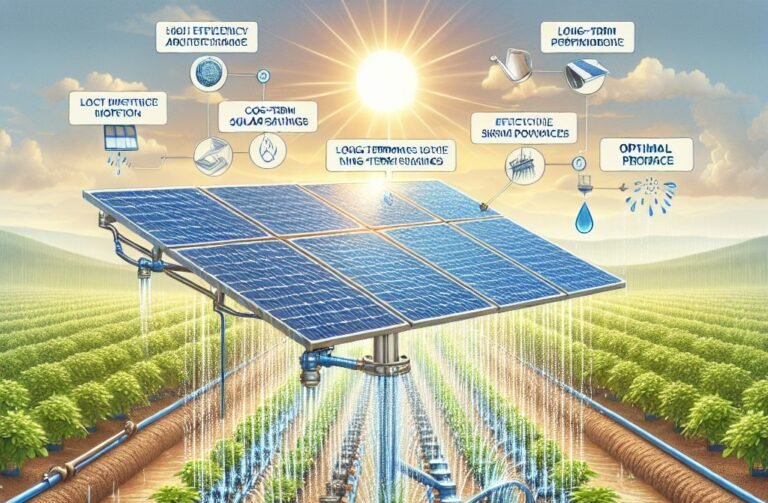
A solar water pump can run without batteries by using electricity from solar panels in real time. The panels send power to a pump controller, which then supplies the pump motor.
When the sun is bright, the pump may run at full speed. When clouds pass over, the controller reduces the pump speed or the pump may stop for a short time.
In a battery-free system, water storage often replaces electrical storage. For example, the pump can fill a tank during the day. You can then use that stored water at night or during cloudy weather.
Can a solar water pump run without batteries at night? Not usually. Standard solar panels produce little or no useful power after sunset, so the pump needs another energy source to operate at night.
A battery-free system works best when:
- Water is needed mainly during daylight.
- A storage tank can hold enough water.
- The pump can tolerate changing power.
- The water source and destination are close enough for practical pipe installation.
- The area receives steady sunlight.
How a battery-free solar water pump works
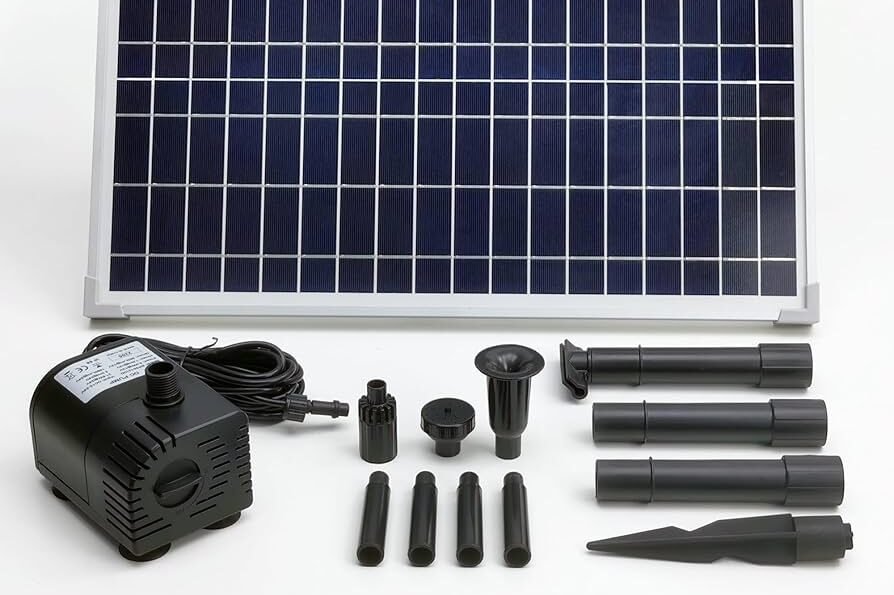
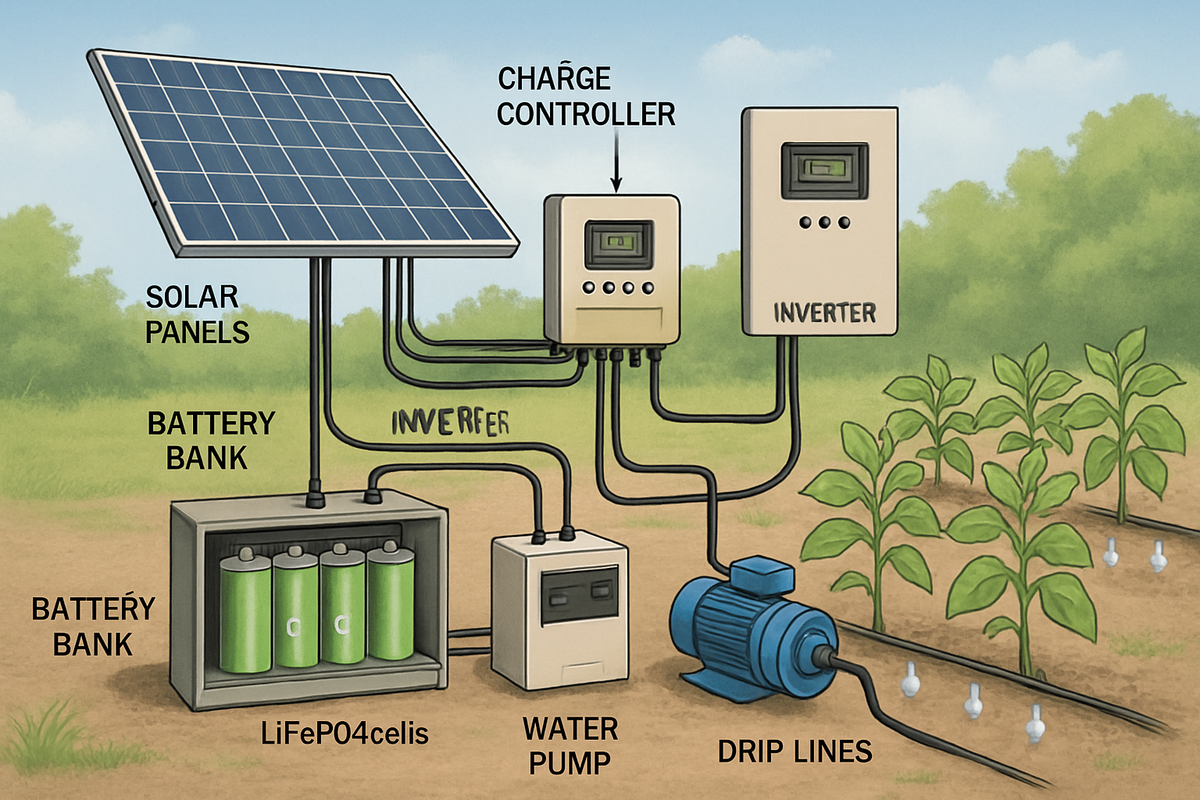
A basic battery-free solar pumping system has four main parts:
- Solar panels produce direct current electricity.
- A solar pump controller manages the power.
- The pump motor moves water.
- Pipes and a tank carry and store the water.
Some systems also use sensors. A dry run sensor stops the pump if the well or tank level becomes too low. A full tank sensor stops pumping when the storage tank is full.
The controller is very important. Solar panel voltage and current change throughout the day. A good controller helps the pump use the available energy more effectively. Many modern controllers use maximum power point tracking, often called MPPT.
MPPT helps the panels operate near their best output as sunlight changes. Without a suitable controller, the pump may start and stop often, run slowly, or fail to start in weak sunlight.
There are two common battery-free designs.
Direct solar pump system
A direct system sends solar power straight to the pump controller. The pump runs only when the panels produce enough energy.
This is simple and has fewer parts. It also has fewer maintenance needs because there is no battery bank to inspect or replace.
Solar pump with water storage
This system pumps water into an elevated or ground-level tank. The tank acts like a water battery.
A raised tank can also provide water pressure through gravity. This may reduce the need for a pressure pump in some homes and small farms.
Source: anernstore.com
What happens when sunlight changes?
Solar output changes during the day. It is usually strongest around midday and weaker in the morning, late afternoon, and during cloudy weather.
A battery-free solar water pump does not always provide the same flow rate. Its performance may change in these conditions:
- Light cloud cover may reduce the flow.
- Heavy clouds may stop the pump.
- Morning and evening sunlight may produce slow pumping.
- Dust or shade on the panels may reduce output.
- High temperatures can lower panel performance.
- Seasonal changes can affect daily water production.
A quality controller can handle some of these changes. However, it cannot create power that the panels do not receive.
This is why system designers often size the pump for the weakest expected solar conditions, not only for a bright summer day. They may also install a larger tank to provide a safety margin.
For example, suppose a livestock system needs 500 gallons of water each day. A pump may produce 700 gallons on a clear day but only 350 gallons during a cloudy period. A tank that stores several days of water can prevent a shortage.
Does the pump stop when clouds appear?
It may. Some controllers keep the pump running at a lower speed when sunlight drops. Other systems stop the pump until enough power returns.
Frequent starting and stopping can stress some motors. A proper controller can use soft starting and speed control to reduce this stress.

Source: hzkuvo.com
Benefits of running a solar pump without batteries
Can a solar water pump run without batteries and still be reliable? Yes, if the system is designed around water storage and local sunlight.
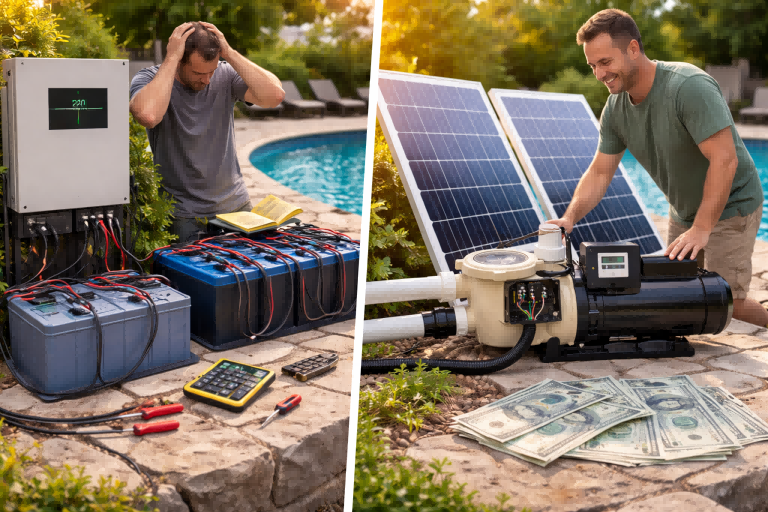
The biggest benefit is lower cost. Batteries can represent a large part of an off-grid solar system budget. Removing them reduces the initial purchase price.
A battery-free system also has fewer maintenance tasks. Batteries may need ventilation, cleaning, monitoring, and replacement. Lead acid batteries often last only a few years, while a well-maintained solar panel can work for decades.
Other benefits include:
- No battery charging losses.
- No battery replacement cost.
- Less risk from leaking battery acid.
- Fewer electrical parts.
- Easier maintenance in remote locations.
- Lower environmental impact.
- Strong performance for daytime irrigation and livestock use.
A direct solar pump can also be more efficient than a system that stores electricity first. Power moves from the panels to the motor without passing through a battery charging cycle.
Still, battery-free pumping is not perfect. The system may not supply water at night unless it uses a tank or another power source.
The most practical design is often “pump by day, store water for later.” Water tanks are usually easier to manage than large battery banks, especially when the main need is water rather than electricity.

Source: amazon.com
Limitations of a battery-free solar water pump
Can a solar water pump run without batteries in every situation? No. The answer depends on the pump size, water demand, sunlight, and required operating hours.
A battery-free system may not suit a home that needs steady water pressure after sunset. It may also be unsuitable for a deep well with a large pump and a small solar array.
Common limitations include:
- No regular pumping after dark.
- Lower flow during storms and winter.
- Possible pump stops during heavy cloud cover.
- Need for a properly sized water tank.
- Reduced output when panels are shaded.
- Limited pressure unless the tank is elevated or a pressure system is added.
- More careful system sizing.
Water quality and well depth also matter. A pump must overcome static lift, friction in the pipes, and the required outlet pressure. This total is called total dynamic head.
A pump that looks powerful on paper may produce very little water when lifting water from a deep well through a long, narrow pipe. Always check the pump curve and compare it with the total head.
Battery-free pumping versus battery-powered pumping
A battery-powered system stores electricity for later use. A battery-free system usually stores water instead.
Battery power may be better when:
- Water is needed at night.
- The system must maintain constant pressure.
- The pump has to run during long cloudy periods.
- A water tank is not practical.
- The pump must start automatically at any hour.
Battery-free pumping may be better when:
- Water use is predictable.
- A tank can store one or more days of supply.
- The pump operates mainly during daylight.
- The site is remote.
- Low maintenance is a priority.

Source: ebay.com
How to size a solar water pump without batteries
Correct sizing is the most important part of a battery-free solar pump project. A system that is too small may not provide enough water. A system that is too large may waste money.
Start by calculating daily water demand. Include people, animals, crops, cleaning, and seasonal use.
Then measure the total pumping head. This includes:
- The vertical distance from the water level to the tank.
- The height of the tank outlet.
- Pipe friction.
- Filters and valves.
- Required pressure at the final outlet.
Next, review the local solar resource. Solar installers often use peak sun hours for this calculation. Peak sun hours are not the same as total daylight. They represent the equivalent number of hours when sunlight produces about 1,000 watts per square meter.
A simple planning process looks like this:
- Estimate daily water use.
- Measure the total dynamic head.
- Select a pump that meets the required flow at that head.
- Check the pump’s voltage and power range.
- Size the solar array to meet daily water needs.
- Add a controller made for the selected pump.
- Choose a tank that covers cloudy periods.
- Add level sensors and dry run protection.
- Test flow during different times of day.
For a reliable system, do not size the panels only for the motor’s rated power. The panels must provide enough energy for the full daily water volume.
A professional installer can use pump curves, site data, pipe calculations, and seasonal solar records to create a more accurate design.
A simple example
Imagine a small farm needs 600 gallons each day. The water must rise 80 feet from a well to a tank.
A pump may meet this need with five to seven hours of useful sunlight, depending on its efficiency and the panel size. A 1,000 gallon tank could provide extra water during a cloudy day.
The exact panel and pump size must come from the manufacturer’s performance data. A simple wattage comparison is not enough.

Source: amazon.com
Practical tips for reliable battery-free pumping
Can a solar water pump run without batteries for many years? It can, but good installation and regular checks matter.
Keep the solar panels clean and free from shade. Even a small tree branch or new building can reduce energy production during important morning or afternoon hours.
Use the correct wire size. Long cable runs with undersized wire can cause voltage loss. That loss may prevent the motor from starting or make the controller shut down.
Protect the pump from dry running. A submersible pump can suffer serious damage if it operates without enough water for long periods.
Useful maintenance steps include:
- Inspect panels every few months.
- Remove dust, leaves, and bird waste.
- Check pipe joints for leaks.
- Clean intake screens and filters.
- Test tank level sensors.
- Watch for unusual pump noise.
- Check cable connections for corrosion.
- Confirm that the pump stops when the tank is full.
- Review water output across the seasons.
One common mistake is placing the tank too low and expecting strong household pressure. A tank provides more gravity pressure when it sits higher above the outlet. If that is not possible, a separate pressure pump may be needed.
Another mistake is selecting a pump before measuring the well depth. Pumping requirements can change greatly as the water level drops during a dry season.

Source: youtube.com
When should you add batteries or backup power?
A battery is useful when water must be pumped at night or during extended cloudy weather. It may also help a system run a pressure pump when water demand changes quickly.
However, adding batteries is not always the best first solution. A larger water tank, better panels, or a more efficient pump may solve the problem at a lower long-term cost.
Consider a backup option if:
- The property needs water every hour.
- The pump supplies a fire protection system.
- The home has no practical tank location.
- Cloudy weather lasts for several days.
- Water demand is high in the evening.
- The system must provide constant pressure.
Possible backup sources include:
- A battery bank.
- A grid connection.
- A generator.
- A small wind turbine.
- A backup AC pump.
- A larger water storage tank.
Safety deserves attention too. Solar pump wiring can involve high DC voltage. Use proper disconnects, grounding, surge protection, and weather-rated equipment. Electrical work should follow local codes and be completed by a qualified professional when required.

Source: amazon.com
Frequently Asked Questions About Can a solar water pump run without batteries?
Can a solar water pump run at night without batteries?
Usually, no. Solar panels do not provide useful power at night, so the pump needs a water tank, battery, generator, or grid connection for nighttime operation.
Can a solar water pump work on cloudy days?
Yes, it may work during light cloud cover if the panels still produce enough power. Heavy clouds can reduce flow or stop the pump until sunlight improves.
Is a battery-free solar pump good for a well?
Yes, many wells use battery-free submersible pumps. The pump must be sized for the well depth, water level, pipe length, and daily water demand.
How do I get water at night from a solar pump?
Use the pump during the day to fill a storage tank. An elevated tank can supply water by gravity, while a pressure pump can provide stronger flow when needed.
Does a solar pump need a special controller?
Most battery-free solar pumps need a controller designed for solar input. The controller manages changing voltage, supports motor starting, and may provide dry run and full tank protection.
How long can a solar water pump last?
A quality pump can last many years when it receives clean water and proper maintenance. Actual life depends on motor quality, sand content, operating hours, water chemistry, and protection from dry running.
Conclusion
Can a solar water pump run without batteries? Yes, and it can be a smart choice when the pump operates during daylight and fills a properly sized water tank.
The main tradeoff is simple: you save money and maintenance by removing batteries, but you must plan for changing sunlight and nighttime water use. A good controller, clean panels, dry run protection, accurate pump sizing, and enough water storage make the system far more dependable.
Before buying equipment, calculate your daily water needs, total pumping head, local sun hours, and required storage. Compare pump performance data rather than relying only on motor wattage. Explore reliable solar pumping resources, speak with a qualified installer, and share your questions or system experience in the comments.